


Military Operations and AI
Revolutionizing Warfare: AI’s Dynamic Impact
“Explore the dynamic impact of Artificial Intelligence in modern warfare and its role in redefining military operations.”
In the ever-evolving landscape of modern warfare, one cannot underestimate the pivotal role that technology plays. One such groundbreaking advancement that has revolutionized the face of military operations is Artificial Intelligence (AI). AI is not just confined to the realms of science fiction anymore; it has become an indispensable tool for modern military forces around the world. In this article, we will delve into the profound impact of AI on contemporary military operations, examining its applications, advantages, and potential concerns, all while providing recent examples to illustrate its significance.
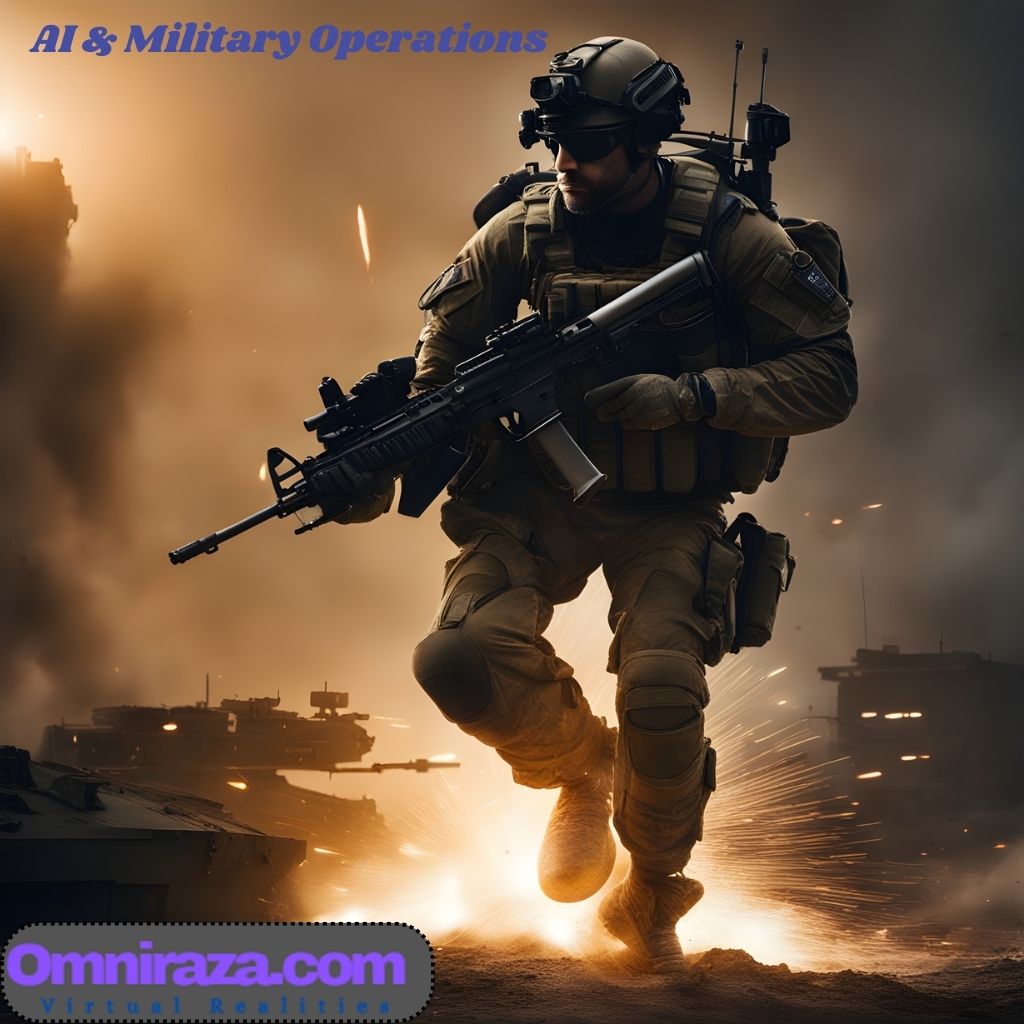
Empowering Decision-Making
Recent examples of AI’s impact on military decision-making can be found in the conflict in Syria. During the Syrian civil war, the Russian military deployed AI-driven systems to analyze vast amounts of data from surveillance drones and satellite imagery. These systems helped Russian commanders identify and prioritize targets with unprecedented precision, minimizing collateral damage. Similarly, the U.S. military has employed AI algorithms to process intelligence data, enabling faster responses to emerging threats. Recent tensions in the South China Sea have seen the U.S. Navy utilizing AI to enhance situational awareness, allowing for more agile and informed decision-making in a highly contested region.
You Might Be Interested In

The Revolutionary Impact of AI in Modern Warfare
US Bets on Data-Driven and AI-Empowered Warfare to Counter China
Information Warfare Mastery: AI vs. Humans – The Battle for Dominance?
Generative AI: Empowering or Threatening Cybersecurity & National Defence
Autonomous Sytems
In recent years, the use of AI in autonomous military systems has garnered significant attention. One notable example is the use of drones, such as the MQ-9 Reaper. Equipped with AI capabilities, these drones can autonomously patrol and gather intelligence in hostile environments. This reduces the risk to human operators while extending the reach and effectiveness of military operations.
Furthermore, the Israeli Defense Forces have employed AI-driven autonomous ground vehicles for border patrol and surveillance. These vehicles use advanced algorithms to navigate challenging terrains and detect intruders, enhancing security along Israel’s borders.

Cybersecurity and Information Warfare
Recent cyberattacks have underscored the importance of AI in cybersecurity. For instance, the 2020 SolarWinds cyberattack, which affected numerous U.S. government agencies, was a wake-up call. AI-powered threat detection systems have since become essential in identifying and mitigating such attacks swiftly.
In the realm of information warfare, Russia’s interference in the 2016 U.S. presidential election serves as a prominent example. AI-driven bots and algorithms were used to amplify divisive content on social media, influencing public opinion. This highlights the need for AI tools to detect and counter disinformation campaigns in the digital age.
Predictive Maintenance
Recent conflicts in the Middle East have showcased the importance of AI-driven predictive maintenance. The harsh desert environments put immense strain on military equipment. AI systems have been employed to predict equipment failures before they occur, ensuring that vital assets like tanks and aircraft remain operational.
For example, the U.S. Army has implemented AI-based predictive maintenance for its Abrams tanks, reducing downtime and maintenance costs. This has been particularly valuable during deployments in regions like Iraq and Afghanistan.
Logistics and Supply Chain Optimization
Recent military operations, such as humanitarian missions in disaster-stricken areas, have highlighted the significance of AI in logistics and supply chain management. AI algorithms can optimize routes for supply convoys, ensuring that aid reaches affected populations quickly and efficiently.
Moreover, the challenges posed by the COVID-19 pandemic required rapid adaptation. AI was instrumental in predicting supply chain disruptions and helping military forces maintain readiness even in the face of unprecedented challenges.
Target Recognition and Analysis
The ongoing conflict in Ukraine provides an example of AI’s role in target recognition. Both Ukrainian and Russian forces have employed AI-driven systems to identify enemy movements and assess potential threats. These systems enhance the precision of artillery strikes and reduce the risk to civilian populations.
In conclusion, the role of Artificial Intelligence in modern military operations is evolving rapidly, driven by recent advancements and real-world applications. From enhancing decision-making to enabling autonomous systems, from bolstering cybersecurity to optimizing logistics, AI has become an indispensable ally to military commanders worldwide.
However, as AI’s influence grows, ethical and legal considerations become increasingly important. Striking the right balance between harnessing the power of AI and upholding international norms is crucial to ensure a safer and more secure world.
Looking ahead, it is evident that AI will continue to shape the future of warfare, making military operations more precise, efficient, and adaptable. The integration of AI into military strategies is not just a trend but a necessity in the complex and ever-changing landscape of modern conflict.
Conclusion
In conclusion, the role of Artificial Intelligence in modern military operations is evolving rapidly, driven by recent advancements and real-world applications. From enhancing decision-making to enabling autonomous systems, from bolstering cybersecurity to optimizing logistics, AI has become an indispensable ally to military commanders worldwide.
However, as AI’s influence grows, ethical and legal considerations become increasingly important. Striking the right balance between harnessing the power of AI and upholding international norms is crucial to ensure a safer and more secure world.
Looking ahead, it is evident that AI will continue to shape the future of warfare, making military operations more precise, efficient, and adaptable. The integration of AI into military strategies is not just a trend but a necessity in the complex and ever-changing landscape of modern conflict.
FAQ
1. How does AI enhance decision-making in the military?
AI processes vast amounts of data in real time, providing commanders with actionable insights. This improves the speed and accuracy of decision-making, as seen in recent conflicts like Syria and tensions in the South China Sea.
2. What are some examples of AI in autonomous military systems?
Drones like the MQ-9 Reaper and autonomous ground vehicles used by the Israeli Defense Forces are prime examples. They perform tasks in hostile environments, reducing the risk to human operators.
3. How does AI contribute to cybersecurity and information warfare?
AI-powered threat detection systems are crucial for identifying and mitigating cyberattacks. In information warfare, AI can detect and counter disinformation campaigns, as seen in Russia’s interference in the 2016 U.S. presidential election.
4. How does AI aid in the predictive maintenance of military equipment?
AI predicts equipment failures before they occur, ensuring operational readiness. The U.S. Army’s use of AI-based predictive maintenance for Abrams tanks is a notable example.
5. In what ways does AI optimize logistics and supply chains for military operations?
AI algorithms optimize supply convoy routes, ensuring timely aid delivery in humanitarian missions. AI also helps predict and manage supply chain disruptions, as exemplified during the COVID-19 pandemic.
6. How does AI improve target recognition and analysis in military operations?
AI-driven systems identify and assess potential threats, enhancing the precision of artillery strikes and minimizing civilian risks. The recent conflict in Ukraine showcases this capability.
