

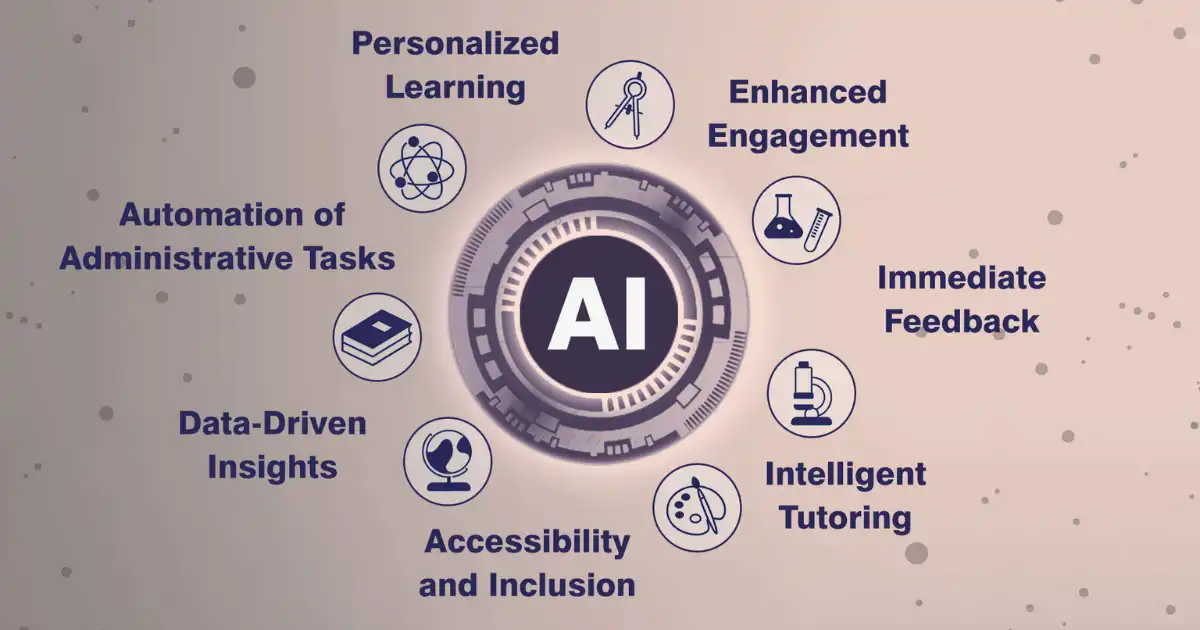
In today’s fast-paced digital world, the education sector stands at the edge of a technological revolution. Teachers, once buried under piles of paperwork and repetitive administrative duties, now find relief through the transformative power of Artificial Intelligence (AI). Imagine an educator’s day freed from the burden of grading, scheduling, data entry, and report generation—allowing more time for teaching, mentoring, and inspiring. That’s not just a dream; it’s a reality reshaping classrooms across the globe.
AI doesn’t just promise efficiency—it delivers precision, speed, and accuracy. It automates administrative tasks that once consumed hours, enabling teachers to focus on creativity and connection rather than clerical work. Through tools like intelligent scheduling systems, predictive analytics, and automated feedback mechanisms, AI in education is redefining what productivity looks like in schools.
This comprehensive guide explores how AI automates administrative tasks for teachers, empowering them to focus on what truly matters—educating and shaping the minds of the future. Let’s dive deep into the systems, tools, and technologies that are revolutionizing education administration worldwide.
The Rising Role of AI in Education
The adoption of AI in education is accelerating at an unprecedented pace. From simplifying grading to managing attendance records, AI-driven systems are taking over time-consuming chores that previously drained teachers’ energy. The primary goal is not to replace educators but to assist them in achieving greater efficiency and impact.
According to recent studies, teachers spend nearly 30–40% of their working hours on administrative tasks rather than teaching. This statistic highlights the urgent need for AI automation in education. AI technologies can automate everything from student performance tracking to communication management, streamlining processes and improving workflow consistency.
AI has evolved from being a futuristic concept into a practical solution implemented in schools, universities, and online learning platforms. Through machine learning, natural language processing, and predictive analytics, AI understands data patterns, anticipates needs, and executes complex processes with minimal human input.
How AI Streamlines Administrative Workflows
1. Automated Attendance and Record Keeping
Recording attendance used to require valuable classroom time every day. AI-based facial recognition systems now automate attendance by scanning students’ faces as they enter a classroom, instantly marking them present or absent. This minimizes manual errors and saves hours over the school year.
Moreover, these systems integrate seamlessly with learning management systems (LMS), updating attendance records automatically and generating analytics reports for administrators. Teachers can now focus on instruction rather than paperwork.
2. Grading and Assessment Automation
One of the most time-consuming administrative duties for educators is grading. AI-powered tools like automated essay scoring and multiple-choice evaluation systems can assess student work quickly and fairly. These systems analyze language patterns, grammar, and content relevance, providing feedback in real-time.
For instance, platforms such as Gradescope and Turnitin use machine learning algorithms to evaluate written work, detect plagiarism, and even offer suggestions for improvement. Teachers can then review summaries instead of individual papers, saving countless hours.
3. Scheduling and Timetable Management
Creating and maintaining schedules for multiple classes, exams, and meetings can be a logistical nightmare. AI scheduling systems analyze data on class sizes, teacher availability, room capacity, and subject requirements to generate optimal timetables automatically.
This reduces conflicts, ensures resource utilization, and allows for dynamic adjustments when unforeseen changes occur. AI-powered scheduling systems continuously learn from previous data to refine their future outputs.
4. Data Management and Analytics
The education sector deals with vast amounts of data—from attendance and grades to behavior logs and learning progress reports. AI automates data collection, processing, and analysis, turning raw data into actionable insights.
For instance, predictive analytics can identify at-risk students by detecting performance patterns, enabling early intervention. Administrators can make informed decisions backed by real-time analytics rather than manual record review.
The Impact of AI on Teacher Productivity
AI significantly enhances teacher productivity by reducing repetitive tasks, improving decision-making, and enabling personalized instruction. By eliminating administrative barriers, teachers can dedicate more energy to student engagement, lesson planning, and innovation.
Enhanced Time Management
AI tools optimize time allocation, allowing educators to balance instructional and administrative duties effectively. Automated notifications, calendar synchronization, and task prioritization ensure that teachers never miss deadlines or meetings.
Improved Decision-Making
AI-driven dashboards provide clear visualizations of student performance, attendance trends, and curriculum progress. Teachers can quickly identify gaps, adjust lesson plans, and customize support for individual learners.
Personalized Learning Support
Through adaptive learning systems, AI not only assists with administrative functions but also personalizes educational content. It tracks each student’s learning pace, identifies weaknesses, and recommends tailored materials.
This holistic support reduces teacher workload while improving academic outcomes.
Key AI Tools Automating Administrative Tasks
-
Google Classroom AI Extensions
Automates grading, attendance, and communication workflows.
-
Turnitin
Uses AI to detect plagiarism and generate quick originality reports.
-
Gradescope
Applies machine learning to speed up grading and provide consistent evaluations.
-
PowerSchool SIS
Manages student information, schedules, and attendance automatically.
-
Otter.ai
Transcribes meetings and lessons using natural language processing, creating instant records.
-
ChatGPT for Education
Assists teachers with lesson creation, feedback summaries, and communication drafting.
-
IBM Watson Education
Delivers predictive analytics to identify students needing extra attention.
These tools highlight how AI in education isn’t limited to futuristic possibilities—it’s already a crucial part of the teaching ecosystem.
The Benefits of AI Automation for Teachers
1. Reduced Workload
AI systems handle repetitive and tedious tasks such as attendance, data entry, and document filing. This drastically cuts down on teachers’ administrative workload, giving them more time to innovate in the classroom.
2. Increased Accuracy and Efficiency
Unlike humans, AI doesn’t get tired or make careless mistakes. Automated data entry and grading ensure greater accuracy, eliminating inconsistencies caused by human error.
3. Faster Decision-Making
With AI analyzing and summarizing data, teachers can make quick, evidence-based decisions regarding curriculum adjustments, student support, or resource allocation.
4. Enhanced Collaboration
AI systems enable seamless communication between teachers, students, and parents. For example, chatbots and AI communication tools can automatically answer common queries and provide instant updates on student performance.
5. Personalized Professional Development
AI not only aids students but also supports teachers’ growth. By analyzing teaching patterns and outcomes, AI suggests training modules or resources to help educators refine their skills.
Overcoming Challenges in AI Adoption
Despite its benefits, integrating AI in education is not without obstacles. Some common challenges include:
1. Data Privacy Concerns
With AI handling vast amounts of student data, privacy and security must remain a top priority. Institutions must ensure compliance with data protection regulations and invest in secure systems.
2. Lack of Technical Expertise
Teachers and administrators may need training to fully utilize AI tools. Without proper guidance, the technology may not reach its full potential.
3. Initial Implementation Costs
While AI saves time and money long-term, initial setup and integration can be expensive. However, cloud-based and subscription models are making it more accessible.
4. Ethical Considerations
The reliance on algorithms raises questions about fairness, bias, and accountability. Developers and educators must ensure that AI systems are transparent and equitable.
The Future of AI-Driven Administration
The future of AI in education promises even more sophistication and integration. AI will soon manage entire school ecosystems, from predictive enrollment analytics to automated parent communication and behavioral monitoring.
Virtual teaching assistants, powered by AI, will continue to evolve—providing real-time support, grading complex assignments, and even handling parent-teacher correspondence.
Furthermore, AI’s integration with the Internet of Things (IoT) will enable smart classrooms that adjust lighting, temperature, and resources automatically based on usage patterns.
Case Studies: AI in Action
Case Study 1: Automated Grading at Stanford University
Stanford’s use of AI-driven grading tools reduced grading time by 60%. The system not only scored assignments but also offered detailed feedback based on content analysis, saving professors hours per week.
Case Study 2: Attendance Automation in Japan
Japanese schools introduced AI facial recognition for attendance, improving record accuracy and reducing teacher workload significantly.
Case Study 3: Personalized Learning in Finland
Finnish schools implemented AI-based analytics systems that identify student performance trends early, allowing educators to tailor interventions effectively.
These real-world examples show how AI automates administrative tasks while enhancing educational quality.
Ethical and Human-Centered AI in Education
The goal of AI in education is not to replace teachers but to empower them. Ethical AI must prioritize human oversight, ensuring technology remains a supportive tool rather than a controlling force.
Educators must remain involved in every decision, using AI insights as guidance rather than absolute judgment. Transparency in AI algorithms and inclusivity in design are essential to building trust and long-term sustainability.
Practical Tips for Teachers Adopting AI Tools
-
Start Small
Introduce one AI tool at a time, such as an automated grading assistant or attendance tracker.
-
Seek Training
Many AI tool providers offer free or affordable online workshops.
-
Collaborate with Colleagues
Share experiences and best practices to ease the learning curve.
-
Monitor Data Privacy
Always verify data security settings and permissions.
-
Evaluate Impact Regularly
Measure improvements in efficiency and student engagement after implementing AI tools.
By gradually integrating AI into their workflow, teachers can achieve long-term success without feeling overwhelmed.
You Might Be Interested In
- What Does Harvest Now, Decrypt Later Mean for Archived Data?
- What Is Cloud Storage?
- Why Ai Tools Are Crucial For Scaling Business Operations?
- What Is Cloud Computing And How Does It Work For Beginners?
- What Is an Input To The Vision?
- How Ai Smart City Concepts Manage Public Events?
- How Does Machine Learning Detect Anomalies In Network Traffic?
- How Does Software As A Service Work?
- How Do Adversarial Examples Bypass Malware Detection Models?
- 10 Ways Natural Language Processing Enhances AI Chatbots
Conclusion
The integration of AI automation in education represents one of the most transformative shifts in modern teaching. From attendance tracking to grading, scheduling, and communication, AI liberates teachers from administrative overload, allowing them to focus on creativity, empathy, and student success.
By streamlining repetitive tasks, AI for teachers fosters a learning environment where educators can do what they do best—inspire and nurture. It’s not just about saving time; it’s about enhancing the quality of education, improving outcomes, and making the teaching profession more rewarding.
As technology continues to evolve, embracing AI will no longer be optional—it will be essential. The schools that adopt it now will lead the next generation of educational innovation.
AI is not the future of education—it is the present, quietly revolutionizing classrooms, empowering teachers, and shaping brighter minds every single day.
FAQs about Administrative Task
How is AI used for administrative tasks in education?
AI is used in education to handle time-consuming administrative tasks that often take teachers and school staff away from more meaningful work like teaching and student support. For example, AI systems can automatically manage attendance records, schedule classes, send reminders, and even grade assignments. This helps reduce human error and saves hours of manual effort. Additionally, AI-powered chatbots can answer common student questions about deadlines, course requirements, or school policies—freeing up administrative staff to focus on more complex issues.
AI also plays a big role in analyzing data. It can track student performance, generate reports, and identify patterns that help schools make better decisions. For instance, AI tools can alert teachers when a student is falling behind, or help administrators forecast enrollment trends. By automating these routine processes, AI ensures that educators spend more time teaching and less time managing paperwork.
How can AI automate administrative tasks?
AI automates administrative tasks by using algorithms that can learn patterns and perform actions without constant human supervision. For example, AI tools can process student registrations, assign teachers to classes, organize schedules, and even send automated notifications or updates. Instead of manually sorting through hundreds of forms, an AI system can analyze data in seconds, ensuring faster and more accurate results.
Moreover, AI can integrate with school management systems to keep track of grades, attendance, and communications in real time. It can also help manage budgeting, resource allocation, and report generation. This automation minimizes repetitive clerical work, reduces errors, and ensures smoother coordination across departments. As a result, schools become more efficient, and teachers and administrators can focus on improving educational outcomes rather than getting buried in routine paperwork.
How can AI automate repetitive tasks for teachers?
AI helps teachers by taking over repetitive tasks that don’t require human judgment, allowing them to dedicate more time to personalized teaching and student interaction. For example, AI grading tools can automatically mark quizzes, assignments, and even essays using natural language processing. Attendance can be tracked with facial recognition or smart ID systems, eliminating roll calls. AI can also generate lesson plans, suggest resources, and organize class materials based on curriculum goals and student needs.
Additionally, AI can assist with communication. It can send automated updates to parents about attendance, performance, or upcoming events, and remind students of homework deadlines. These simple but time-consuming tasks, when handled by AI, make teachers’ workloads lighter and their teaching more efficient. This kind of automation helps educators focus on creativity, mentorship, and delivering high-quality lessons instead of paperwork and routine administration.
What role does AI play in automating tasks in education?
AI plays a central role in transforming education by streamlining administrative operations and improving efficiency across schools and universities. It acts as a digital assistant that manages scheduling, attendance, grading, and data entry, allowing teachers and staff to focus more on students. With machine learning and predictive analytics, AI can even anticipate administrative needs—like predicting which students might need academic help or suggesting schedule adjustments to avoid conflicts.
Beyond basic automation, AI supports decision-making by analyzing educational data at scale. It identifies trends, measures progress, and provides insights that help institutions improve policies and teaching methods. By automating both small daily tasks and larger management functions, AI creates a smoother, faster, and more effective educational environment.
How does AI automate tasks?
AI automates tasks by using advanced algorithms that mimic human thinking and decision-making. It learns from data, recognizes patterns, and performs actions that would otherwise require manual effort. For example, when processing student forms or scheduling classes, AI can analyze hundreds of variables in seconds to choose the best outcomes—something that would take hours for a person. Through machine learning, AI continuously improves its accuracy and speed as it processes more data over time.
In education, this means AI can grade assignments, manage attendance, send notifications, or organize records without human intervention. Tools like chatbots, virtual assistants, and data management systems all rely on AI to handle these repetitive processes efficiently. The result is faster task completion, fewer mistakes, and more time for teachers and administrators to focus on what truly matters—enhancing learning experiences and supporting students.
