

If you’ve ever looked at AI training from the outside, it’s easy to assume the main limitation is compute. More GPU cores, more FLOPS, more power, right?
In real systems, that assumption breaks pretty quickly.
What actually slows large-scale AI training down most of the time is not raw compute. It is memory movement. More specifically, how fast data can be fed into the GPU while it is trying to process massive neural network workloads.
Training modern models like LLMs is extremely memory-heavy. Every step involves moving huge tensors in and out of memory. Attention layers, activations, gradients, optimizer states, all of it keeps circulating constantly. The GPU is rarely “just computing”. It is waiting for data far more often than people expect.
I’ve seen this pattern repeatedly in production training runs. You scale up GPU count, utilization still looks disappointing. You upgrade compute, performance barely moves. Then you look closer and realize the GPU is starved. Not for power, not for cores, but for memory bandwidth.
This is where GPU memory bandwidth becomes the real battlefield. And this is exactly where HBM AI chips change the game.
What HBM Actually Is
HBM in practical terms
HBM, or High Bandwidth Memory, is not just “fast RAM for GPUs”. In real hardware terms, it is memory placed physically extremely close to the GPU die and designed to move data at absurd speed compared to traditional memory.
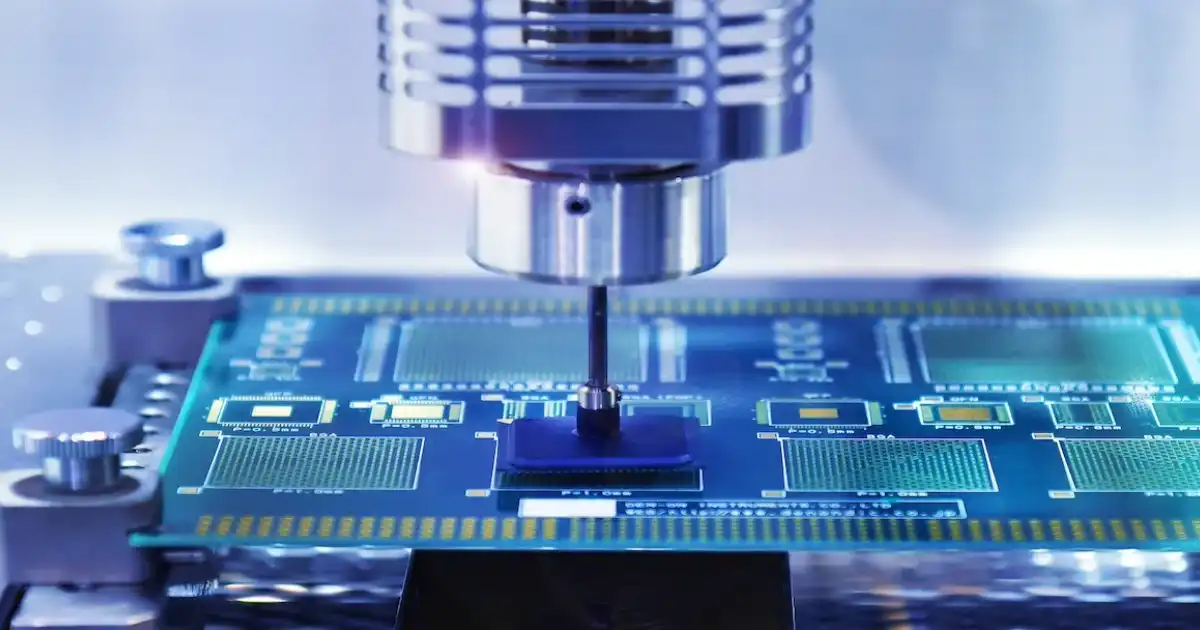
Instead of sitting off-chip like normal memory, HBM is stacked vertically in layers and connected through a very wide interface. The GPU does not have to “reach far” for data. The data path is short, wide, and extremely parallel.
Stacked memory concept
In practice, HBM looks like multiple memory layers stacked like a sandwich next to the GPU. Each layer communicates through thousands of microscopic connections. This is why HBM can deliver massive bandwidth without needing extreme clock speeds.
Engineers care about this because clock speed is not the bottleneck anymore. The bottleneck is how many bytes you can move per second into the compute units.
Why proximity matters
One of the simplest truths in hardware design is this: distance kills performance.
Even if DDR memory is fast on paper, the physical distance and narrower interface create delays and congestion. HBM removes a lot of that friction by putting memory directly on the same package as the GPU.
In real AI systems, that proximity is what allows the GPU to stay busy.
The Real Problem: Memory Bottleneck in AI Training
What actually slows AI training
Most people imagine GPUs are constantly calculating matrix multiplications at full speed. In reality, a large portion of time is spent waiting for data to arrive.
When training an LLM, the GPU needs:
- weights from memory
- activations from previous layers
- gradients for backpropagation
- optimizer states like Adam moments
All of this is constantly flowing.
Why compute is not the main issue
Modern GPUs already have more compute than most workloads can fully saturate. The real limitation is feeding those compute units fast enough.
If memory cannot supply data at the same rate compute consumes it, the GPU stalls. It sits idle, not because it is weak, but because it is waiting.
The “GPU waiting for data” problem
I’ve seen this many times in real training jobs. You look at utilization metrics and see something like:
- GPU compute usage fluctuating between 40% to 70%
- memory bandwidth maxed out
- pipeline stalls during attention-heavy phases
The system is not compute-bound. It is memory-bound.
That is the AI memory bottleneck in practice.
How HBM Fixes the Bottleneck
How data flow improves
HBM does one thing extremely well: it massively increases memory bandwidth.
Instead of a narrow pipeline, you get a very wide one. That means more data can be streamed into the GPU per second.
So instead of the GPU waiting for data chunks, it gets a steady stream that keeps execution units busy.
Why bandwidth matters more than raw speed
People often confuse latency and bandwidth. In AI training, bandwidth matters more than latency most of the time.
You are not fetching a single value. You are streaming huge tensors continuously. Think of it like a firehose instead of a drip feed.
HBM turns memory into a high-volume pipeline rather than a constrained channel.
Why GPUs become more fully utilized
Once memory stops choking the pipeline, something interesting happens.
GPU utilization becomes more stable. Instead of oscillating between busy and idle, the GPU stays closer to full saturation during compute-heavy phases.
That is the real win. Not theoretical speedups, but sustained throughput.
What Changes in Real AI Training Workloads
LLM training behavior
In large language model training, especially transformer-based architectures, memory traffic is enormous.
Every token batch triggers:
- attention matrix construction
- large activation storage
- gradient propagation across layers
HBM AI chips allow these workloads to run more smoothly because data is always available when needed.
Batch size improvements
One thing engineers notice quickly is that larger batch sizes become more feasible.
Without enough memory bandwidth, increasing batch size leads to congestion. With HBM, the system handles larger batches without collapsing into stalls.
Throughput improvements
Instead of focusing on “faster single step execution”, what actually improves is throughput over time.
More tokens processed per second. More stable training curves. Less variance caused by memory starvation.
What engineers notice first
In real deployments, nobody celebrates benchmark numbers first.
What they notice is:
- fewer pipeline stalls
- more predictable training time
- reduced need for micro-optimizations just to keep GPUs busy
That stability is often more valuable than raw speed.
Where HBM Helps the Most
Helps in large-scale training
HBM shines in:
- LLM training
- deep transformer models
- HPC simulations
- large batch inference pipelines
These are all memory streaming heavy workloads.
Helps in HPC and LLMs
High performance computing workloads behave similarly. They constantly move large datasets through compute units. HBM keeps that pipeline fed.
Does NOT magically fix everything
This is important.
HBM does not fix:
- inefficient model architecture
- poor software pipeline design
- communication overhead in distributed training
- CPU or networking bottlenecks
If your system is network-bound in multi-GPU setups, HBM will not save you.
Other bottlenecks still exist
Even with fast memory, you can hit:
- inter-GPU communication limits
- storage I/O bottlenecks
- kernel inefficiencies
HBM solves one major constraint, not the entire system.
HBM vs DDR vs GDDR
DDR in real systems
DDR memory is flexible and cheap, but it is not designed for extreme parallel bandwidth. In AI workloads, it becomes a choke point very quickly.
It is fine for CPUs, not for high-throughput GPU training.
GDDR behavior
GDDR (used in consumer GPUs) is faster than DDR but still limited in bandwidth compared to HBM. It works well for gaming and smaller workloads, but struggles with large-scale AI training.
HBM in practice
HBM behaves differently because it prioritizes:
- extremely wide interfaces
- high sustained throughput
- proximity to compute cores
In real AI training systems, this difference is not subtle. It is the difference between “GPU waiting” and “GPU fully busy”.
Real Hardware Examples
Modern AI systems rely heavily on HBM-based GPUs.
A good example is the data center class GPUs like NVIDIA H100 Tensor Core GPU. These systems use HBM to feed massive transformer workloads efficiently.
In cloud environments, these GPUs are deployed in clusters where thousands of accelerators work on distributed training jobs. Without HBM, scaling these workloads would collapse under memory pressure long before compute limits are reached.
In practice, when engineers design training clusters, they do not start with compute first. They start with memory bandwidth per GPU, because that defines how efficiently the rest of the system will behave.
Common Misunderstandings About HBM
“HBM makes GPUs smarter”
No. It does not increase intelligence or capability of the model. It only changes how fast data moves.
Overfocus on GPU cores
Many people assume more cores equals better AI performance. In reality, cores sitting idle because of memory starvation is a common problem.
Bandwidth vs compute confusion
This is the biggest misunderstanding. Compute is how fast you process data. Bandwidth is how fast you get data.
If bandwidth is too low, compute does not matter.
Future of AI Memory Systems
Memory becoming the real bottleneck
As models grow larger, memory pressure increases faster than compute improvements.
That means memory systems are becoming the dominant constraint in AI hardware design.
Evolution of HBM
We are already moving through:
- HBM3
- HBM3E
- HBM4 (emerging direction)
Each generation increases bandwidth and capacity because AI workloads demand it.
Why demand keeps rising
Every new LLM generation increases:
- parameter count
- context length
- training dataset size
All of that translates directly into higher memory bandwidth requirements.
You Might Be Interested In
- Top 10 Green Data Centre Innovations Saving The Planet
- Why Do LLMs Hallucinate on Factual Questions?
- How Can Prompt Injection Spread Through Connected Tools?
- What Is A Data Centre And How Does It Work?
- Is Google Maps Considered AI?
Conclusion
If you strip away all the hype, HBM is not some magical upgrade that makes AI systems “smarter” or fundamentally different. It is much more grounded than that. Its real job is simple: keep data flowing fast enough so modern GPUs don’t sit around waiting.
In real AI training systems, especially with large language models, the biggest performance loss is not from weak compute. It is from starving compute units of data. That is the AI memory bottleneck most people underestimate. HBM fixes a large part of that by massively increasing GPU memory bandwidth and tightening the connection between memory and compute.
FAQs
What is HBM in AI systems?
HBM, or High Bandwidth Memory, is essentially a type of memory designed to feed GPUs at extremely high speed so they don’t sit idle during heavy workloads like AI training. In real AI systems, it sits physically very close to the GPU core and is stacked vertically to allow massive parallel data transfer. This design is not about making memory “bigger” or just “faster” in a simple sense, it is about removing the choke point between compute and data.
In practical AI training, HBM matters because models are constantly pulling in huge chunks of tensors for forward and backward passes. Without enough memory bandwidth, the GPU ends up waiting for data instead of computing. HBM reduces that waiting time significantly, which is why it is used in high-end AI training accelerators.
Why is memory bandwidth more important than GPU compute in AI training?
In real-world training workloads, especially large language models, GPUs rarely struggle because they “lack compute power”. Instead, they struggle because compute units are starved of data. You can have extremely powerful GPU cores, but if memory cannot supply data fast enough, those cores stay underutilized. That is the real performance limiter most engineers run into.
Memory bandwidth decides how quickly tensors, activations, and gradients can move through the system. If that flow is slow, everything slows down regardless of how strong the GPU is on paper. I’ve seen cases where upgrading compute barely changed training speed, but improving memory bandwidth immediately improved utilization and throughput. That is why bandwidth has become more critical than raw compute in many AI workloads.
How does HBM improve AI training performance in practice?
HBM improves performance by increasing the rate at which data moves between memory and GPU cores. In practice, this means the GPU spends far less time stalled waiting for data and more time actively processing operations. The training pipeline becomes smoother because large chunks of model data are continuously available instead of arriving in small, delayed bursts.
What engineers notice first is not just faster training, but more stable training behavior. Batch processing becomes more consistent, throughput becomes predictable, and GPU utilization stays closer to maximum for longer periods. Instead of fluctuating between busy and idle states, the system maintains a steady flow, which is extremely important when training large models over days or weeks.
Where does HBM not help in AI systems?
HBM helps with memory bandwidth, but it does not fix every bottleneck in AI infrastructure. If the system is limited by compute, network communication between GPUs, or inefficient software pipelines, HBM will not solve those issues. It is not a universal performance upgrade, it is a very specific fix for memory-related stalls.
In distributed training setups, for example, GPUs can still slow down due to communication overhead between nodes or slow storage pipelines feeding data. In those cases, even with HBM, the system can remain bottlenecked elsewhere. So while HBM removes a major constraint, it does not eliminate the need for good system design across compute, networking, and storage layers.
What is the future of HBM in AI hardware?
The future of HBM is tightly connected to how fast AI models are growing. As model sizes, context lengths, and dataset requirements continue increasing, memory bandwidth demands are scaling aggressively. This is pushing hardware designers to develop newer generations like HBM3E and HBM4 with even higher throughput and capacity.
From what we see in real deployments, memory is becoming just as important as compute in system design discussions. Future AI accelerators will likely focus even more on balancing compute with massive memory bandwidth, because without it, scaling large models efficiently becomes extremely difficult. In other words, HBM is not a final solution, it is part of an ongoing race between model complexity and hardware capability
