

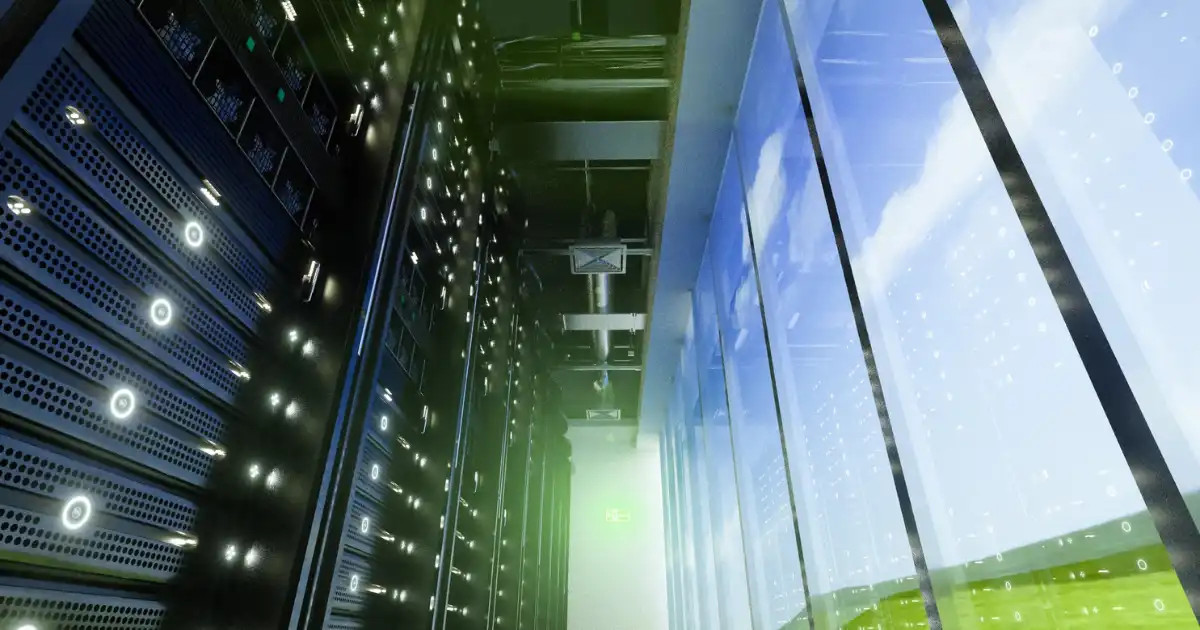
In the current world that is dominated by technology, everything from cloud computing to online services requires the existence of Data Centers. However, their environmental effect remains a major problem. Here, Green Data Centre Innovations comes in to provide solutions that help reduce carbon footprints and energy consumption. These innovations are even more important than changing the tech industry.
They’re essential to making sure the future of the world is sustainable. If you are interested in tech or sustainability, then advancements in green data center innovations will excite you. So it is time to look at the 10 innovations that are shifting the paradigm in Data Centers and saving the planet.
The Emergence of Environmentally Friendly Data Centers: What You Should Know
Traditional data centers have always posed a threat to the environment due to their operations. Data centers use up an outrageous amount of energy, much of it coming from fossil fuels. This helps contribute tremendously to the global carbon emissions. Unfortunately, with the rise of the digital world, the requirements for data processing and storage are continuously on the rise. The good news is that there is hope in green data processing centers with transformational innovations that develop technologies that strive to enhance productivity while minimizing energy consumption and carbon footprint.
Green Data Center Innovations have the potential to shift the paradigm in how industrial and governmental data centers operate. The next generation of data centers depends on advanced performant technologies that are also energy efficient and enable green business practices. Wind and solar energy, as well as fresh approaches to cooling IT equipment, are some more ideas that change the way we view the processing and storing of data.
Efficient Cooling Systems
Cooling systems, particularly in traditional data centers, are the largest consumers of energy. In a typical data center, cooling systems use up nearly 40% of the total energy. This figure is likely to increase due to the rising amounts of data being processed unless proactive measures are taken.
Innovations in liquid cooling technology, where cool liquids are used to disperse heat instead of air, are positively impacting the Green Data Centre. This technique is distinctly superior to air cooling systems due to it being more energy efficient and environmentally friendly by using less energy to sustain optimal temperatures.
Another innovative technique is free cooling, where external sources of cool air are used without employing traditional air conditioning units. Not only can data centers enhance their energy efficiency, but they can also significantly minimize greenhouse gas emissions with the implementation of these methods.\
The Adoption Of New And Effective Energy Sources
The usage of data and corresponding expenses goes higher over time. Conventional data centers are extraordinarily reliant on the usage of fossil energy, while Green Data Centre Innovations are attempting to integrate renewable energy from solar and wind, as well as hydropower. Employing these clean sources of energy allows data centers to lower their carbon emissions significantly.
Many companies in the technology industry, such as Google, have pledged to switch all operations of their data centers to be powered by 100% renewable energy. Google has already met its target of powering all its data centers through renewable energy. Currently, the commitment is shifting through the entire industry as new players come in understand the positive impact both for the business and the environment renewable energy can bring.
Advanced batteries as energy storage solutions are also built in the data centers so that there can be excess renewable energy during low-demand periods. This creates a constant and sustainable supply of power even if its sources are renewables and hence intermittent.
Modular Data Centers
The concept of modular data centers is another innovation in Green Data Centres that is rapidly gaining popularity. Traditional data centers look like massive, decentralized structures that have a set size and volume. In many cases, this results in inefficiencies because firms are required to increase their infrastructure based on projections instead of actual requirements.
Modular data centers possess flexibility and scalability. They may be expanded in stages, permitting firms to increase capacity as needed. This method eliminates energy wastage because there is no need for overabundant infrastructure and resources. In case modular data centers have to be constructed, sustainable materials and energy-efficient components can be used, which improves sustainability further.
Artificial Intelligence for Energy Management
AI is one big factor that is advancing development for all types of organizations. For Green Data Centre Innovations, AI adoption is being done specifically on energy management and operational efficiency to enhance them.
AI-powered systems can find and analyze data and use it to estimate how much energy will be needed in the future and manage the energy flow accordingly. For example, AI could manage the cooling systems and only activate them when absolutely needed based on the available data. This will conserve energy consumed by data centers while ensuring ideal operating conditions.
Furthermore, AI can help in predictive maintenance by spotting issues before they arise. This enables data centers to run more optimally and with reduced downtime. Data centers are reaping the benefits of these AI-enabled improvements with lower costs and energy use while fostering a cleaner environment.
Edge Computing
Edge computing is one of the newest innovations in green data centers which brings data processing physically closer to the data being generated or collected. This reduces the distance the data has to travel, improving latency and overall performance. More importantly, lessens the load on traditional data centers which lowers the overall energy expenditure.
Compared to big centralized data centers, edge data centers are smaller, set up in more convenient locations and are much more energy efficient. These smaller centers are usually more efficient because they utilize renewable energy sources and are built where the temperature is cooler naturally allowing for less energy to be used in cooling. As edge computing becomes increasingly widespread, it allows for lower carbon infrastructure.
Systems for Heat Reclamation
Green Data Centre Innovations is now using the waste heat produced by data centers to fulfill other purposes. Heating recovery systems use the surplus heat generated by the servers and harness it to heat nearby buildings as well as power district heating systems. For a long period of time, excess heat production has been looked at in a negative light.
This new method not only helps in energy expenditure by data centers, but also is beneficial to the surrounding locality. The data centers are able to achieve greater sustainability and lessen the damage done to the environment by reusing surplus heat.
Cooling with Liquid Immersion
Liquid immersion cooling is one of the most immersive breakthroughs in data center cooling that involves placing the server into a heat-absorbing liquid. This type of cooling, unlike those traditional ones that use air, do not require heat vents, fans or significant air conditioning, thereby saving energy. With this development, cooling systems make use of electrically conductive liquids that enable efficient heat absorption.
Data centers no longer have to operate their cooling or air conditioning systems to maintain the needed air temperature. With this method in place, data centers function at environmentally friendly energy efficiency. The combination of all these factors culminates in lowering the carbon footprint of data centers, making it an efficient option.
Energy Efficient Device
The Innovations in Green Data Centre has placed a lot of emphasis on the development of energy-efficient devices. The evolution of some of the processor technology has resulted in the creation of energy-efficient chips with high performance-to-power consumption ratios. These chips are designed with more advanced data processing structures so that less energy is needed to power servers and other related equipment.
This type of hardware is more energy-efficient, even less than alternative sources of energy. Because of this, low-powered energy-efficient devices are particularly necessary in the context of data centers. Data centers can decrease their operational expenses and CO2 emissions to a greater extent by implementing these energy-efficient methods.
Carbon Capture and Storage (CCS)
One important trend in Green Data Centre innovations due to higher production of CO2 in data centers is how to best capture and store the CO2. For that reason, Carbon capture and storage (CCS) technologies describe the initiative which describes storing produced carbon dioxide under earth’s surface or using it in different ways.
With the use of these technologies, data centers can utilize some of the carbon emissions they produce for other purposes in turn reducing their effect on the environment. Even though CCS is still at the evaluation stage, it is likely to be of great relevance when working toward sustainable data center operations.
Water Recycling and Conservation
Data centers utilize water as a resource, especially for cooling purposes. Traditional data centers used to waste a lot of water in their cooling processes. That is however changing with water recycling and conservation by Green Data Centre Innovations.
Data centers are now implementing closed-loop cooling systems. Many facilities are also adopting rainwater collection and other water-saving strategies to reduce their eco-footprints. These measures help circulate water and simultaneously maximize the sustainability efforts of the data centers.
You Might Be Interested In
- Can Chat GPT Make Art?
- How To Learn CNC Machining?
- Using Ai For Smart Home Security Systems
- What Is Network Security?
- What Is Inference In Machine Learning?
Conclusion
The green angle of data centers is strategically more appealing due to the new, Green Data Centre Innovations emerging in the industry. These developments of cooling systems, renewable energy usage, AI optimization, and modular data centers are changing the approaches taken when building data centers. With the rapid adoption of sustainable measures by companies and governments, the negative effects of data centers on the environment will be alleviated over time and help save the earth for the next generations. Businesses can take advantage of Green Data Centre Innovations to cut down carbon emissions, lower operational expenditure, and help build a sustainable digital future.
Toward the end of October 2023, we learned that technological centers are rapidly advancing, making the world more technologically driven, and improving green initiatives. The possibilities offered are still just the tip of the iceberg, and the possibilities for energy efficient and green tech are growing at an exponential rate. For now all we can do is wait and see the changes come to fruition because the world certainly looks greener.
FAQs about Data Centre Innovations
What is the purpose of a data innovation center?
The Center for Data Innovation functions as a think tank and a research center that focuses on the intersection between data, technology, and innovation. Its mission revolves around building awareness of how data can spearhead economic, social, and technological progress. The center works to influence the policies surrounding data and innovative technologies so that their use within society is beneficial.
The center’s goal is to assist in solving issues related to data privacy and governance by encouraging scrutiny and cooperation between the public and private sectors. It also aims to assist in the development of policies and regulations that allow companies to utilize data in an unrestricted manner but make sure that ethical and state laws are not broken. The Center for Data Innovation aims to foster innovation and formulate policies for the use of technology and data.
How will data centers evolve in the future?
A variety of advancing technologies and the ever-increasing need for data processing power suggest that data centers are set to undergo one of their most drastic transformations yet. In the long run, we must expect the rise of highly flexible and efficient infrastructures that are automated enough to handle completely unconstrained complex workloads. With the growing demands for cloud data storage, Al and ML will have already powered advanced automation in data centers, greatly streamlining operations beyond human intervention.
Lowering the environmental impact of data centers will also be a core focus, leading to the widespread implementation of non-invasive cooling systems and renewable energy sources powered by eco-friendly designs. These advanced systems will seamlessly optimize everything from resource allocation and energy management to predictive maintenance.
As a result, turning data processing closer to the edge will minimize latency and amplify overall system performance, causing a shift towards decentralization of data processing. To sum it all up, the canopy of data storage and processing will call for the implementation of unprecedented integration capabilities, and machine learning combined with artificial intelligence will enable smoother calls for sustainment.
What are the 3 main components of a data center infrastructure?
The three main components of a data center infrastructure are computing hardware, storage systems, and networking equipment. To elaborate, computing hardware includes the servers and processors used for carrying out various orders of data operations like running certain applications or processing automation tasks. These servers provide computational power to many services and are the basic blocks in a Datacenter.
Storage Systems are the devices and subsystems that store data and allow retrieval of information. This involves hard drives, solid-state drives, or cloud storage depending on the type and size of information. Networking equipment is needed to ensure internal and external communication with the data center and its components. Some basic examples of networking equipment are: switches, routers, cables, etc. All of these devices allow communication and, therefore, possession of reliable and constant connectivity to the data center.
Depending on its usage, all these components work together to provide the required infrastructure to all operational processes of the Datacenter – these include scalability, reliability, and performance across various workloads.
What are the emerging technology for data centers?
Emerging technologies are constantly changing the structure and operation of data centers to align with modern computing requirements. Artificial Intelligence (AI) and Machine Learning (ML) are revolutions within themselves since they enable anticipatory maintenance, optimal performance, and energy resource management in data centers. AI can automate the analysis of operational data to identify performance problems in advance and dictate cooling resources and operations to improve energy waste. Edge computing is another innovation that shifts the processing of data from the data center toward where it is generated. This helps to enhance latency, real-time capability, and the functionality of IoT devices.
Furthermore, the proliferation of 5G networks will augment data transfer rates which will greatly assist the usage of high-demand applications such as autonomous vehicles, real-time analytics, and stream processing. Quantum computing is already beginning to make its presence felt because of their ability to perform difficult calculations and data manipulations at speeds that are much faster than traditional systems. New cooling technologies such as liquid cooling are more advanced as they offer energy-efficient means of dealing with heat management in high-density environments.
These technologies will enable data centers to become faster, more flexible, more powerful, and more sustainable while being able to cope with the challenges of a highly globalized world.
What is replacing data centers and their services?
Data centers are not completely going away; rather, they are evolving towards other infrastructures like cloud computing, edge computing, and decentralized models. The AWS, Microsoft Azure, and Google Cloud shift a lot of the data storage and processing responsibilities due to cloud computing. This practice not only shifts the burden of owning a physical data center to third-party providers but also makes it easy to scale business and optimize expenses. Edge computing is yet another disruptive trend that’s reshaping the data infrastructure landscape. Processing data at the edge, whether it’s at the edge of a network or an IoT device, allows for better real-time decision-making.
Also, these days, attempts are being made to replace the centralized data center with distributed and decentralized infrastructures based on blockchain technology. These technologies seek to provide more secure, transparent, and efficient approaches to data management and storage. Even though conventional data centers will always be required for some specific, large-scale applications, the combination of cloud, edge, and decentralized solutions is emerging.
