

For a long time, the traditional data center was the default. You bought land or space, planned for peak capacity five to ten years out, built everything upfront, and hoped demand eventually caught up. I’ve worked in environments where this made sense and plenty where it didn’t. Modular Data Centers Vs Traditional: What Changes
What’s changed is not that traditional data centers suddenly stopped working, but that business timelines have collapsed. Cloud adoption, AI workloads, edge computing, regulatory pressure, and cost scrutiny have all squeezed the margin for slow, oversized infrastructure bets.
Today, infrastructure teams are being asked to move faster with less certainty. “We might need 500 kW now, but possibly 2 MW in 18 months… or maybe not.” That uncertainty is what’s challenging traditional data center thinking. Modular data centers didn’t appear out of nowhere they’re a response to speed, flexibility, and risk management problems I’ve seen play out repeatedly in real projects.
What Is a Traditional Data Center?
In the real world, traditional data centers are custom-built facilities designed around long-term forecasts. You plan the building, power, cooling, racks, redundancy, and compliance as one large, integrated project. Construction timelines often run 18 to 36 months once you include design approvals, utilities, and fit-out. I’ve seen projects delayed another year just waiting on power availability.
The upside is control. Traditional data center design lets you tune everything: layout, airflow, redundancy levels, security zoning, and specialized environments. For large, stable workloads financial systems, government infrastructure, core enterprise platforms this level of customization still matters. When done well, traditional data centers can be extremely efficient and reliable.
The downside is commitment. You pay for capacity long before you use it. Scaling later usually means major construction work. If your assumptions are wrong and they often are you’re stuck with either stranded capacity or an urgent expansion problem. Traditional data centers reward certainty. They punish volatility.
What Is a Modular Data Center?
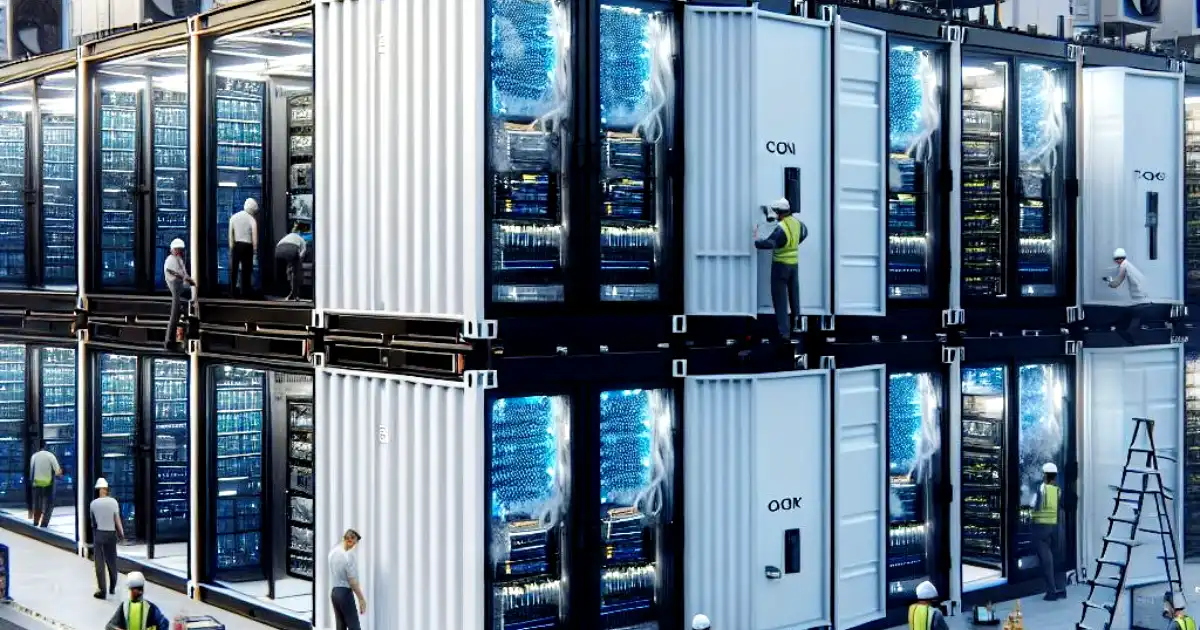
Modular data centers are often misunderstood. They’re not “cheap containers slapped together,” despite how some people talk about them. In practice, modular data center architecture means pre-engineered modules power, cooling, IT space that are built, tested, and delivered as repeatable units. These can be containerized systems, skid-based modules, or prefabricated rooms.
What surprises people the first time they deploy one is how much work is already done before it arrives. Power distribution, cooling loops, fire suppression, and even monitoring are pre-integrated. You’re assembling proven blocks instead of inventing a new design each time. That dramatically reduces deployment time.
The trade-off is flexibility. You’re choosing from defined options rather than designing everything from scratch. In my experience, this is either a huge relief or a serious limitation depending on your requirements and culture.
4. Modular vs Traditional Data Centers: Key Differences
| Area | Traditional Data Centers | Modular Data Centers |
|---|---|---|
| Design | Fully custom, site-specific | Pre-engineered, standardized |
| Deployment time | 18–36+ months | 3–9 months (sometimes faster) |
| Scaling | Large expansion projects | Incremental, module-by-module |
| CapEx model | Heavy upfront investment | Staged, pay-as-you-grow |
| Customization | Very high | Moderate to limited |
| Predictability | Variable project risk | Highly predictable delivery |
Operationally, these differences matter more than the marketing claims. Traditional designs give you freedom but introduce schedule and cost risk. Modular systems reduce uncertainty but ask you to accept constraints. The “better” choice depends on which risk hurts you more.
Deployment Speed: Why Time Matters More Than People Expect
Data center deployment time is not just an IT problem it’s a business risk. I’ve seen companies lose market opportunities because infrastructure wasn’t ready. Traditional builds suffer from long dependency chains: permits, utilities, contractors, weather, inspections. Each delay compounds.
Modular data centers shine here. Because modules are built in parallel with site prep, timelines compress dramatically. I’ve seen production environments go live in under six months from approval. That speed can be a competitive advantage or a safety net when demand spikes unexpectedly.
But speed cuts both ways. Faster deployment also means faster mistakes if planning is sloppy. Modular doesn’t eliminate the need for good capacity planning; it just gives you less time to recover from bad assumptions.
Cost Reality: CapEx, OpEx, and Hidden Trade-offs
The question “Are modular data centers cheaper?” is the wrong starting point. Initial CapEx for modular units can look higher per kilowatt compared to large traditional builds. What people miss is timing. With traditional data centers, you pay upfront for future capacity. With modular, you align spend closer to actual demand.
Operational costs are where things get interesting. Modular systems often benefit from optimized cooling and shorter airflow paths, which can improve energy efficiency. However, maintenance contracts, vendor lock-in, and replacement cycles can increase long-term OpEx if you’re not careful.
I’ve also seen modular deployments underestimate site work costs foundations, power feeds, networking, and compliance don’t disappear just because the IT space is prefabricated.
Scalability and Growth Planning
Data center scalability in theory is easy. In practice, it’s messy. Traditional data centers scale well when growth is predictable and linear. When it isn’t, you either overbuild or scramble.
Modular data centers support true pay-as-you-grow models. You add capacity when you need it, not years before. That flexibility is invaluable for AI pilots, regional expansion, and edge deployments. But scaling with modules requires discipline. Mixing generations, capacities, and vendors can create operational complexity over time.
Energy Efficiency, Cooling, and Sustainability
Energy-efficient data centers are as much about execution as architecture. Modular systems often achieve strong efficiency numbers because they’re tightly engineered and factory-tested. Contained airflow, optimized cooling loops, and standardized layouts help.
Traditional data center design can match or exceed this but only when the project is well-funded, well-managed, and carefully optimized. In reality, I’ve seen many traditional facilities underperform because value engineering cuts efficiency features early in the project.
Sustainability goals also depend heavily on power sourcing. Modular doesn’t automatically mean greener. It just makes it easier to deploy efficient designs consistently.
Customization, Control, and Real Limitations
This is where modular still falls short. If you need highly specialized environments, unusual rack densities, custom security zoning, or complex compliance layouts, traditional data centers still win. Modular systems offer options, not infinite choice.
Control is another factor. Some organizations are uncomfortable relying heavily on a single vendor’s design assumptions. In regulated industries, that concern is not theoretical it affects audits, certifications, and risk models.
Real-World Use Cases: When Each One Makes Sense
Modular data centers are a strong fit for rapid expansion, edge deployments, disaster recovery, AI and HPC pilots, and organizations with uncertain growth curves. They reduce risk when speed and flexibility matter more than perfect optimization.
Traditional data centers still make sense for large, centralized workloads, stable demand profiles, and environments requiring deep customization. When you know exactly what you’ll need for the next decade, building once can be more efficient.
Hybrid Models: What Most Organizations End Up Doing
In reality, most organizations land on a hybrid data center strategy. Core workloads stay in traditional facilities. Growth, edge, and experimental capacity move to modular deployments. I’ve seen this reduce risk while keeping long-term efficiency intact.
Hybrid approaches also allow teams to learn. Modular systems can act as a proving ground before committing to large-scale builds.
Future Outlook: What’s Actually Changing (and What Isn’t)
AI and edge computing are accelerating modular adoption, but traditional data centers aren’t disappearing. What’s changing is planning philosophy. Fewer organizations are willing to bet everything on long-range forecasts. Flexibility is becoming a design requirement, not a nice-to-have.
What isn’t changing is physics. Power, cooling, land, and people still matter. No architecture removes those constraints.
Conclusion
The choice between modular data centers vs traditional isn’t about trends it’s about risk tolerance, growth uncertainty, and operational maturity. In my experience, regret usually comes from forcing one model to solve problems it wasn’t designed for. Choose the approach that matches how your business actually behaves, not how you wish it would.
AI and edge computing are accelerating modular adoption, but traditional data centers aren’t disappearing. What’s changing is planning philosophy. Fewer organizations are willing to bet everything on long-range forecasts. Flexibility is becoming a design requirement, not a nice-to-have.
FAQs
What is the main difference between modular and traditional data centers?
The real difference comes down to how risk, time, and growth are handled. Traditional data centers are designed as one large, long-term bet. You plan for future demand upfront, build everything together, and then operate within that fixed envelope for years. This works well when business demand is stable and predictable, but it becomes a problem when growth patterns change or timelines slip, which I’ve seen happen more often than most planners expect.
Modular data centers flip that model. Instead of betting big early, you deploy standardized capacity in smaller, repeatable units as demand materializes. Operationally, this changes how teams think about expansion, budgeting, and timelines. You’re trading deep customization for flexibility and speed, which can dramatically reduce regret when forecasts turn out wrong.
Are modular data centers cheaper than traditional data centers?
Modular data centers are not automatically cheaper, and anyone claiming that is oversimplifying. Upfront, modular systems can look more expensive on a per-kilowatt basis because you’re paying for pre-engineering, factory testing, and faster delivery. However, the financial advantage often comes from timing, not sticker price. You avoid paying years in advance for capacity that may sit unused.
Traditional data centers can be more cost-efficient at large scale when utilization is high and stable. But I’ve seen plenty of projects where unused capacity quietly became one of the most expensive line items over time. The real cost comparison only becomes clear after several years of operation, not at procurement time.
How long does it take to deploy a modular data center?
In practice, modular data center deployment is significantly faster than traditional builds because much of the work happens off-site. Once power, foundations, and network connectivity are ready, modules can be installed and commissioned in a matter of months. I’ve personally seen production workloads running in under six months from project approval when coordination was tight.
That said, modular does not magically bypass local constraints. Power availability, permitting, and site readiness still dictate the schedule. The difference is that modular reduces unknowns and compresses timelines, making delays easier to predict and manage.
Are modular data centers reliable and secure?
When designed correctly, modular data centers are just as reliable and secure as traditional ones. Factory testing actually improves consistency, since systems are validated before they ever reach the site. From a reliability standpoint, failures are often easier to isolate because capacity is segmented into defined modules rather than one massive environment.
Security and compliance depend less on architecture and more on execution. I’ve seen secure modular deployments and poorly secured traditional ones. Physical security, monitoring, access controls, and operational discipline matter far more than whether the data center was built on-site or delivered in modules.
When should an organization choose a traditional data center instead of modular?
Traditional data centers still make sense when long-term demand is well understood and unlikely to change dramatically. Large enterprises with stable workloads, strict regulatory requirements, or highly specialized cooling and layout needs often benefit from full customization. In those environments, the flexibility of modular doesn’t always justify its constraints.
I’ve also seen traditional builds work better when organizations want maximum control over vendors, design assumptions, and future modifications. If speed is less critical than optimization and long-term efficiency, a traditional data center can still be the right and smarter choice.
