

A few years ago, most infrastructure conversations were simple. You had on-prem data centers for control, public cloud for flexibility, and maybe a CDN if you cared about performance at scale. Then everything got faster, more distributed, and less patient.
Applications stopped tolerating delays. Users started noticing milliseconds. Devices exploded in number. Video, sensors, AI inference, 5G, real-time analytics all of it pushed against a hard physical limit: distance.
Light can only move so fast. Networks add overhead. Centralized cloud data centers, no matter how well engineered, are still far away from users, machines, and environments generating data.
That’s where edge data centers entered the conversation not as a replacement for cloud or traditional data centers, but as a response to latency, bandwidth, and reliability problems that couldn’t be solved by scaling centrally anymore.
In my experience, edge isn’t a trend that appeared out of nowhere. It’s a correction. A way to bring compute closer to where data is created and decisions need to happen because sometimes “send it to the cloud” is simply too slow, too expensive, or too fragile.
The problem is that edge data centers are now talked about as if they’re magic boxes that solve everything. They’re not. They’re powerful in the right situations and unnecessary in many others.
What Is an Edge Data Center?
At the simplest level, an edge data center is a small, localized facility that provides compute, storage, and networking closer to end users or data sources than a centralized cloud or core data center.
That’s the clean definition. The reality is messier.
In practice, an edge data center can be:
-
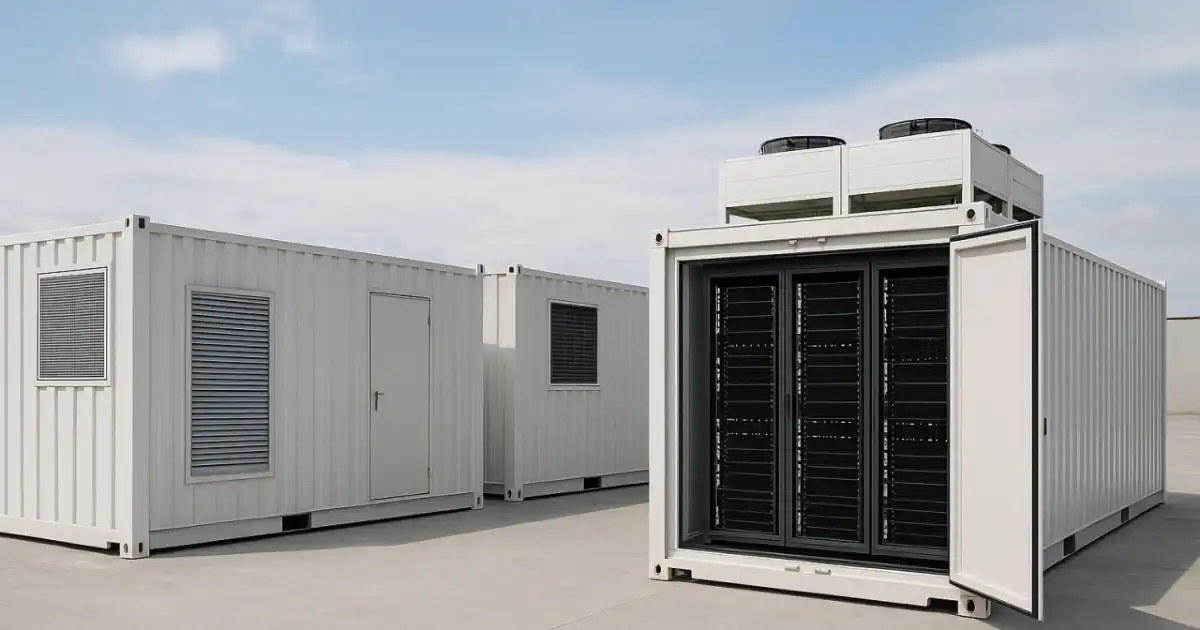
A micro data center in a factory
-
A rack inside a telecom central office
-
A modular container next to a retail store
-
A hardened enclosure at a cell tower
-
A regional hub serving a metro area
What makes it “edge” isn’t size. It’s placement.
Edge data centers sit between endpoints (users, devices, sensors) and centralized infrastructure. They handle workloads that need fast response times, local processing, or resilience when connectivity isn’t guaranteed.
Here’s how they actually work in real environments:
Data is generated locally cameras, machines, phones, vehicles, sensors. Instead of shipping everything back to a far-away cloud region, an edge data center processes the time-sensitive part locally. Only the results, summaries, or non-urgent data go upstream.
Think of edge as a filter and accelerator. It absorbs noise, handles immediacy, and reduces pressure on central systems.
What edge data centers are not:
-
They are not just “small clouds”
-
They are not replacements for hyperscale regions
-
They are not automatically cheaper or simpler
They exist because physics and economics force them to.
Edge Data Centers vs Traditional Data Centers
On paper, this comparison looks straightforward. In practice, it’s nuanced.
Traditional data centers (including cloud regions) are designed for scale, efficiency, and centralized management. Edge data centers are designed for proximity and responsiveness.
Here’s where the differences really show up:
Latency
Traditional data centers optimize compute speed. Edge data centers optimize distance. Even the fastest server is slow if it’s 2,000 kilometers away.
Bandwidth
Shipping raw data to a central location is expensive. Edge reduces bandwidth usage by processing locally and sending less upstream.
Reliability
If your WAN link drops, a central cloud app may stop functioning. An edge deployment can keep operating locally.
Consistency
Edge environments are rarely uniform. Traditional data centers thrive on standardization. Edge deals with variation in power, space, cooling, and connectivity.
Where the comparison breaks down is cost and complexity. Traditional data centers benefit from massive economies of scale. Edge deployments multiply locations, vendors, and failure points.
I’ve seen teams assume edge would be “lighter” than central infrastructure. It almost never is operationally. You trade centralized complexity for distributed complexity.
Edge doesn’t replace traditional data centers. It reshapes the boundary of where work happens.
Why Edge Data Centers Matter
Edge data centers matter because some problems cannot be solved centrally, no matter how much cloud capacity you throw at them.
Latency
Real-time systems don’t negotiate with physics. Autonomous control loops, industrial automation, AR/VR, live analytics these break down when round-trip latency crosses certain thresholds.
If a decision needs to happen in 10 milliseconds, a cloud region hundreds of miles away is a non-starter.
Bandwidth
Raw video streams, sensor feeds, telemetry sending all of it upstream is expensive and often unnecessary. Edge data centers preprocess, compress, filter, and discard data intelligently.
Reliability
Edge deployments keep critical systems running when connectivity degrades. I’ve seen manufacturing lines continue operating because edge systems handled control logic locally while cloud dashboards went dark.
Security and Data Locality
Sometimes data cannot leave a location due to regulatory, contractual, or safety reasons. Edge allows sensitive processing to remain local while still integrating with centralized systems.
The key point: edge matters when delay, disruption, or data movement creates real risk or cost not just inconvenience.
When Do Edge Data Centers Matter Most?
This is where hype and reality often diverge.
5G and Telecom
Yes, edge matters here but not for every application. Ultra-low-latency services, network slicing, and localized content benefit. Basic mobile apps usually don’t need it.
IoT and Industrial Systems
This is one of the strongest cases for edge. Sensors generate massive data volumes, and control decisions often need to happen immediately. Edge reduces latency and protects operations from network outages.
Autonomous and Semi-Autonomous Systems
Vehicles, drones, robotics anything that moves and reacts in real time benefits from local processing. Centralized compute is too slow and too unreliable for core control loops.
Content Delivery
CDNs are an early form of edge. Modern edge data centers take this further by running application logic, personalization, and analytics closer to users.
Smart Cities
Traffic control, surveillance, environmental monitoring edge makes sense when data is local, time-sensitive, and continuous. But many “smart city” projects fail because edge infrastructure is deployed without clear operational goals.
Where edge does not matter as much:
-
Internal business apps
-
Batch analytics
-
Most CRUD systems
-
Workloads tolerant of seconds (or minutes) of delay
If your system works fine with a cloud region today, edge is probably optional.
Core Components of an Edge Data Center
People imagine edge data centers as simplified. They’re not they’re compressed.
Inside, you typically find:
Compute
Often fewer servers, sometimes specialized (GPUs, AI accelerators). Resource constraints matter more.
Storage
Local storage for buffering, caching, and short-term retention. Long-term storage usually lives upstream.
Networking
This is critical and often overlooked. Edge networking must handle unreliable links, dynamic routing, and segmentation.
Power and Cooling
Edge sites rarely have luxury conditions. Limited power, inconsistent cooling, and physical constraints are common.
Remote Management
You cannot treat edge like a hands-on data center. Everything must be observable, updatable, and recoverable remotely.
The biggest oversight I see is underestimating operational tooling. Without solid monitoring, automation, and security controls, edge deployments become fragile fast.
Benefits of Edge Data Centers
When done right, edge data centers deliver:
-
Predictable low latency
-
Reduced bandwidth costs
-
Improved resilience
-
Better user experience in specific contexts
-
Compliance with data locality requirements
What they don’t automatically deliver:
-
Lower total cost
-
Simpler operations
-
Faster development
-
Universal performance improvements
Edge rewards discipline. Sloppy architecture at the edge scales pain, not value.
Challenges and Limitations
This is the part that gets glossed over.
Operational Complexity
One data center is hard. One hundred micro data centers are harder. Patching, monitoring, and incident response become distributed problems.
Security
Edge sites are physically exposed and network-diverse. Attack surfaces multiply. Zero-trust isn’t optional here.
Scaling
Edge doesn’t scale like cloud. You scale by deploying more locations, not just more instances.
Cost Predictability
CapEx, OpEx, maintenance, connectivity edge costs are lumpy and context-dependent.
I’ve seen edge deployments succeed brilliantly and I’ve seen them collapse under their own operational weight.
The Future of Edge Data Centers
Edge isn’t replacing cloud. It’s being absorbed into it.
We’re moving toward hybrid models where centralized cloud, regional hubs, and edge locations operate as a continuum. Tooling is improving. Orchestration is getting better. Abstractions are forming.
But edge will remain workload-specific. It won’t become the default. It will become invisible only noticed when latency disappears or systems keep running during outages.
That’s the future that actually makes sense.
You Might Be Interested In
- Physical Security For Data Centers: Threats + Controls
- Data Center Cooling Methods Compared
- Data Center Energy Efficiency Metrics Pue, Wue Explained
- How Data Centers Power The Internet Simple Guide?
- Data Center Networking Basics: Spine-leaf Explained
Conclusion
Edge data centers are not about being modern. They’re about being realistic.
If your workloads are time-sensitive, bandwidth-heavy, or operationally critical in disconnected environments, edge can be transformative.
If your applications are tolerant of delay, centralized, and already stable in the cloud, edge may add complexity without meaningful benefit.
The best edge deployments I’ve seen started with a clear problem, not a trendy architecture. They were small, intentional, and integrated not sprayed everywhere.
