

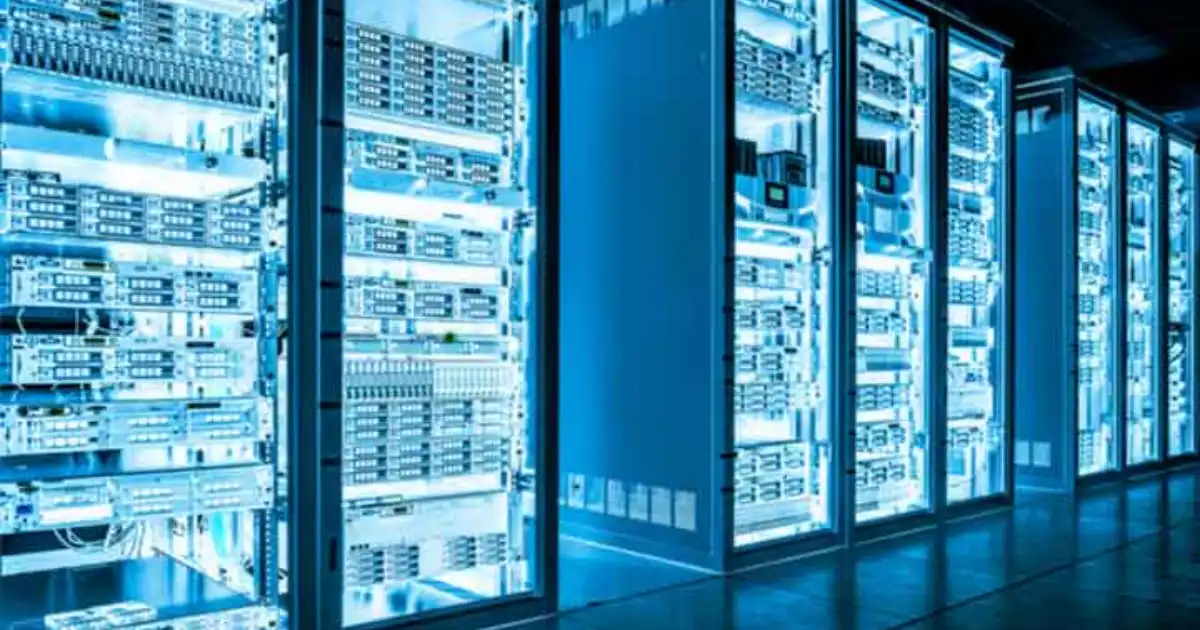
When you stream a video, check social media, or even send an email, there’s a massive, humming machine somewhere making it all happen: the data center. Most people think of the internet as “cloud magic,” but in reality, it’s very much grounded in racks of servers, blinking lights, and enormous cooling systems. How Data Centers Power The Internet Simple Guide?
I’ve spent hours walking through data halls, and let me tell you, it’s both awe-inspiring and terrifying — one wrong move can take a chunk of the internet offline. How Data Centers Power The Internet Simple Guide?
Data centers aren’t just giant server warehouses. They’re highly orchestrated ecosystems designed to handle unimaginable amounts of information every second. From powering Google searches to streaming Netflix in HD, they are the backbone of everything we do online.
In this guide, I’ll take you behind the walls, into the noisy hum of servers, the maze of cables, and the cooling tunnels, to show you exactly how data centers keep the internet running reliably, efficiently, and increasingly sustainably. You’ll get real-world insights into their components, power systems, networking, and even what the future holds.
What Is a Data Center?
A data center is basically a big, secure warehouse for servers but that description only scratches the surface. It’s a purpose-built facility designed to store, process, and distribute data at scale. The servers inside are the engines, but they can’t work alone. You need networking gear, power systems, cooling, and physical security, all running like a well-oiled machine.
Most people picture a room full of blinking servers, which is accurate, but in practice, a modern data center is more like a mini-city. There are aisles of racks, cable trenches under the floor, raised ceilings for airflow, and strict zones you can’t enter without badges and security clearance. I’ve seen companies spend millions just on redundant cooling systems not because it’s flashy, but because if a server overheats, the effects ripple through thousands of users instantly.
Data centers also vary in size and purpose. Some are massive “hyperscale” centers run by tech giants like Amazon or Google, capable of powering entire cloud infrastructures. Others are smaller “edge” centers placed closer to users to reduce latency. Whether big or small, all data centers share a common goal: process and deliver data reliably, 24/7, no excuses.
Why Data Centers Are the Backbone of the Internet?
You’ve probably heard the term “backbone of the internet,” but what does that really mean? Think of data centers as the control hubs of a city. Every time you send a message, stream a movie, or shop online, packets of data are routed through multiple servers, storage systems, and network switches housed in these facilities. Without them, the internet as we know it wouldn’t exist.
I’ve seen outages firsthand a single cooling system failure can knock multiple services offline in seconds if redundancies aren’t properly configured. That’s why uptime is the holy grail in data center operations. They run nonstop, around the clock, because the internet never sleeps.
What most people underestimate is the complexity behind the scenes. Load balancing, backup systems, disaster recovery, and network optimization all work silently. Data centers don’t just store information; they orchestrate it, moving it efficiently across the globe. From cloud infrastructure powering business apps to social media servers delivering your feed, they’re the invisible engines making it all seamless.
In short, data centers aren’t just physical spaces they’re critical infrastructure. Without them, streaming, online gaming, e-commerce, and even emergency communications would grind to a halt. They are the literal and figurative backbone of our connected world.
Inside a Data Center: Key Components
Walking into a data center for the first time can be overwhelming. The first thing you notice is the sound: a constant hum of fans, servers, and air conditioning.
Then the aisles of racks sometimes hundreds of feet long each stacked with servers, storage units, and networking gear. Here’s what you’ll find inside and why each part matters:
Servers
These are the workhorses. They process requests, store files, and run applications. A modern server is a powerful computer, but unlike your laptop, they’re optimized for speed, redundancy, and continuous operation. Most servers are stacked in racks, with hot and cold aisles to manage airflow efficiently.
Storage Systems
Data is useless if you can’t store it reliably. Data centers use a mix of SSDs and traditional hard drives, often in redundant arrays (RAID) to prevent data loss. Think of this as your library, but one that can serve millions of people at once without a single missing book.
Networking Gear
Routers, switches, and firewalls make sure data gets to the right place. I’ve spent hours tracing network cables, which often run under raised floors or above ceilings, connecting thousands of servers without a tangle. Fiber optic lines carry the bulk of traffic, while smaller copper lines handle local connections.
Cooling & Environmental Systems
Heat is the enemy. Servers generate enormous amounts of heat, and without efficient cooling, performance tanks and hardware fails. Data centers use everything from chilled water systems to hot/cold aisle containment, sometimes even liquid cooling directly to CPUs. I’ve personally seen liquid-cooled racks keep hyperscale servers running in a room that would fry a laptop in minutes.
Physical Security
You’ll need badges, biometrics, and cameras just to get in. Data centers are high-value targets, and real-world incidents show that even a minor breach can have massive consequences. Security isn’t just about locking doors it’s about continuous monitoring, threat detection, and strict operational protocols.
Power Systems
Servers demand a lot of electricity, and even a few seconds of downtime can be catastrophic. That’s why data centers have massive UPS systems, diesel generators, and redundant feeds from the grid. In practice, this means that even if the local power goes out, the data center keeps humming along.
Every component works together. Skip or underinvest in one area, and the whole system suffers. In real-world operations, the best data centers are the ones that make this complexity look simple seamless uptime is the goal, and achieving it takes serious planning.
Power & Redundancy Keeping the Internet Always On
Power is the lifeblood of a data center. I’ve been inside facilities where a single UPS battery bank feeds tens of thousands of servers. But here’s the catch: power is never a single line in the real world. Redundancy is king.
Most data centers operate on an N+1 or 2N system. That’s geek speak for “we have extra everything generators, transformers, UPS systems so if one fails, the others take over without interruption.” I’ve seen a main grid failure trigger backup generators within seconds, and users didn’t notice a thing.
Fuel logistics also matter. Generators need diesel, natural gas, or other power sources on-site, ready to run for days if needed. And it’s not just electricity cooling, networking, and storage all need redundancy. Without it, the internet isn’t just slow; it stops.
Power planning in practice is messy. You need to account for fluctuating demand, maintenance schedules, and even extreme weather. That’s why the most reliable data centers often feel over-engineered because over-engineering is what keeps your apps online while a storm knocks out the local grid.
How Data Travels: Connectivity & Networking
Data is only as fast as the network it travels on. Inside a data center, thousands of servers are connected via high-speed switches, which handle the routing of packets in microseconds. But the real trick is connecting the data center to the outside world. Fiber optic lines carry vast amounts of information across cities, countries, and oceans.
I’ve crawled under raised floors tracing fiber bundles thicker than my arm, and it’s staggering how much thought goes into routing. Latency matters. Edge computing centers exist to reduce the distance between users and servers, so your gaming session or Zoom call doesn’t feel like molasses.
Redundancy is again key. Multiple carriers, diverse fiber paths, and load-balancing systems ensure that if one route fails, data finds another. Think of it like city traffic: even if a highway closes, traffic keeps flowing via alternative routes. In practice, this is where network engineers shine constantly monitoring congestion, rerouting traffic, and keeping things seamless for end users.
Without this meticulous connectivity, even the best servers are useless. Data centers are the intersection points where raw computing power meets the internet highways, and keeping that intersection smooth is what makes online life feel instant.
Efficiency & Sustainability
Data centers are power-hungry. A hyperscale facility can consume as much electricity as a small city. That’s why efficiency is a big deal. Techniques like free-air cooling, liquid cooling, and AI-driven energy management reduce costs and environmental impact.
I’ve walked through “green” data centers where recycled water cools servers, and solar panels offset some of the massive energy draw. Sustainable data centers aren’t just marketing fluff they’re increasingly required to meet regulations and customer expectations.
Even small improvements in efficiency better airflow, optimized server utilization, or smarter backup systems translate into huge savings and a smaller carbon footprint. In practice, balancing uptime, performance, and sustainability is a constant juggling act, but one that every modern facility must master.
Future of Data Centers
The future is edge and AI-driven. More computation is moving closer to users, reducing latency and bandwidth costs. I’ve seen edge centers the size of shipping containers deployed near cities, handling local traffic for 5G and IoT devices.
AI is also transforming operations. Predictive maintenance, dynamic cooling, and automated load balancing are making data centers smarter and more efficient than ever. Hyperscale facilities will continue to grow, but sustainability and decentralization will shape the next decade.
In short, data centers will stay invisible but essential like electricity in the walls, quietly powering our digital lives while evolving to meet tomorrow’s demands.
You Might Be Interested In
- Data Center Cooling Methods Compared
- Green Data Centers: Practical Sustainability Checklist
- Data Center Compliance: Soc 2 Vs Iso 27001
- Data Center Energy Efficiency Metrics Pue, Wue Explained
- Edge Data Centers Explained And When They Matter?
Conclusion
Data centers are far more than server warehouses. They are complex, high-stakes ecosystems powering every click, stream, and message we send. From robust power systems to sophisticated networking and efficient cooling, every component works together to keep the internet alive 24/7.
I’ve walked the aisles, heard the hum of thousands of servers, and seen firsthand the planning, redundancy, and precision it takes to keep services online. The next time you stream a video or send an email, remember: it didn’t just happen magically. It traveled through a carefully orchestrated network of machines, systems, and humans dedicated to keeping the digital world moving.
FAQs about How Data Centers Power The Internet Simple Guide?
How do data centers stay online during power outages?
Data centers are designed to expect the unexpected, and power outages are one of the biggest threats. They rely on multiple layers of redundancy, including uninterruptible power supplies (UPS) and backup generators. The UPS can provide instant power for seconds to minutes, giving the generators time to kick in, while redundant feeds from the grid ensure there’s always another source ready if one fails.
In practice, this means that even during a blackout, users rarely notice anything. I’ve been in data centers when the grid went down completely, and the facility continued humming along as if nothing happened. Engineers monitor power systems constantly, and switching between sources is almost instantaneous, which is why “downtime” in a modern facility is extremely rare.
Why do data centers get so hot?
Servers produce a surprising amount of heat, especially when you have thousands running 24/7. Each server generates heat from CPUs, memory, and storage drives, and in a dense rack, this quickly adds up. Without proper cooling, hardware performance drops, components fail, and the risk of outages skyrockets.
That’s why data centers use advanced cooling systems, ranging from traditional air conditioning to chilled water loops and even liquid cooling directly to CPUs. I’ve seen racks where liquid cooling pumps run continuously, keeping machines at a steady 20–25°C even in a room that would otherwise be unbearably hot. Hot and cold aisle containment and careful airflow management are also crucial it’s not just about cranking the AC, but directing the air precisely where it’s needed.
What is edge computing, and why is it important?
Edge computing is essentially moving some of the computing closer to the end users, rather than sending all traffic to a massive, centralized data center. This reduces latency and speeds up processing for applications that demand near-instant responses, like online gaming, IoT devices, and autonomous vehicles.
I’ve seen edge data centers the size of shipping containers deployed near urban hubs, handling local traffic for 5G networks. Even though they’re small compared to hyperscale facilities, they dramatically improve performance. The closer the servers are to users, the less distance data has to travel, which not only reduces lag but also eases pressure on global network backbones. In real-world terms, edge computing makes online experiences smoother and more reliable, especially during peak traffic.
Are data centers environmentally friendly?
Historically, data centers were energy monsters, consuming electricity like a small city. But the industry is changing rapidly. Modern sustainable data centers incorporate energy-efficient cooling, renewable power sources like solar or wind, and AI-driven systems to optimize server and cooling loads dynamically. These measures significantly cut energy use while maintaining high performance.
In practice, sustainability isn’t just a buzzword; it’s a competitive advantage. Companies are increasingly choosing providers with lower carbon footprints. I’ve walked through facilities where recycled water cools entire server halls and where solar arrays offset a meaningful portion of energy consumption. While data centers still use a lot of power, intelligent design and operational improvements make them far greener than most people realize.
Can a data center fail completely?
While it’s theoretically possible for a data center to fail, modern facilities are built with multiple layers of redundancy to make this extremely unlikely. Most critical centers operate on N+1 or 2N systems, meaning every essential component power, cooling, networking has at least one backup ready to take over instantly.
In reality, failures tend to be partial, affecting a single rack, room, or service rather than the entire facility. I’ve seen cases where a generator failed or a cooling loop went offline, but the automated systems rerouted workloads and kept user services running without interruption. Complete shutdowns are usually the result of catastrophic events, and even then, disaster recovery plans kick in to minimize downtime. The key takeaway is that data centers are built for resilience they rarely fail completely, and even when problems arise, the impact is often invisible to end users.
