

In today’s hyper-connected world, every message you send, video you stream, or search query you type is made possible by a complex yet invisible network of infrastructure. At the core of this ecosystem are facilities designed to store, manage, and deliver digital information at lightning speed.
These are known as data centers, and they have become the backbone of the internet. Without them, online businesses, social media, e-commerce platforms, and even government operations would come to a grinding halt.
The phrase data centers power the internet is more than just a technical statement—it’s a reality that affects nearly every aspect of modern life. From the rise of cloud computing to the delivery of AI-driven applications, data centers ensure that information flows securely, reliably, and efficiently.
As technology evolves, the role of these digital warehouses continues to expand, shaping the way humans connect, work, and interact.
This guide explores how data centers function, why they are essential, and how they support the modern internet. We will break down the architecture, operations, and global impact of data centers, offering a detailed yet easy-to-understand look into one of the most vital parts of our digital age.
What Are Data Centers?
A data center is a specialized facility designed to house computing systems, networking equipment, and storage infrastructure. Its primary purpose is to process, store, and distribute data to users across the globe. Think of it as the beating heart of the internet—a centralized location where critical information is managed and transmitted.
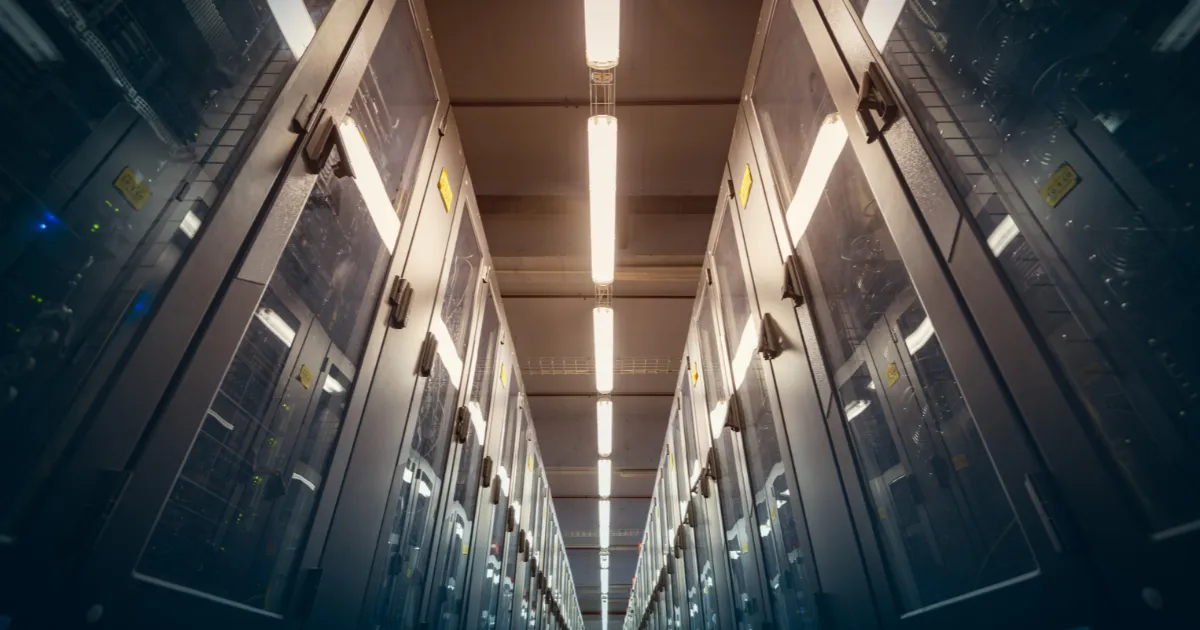
Inside a data center, rows of servers operate around the clock, handling billions of requests every second. These servers are supported by cooling systems, backup power supplies, fire protection, and advanced security protocols to keep them running smoothly. Data centers come in many sizes, ranging from small on-premises setups for businesses to massive hyperscale facilities owned by companies like Amazon Web Services, Google, and Microsoft.
The reason data centers power the internet so effectively is because of their ability to combine physical infrastructure with advanced software systems. They make it possible to deliver real-time services, such as video calls, online gaming, financial transactions, and more, without noticeable delays.
The Evolution of Data Centers
The journey of data centers started with mainframe computers in the mid-20th century. Early organizations required large rooms filled with specialized machines to handle computing tasks. These setups eventually evolved into centralized facilities that could serve multiple applications.
With the advent of the internet in the 1990s, the demand for dedicated hosting services skyrocketed. Businesses needed servers to store websites and applications, leading to the first generation of commercial data centers. Over time, as broadband expanded and smartphones became ubiquitous, the role of data centers grew exponentially.
Today, hyperscale data centers dominate the industry. Built to support millions of virtual machines, these facilities occupy hundreds of thousands of square feet. Their capacity is what allows cloud platforms like AWS, Microsoft Azure, and Google Cloud to deliver services worldwide. This evolution highlights how data centers power not just basic internet functions, but also emerging technologies like artificial intelligence, blockchain, and virtual reality.
The Core Components of Data Centers
To understand how data centers power the internet, it’s essential to examine their core components:
Servers
Servers are the workhorses of a data center. They handle requests, run applications, and process information. Each server can support hundreds of virtual environments, making them highly efficient.
Networking Equipment
Routers, switches, and firewalls enable smooth communication between servers, users, and other data centers. Without robust networking, information would never reach its destination.
Storage Systems
Data needs a safe place to reside. Storage systems within data centers ensure files, videos, and databases are available whenever users need them.
Power Supply
Uninterrupted power is critical. Data centers rely on redundant systems, including backup generators and uninterruptible power supplies (UPS), to prevent outages.
Cooling Systems
Servers generate significant heat. Cooling infrastructure, such as air conditioning and liquid cooling, keeps equipment at optimal temperatures.
Security Infrastructure
Physical and digital security protect sensitive data. Biometric access controls, video surveillance, and encryption safeguard both the facility and its contents.
Each of these components works in harmony, ensuring that data centers power the internet with unmatched reliability and speed.
Why Data Centers Are the Backbone of the Internet
Data centers ensure that digital services remain accessible at all times. Every time you stream Netflix, upload photos, or make an online payment, the information travels through a data center. Their reliability is what keeps businesses and individuals connected in a seamless digital ecosystem.
Additionally, data centers help ensure redundancy. If one server fails, another instantly takes its place. This resilience is why global giants like Google and Facebook can operate continuously without downtime. In essence, data centers power the backbone of online operations by offering stability, performance, and scalability.
How Data Centers Support Cloud Computing
Cloud computing has transformed how businesses and individuals interact with technology. Instead of relying on local machines, users now access services, applications, and storage through the internet. This shift wouldn’t be possible without data centers.
Cloud providers run massive data centers worldwide, enabling customers to scale operations instantly. For example, a startup can launch an app in the United States and serve users in Asia without owning a single server. This global reach is a direct result of how data centers power the cloud ecosystem.
Moreover, advanced virtualization and containerization technologies within data centers allow for efficient resource use. Customers can pay only for what they consume, making technology accessible and affordable.
Data Centers and Artificial Intelligence
Artificial intelligence requires massive computing power. Training models like ChatGPT or image recognition systems involves processing trillions of data points. Traditional servers alone cannot handle these demands.
This is where modern data centers step in. Equipped with GPUs (graphics processing units) and TPUs (tensor processing units), they provide the high-performance computing environment necessary for AI development. Companies like OpenAI and DeepMind rely on data centers to train, deploy, and scale their models.
Thus, data centers power the AI revolution, enabling innovations in healthcare, autonomous vehicles, and natural language processing. Without them, breakthroughs in machine learning would remain limited to theoretical research.
The Role of Data Centers in Streaming Services
Entertainment has moved online, with platforms like YouTube, Netflix, and Spotify dominating global consumption. Streaming high-definition video or music requires instant access to large volumes of data.
Data centers make this possible by hosting content close to users. Content delivery networks (CDNs) replicate and cache data across multiple facilities, reducing latency. This ensures users experience smooth playback, even during peak hours.
In this way, data centers power the entertainment industry by bringing movies, shows, and music to billions of devices simultaneously.
Data Centers and E-Commerce
Online shopping has revolutionized the retail industry. Platforms like Amazon, eBay, and Shopify depend on data centers to keep their marketplaces active. Every product search, payment, and shipping update involves multiple data transfers.
Data centers handle these processes securely, ensuring transactions remain encrypted and reliable. During peak shopping seasons like Black Friday, data centers manage unprecedented traffic surges without slowing down.
By enabling scalability and real-time processing, data centers power the global e-commerce economy.
The Environmental Impact of Data Centers
While data centers are critical, they consume vast amounts of energy. The electricity required to run servers and cooling systems contributes significantly to global power consumption.
Many companies are addressing this challenge by shifting to renewable energy. Google, Amazon, and Microsoft have invested in wind and solar farms to offset their carbon footprint. Advanced cooling techniques, such as liquid immersion cooling, also reduce energy use.
As sustainability becomes a global priority, the way data centers power the internet is shifting toward greener, more efficient practices.
The Future of Data Centers
The future of data centers lies in innovation and expansion. Edge computing is emerging as a major trend, bringing processing power closer to users. This reduces latency and improves applications like autonomous driving and augmented reality.
Quantum computing is another frontier. When combined with data center infrastructure, it could revolutionize problem-solving in fields such as cryptography and drug discovery.
Ultimately, the demand for faster, more reliable internet will continue to grow. To meet this challenge, data centers power will evolve with smarter, more sustainable, and more globally distributed designs.
You Might Be Interested In
- HUMAIN’s Role in Saudi Arabia’s Tech Economy
- Why Ai-driven Citizen Engagement Platforms Help?
- AI Tools for Early Disease Diagnosis and Detection
- What Are the Different Cloud Service Models?
- How AI Creates Adaptive Learning Environments?
Conclusion
The internet is often viewed as an abstract, limitless resource, but behind every click lies a physical foundation. That foundation is the data center. By combining advanced servers, networking, and security systems, these facilities form the lifeblood of our digital world.
The way data centers power the internet goes far beyond simple storage. They fuel innovations in cloud computing, artificial intelligence, e-commerce, and entertainment. They ensure reliability, speed, and scalability in a world where downtime can mean millions in lost revenue.
As the digital age advances, the importance of data centers will only grow. Emerging technologies like quantum computing, edge infrastructure, and renewable energy integration will shape the future. For now, we can appreciate that every video streamed, every online purchase, and every AI tool we use is possible because data centers power the modern internet.
FAQs
What is the main purpose of a data center?
The main purpose of a data center is to serve as a centralized hub where digital information is stored, managed, and distributed. Every website you visit, email you send, or video you stream passes through a data center at some point. These facilities are designed to handle enormous volumes of data while ensuring reliability, speed, and security for users around the globe.
Beyond simply storing files, data centers also provide the infrastructure that allows businesses, governments, and individuals to run applications, host databases, and maintain continuous connectivity. In other words, they act as the foundation for nearly every online service we use today. Without them, the modern internet as we know it would not exist.
How do data centers power the internet?
Data centers power the internet by housing the servers, networking equipment, and storage systems that make digital communication possible. When you access a website or use a cloud service, your request is routed to a server within a data center.
That server processes the request and delivers the information back to your device within milliseconds. This seamless interaction creates the impression of instant connectivity.
Additionally, data centers operate globally, with facilities strategically located to reduce latency and improve performance. They run 24/7 with backup systems to prevent downtime, ensuring users always have access to digital services. Their ability to balance millions of requests at once is a key reason why the internet can support billions of users simultaneously.
Why are data centers important for cloud computing?
Cloud computing relies entirely on the existence of large-scale data centers. When you use services like Google Drive, Microsoft Azure, or Amazon Web Services, your data and applications are not stored on your personal device but within these powerful facilities. Data centers provide the infrastructure that allows users to scale resources up or down based on demand, giving businesses unprecedented flexibility.
Furthermore, data centers enable cloud providers to replicate services across multiple locations worldwide. This global distribution ensures that users experience fast, reliable access to cloud-based tools no matter where they are located.
Without the computing power of data centers, the cloud would simply not be able to function on the scale required to support today’s businesses, apps, and global communication.
What industries rely most on data centers?
While almost every industry depends on data centers in some capacity, some sectors are especially reliant on them. The financial industry, for example, uses data centers to process millions of transactions securely and in real time.
Healthcare providers store patient records, run medical imaging software, and even support telemedicine using data center infrastructure. E-commerce platforms rely on them to ensure that millions of customers can browse, order, and pay without delays.
Entertainment and streaming services also lean heavily on data centers. Platforms like Netflix and Spotify require enormous computing and storage power to deliver smooth playback to millions of users at once.
Similarly, emerging industries such as artificial intelligence and autonomous vehicles need high-performance computing resources from data centers to develop and deploy advanced technologies. In essence, any modern sector that uses digital tools depends on these facilities to remain operational and competitive.
Are data centers sustainable?
Sustainability has become a major focus in the data center industry because these facilities consume massive amounts of energy. Traditional data centers often required vast cooling systems, which increased their carbon footprint.
However, many companies are now adopting renewable energy sources like wind, solar, and hydroelectric power to reduce environmental impact. Some hyperscale providers, including Google and Microsoft, have pledged to operate their data centers on 100% renewable energy.
Innovations in cooling and energy efficiency are also making a difference. Technologies such as liquid cooling, AI-driven energy management, and modular design are helping reduce waste while maximizing performance. Although challenges remain, the industry is moving toward greener solutions.
This shift ensures that as data centers power the modern internet, they also contribute to a more sustainable digital future.
