

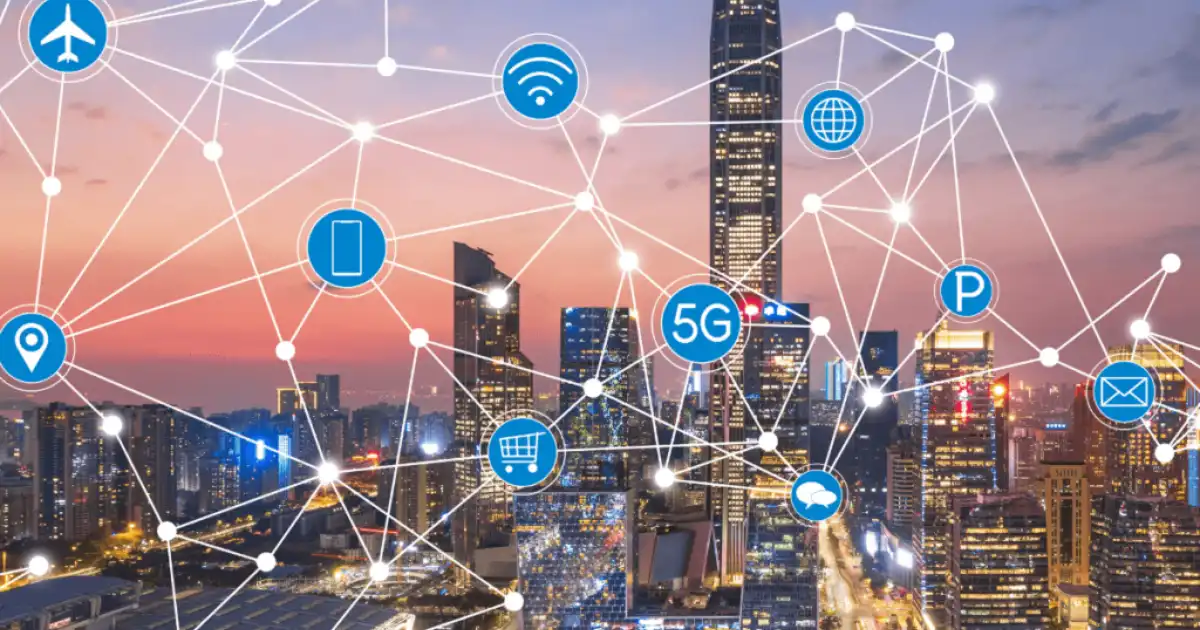
Cities are growing faster than ever, and with that growth comes stress on resources energy grids, water supply, traffic systems, waste management, and public safety. In my experience, traditional management methods struggle to keep up.
Traffic jams aren’t just annoying; they cost cities millions in lost productivity. Leaks in water pipes can go undetected for months, and energy consumption spikes unpredictably. That’s where smart city technology, powered by IoT and AI, steps in. How Iot And Ai Manage Smart City Resources?
IoT in smart cities provides the “sensors and eyes” devices that track temperature, traffic flow, water pressure, energy usage, and more in real time. AI in smart cities acts as the “brain” analyzing this torrent of data to make decisions, predict issues, and even automate responses. But it’s not magic.
From my hands-on work, deploying these systems involves constant calibration, edge-case problem solving, and a fair share of trial and error. The payoff? Cities that use resources more efficiently, respond faster to problems, and ultimately improve residents’ quality of life.
IoT and AI
When people talk about IoT and AI, they often stick to definitions: IoT connects devices, AI analyzes data. In practice, it’s messier, more nuanced, and much more fascinating.
IoT in smart cities is everywhere sensors in streetlights, water meters, parking spaces, even garbage bins. I’ve seen smart trash bins that notify the waste management system only when they’re full. That sounds simple, but installing hundreds of these sensors and keeping them powered and connected is a logistical headache. Batteries fail, signals drop, and calibration drifts over time.
AI in smart cities isn’t just a fancy algorithm sitting in a server room. It’s the system that predicts traffic congestion before it happens, suggests when to open or close water valves, or determines which neighborhoods need extra street lighting tonight. In practice, AI often works on historical patterns and real-time sensor feeds. I’ve worked on projects where AI misread a sudden storm as a traffic spike, showing that while AI can anticipate trends, it sometimes struggles with anomalies.
The magic happens when IoT feeds real-time data into AI models. Without reliable IoT data, AI is blind. Without AI, IoT is just a lot of blinking devices. Together, they form a feedback loop: sensors detect, AI predicts, systems adjust, sensors detect again rinse and repeat.
How IoT and AI Work Together
The synergy between IoT and AI is what turns a city from “smart-ish” to truly resource-efficient. IoT devices collect data constantly: how much electricity a neighborhood uses, how full a reservoir is, or which roads are congested. AI takes that data and finds patterns humans might miss. In one traffic project I was involved in, AI analyzed sensor feeds from hundreds of intersections and adjusted traffic lights in real-time to prevent gridlock.
But the system isn’t perfect. IoT sensors fail, data gets noisy, and AI predictions can be thrown off by unusual events a marathon, sudden downpour, or even a city-wide festival. A lesson I’ve learned: never trust AI blindly. Human oversight and periodic recalibration are essential.
Ultimately, IoT gives AI eyes, ears, and hands, and AI gives IoT purpose and intelligence. Together, they allow cities to manage resources dynamically instead of reacting after the fact.
Key Areas of Smart City Resource Management
Energy Management
IoT sensors monitor electricity consumption across neighborhoods, public buildings, and streetlights. AI can then predict peak demand periods and dynamically adjust supply. I’ve seen cities that dim streetlights slightly during low-traffic hours, cutting energy costs by 20% small adjustments, big savings.
But there’s a catch: residents often notice dimming and complain, requiring a balance between efficiency and human comfort. Another common pitfall: sensors installed poorly give inaccurate data, leading AI to make the wrong adjustments.
Water Management
Leaks in water pipes cost millions annually. Smart water meters and pressure sensors feed data to AI systems that detect anomalies in real-time. In one project, we found a mainline leak that had been wasting thousands of liters daily sensors flagged unusual flow, AI predicted the problem, and maintenance was dispatched before a major failure. The challenge? Sensor maintenance in older, underground pipelines is tricky. Dust, corrosion, and even rodents can knock sensors offline.
Waste Management
IoT-enabled smart bins tell waste management systems when they’re full. AI then optimizes collection routes. I’ve been on the ground watching garbage trucks bypass empty bins because the system predicted fullness incorrectly. This happens when AI doesn’t account for sudden spikes like after a festival or public holiday. The lesson: AI systems must learn seasonal and event-based patterns, not just daily averages.
Traffic Management
Arguably the most visible use of IoT and AI. Cameras, road sensors, and GPS data feed AI traffic management systems that control signal timing, suggest reroutes, and even manage public transport schedules. In practice, I’ve seen AI reduce congestion on major arteries during rush hours, but accidents, construction, and human error still cause unpredictable jams. A city can’t run entirely on automation flexibility is key.
Public Safety
IoT devices like connected cameras, emergency sensors, and gunshot detectors feed AI that monitors city safety. AI can detect unusual activity, alert law enforcement, and even prioritize patrol routes. I’ve worked on systems where AI flagged an abandoned vehicle near a school at night, prompting a quick human check. Pitfalls include false positives, privacy concerns, and over-reliance on AI: nothing replaces trained human judgment entirely.
Environmental Monitoring
Air quality sensors, noise detectors, and weather stations feed AI that predicts pollution spikes and suggests interventions. In practice, AI might adjust traffic flow or trigger alerts to citizens. One challenge I saw: sensors exposed to harsh urban conditions gave fluctuating readings, making predictions unreliable until calibration and redundancy were added.
Across all these areas, the recurring theme is the gap between theory and reality. Sensors fail, data is messy, AI makes mistakes, and humans still need to make judgment calls. The systems work best when designed with redundancy, regular calibration, and an understanding that the city is dynamic, not deterministic.
Benefits of IoT and AI
In practice, IoT and AI make city resource management faster, more precise, and proactive. Energy grids balance loads automatically, water leaks get fixed before becoming disasters, traffic flows more smoothly, and emergency response is faster. From my experience, the biggest wins are in real-time monitoring and predictive analytics. Cities can spot problems before they escalate and that saves both money and public frustration.
That said, benefits are not uniform. A perfectly smart city is a myth; there will always be blind spots, unpredictable events, and sensor failures. However, the combination of IoT and AI shifts the city from reactive to proactive management. Even incremental improvements like AI-assisted route optimization for garbage trucks can save millions over time.
The real-world takeaway: smart city technology is most effective when it complements human operators, not replaces them. The moment city managers rely solely on algorithms, small errors can cascade into big problems.
Challenges and Considerations
Deploying IoT AI applications is rarely straightforward. Sensor placement, network reliability, and environmental factors often trip up projects. In one water management initiative, sensors installed too close to industrial discharge points gave wildly inaccurate readings, skewing AI predictions.
Data privacy and cybersecurity are huge considerations. IoT devices can be hacked, and AI models can inadvertently expose sensitive patterns like where people live or commute. Maintenance costs are also underestimated. Batteries die, connections fail, and AI models drift if not regularly retrained.
Another practical pitfall: AI often struggles with anomalies. A sudden flood, festival, or protest can confuse predictions, meaning systems need human oversight. Finally, integrating systems across city departments is a bureaucratic challenge. Energy, water, traffic, and safety often operate in silos. The technology can be brilliant, but without coordination, the benefits are diluted.
Real-World Examples
In Barcelona, IoT-enabled streetlights adjust based on pedestrian presence and ambient light, reducing energy costs significantly. AI predicts peak water usage, helping prevent shortages during heatwaves.
In Singapore, AI and IoT traffic management systems constantly optimize intersections using real-time GPS data. During my visit, I observed AI rerouting buses dynamically to avoid congestion it wasn’t perfect, but it prevented gridlock in critical areas.
Waste management in Seoul relies on smart bins and AI-driven collection routes, cutting fuel costs and ensuring cleaner streets. On the flip side, I’ve seen a smaller city in Europe struggle because sensor maintenance lagged AI predictions were off, routes were inefficient, and residents complained.
The key insight: successful deployments combine technology with on-the-ground understanding, human oversight, and regular system tuning.
You Might Be Interested In
Conclusion
IoT and AI are transforming smart city resource management, but real-world deployment is a mix of brilliance and chaos. Sensors feed AI, AI optimizes resources, and humans provide the checks and context. The results more efficient energy use, faster emergency response, better traffic flow, and proactive maintenance are tangible, measurable, and impactful.
The future will see more integrated, self-correcting systems, but cities must embrace incremental improvements and realistic expectations. Smart city technology isn’t a silver bullet; it’s a tool to augment human decision-making. Done right, it can make urban life more efficient, sustainable, and livable. Done poorly, it can create blind spots, inefficiencies, and frustrated citizens. From my hands-on experience, success lies in understanding the messy realities behind the glossy concept of a “smart city.
FAQs about How Iot And Ai Manage Smart City Resources?
How do IoT and AI actually save city resources?
IoT devices provide a constant stream of real-time data on everything from energy usage and water flow to traffic patterns and waste levels. AI takes this data and looks for inefficiencies or anomalies that humans would miss. For instance, in energy management, AI can detect unusual spikes in consumption and adjust streetlight intensity or redistribute loads across the grid before the system becomes overloaded.
In water management, AI can predict potential pipe bursts or leaks and alert maintenance teams before damage escalates. The savings come not only from automating tasks but from preventing costly problems, reducing waste, and optimizing resource distribution across the city.
In my experience, even small adjustments like slightly dimming streetlights during low-traffic hours or rerouting garbage trucks based on smart bin data can yield significant operational and financial benefits over time.
Are these systems fully autonomous?
Not at all. While AI can make decisions faster than humans, it isn’t foolproof and still relies heavily on human supervision. I’ve worked on traffic management projects where AI rerouted buses and controlled signal timing effectively, but a sudden parade or heavy rainstorm completely confused the system. Without human oversight, the city would have faced major congestion.
Think of AI as a highly skilled assistant: it can handle the routine and predictable tasks, anticipate problems based on historical data, and alert humans to issues. The real-world best practice is a hybrid approach where AI handles optimization and prediction, but humans validate critical decisions and manage anomalies that algorithms aren’t equipped to handle.
What are common pitfalls?
Deploying IoT and AI in cities is full of practical challenges. Sensors can fail due to environmental conditions, network issues can drop critical data, and AI predictions can be skewed if it receives inaccurate or incomplete information.
I’ve seen water pressure sensors buried underground give wildly fluctuating readings, leading AI to incorrectly signal a leak where none existed. Integration is another hurdle — energy, water, traffic, and public safety systems often operate in silos, making it hard for AI to have a holistic view of the city.
Maintenance, recalibration, and cross-departmental coordination are absolutely essential; neglect any of these, and the system underperforms or even produces counterproductive outcomes.
Do these technologies violate privacy?
They can, if not designed thoughtfully. Cameras, GPS trackers, and utility meters collect highly detailed data about people’s daily activities, and without anonymization, it could expose sensitive information like where residents live, work, or travel. In one project I observed, the city had to completely redesign its AI algorithms to ensure no individual could be identified while still maintaining the utility of the system.
Cybersecurity is equally critical: a compromised sensor or AI system can be exploited to manipulate traffic, waste collection, or energy distribution. Proper safeguards, data anonymization, and strict access controls are non-negotiable if cities want to implement these systems responsibly.
Can smaller cities implement these solutions?
Absolutely, but the approach needs to be scaled and focused. Smaller cities often don’t have the budget or infrastructure for city-wide sensor networks, so it’s smarter to start with high-impact areas like traffic intersections, waste collection routes, or public lighting. In my experience, implementing IoT and AI incrementally allows city staff to understand the technology, handle maintenance, and refine AI predictions before expanding.
A small city can still see dramatic improvements in efficiency and cost savings by starting with one or two resource areas, learning from real-world issues like sensor downtime or AI mispredictions, and then scaling gradually. This stepwise deployment also helps residents adapt to changes and builds trust in the technology.
