

Most people hear “strengths and weaknesses analysis” in a classroom, workshop, or corporate meeting and it sounds simple. List what you’re good at. List what you’re bad at. Done.
In reality? It’s rarely that clean.
I’ve used strengths and weaknesses analysis in hiring decisions, project planning, business strategy sessions, and even personal career pivots. When it’s done properly, it’s one of the most powerful tools in strategic planning. When it’s done poorly, it becomes a self-congratulatory exercise that leads nowhere.
This isn’t about filling out a template. It’s about understanding your internal factors honestly without ego, without panic, and without wishful thinking.
Let’s break down what this analysis really is, how it fits into business SWOT and personal SWOT, and how to use it in a way that actually changes outcomes.
What Is a Strengths and Weaknesses Analysis?
At its core, a strengths and weaknesses analysis is a structured way to evaluate your internal reality.
That word internal matters.
Strengths and weaknesses are things you control. Skills. Resources. Capabilities. Systems. Habits. Team culture. Technical know-how. Brand reputation. Execution speed. These are internal factors.
In a business SWOT context, strengths examples might include:
-
A loyal customer base
-
Strong cash flow
-
A highly skilled engineering team
-
Efficient operations
Weaknesses examples might include:
-
Poor customer service systems
-
Heavy dependence on one client
-
Weak marketing capability
-
High employee turnover
For individuals, personal SWOT often reveals different patterns:
Strengths:
-
Clear communication
-
Strong analytical thinking
-
Consistency under pressure
Weaknesses:
-
Avoiding difficult conversations
-
Poor time management
-
Overcommitting
The key thing I’ve learned: strengths and weaknesses are not moral judgments. They are performance realities.
Being “bad at sales” doesn’t make you a bad person. It just means you shouldn’t build a business model that depends entirely on cold outreach if you refuse to improve that skill.
Strengths and weaknesses analysis is about clarity, not ego protection.
How It Fits Into SWOT
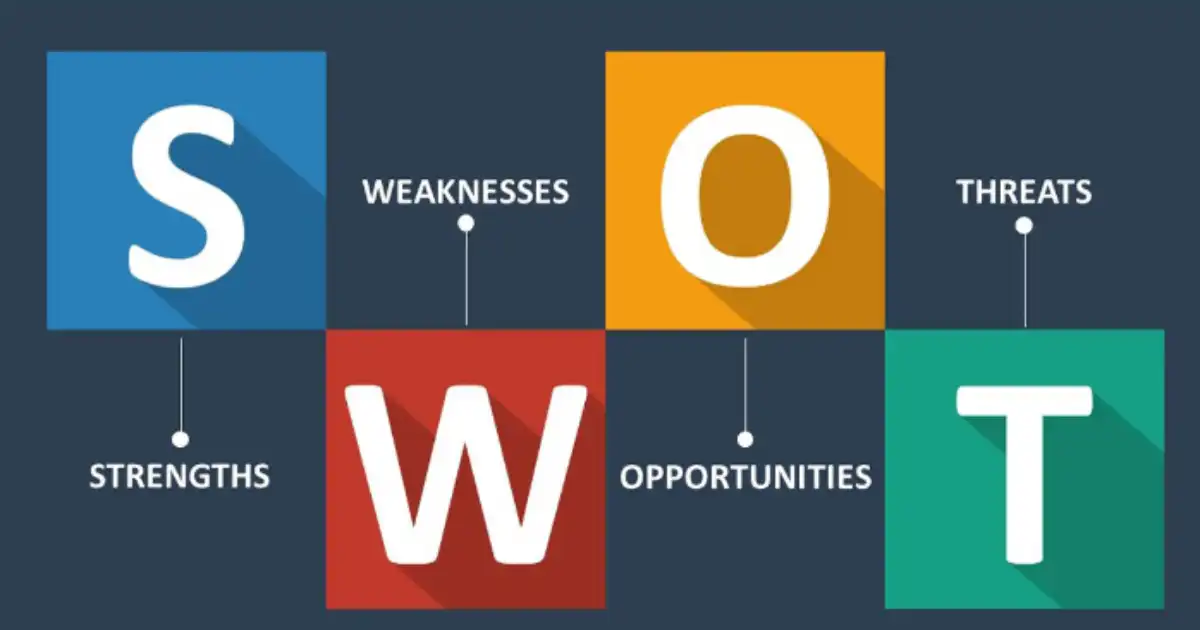
Strengths and weaknesses analysis is the “internal” half of a full SWOT framework.
SWOT stands for:
-
Strengths (internal)
-
Weaknesses (internal)
-
Opportunities (external)
-
Threats (external)
The internal vs external distinction is critical.
Internal factors are within your control. External factors market conditions, regulations, competition, economic shifts are not.
In business SWOT, your strength might be operational efficiency. But an external threat might be a new competitor undercutting your prices.
In personal SWOT, your strength might be strong technical skills. But an external threat could be industry automation.
Where people go wrong is mixing them up. “The market is saturated” is not a weakness. It’s an external threat. If you confuse the two, your strategic planning becomes messy and unfocused.
Strengths and weaknesses analysis sets the foundation. Without understanding your internal reality, reacting to external conditions is guesswork.
Steps to Conduct the Analysis
Here’s how I approach strengths and weaknesses analysis in practice.
Define the Context
This is where most people mess up.
Are you analyzing:
-
A company?
-
A department?
-
A product?
-
Yourself professionally?
-
Yourself personally?
Be specific. Vague analysis leads to vague insights.
Gather Real Evidence
Don’t rely on opinions alone.
Look at:
-
Performance data
-
Feedback
-
Financial results
-
Client retention rates
-
Missed deadlines
-
Sales numbers
-
Promotion history
In my experience, data cuts through ego fast.
If you think “we’re great at customer service” but your churn rate says otherwise, that’s not a strength. That’s denial.
Identify Genuine Strengths
Ask:
-
What do we consistently do better than others?
-
What gives us leverage?
-
What do customers or managers repeatedly praise?
A real strength creates advantage. If it doesn’t create advantage, it’s probably just a basic competency.
Identify Real Weaknesses
This part requires honesty.
Ask:
-
Where do we consistently struggle?
-
What slows us down?
-
What causes repeated problems?
-
Where do competitors outperform us?
Weaknesses analysis isn’t about self-criticism. It’s about risk awareness.
In strategic planning, unacknowledged weaknesses become future crises.
Prioritize
Not all strengths matter equally. Not all weaknesses are urgent.
Focus on:
-
Strengths that directly drive results
-
Weaknesses that create major risk
Everything else is background noise.
Turn Insights into Decisions
This is where strengths and weaknesses analysis becomes useful.
-
Double down on strengths that give strategic advantage.
-
Fix critical weaknesses.
-
Design systems around your strengths.
-
Avoid building strategies that depend on your weaknesses magically disappearing.
I’ve seen too many plans built on “we’ll just get better at that somehow.” That’s not strategy. That’s hope.
Practical Examples
Let’s make this real
Business Example
A small digital agency I worked with believed their strength was “creativity.” After reviewing projects, we realized their real strength was fast turnaround time. Clients valued speed more than originality.
Their weakness? Poor project scoping, which caused margin erosion.
By leaning into speed as a differentiator and tightening project definition, profitability improved quickly. That’s strengths and weaknesses analysis working in practice.
Personal Example
A professional doing a personal SWOT thought their weakness was “lack of leadership.” After deeper reflection, it turned out the issue was avoidance of conflict.
That’s specific. And fixable.
Once addressed, promotions followed. The original vague label was useless. The clarified weakness changed everything.
Benefits of Strengths and Weaknesses Analysis
When done honestly, this analysis:
-
Improves strategic planning
-
Reduces blind spots
-
Aligns decisions with real capabilities
-
Prevents overextension
-
Builds self-awareness
It also reduces wasted effort.
If your business SWOT shows weak distribution channels, you either fix distribution or design around it. You stop pretending it doesn’t matter.
For individuals, personal SWOT creates clarity. Career choices become more grounded. You stop chasing roles that fight your core strengths every day.
The biggest benefit? Reality-based decisions.
Common Mistakes
Here’s what I’ve seen go wrong repeatedly:
-
Confusing external threats with internal weaknesses
-
Listing personality traits instead of performance realities
-
Being overly harsh or overly flattering
-
Creating long lists without prioritizing
-
Never acting on the findings
And the worst one: doing the analysis once and never revisiting it.
Internal factors change. Skills evolve. Teams shift. So should your assessment.
Most people hear “strengths and weaknesses analysis” in a classroom, workshop, or corporate meeting and it sounds simple. List what you’re good at. List what you’re bad at. Done.
In reality? It’s rarely that clean.
I’ve used strengths and weaknesses analysis in hiring decisions, project planning, business strategy sessions, and even personal career pivots. When it’s done properly, it’s one of the most powerful tools in strategic planning. When it’s done poorly, it becomes a self-congratulatory exercise that leads nowhere.
This isn’t about filling out a template. It’s about understanding your internal factors honestly without ego, without panic, and without wishful thinking.
Let’s break down what this analysis really is, how it fits into business SWOT and personal SWOT, and how to use it in a way that actually changes outcomes.
What Is a Strengths and Weaknesses Analysis?
At its core, a strengths and weaknesses analysis is a structured way to evaluate your internal reality.
That word internal matters.
Strengths and weaknesses are things you control. Skills. Resources. Capabilities. Systems. Habits. Team culture. Technical know-how. Brand reputation. Execution speed. These are internal factors.
In a business SWOT context, strengths examples might include:
-
A loyal customer base
-
Strong cash flow
-
A highly skilled engineering team
-
Efficient operations
Weaknesses examples might include:
-
Poor customer service systems
-
Heavy dependence on one client
-
Weak marketing capability
-
High employee turnover
For individuals, personal SWOT often reveals different patterns:
Strengths:
-
Clear communication
-
Strong analytical thinking
-
Consistency under pressure
Weaknesses:
-
Avoiding difficult conversations
-
Poor time management
-
Overcommitting
The key thing I’ve learned: strengths and weaknesses are not moral judgments. They are performance realities.
Being “bad at sales” doesn’t make you a bad person. It just means you shouldn’t build a business model that depends entirely on cold outreach if you refuse to improve that skill.
Strengths and weaknesses analysis is about clarity, not ego protection.
How It Fits Into SWOT
Strengths and weaknesses analysis is the “internal” half of a full SWOT framework.
SWOT stands for:
-
Strengths (internal)
-
Weaknesses (internal)
-
Opportunities (external)
-
Threats (external)
The internal vs external distinction is critical.
Internal factors are within your control. External factors market conditions, regulations, competition, economic shifts are not.
In business SWOT, your strength might be operational efficiency. But an external threat might be a new competitor undercutting your prices.
In personal SWOT, your strength might be strong technical skills. But an external threat could be industry automation.
Where people go wrong is mixing them up. “The market is saturated” is not a weakness. It’s an external threat. If you confuse the two, your strategic planning becomes messy and unfocused.
Strengths and weaknesses analysis sets the foundation. Without understanding your internal reality, reacting to external conditions is guesswork.
Steps to Conduct the Analysis
Here’s how I approach strengths and weaknesses analysis in practice.
Define the Context
This is where most people mess up.
Are you analyzing:
-
A company?
-
A department?
-
A product?
-
Yourself professionally?
-
Yourself personally?
Be specific. Vague analysis leads to vague insights.
Gather Real Evidence
Don’t rely on opinions alone.
Look at:
-
Performance data
-
Feedback
-
Financial results
-
Client retention rates
-
Missed deadlines
-
Sales numbers
-
Promotion history
In my experience, data cuts through ego fast.
If you think “we’re great at customer service” but your churn rate says otherwise, that’s not a strength. That’s denial.
Identify Genuine Strengths
Ask:
-
What do we consistently do better than others?
-
What gives us leverage?
-
What do customers or managers repeatedly praise?
A real strength creates advantage. If it doesn’t create advantage, it’s probably just a basic competency.
Identify Real Weaknesses
This part requires honesty.
Ask:
-
Where do we consistently struggle?
-
What slows us down?
-
What causes repeated problems?
-
Where do competitors outperform us?
Weaknesses analysis isn’t about self-criticism. It’s about risk awareness.
In strategic planning, unacknowledged weaknesses become future crises.
Prioritize
Not all strengths matter equally. Not all weaknesses are urgent.
Focus on:
-
Strengths that directly drive results
-
Weaknesses that create major risk
Everything else is background noise.
Turn Insights into Decisions
This is where strengths and weaknesses analysis becomes useful.
-
Double down on strengths that give strategic advantage.
-
Fix critical weaknesses.
-
Design systems around your strengths.
-
Avoid building strategies that depend on your weaknesses magically disappearing.
I’ve seen too many plans built on “we’ll just get better at that somehow.” That’s not strategy. That’s hope.
Practical Examples
Let’s make this real.
Business Example
A small digital agency I worked with believed their strength was “creativity.” After reviewing projects, we realized their real strength was fast turnaround time. Clients valued speed more than originality.
Their weakness? Poor project scoping, which caused margin erosion.
By leaning into speed as a differentiator and tightening project definition, profitability improved quickly. That’s strengths and weaknesses analysis working in practice.
Personal Example
A professional doing a personal SWOT thought their weakness was “lack of leadership.” After deeper reflection, it turned out the issue was avoidance of conflict.
That’s specific. And fixable.
Once addressed, promotions followed. The original vague label was useless. The clarified weakness changed everything.
Benefits of Strengths and Weaknesses Analysis
When done honestly, this analysis:
-
Improves strategic planning
-
Reduces blind spots
-
Aligns decisions with real capabilities
-
Prevents overextension
-
Builds self-awareness
It also reduces wasted effort.
If your business SWOT shows weak distribution channels, you either fix distribution or design around it. You stop pretending it doesn’t matter.
For individuals, personal SWOT creates clarity. Career choices become more grounded. You stop chasing roles that fight your core strengths every day.
The biggest benefit? Reality-based decisions.
Common Mistakes
Here’s what I’ve seen go wrong repeatedly:
-
Confusing external threats with internal weaknesses
-
Listing personality traits instead of performance realities
-
Being overly harsh or overly flattering
-
Creating long lists without prioritizing
-
Never acting on the findings
And the worst one: doing the analysis once and never revisiting it.
Internal factors change. Skills evolve. Teams shift. So should your assessment.
You Might Be Interested In
Conclusion
Strengths and weaknesses analysis is simple in theory but powerful in practice. It forces you to face reality about your internal factors the things you can control and make smarter decisions based on that clarity. Whether for a business planning its next move or an individual navigating a career, understanding your real strengths and weaknesses is the foundation for effective strategy.
The key is honesty, evidence, and action. Don’t just list traits; prioritize what truly matters, leverage your strengths, address critical weaknesses, and revisit your analysis regularly. When you do this consistently, you transform a simple exercise into a decision-making tool that actually drives results, avoids wasted effort, and keeps you grounded in what’s achievable.
FAQs
What is the main purpose of a strengths and weaknesses analysis?
The main purpose is to get a clear, honest picture of your internal factors the things you actually control. It’s about identifying where you excel and where you consistently struggle, without sugarcoating or exaggerating. In practice, this clarity allows you to make decisions that are grounded in reality rather than wishful thinking.
For businesses, this means knowing which capabilities give you an edge in the market and which internal issues could block growth or profitability. For individuals, it’s about understanding which skills, habits, or traits genuinely support your goals and which are holding you back. Done properly, it turns vague self-reflection into actionable insight that can guide strategy, hiring, project planning, or personal development.
How often should you conduct a strengths and weaknesses analysis?
There’s no one-size-fits-all schedule, but in my experience, doing it regularly keeps your strategy relevant. For businesses, annual reviews are a minimum, especially before planning cycles or launching new products. Major changes, like market shifts, mergers, or leadership changes, are also good triggers to reassess your internal factors.
For personal SWOTs, I recommend revisiting them during career transitions, after completing major projects, or whenever you’re considering a promotion or shift. Skills, habits, and resources evolve over time. Without regular updates, what you think is a strength might have atrophied, and weaknesses you ignored could have grown into bigger problems. Treat it as a living tool, not a one-time exercise.
What’s the difference between weaknesses and threats in business SWOT?
This is a common area where people get confused. Weaknesses are internal limitations things you have some control over, like inefficient processes, skill gaps, or outdated technology. Threats, on the other hand, come from outside your organization: competition, economic trends, or regulatory changes.
Mixing these up can lead to misaligned strategy. I’ve seen companies treat external market shifts as a weakness to fix internally, which wastes effort and creates frustration. Correctly separating internal weaknesses from external threats ensures you address the right issues with the right solutions strengthening what’s within your control and planning around what isn’t.
Can weaknesses become strengths?
Yes, but only with deliberate effort. A weakness isn’t a fixed label; it’s a performance gap. With focused training, process improvement, or leveraging other strengths, you can sometimes turn a weakness into a true capability. Occasionally, a weakness can even become a differentiator if approached strategically.
That said, not every weakness is worth trying to flip. Some are too costly or outside your core focus. In my experience, the key is prioritization: focus on weaknesses that directly impact your goals or strategic advantage. Trying to fix every shortcoming often leads to burnout or wasted resources, while selective improvement creates meaningful growth.
Is personal SWOT actually useful?
Absolutely if you’re brutally honest with yourself. Personal SWOT can expose patterns you might overlook, like recurring bad habits, gaps in skill, or hidden strengths you’ve underestimated. It’s easy to dismiss it as a self-help exercise, but when applied rigorously, it provides a map for career moves, skill development, and personal decisions.
The real value comes when you act on it. Knowing your weaknesses examples is only useful if you work around them or improve them, and recognizing your strengths examples helps you focus your energy where it counts. In short, it’s a reality check that translates into actionable steps, not just a list of traits on paper.
