

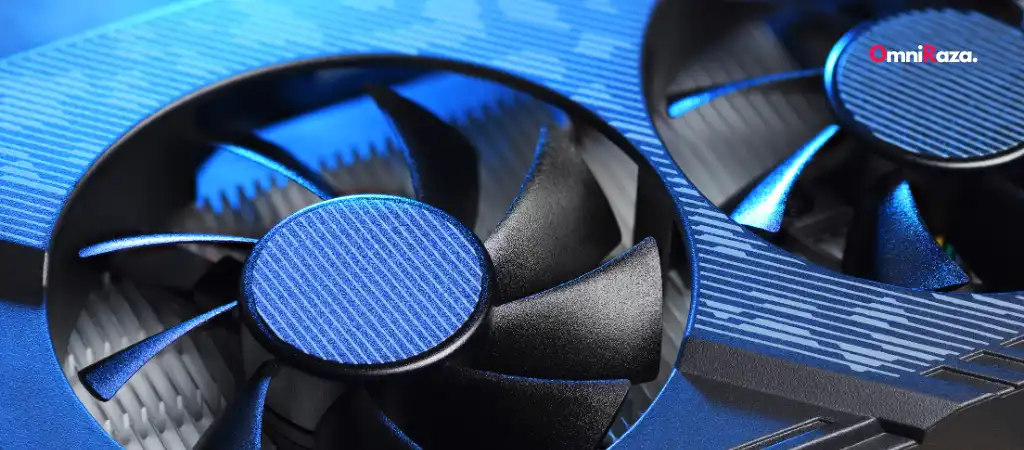
Graphics Processing Units (GPUs) are crucial components in modern computing systems, particularly for tasks involving rendering, image processing, and complex calculations. Understanding the unit for GPU is essential for anyone delving into computer hardware or software development. What Is The Unit For GPU?
In this comprehensive guide, we will explore the various aspects of the unit for GPU, from its basic definition to its role in modern computing architectures.
What is a GPU?
A GPU, or Graphics Processing Unit, is a specialized electronic circuit designed to accelerate the creation of images in a frame buffer intended for output to a display device. Originally developed for rendering graphics in video games, GPUs have evolved into highly parallel, multithreaded processors capable of handling a wide range of tasks beyond just graphics rendering.
The Core of GPU Architecture
At the heart of a GPU lies its processing cores, which are responsible for executing the computational tasks assigned to the GPU. These processing cores are organized into one or more units, each capable of executing thousands of threads simultaneously.
Understanding GPU Units
Streaming Multiprocessors (SMs)
The basic building block of a GPU is the streaming multiprocessor (SM). An SM contains multiple CUDA cores (in NVIDIA GPUs) or stream processors (in AMD GPUs), along with shared memory and special function units. The number of SMs in a GPU determines its parallel processing capabilities.
CUDA Cores and Stream Processors
CUDA cores and stream processors are the individual processing units within an SM. These cores handle the actual computation tasks assigned to the GPU. The number of CUDA cores or stream processors in a GPU directly impacts its processing power and performance.
Texture Mapping Units (TMUs)
Texture mapping units (TMUs) are responsible for applying textures to objects in a scene. They fetch texture data from memory and apply it to the objects being rendered. The number of TMUs in a GPU affects its ability to render detailed textures efficiently.
Render Output Units (ROPs)
Render output units (ROPs) are responsible for finalizing the rendering process by blending and outputting the pixel data to the frame buffer. The number of ROPs in a GPU determines its pixel fill rate, which is crucial for high-resolution rendering.
Measuring GPU Performance
When evaluating GPU performance, several metrics come into play:
FLOPS (Floating Point Operations Per Second)
FLOPS measure the number of floating-point operations a GPU can perform in one second. It’s a common metric used to gauge computational power.
Memory Bandwidth
Memory bandwidth refers to the rate at which data can be read from or written to the GPU’s memory. Higher memory bandwidth allows for faster data transfer, essential for handling large datasets or high-resolution textures.
Texture Fill Rate
Texture fill rate measures the speed at which a GPU can apply textures to objects in a scene. It’s determined by the number of TMUs and the GPU’s core clock speed.
Pixel Fill Rate
Pixel fill rate measures how quickly a GPU can render and output pixels to the frame buffer. It’s determined by the number of ROPs and the GPU’s core clock speed.
Evolution of GPU Units
Over the years, GPU units have evolved significantly, driven by advancements in semiconductor technology and increasing demands for graphics and computational power.
Moore’s Law and Transistor Density
Moore’s Law, which predicts the doubling of transistor density on integrated circuits roughly every two years, has enabled the integration of more processing cores and specialized units into GPUs, leading to exponential growth in performance.
Parallel Processing
The shift towards parallel processing has been a significant trend in GPU development. Modern GPUs contain thousands of processing cores capable of executing tasks in parallel, enabling them to handle complex computations with high efficiency.
Specialized Units
GPUs have started incorporating specialized units for tasks beyond graphics rendering. For example, NVIDIA’s Tensor Cores are designed specifically for accelerating tensor operations used in deep learning algorithms.
The Role of GPU Units in Modern Computing
Gaming
In gaming, GPU units play a crucial role in rendering realistic graphics and providing smooth gameplay experiences. The parallel processing capabilities of GPUs allow for complex lighting effects, detailed textures, and high frame rates.
Machine Learning and AI
GPUs have become indispensable for training and deploying machine learning models, thanks to their ability to handle large datasets and perform matrix calculations efficiently. Specialized units like Tensor Cores accelerate operations crucial for deep learning algorithms.
Scientific Computing
In scientific computing, GPUs are used to accelerate simulations, data analysis, and modeling tasks. Their parallel processing power enables researchers to tackle computationally intensive problems in fields like physics, chemistry, and biology.
You Might Be Interested In
- TeckNet Pro Gaming Mouse Review
- What Is The Lowest Dpi For Corsair Harpoon?
- What Is The Function Of Tecknet Mouse?
- TENMOS T12 Wireless Gaming Mouse Review
- VersionTECH Gaming Mouse Review
Conclusion
In conclusion, the unit for GPU encompasses various components, including streaming multiprocessors, CUDA cores, texture mapping units, and render output units. These units work together to provide the computational power needed for graphics rendering, machine learning, scientific computing, and more. Understanding the role of each unit is essential for optimizing GPU performance and leveraging its capabilities effectively.
From the evolution of GPU architecture driven by Moore’s Law to the growing importance of parallel processing and specialized units, GPUs continue to push the boundaries of what’s possible in computing. Whether you’re a gamer, a data scientist, or a researcher, the unit for GPU plays a crucial role in shaping the future of technology.
FAQs about What Is The Unit For GPU?
What are CUDA cores and how do they differ from traditional CPU cores?
CUDA cores are the individual processing units within NVIDIA GPUs, designed to handle parallel processing tasks. Unlike traditional CPU cores, which are optimized for sequential processing, CUDA cores excel at executing multiple tasks simultaneously. This parallelism makes GPUs ideal for computationally intensive tasks like graphics rendering, machine learning, and scientific computing.
How does the number of TMUs affect gaming performance?
Texture Mapping Units (TMUs) are responsible for applying textures to objects in a scene. A higher number of TMUs allows a GPU to fetch and apply textures more efficiently, resulting in better image quality and smoother gameplay. Games with detailed textures or large environments benefit significantly from GPUs with a higher TMU count, as they can render scenes with greater fidelity and realism.
What is the significance of memory bandwidth in GPU performance?
Memory bandwidth refers to the rate at which data can be read from or written to the GPU’s memory. It plays a crucial role in GPU performance, particularly when handling large datasets or high-resolution textures. A higher memory bandwidth allows the GPU to access data more quickly, reducing bottlenecks and improving overall performance. It is especially important for tasks involving high-resolution gaming, 4K video editing, and deep learning training.
How do Tensor Cores enhance GPU performance in machine learning?
Tensor Cores are specialized units found in some NVIDIA GPUs, designed specifically for accelerating tensor operations used in deep learning algorithms. These operations involve large matrix multiplications and additions, which are fundamental to training neural networks.
By offloading these computations to Tensor Cores, GPUs can perform deep learning tasks much faster compared to traditional CPU-based methods, making them indispensable for training complex models on large datasets.
What impact does Moore’s Law have on the evolution of GPU units?
Moore’s Law, which predicts the doubling of transistor density on integrated circuits roughly every two years, has driven the evolution of GPU units by enabling the integration of more processing cores and specialized units into GPUs.
This exponential increase in transistor density has allowed GPU manufacturers to pack more computational power into smaller chips, leading to significant advancements in graphics rendering, parallel processing, and specialized tasks like deep learning acceleration. As a result, GPUs have become increasingly powerful and versatile, revolutionizing industries from gaming to scientific computing.
