

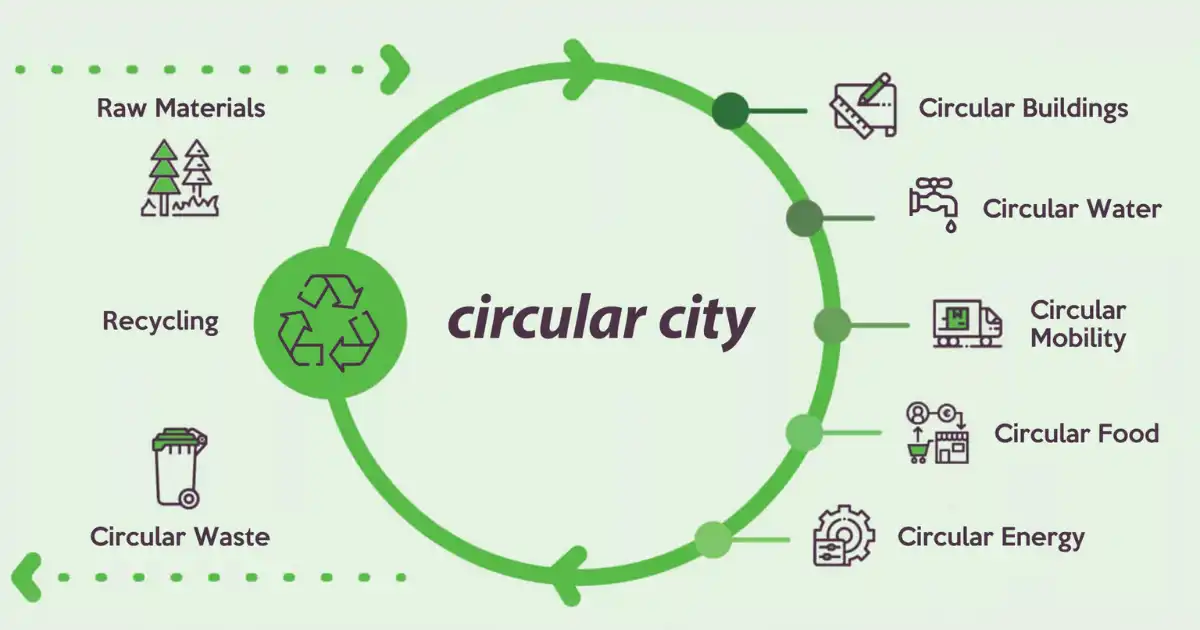
Imagine a city that thrives without waste — where every drop of water is reused, every piece of material is recycled, and every building is designed to give back more energy than it consumes. That’s not a futuristic fantasy — it’s reality in Masdar City, a groundbreaking urban project redefining sustainability and innovation in the heart of the United Arab Emirates.
The world is racing toward sustainability, and Masdar City stands as a living laboratory of what the future can look like when a circular economy drives the blueprint of development. This city, near Abu Dhabi, was built with one bold vision: to eliminate waste, maximize renewable energy use, and create an economy where resources circulate endlessly.
The concept of a circular economy challenges the traditional “take-make-dispose” model. Instead, it focuses on “reduce, reuse, recycle, and regenerate.” In Masdar City, this philosophy is not just theoretical—it’s built into every road, building, and policy. The city demonstrates how human progress can coexist with nature through conscious design and forward-thinking technology.
Let’s take a deep dive into how Masdar City implements the circular economy, creating a real-world model for sustainable urban living that inspires the world to reimagine the future of cities.
Understanding the Circular Economy
A circular economy is a system where materials, energy, and resources are continuously reused and repurposed to minimize waste. Unlike the linear economy, which follows a straight path from production to disposal, a circular economy works like nature—where every output becomes the input for another process.
This model emphasizes resource efficiency, waste reduction, and renewable energy integration. It is an essential response to the growing global crisis of resource depletion and pollution. In simple terms, a circular economy asks: What if waste didn’t exist?
In Masdar City, this idea is not just theoretical. It forms the backbone of its planning, architecture, energy systems, and community living. Every component of the city — from how buildings are designed to how food is produced — follows the principles of circularity.
The Vision and Philosophy Behind Masdar City
Founded in 2006 by the Abu Dhabi Future Energy Company, Masdar City is one of the world’s most ambitious sustainable urban projects. Its vision goes far beyond energy efficiency. The city was designed to serve as a global model for circular economy practices, research, and green innovation.
The philosophy of Masdar City is rooted in three main pillars:
-
Sustainability minimizing carbon emissions and promoting renewable energy.
-
Innovation using advanced technologies for waste management and energy production.
-
Circularity designing systems that keep resources in use for as long as possible.
From its inception, Masdar City has aimed to reduce ecological impact while maintaining economic growth and human comfort. The goal isn’t just to live sustainably — it’s to prove that sustainability and prosperity can grow together.
Infrastructure Built on Circular Principles
Smart Urban Design
The design of Masdar City embodies the essence of a circular economy. The layout follows traditional Arabic architectural principles to reduce energy needs naturally. Narrow streets provide shade and channel cooling breezes through the city, minimizing dependence on air conditioning.
Buildings are oriented to maximize natural light while minimizing heat gain, significantly reducing the demand for electricity. Many structures use recycled materials and low-carbon concrete, showcasing how construction can itself become circular.
Renewable Energy Integration
At the heart of Masdar City is its reliance on renewable energy sources. Solar energy dominates — from rooftop panels to large-scale photovoltaic farms that power much of the city’s needs. Wind towers and passive cooling systems reduce reliance on mechanical energy.
This combination of design and renewable technology allows Masdar City to maintain near-zero carbon emissions, aligning perfectly with the circular economy principle of renewable resource use.
Sustainable Transportation
Another pillar of Masdar City’s circular system is transportation. Instead of relying on fuel-based vehicles, the city encourages electric and driverless cars, bicycles, and pedestrian pathways. The Personal Rapid Transit (PRT) system, powered by electricity, minimizes pollution and provides efficient mobility.
The reduction in fossil fuel use contributes to lower carbon emissions and supports circularity by reducing energy waste.
Waste Management: Turning Trash into Treasure
In a circular economy, waste is not an end product — it’s a new beginning. Masdar City exemplifies this by transforming waste into valuable resources.
Recycling and Reuse
Waste is meticulously sorted into categories such as plastics, metals, paper, and organic matter. Recyclable materials are processed and reintegrated into manufacturing cycles. Organic waste is composted to nourish the city’s green spaces and urban farms.
This process not only reduces landfill waste but also regenerates natural resources — a core aspect of circularity.
Industrial Symbiosis
One of the most innovative features of Masdar City is industrial symbiosis — where the waste of one industry becomes the raw material for another. For example, construction waste is reused in new building materials, while treated wastewater supports landscaping and cooling systems.
This interconnected system mimics natural ecosystems, where nothing goes to waste.
Zero Waste Ambition
Masdar City has set a long-term goal of achieving zero waste to landfill. This means that every product and material entering the city is designed with its end-of-life in mind — to be reused, repurposed, or recycled.
Water Conservation and Recycling
Water scarcity is a major challenge in desert regions, but Masdar City uses innovative circular solutions to overcome this issue.
Greywater Recycling
The city employs greywater recycling systems, which collect used water from sinks and showers, treat it, and reuse it for irrigation and cooling. This significantly reduces the strain on freshwater resources.
Efficient Irrigation
Urban greenery is maintained using treated wastewater through smart irrigation systems that use sensors to optimize water use. The result is a thriving green landscape in a desert environment — achieved sustainably.
Desalination Research
Masdar City is also a hub for research into solar-powered desalination, which could provide a renewable solution for producing fresh water without harming the environment.
Energy Efficiency and Renewable Power
Energy is the heartbeat of every city, and in Masdar City, it flows in harmony with circular economy principles.
Solar Power at Scale
The Masdar Solar Power Plant generates clean electricity that powers the city’s infrastructure. Rooftop solar panels on residential and commercial buildings provide decentralized energy generation, reducing transmission losses.
Smart Grids and Energy Storage
To optimize efficiency, Masdar City uses smart grids that balance energy demand and supply in real-time. Advanced battery storage ensures that excess energy is stored and reused during peak times.
Low-Energy Buildings
Each building in Masdar City is constructed with energy efficiency in mind — incorporating natural ventilation, high insulation, and low-energy appliances. Many buildings even produce more energy than they consume, feeding the surplus back into the grid.
Sustainable Architecture and Materials
In Masdar City, architecture is both beautiful and functional, inspired by heritage yet powered by modern technology.
Eco-Friendly Materials
Construction prioritizes locally sourced and recycled materials. Concrete with lower carbon emissions, recycled steel, and sustainable timber are standard building components.
Modular and Adaptable Design
Buildings are designed to be modular, meaning components can be replaced, reused, or upgraded without wasteful demolition. This adaptability is central to the circular economy philosophy — design for longevity and reusability.
Passive Cooling Systems
Wind towers and shaded courtyards reduce heat and lower cooling costs. These passive systems harness natural elements rather than consuming energy, reinforcing sustainability.
Food and Agriculture in a Circular System
Food production and consumption are vital parts of a circular city. Masdar City integrates urban farming, hydroponics, and vertical agriculture to produce food locally.
Local Food Production
By growing food within the city, transportation costs and emissions are minimized. Waste from organic matter becomes compost, completing the nutrient cycle.
Smart Farming Technology
IoT-based farming systems monitor soil and water quality, ensuring efficient resource use. This smart agriculture not only conserves energy but also embodies circular economy efficiency.
Education, Innovation, and Research
Masdar City is home to the Masdar Institute of Science and Technology, now part of Khalifa University. It serves as a hub for education and research in renewable energy, sustainable technology, and environmental policy.
The city also hosts startups and research labs focusing on circular economy innovation, including clean energy systems, recycling technologies, and sustainable construction methods.
By nurturing a knowledge-based ecosystem, Masdar City ensures continuous innovation and adaptation in its sustainability practices.
Economic Sustainability and Job Creation
The circular economy in Masdar City doesn’t just protect the environment — it fuels economic growth. By investing in renewable energy, recycling industries, and green technologies, the city creates jobs and business opportunities in sustainable sectors.
This diversified economy attracts international companies and investors looking to participate in a green, resilient marketplace. The economic sustainability of Masdar City proves that profitability and environmental responsibility can go hand in hand.
The Circular Economy Policy of the UAE
The United Arab Emirates supports projects like Masdar City through its Circular Economy Policy 2021–2031, focusing on four key sectors: manufacturing, food, infrastructure, and transport.
This national policy promotes resource efficiency, clean energy use, and innovation. Masdar City serves as a model implementation of this strategy, showcasing how national policies can translate into real-world urban success.
Global Impact and Replication
The achievements of Masdar City extend far beyond the UAE’s borders. Its circular design principles are now studied and adapted in other urban development projects across the world — from Singapore to Amsterdam.
As a global hub for sustainability conferences and green innovation, Masdar City continues to inspire urban planners, architects, and policymakers worldwide. It demonstrates that a circular economy is not only possible but also profitable and scalable.
Challenges and Continuous Improvement
While Masdar City is a pioneering model, it faces challenges too. Maintaining affordability, scaling renewable energy to meet population growth, and ensuring long-term resource balance are ongoing tasks.
However, these challenges are part of the city’s learning process. Continuous research, public engagement, and technological innovation ensure that Masdar City remains adaptable and future-ready.
You Might Be Interested In
- What Does Shadow AI Look Like in Remote Teams?
- How Can Ai Be Used To Detect Plagiarism Without False Positives?
- AI Supercomputing Applications: Pioneering a Bright Future in Gaming, Finance & Beyond – 6 Key Insights
- Why Ai In Education Personalizes Learning Paths?
- How Does Python Development Help Beginners?
- How AI transform the future of healthcare industry?
- Top 10 Benefits Of Cloud Computing For Startups
- Top 10 Digital Transformations In Saudi Banking Sector
- How Does Ai Improve Patient Triage In Emergency Departments?
- What Is Ai-assisted Clinical Decision Support And How Does It Work?
Conclusion
Masdar City is more than an eco-friendly development — it is a living embodiment of the circular economy. Through its intelligent design, renewable energy use, water conservation, waste management, and innovation ecosystem, it demonstrates that sustainability is not just an option but a necessity for the future.
Every street, building, and initiative within Masdar City echoes the principles of circularity — regeneration, reuse, and renewal. It proves that with vision, collaboration, and innovation, humanity can create cities that nurture both people and the planet.
In a world facing mounting environmental challenges, Masdar City stands as a beacon of hope — showing that sustainable living, economic growth, and environmental harmony can truly coexist.
