

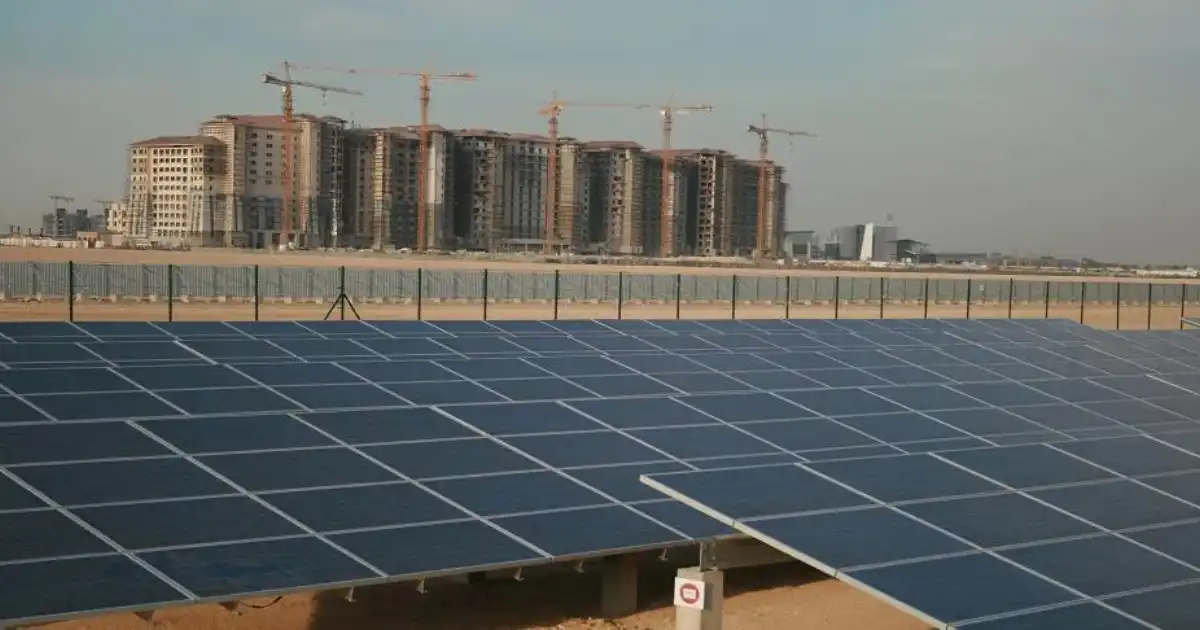
Imagine a city where cars hum quietly, streets stay cool under desert heat, and skyscrapers sip sunlight instead of burning fuel. Welcome to Masdar City, the UAE’s bold vision of a sustainable urban future. Nestled on the outskirts of Abu Dhabi, this pioneering eco-city is a living experiment in how humans can thrive without compromising the planet. But behind its futuristic design lies an even more fascinating story — the renewable energy mix powering Masdar City.
Masdar City isn’t just another modern development; it’s a blueprint for sustainability — a hub where innovation, clean technology, and green energy converge to redefine urban living. Using solar power, wind energy, waste-to-energy systems, and energy-efficient architecture, Masdar City aims to set a global benchmark for carbon-neutral urban design.
In this comprehensive guide, we’ll explore every element of the city’s renewable energy infrastructure, from its solar fields that glisten under the desert sun to its smart grids and energy storage systems that ensure efficiency around the clock. We’ll also uncover how the UAE’s energy mix and Masdar’s global partnerships are transforming not only one city but the entire landscape of renewable innovation.
The Vision Behind Masdar City
A Sustainable Dream Born in the Desert
When Masdar City was announced in 2006 by the Abu Dhabi Future Energy Company (Masdar), the world took notice. The UAE, known for its vast oil reserves, was making a bold statement: the future would not be built on fossil fuels but on renewable energy. The idea was simple yet ambitious — to create a carbon-neutral, zero-waste, and energy-efficient urban model that could serve as a global example.
The master plan was designed by Foster + Partners, integrating passive cooling, compact city design, and clean energy systems to minimize environmental impact. The city would rely almost entirely on solar power, wind energy, and recycled resources to operate.
Today, Masdar City stands as a living laboratory, where renewable technologies are tested and refined before being deployed worldwide. It embodies the UAE’s Energy Strategy 2050, which aims to increase the contribution of clean energy to 50% of the national energy mix by mid-century.
The Heart of Masdar’s Energy — Solar Power
The Shams 1 Solar Power Plant
One of the cornerstones of Masdar City’s renewable energy mix is solar power. The Shams 1 solar power plant, located about 120 kilometers southwest of Abu Dhabi, is one of the largest concentrated solar power (CSP) facilities in the world.
Covering 2.5 square kilometers and generating 100 megawatts (MW) of electricity, Shams 1 supplies energy to tens of thousands of homes. Its parabolic trough technology captures sunlight and converts it into heat, which is then used to produce steam and drive turbines.
Unlike traditional solar panels, CSP systems like Shams 1 store heat, allowing electricity production even after sunset. This makes it a vital part of Masdar City’s energy resilience, ensuring steady power even when sunlight fades.
Rooftop Photovoltaic Systems
Beyond large-scale solar plants, Masdar City’s architecture itself functions as a solar farm. Most buildings are topped with photovoltaic (PV) panels, which convert sunlight directly into electricity. These rooftop solar arrays provide energy for lighting, air conditioning, and electric vehicle charging.
Together, rooftop PV systems and Shams 1 ensure that solar energy remains the backbone of Masdar’s renewable energy mix.
Wind Energy — Powering Efficiency
While solar power dominates, wind energy also contributes to Masdar’s renewable matrix. The UAE’s geography poses challenges for consistent wind generation, but strategically placed turbines around the city capture high-altitude and seasonal winds.
Masdar has also invested heavily in offshore wind projects abroad, particularly in the UK and the North Sea. These international ventures generate knowledge and resources that feed back into Masdar City’s sustainable ecosystem.
Wind energy plays a smaller but significant role, complementing solar production during cloudy or nighttime conditions, ensuring energy stability and balance.
Waste-to-Energy — Turning Trash into Power
Circular Economy in Action
Masdar City’s commitment to sustainability extends beyond clean electricity — it also embraces a circular economy model. One of the most innovative systems in place is its waste-to-energy program.
Instead of sending waste to landfills, organic and non-recyclable waste is converted into usable energy. This process involves thermal treatment and gasification, producing electricity that feeds back into the city’s grid.
By turning waste into a resource, Masdar not only reduces environmental pollution but also decreases dependency on external power sources. This contributes to the carbon-neutral vision that drives the city’s mission.
Geothermal and Cooling Innovations
Harnessing the Earth’s Natural Energy
Although geothermal potential in the UAE is limited, Masdar City has explored pilot projects in geothermal energy for district cooling. This technology uses the Earth’s natural heat exchange to maintain comfortable indoor temperatures, drastically reducing the need for energy-intensive air conditioning systems.
Cooling is a major energy consumer in desert climates. Through geothermal systems and district cooling, Masdar has achieved energy savings of up to 40% compared to conventional methods.
The Wind Tower — An Ancient Idea Reimagined
A striking feature of Masdar’s design is its wind tower, inspired by traditional Arabic architecture. Standing tall in the city’s central plaza, it channels cooler air from above and circulates it throughout pedestrian areas. This passive cooling system reduces the need for artificial climate control, blending heritage with high-tech innovation.
Smart Grids and Energy Storage
The Brain Behind the Power
To efficiently manage the renewable energy mix powering Masdar City, a smart grid infrastructure interconnects solar panels, wind turbines, and storage units. The grid constantly monitors supply and demand, adjusting power distribution for maximum efficiency.
Advanced AI algorithms forecast energy usage patterns and weather changes, ensuring renewable generation aligns with consumption. When excess energy is produced, it’s stored in lithium-ion batteries or converted into other usable forms for later use.
Battery Storage and Grid Independence
Energy storage is crucial to maintaining reliability in renewable systems. Masdar’s battery storage units allow the city to operate independently from the main grid when needed. This self-sufficiency ensures that even in emergencies, the city can continue functioning sustainably.
The Broader UAE Energy Mix
Balancing Renewable and Traditional Sources
While Masdar City leads in sustainability, the UAE’s national energy mix is also evolving. Traditionally dominated by natural gas and oil, the country now includes solar, nuclear, and hydrogen in its strategy.
The UAE Energy Strategy 2050 aims to produce 50% clean energy by 2050 — 44% from renewable sources and 6% from nuclear power. Masdar’s advancements directly support this target, serving as a testing ground for technologies that can be scaled nationwide.
Hydrogen — The Next Frontier
Masdar has also ventured into green hydrogen, a promising energy carrier produced by splitting water molecules using renewable electricity. Hydrogen could soon power buses, industries, and even export markets, making the UAE a global hub for clean fuel innovation.
Innovation Through Research and Development
The Masdar Institute of Science and Technology
At the core of Masdar’s innovation lies the Masdar Institute of Science and Technology, now part of Khalifa University. It serves as a hub for research in renewable energy, sustainability engineering, and urban efficiency.
Students and scientists collaborate on projects such as advanced solar materials, smart water grids, and low-carbon transport systems. This synergy of academia and industry ensures continuous technological evolution within the city.
Global Collaborations
Masdar collaborates with leading global institutions, including MIT, Siemens, and GE Renewable Energy, to push the boundaries of sustainability. These partnerships foster knowledge exchange, bringing international expertise to local innovation.
Transportation and Mobility
Electric and Autonomous Vehicles
In Masdar City, transportation is not just green — it’s futuristic. Electric vehicles (EVs), autonomous pods, and personal rapid transit (PRT) systems move people efficiently with zero emissions.
These vehicles are powered by the renewable energy mix generated within the city, closing the loop between clean power and clean mobility. Charging stations, solar canopies, and energy-efficient pathways promote a low-carbon lifestyle.
Walkable and Car-Free Urban Design
The city’s compact design encourages walking and cycling. Streets are narrow and shaded, allowing residents to travel comfortably even in hot weather. This human-centered design reduces transportation-related emissions and promotes well-being.
Challenges and Lessons Learned
Adapting to Desert Realities
Despite its success, Masdar City has faced challenges — primarily the harsh desert environment and the high cost of green technologies. Dust storms reduce solar panel efficiency, and maintaining temperature control in summer remains energy-intensive.
However, continuous innovation in solar cleaning robots, reflective building materials, and smart cooling systems has turned these obstacles into opportunities for research and advancement.
The Evolving Vision
Originally planned to house 50,000 residents by 2016, Masdar City’s growth has been slower due to economic and technological adjustments. Yet, the city remains a symbol of perseverance and adaptability, evolving with every challenge to become even more efficient and scalable.
Global Impact of Masdar City
A Model for the World
Masdar City’s achievements have inspired urban sustainability projects worldwide. From NEOM in Saudi Arabia to Songdo in South Korea, the city’s principles of renewable integration, smart grids, and low-carbon living are influencing the next generation of eco-cities.
Masdar also invests globally, with renewable energy projects spanning more than 40 countries and a combined capacity exceeding 20 gigawatts. This global reach amplifies its role as a pioneer in clean energy transformation.
The Future of Masdar City
Beyond Net-Zero
The future vision of Masdar City extends beyond net-zero emissions — toward climate positivity. With advances in carbon capture, green hydrogen, and AI-powered energy management, the city aims to generate more clean energy than it consumes.
Masdar’s upcoming developments include energy-positive buildings, vertical gardens, and AI-optimized infrastructure to make every watt count. These innovations position Masdar as a living demonstration of how technology and sustainability can coexist harmoniously.
You Might Be Interested In
- What Are the Signs of Deepfake Audio in Customer Support Calls?
- Why Do Voice Cloning Scams Fool Family Members So Easily?
- AI for Behavioral Analysis in Network Security
- what is GTE technology?
- Why Is Deepfake Audio Becoming an Evidence Problem?
- Why Are Scalable Cloud Solutions Important?
- The Impact Of Stargate On UAE’s Global Tech Status
- What Are The 4 Types Of Environmental Science?
- What Is Augmented Reality With An Example?
- How To Turn Off 5G On Samsung?
Conclusion
Masdar City is far more than an urban experiment — it’s a living testament to what is possible when human ingenuity meets environmental responsibility. The renewable energy mix powering Masdar City — a blend of solar power, wind energy, waste-to-energy, and smart storage — demonstrates how the world can transition from dependence on fossil fuels to a cleaner, more resilient energy future.
Every beam of sunlight captured, every watt stored, and every breath of cool air in Masdar tells a story of transformation — one that other nations can emulate as they chart their paths toward sustainability. As global climate goals tighten, Masdar City stands as a beacon of innovation, illuminating the road to a carbon-neutral world.
