

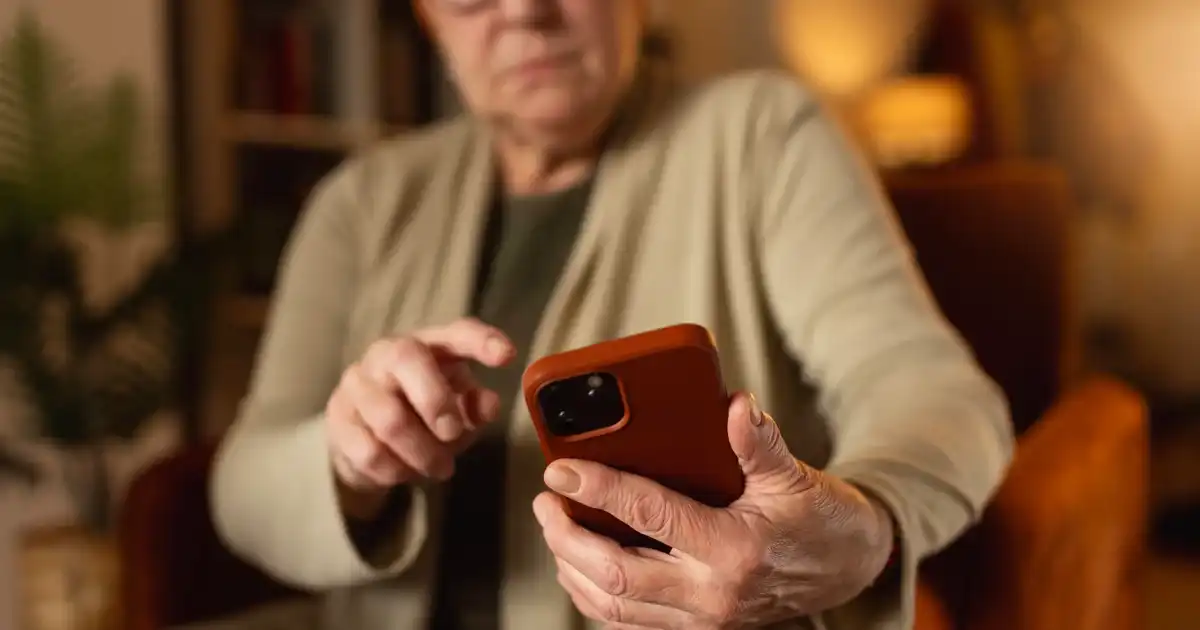
A woman gets a call late at night. The voice on the other end is her son. He sounds panicked, out of breath, like he is trying to hold himself together.
“Mom, I messed up. I need money right now. Please don’t tell dad. I’m in trouble.” Why Do Voice Cloning Scams Fool Family Members So Easily?
There is noise in the background. It sounds like traffic, maybe a crowd. The voice keeps breaking slightly, like he is scared or injured. Then another voice comes on the line, someone claiming to be a police officer, speaking fast, firm, and impatient.
“Ma’am, your son is involved in an incident. If you want to avoid serious legal trouble, you need to act now.”
In many real cases, that is all it takes.
The mother doesn’t stop to analyze whether it makes sense. She doesn’t compare details. She doesn’t question why her son’s number is different. She hears her child’s voice and her brain skips everything else. Money gets transferred. Panic takes over. Only later does she realize her son was asleep in another city the whole time.
This is not rare anymore. Voice cloning scams have moved from experimental tech demos into everyday fraud. And what makes them especially dangerous is not just the technology. It is how naturally they fit into human psychology.
We are wired to trust familiar voices. We are trained by life itself to respond quickly when someone we love sounds like they are in danger. Scammers now understand that better than most people do.
The uncomfortable truth is this: these scams are not breaking trust. They are exploiting it exactly as it exists in normal families. And that is why even smart, educated people fall for them.
What Voice Cloning Actually Is in Simple Terms
Voice cloning sounds complicated, but in real-world terms it is much simpler than most people imagine.
At its core, it is just software learning how a person sounds, then imitating that voice when given new text.
Think of it like this. If you give a machine enough recordings of someone speaking, it starts to learn patterns. Not just words, but tone, rhythm, accent, pauses, and emotional style. Once it learns those patterns, it can generate new sentences that sound like the same person is speaking them.
The surprising part is how little audio is needed now.
In earlier days, voice imitation required hours of clean recordings. Today, scammers can get usable results from short clips. Sometimes just a few minutes of audio from social media is enough to create something convincing, especially for emotional or urgent speech.
And where do they get that audio?
Mostly from public sources.
Short videos on social media. Voice notes shared in group chats. YouTube clips. Instagram reels. TikTok videos. Even casual birthday messages posted online. People unintentionally leave behind hours of usable voice data without thinking about it.
Once scammers have that, they feed it into AI tools designed to replicate speech. These tools are widely available. Some are marketed as entertainment apps. Others are open-source models or paid services that can be misused.
The output is not always perfect. It may have small unnatural pauses or slight robotic tones. But here is the key point most people miss.
In a real scam call, perfection is not required.
If the emotional pressure is high enough, your brain stops analyzing technical flaws. You are not sitting there judging audio quality. You are reacting to urgency.
Scammers understand this better than the technology itself. They do not need a flawless clone. They just need something that sounds “close enough” in a moment of panic.
Why Family Members Fall for It So Easily
If you ask most people, they will confidently say, “I would never fall for that.”
But real-world cases show something different. Even people who are cautious in normal life can be completely overwhelmed when they hear a familiar voice in distress.
There are a few reasons for this.
First is trust built over time.
Families spend years hearing each other’s voices in normal, safe environments. That creates a deep mental association. A parent does not just recognize a voice. They recognize it as “my child.” That identity layer is stronger than logical thinking in emergencies.
Second is emotional shock.
When someone you love is suddenly in danger, your brain does not behave like it does during calm decision-making. It shifts into immediate response mode. You are not evaluating evidence. You are trying to stop harm.
Third is automatic reaction.
Most people do not consciously verify identity in emergencies. They respond. If a voice sounds like your son or daughter crying for help, your first instinct is action, not investigation.
Fourth is isolation.
Elderly family members are especially vulnerable because they may not have immediate access to other people to verify the situation. Scammers often target this gap. They keep the victim on the phone, preventing them from calling others.
And finally, there is the social conditioning factor.
We are trained from childhood to respond to distress. If someone cries for help, we help. That instinct is socially reinforced for a reason. But scammers hijack that exact instinct and turn it into a weapon.
What makes this even more dangerous is that there is no obvious “stupid mistake” involved. The reaction is human. It is normal. That is why people do not see the trap until after it has already worked.
The Psychology Behind These Scams
To understand why voice cloning scams work so well, you need to understand what happens inside the brain during emotional stress.
When a person hears a loved one in danger, the brain activates what is often called a survival response. In simple terms, thinking becomes narrower. The focus shifts from analysis to immediate resolution.
Fear plays the biggest role here.
Fear does something very specific. It reduces your ability to process complex information. Instead of asking “Does this make sense?” your mind jumps to “How do I fix this right now?”
Scammers rely heavily on this shift.
They create urgency on purpose. Phrases like “you must act now,” “do not tell anyone,” or “this is confidential” are not random. They are designed to prevent reflection. The less time you have to think, the more likely you are to comply.
Then there is voice recognition as a shortcut.
Human brains do not analyze voices like audio engineers. We recognize them holistically. It is a pattern recognition system, not a verification system. If enough cues match, the brain labels it as “familiar” and accepts it.
Scammers exploit this by focusing on emotional similarity rather than perfect accuracy. Even if the voice is slightly off, the emotional tone is often enough to trigger recognition.
Another important factor is authority pressure.
When scammers impersonate police, hospitals, or employers, they add another layer of compliance pressure. People are conditioned to obey authority figures in urgent situations, especially when consequences are described as serious or legal.
In many cases I have seen, victims describe the experience the same way. They say they “didn’t think.” That is not an exaggeration. It is an accurate description of how the brain behaves under combined fear and urgency.
The scary part is how predictable this behavior is. Scammers do not need to manipulate each victim differently. The emotional triggers are consistent across most humans.
That consistency is what makes the scam scalable.
How Scammers Actually Build These Attacks
Most people imagine scams as random attempts, but in reality many of them are structured and deliberate.
A typical voice cloning scam starts long before the phone call.
First, scammers collect voice data.
They scan social media platforms looking for publicly available videos. They are not targeting famous people only. Ordinary users are often easier targets because they post casual voice content without thinking about reuse.
Once they have enough audio, they organize it into usable samples. Even fragmented clips can work if the AI tool is strong enough.
Next comes script building.
Scammers prepare scenarios in advance. These are not complex scripts. They are simple emotional frameworks like “emergency,” “legal trouble,” or “accident.” The goal is not storytelling. It is triggering panic.
Then they use AI tools to generate voice output.
They input the cloned voice model and generate sentences that match the script. Some scammers even adjust tone to sound more distressed or urgent depending on the scenario.
Finally, they combine voice with pressure tactics.
The call is structured carefully. One voice delivers emotional distress. Another voice may impersonate authority. Background noise is sometimes added to increase realism, like traffic, hospital sounds, or crowd noise.
The entire setup is designed to prevent pause and reflection.
The victim is not given space to question what is happening. Every second is filled with urgency or instruction.
What is important to understand is that this is not high-budget operation work in many cases. The tools are accessible. The process is repeatable. That is why these scams are increasing so quickly.
Common Real-World Scam Scenarios
Voice cloning scams tend to follow a few predictable patterns. They are not random. They are designed around situations that trigger emotional urgency.
One of the most common is the emergency hospital call.
A family member receives a call saying their child has been in an accident. The voice sounds panicked, sometimes crying or struggling to speak. The scammer claims treatment cannot begin until payment is made. Time pressure is extreme.
Another frequent scenario is fake arrest or police involvement.
The victim is told their relative is involved in a serious legal issue. The cloned voice may sound distressed, asking for help, while another “official” voice demands immediate payment for bail or fines.
Kidnapping ransom calls are also used.
In these cases, the cloned voice may sound terrified, sometimes barely speaking clearly. Background noise is added to simulate captivity. The emotional intensity is very high, which makes rational thinking even harder.
There are also workplace impersonation scams.
A cloned voice of a boss or manager requests urgent transfer of funds or sensitive information. The urgency is framed as confidential business pressure, which discourages verification.
What connects all of these scenarios is urgency combined with emotional manipulation.
The details change, but the structure stays the same. Create fear, reduce thinking time, and demand immediate action.
Warning Signs You Should Never Ignore
Even though these scams can feel very real in the moment, they often contain patterns that do not match normal communication.
The first warning sign is urgency.
If someone insists you must act immediately without time to verify, that is a major red flag. Real emergencies allow verification. Scams try to prevent it.
Second is secrecy.
If you are told not to tell other family members, that is not normal behavior in genuine emergencies. Isolation is a control tactic.
Third is money pressure.
Any unexpected request for urgent transfer of funds, especially in emotional situations, should be treated with suspicion.
Fourth is emotional inconsistency.
Sometimes the voice may sound correct, but the situation details do not fully match reality. Small inconsistencies often appear because scammers are improvising.
Fifth is refusal to verify identity.
If the caller resists alternative verification methods, like calling back through another number or contacting someone else, that is a strong indicator of fraud.
These signs do not always appear clearly, especially under stress. But training yourself to notice even one of them can make a difference.
How to Protect Yourself and Your Family
Protection against voice cloning scams is less about technology and more about habits.
One of the most effective methods is a family safe word system.
This is simple. Families agree on a private word or phrase that only they know. In any emergency request involving money or sensitive action, the safe word must be used. If it is missing, the request is treated as suspicious.
Another key habit is call-back verification.
If you receive a distress call, do not rely on the same call to confirm anything. Hang up and call the person back using a known number. Scammers often try to keep you on the line specifically to prevent this step.
Education for elderly family members is also critical.
Older individuals are often primary targets. They should be regularly informed that voice cloning scams exist and that urgent requests for money should always be verified, no matter how real they sound.
Limiting public voice exposure helps too.
While it is not practical to avoid sharing voice entirely, being mindful of where voice recordings are posted can reduce risk. Public videos with clear speech are the easiest source for cloning.
Finally, use multi-step verification for any financial request.
No legitimate emergency should rely on a single phone call. There should always be a second channel of confirmation.
The goal is not paranoia. The goal is creating friction for scammers so that emotional pressure alone is not enough.
What to Do If You Get One of These Calls
If you ever receive a suspicious call that sounds like a family member in distress, the response needs to be simple and controlled.
First, do not react immediately.
Even if the voice sounds real, pause the decision to send money or share information.
Second, do not transfer any funds during the call.
Scammers depend on urgency. Cutting off financial action breaks their advantage.
Third, verify through another channel.
Call the person back directly. Contact another family member. Use messaging apps or any trusted communication path. The goal is to confirm independently.
Fourth, document and report the attempt.
Even if no loss occurs, reporting helps track scam patterns and can help others avoid similar attacks.
The key principle is simple. Emotional urgency should never override verification.
Future of Voice Cloning Scams
Voice cloning scams are not slowing down. They are evolving.
One major shift is real-time voice cloning.
Instead of pre-recorded models, systems are moving toward live voice imitation. This means scammers could potentially mimic speech during live conversations with very little delay.
Another development is combining voice with video deepfakes.
In the near future, victims may not just hear a familiar voice but also see a familiar face on video calls. That increases emotional pressure significantly.
Detection is also becoming harder.
As AI improves, unnatural audio patterns are becoming less noticeable. What used to sound robotic is now increasingly natural.
The biggest change, however, is accessibility.
These tools are becoming easier to use, not harder. That means more scammers can operate with less skill.
Because of this, awareness is becoming more important than technical defense.
You Might Be Interested In
- AI for Behavioral Analysis in Network Security
- Sustainability in Green Technology: A Path to Innovative Greener Future
- How Does Ai Business Automation Increase Productivity?
- What Data Is Google Analytics Goals Unable To Track?
- What Makes Synthetic Voices Sound Unnatural to Human Listeners?
Conclusion
Voice cloning scams succeed not because people are careless, but because they are human. They exploit normal emotional responses that exist in families everywhere. Trust in a loved one’s voice is not a weakness. It is a natural behavior that has worked safely for most of human life.
The problem is that technology has changed the context faster than people have adapted their habits. What used to be reliable recognition is no longer enough on its own.
In real-world cases, the difference between falling for the scam and stopping it usually comes down to one thing: verification. Not intuition, not emotion, and not even familiarity. Just a second check through a separate channel. That small pause is often the only barrier between safety and loss.
FAQs about Why Do Voice Cloning Scams Fool Family Members So Easily?
Can voice cloning scams really sound exactly like a family member?
In many real cases, the cloned voice is not a perfect match, but it is close enough to trigger recognition, especially in emotional situations. The brain does not analyze speech like a recording engineer. It relies on familiarity, tone, and emotional cues. That means even small similarities in pitch, rhythm, and speaking style can feel convincing when someone is already stressed or worried.
What makes this more dangerous is that scammers usually don’t need perfection. They rely on urgency and emotional pressure to override careful listening. When a parent hears what sounds like their child in distress, they are not evaluating audio quality. They are reacting to the situation, which is exactly what scammers expect.
How do scammers get access to someone’s voice for cloning?
Most voice data used in scams comes from public sources rather than private hacking. Social media platforms are the biggest goldmine. Short videos, voice notes, interviews, reels, and even casual clips posted by family members can be enough to train a basic voice model. People often share more voice content than they realize, especially in informal or emotional posts.
In real-world scam operations, attackers often collect multiple short samples rather than one long recording. Once enough material is gathered, AI tools can analyze patterns in tone, pronunciation, and speaking style. This is why even ordinary people, not just public figures, can become targets if their voice is accessible online.
Why do victims not recognize that the voice is fake during the call?
The main reason is emotional overload. When someone receives a call that sounds like a loved one in danger, the brain shifts into a survival-oriented mode. In that state, critical thinking becomes weaker, and emotional response becomes dominant. This is not a lack of intelligence. It is a normal neurological reaction under stress.
Another factor is expectation bias. If you believe you are hearing your child or spouse, your brain actively fills in gaps to match that belief. Even minor inconsistencies in voice or wording are often ignored because the emotional context feels more important than technical accuracy. Scammers rely heavily on this natural mental shortcut.
Are elderly people the only targets of voice cloning scams?
No, although elderly individuals are often targeted more frequently due to isolation and lower familiarity with digital fraud tactics. However, younger adults also fall victim, especially when the scam involves children, spouses, or close family members. Emotional connection is the real target, not age.
In real-world cases, even tech-savvy individuals have been caught off guard when a familiar voice is used in a high-pressure scenario. The deciding factor is not technical knowledge, but emotional disruption. Anyone can be vulnerable when they are emotionally triggered and given very little time to verify what is happening.
What is the most effective way to confirm if a voice call is real or fake?
The most reliable method is independent verification through a separate communication channel. This means not relying on the same call that delivered the message. If someone calls you in distress, the safest response is to hang up and contact them directly using a known number or trusted app.
Another highly effective method is using a family verification system, such as a shared safe word or pre-agreed confirmation habit. Real emergencies can always be verified in more than one way. Scams, on the other hand, often collapse when they are forced to pass a second layer of confirmation outside the controlled phone call environment.
