

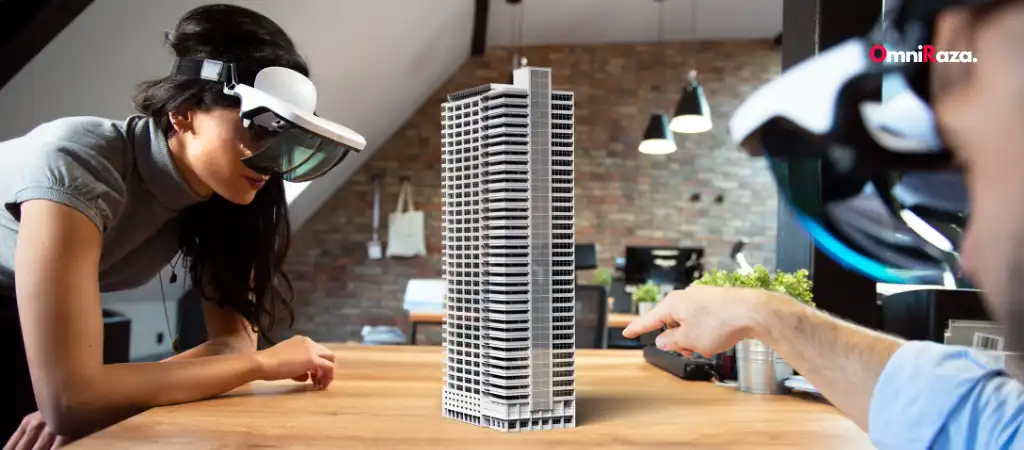
Augmented Reality (AR) is a technological innovation that blends the physical world with computer-generated elements, creating an enriched user experience by overlaying digital information onto real-world environments.
This comprehensive guide will delve into what augmented reality is, its history, components, applications, and provide a detailed example to illustrate its practical use.
What is Augmented Reality?
Definition and Concept
Augmented Reality (AR) is a technology that superimposes digital information—such as images, videos, sounds, and other data—onto the real-world environment in real-time. Unlike Virtual Reality (VR), which immerses users in a completely virtual environment, AR enhances the real world by adding interactive and informative layers. This blend of the real and virtual worlds creates a new dimension of interaction and perception for users.
History and Evolution
The concept of AR can be traced back to the 1960s when Ivan Sutherland developed the first head-mounted display system, which was rudimentary compared to today’s standards. In the 1990s, AR began to gain more traction with the advent of more advanced computing power and the development of more sophisticated display technologies.
The term “Augmented Reality” itself was coined by Tom Caudell in 1990 while working at Boeing. Since then, AR has evolved rapidly, especially with the proliferation of smartphones and tablets, which serve as accessible platforms for AR applications.
Components of Augmented Reality
Hardware
The hardware required for AR includes devices that can process digital information and display it over the real world.
Common AR hardware components include:
-
Smartphones and Tablets:
Equipped with cameras, sensors, and powerful processors, these devices are the most common platforms for AR applications.
-
AR Glasses and Headsets:
Devices like Microsoft HoloLens and Magic Leap offer more immersive AR experiences by providing hands-free interaction.
-
Wearables:
Smartwatches and other wearable devices can also support basic AR functionalities.
-
Projectors:
Used in spatial AR, projectors cast digital images onto physical surfaces.
Software
The software aspect of AR involves applications and platforms that process data from the real world and integrate it with digital information.
Key components include:
-
AR SDKs (Software Development Kits)
Tools like ARKit (Apple), ARCore (Google), and Vuforia enable developers to create AR applications.
-
Computer Vision
Technology that enables devices to understand and interpret the visual data from the real world.
-
3D Modelling
Software that creates and manipulates 3D digital objects which can be integrated into the AR environment.
Sensors and Cameras
Sensors and cameras play a critical role in AR by capturing the real world and enabling the overlay of digital information.
Essential sensors include:
-
Cameras
Capture the real-world environment.
-
GPS
Provides location-based data for location-specific AR applications.
-
Gyroscope and Accelerometer
Detect orientation and movement, essential for aligning digital content with the physical world.
Applications of Augmented Reality
Retail and E-Commerce
AR is transforming the retail sector by enhancing the shopping experience. Retailers use AR to create virtual fitting rooms where customers can try on clothes or accessories virtually. For example, IKEA’s AR app allows customers to visualize how furniture would look in their homes.
Education
AR has significant potential in education by making learning more interactive and engaging. AR can bring historical events to life, visualize complex scientific concepts, and provide immersive language learning experiences. Applications like Google Expeditions enable virtual field trips to various historical and scientific sites around the world.
Healthcare
In healthcare, AR is used for medical training, surgery assistance, and patient care. Surgeons can use AR to visualize internal organs and structures during operations, improving precision and outcomes. Medical students can use AR to study anatomy interactively.
Gaming and Entertainment
The gaming industry has been one of the most enthusiastic adopters of AR. Games like Pokémon GO have shown how AR can create engaging and interactive gaming experiences by blending digital elements with the real world.
Navigation and Travel
AR enhances navigation systems by overlaying directions onto the real world, making it easier to follow routes and find destinations. In travel, AR can provide interactive guides and information about historical sites and tourist attractions.
Augmented Reality With An Example: Pokémon GO
Overview of Pokémon GO
Pokémon GO is a prime example of how augmented reality can be successfully implemented to create an engaging and interactive user experience. Developed by Niantic, Inc., Pokémon GO is a mobile game that uses AR to bring the world of Pokémon into the real world.
How Pokémon GO Uses AR
Pokémon GO utilizes the camera and GPS features of smartphones to superimpose Pokémon characters into the real-world environment. Players can see and interact with these characters through their smartphone screens as if they were actually present in their surroundings.
Gameplay Mechanics
-
Capturing Pokémon
Players use their smartphones to find and capture Pokémon that appear in various real-world locations. The AR feature allows players to see the Pokémon in their actual surroundings through their phone’s camera.
-
PokéStops and Gyms
Real-world landmarks serve as PokéStops and Gyms where players can collect items and engage in battles. This encourages players to explore their surroundings and visit new places.
-
Events and Community Days
Regular in-game events and community days encourage players to gather in specific locations to catch rare Pokémon and participate in challenges, fostering social interaction.
Impact and Success
Pokémon GO’s success can be attributed to its innovative use of AR, which has created a new way for players to interact with the game and the real world. The game has:
-
Encouraged Physical Activity
By requiring players to walk around to find and catch Pokémon, the game promotes physical exercise.
-
Boosted Tourism
Many tourist spots have seen increased foot traffic due to their designation as PokéStops or Gyms.
-
Fostered Community Engagement
The game has brought people together, encouraging social interactions and community events.
Future of Augmented Reality
Technological Advancements
The future of AR is promising, with advancements in hardware and software continuously pushing the boundaries of what is possible. Developments in 5G technology, AI, and machine learning will further enhance AR’s capabilities, making it more immersive and accessible.
Integration with Other Technologies
AR is expected to integrate more deeply with other emerging technologies such as:
-
Artificial Intelligence
AI can enhance AR by providing more intelligent and context-aware interactions.
-
Internet of Things (IoT)
AR can visualize data from IoT devices, providing real-time information about the physical environment.
-
Blockchain
Ensuring secure and verifiable digital interactions within AR applications.
Expanded Applications
As AR technology matures, its applications will expand across various sectors, including:
-
Real Estate
Virtual property tours and interactive home staging.
-
Manufacturing
Enhanced visualization of assembly processes and machinery maintenance.
-
Social Media
More interactive and engaging ways to share content and experiences.
You Might Be Interested In
- How Does The Uae Stargate Project Impact Ai And Digital Infrastructure?
- How To Turn Off 5g On Iphone?
- AI in 2023: Our Greatest Ally or Our Greatest Threat?
- What Is Ai Workflow Management And How Does It Work?
- Which Of The Following Is True Of Protecting Classified Data
Conclusion
Augmented Reality (AR) is a transformative technology that enhances our interaction with the physical world by overlaying digital information onto real-world environments. From its early beginnings to its current applications in gaming, retail, education, healthcare, and beyond, AR continues to revolutionize the way we perceive and interact with our surroundings.
Pokémon GO serves as a quintessential example of AR’s potential, showcasing how it can create immersive, engaging experiences that blend the virtual and real worlds seamlessly. As AR technology advances and integrates with other emerging technologies, its applications will broaden, leading to even more innovative and impactful uses.
Embracing augmented reality with an example like Pokémon GO highlights the exciting possibilities and transformative power of this technology.
FAQs about Augmented Reality With An Example
What is Augmented Reality and how does it differ from Virtual Reality?
Augmented Reality (AR) is a technology that overlays digital information, such as images, videos, and sounds, onto the real-world environment in real-time. Unlike Virtual Reality (VR), which immerses users in a completely virtual environment,
AR enhances the real world by adding interactive and informative layers. AR allows users to interact with both the physical and digital worlds simultaneously, while VR creates a wholly artificial experience, isolating the user from the real world.
How does Augmented Reality work?
Augmented Reality works by using hardware such as smartphones, tablets, AR glasses, or headsets that are equipped with cameras and sensors. These devices capture the real-world environment and process the visual data.
Software applications, often developed using AR SDKs like ARKit or ARCore, interpret this data and overlay digital content onto the live camera feed. Sensors like GPS, gyroscopes, and accelerometers help in aligning the digital information accurately with the physical world, enabling a seamless integration of virtual elements into real-world settings.
Can you give a practical example of Augmented Reality in use?
A practical example of Augmented Reality is the mobile game Pokémon GO, developed by Niantic, Inc. In Pokémon GO, players use their smartphones to find and capture Pokémon characters that appear in real-world locations.
The game uses the phone’s camera and GPS to superimpose these characters onto the user’s surroundings. Players can see and interact with Pokémon through their phone screens as if they were actually present in their environment, creating an engaging and immersive gaming experience.
What are some common applications of Augmented Reality beyond gaming?
Beyond gaming, Augmented Reality has a wide range of applications in various fields:
- Retail and E-Commerce: Virtual fitting rooms and product visualization.
- Education: Interactive learning experiences and virtual field trips.
- Healthcare: Medical training, surgery assistance, and patient care.
- Navigation and Travel: Enhanced navigation systems and interactive travel guides.
- Manufacturing: Visualization of assembly processes and machinery maintenance. These applications demonstrate AR’s potential to enhance user experiences, improve efficiency, and provide new ways of interaction across different industries.
What is the future of Augmented Reality technology?
The future of Augmented Reality is promising, with continuous advancements in hardware, software, and related technologies. Developments in 5G, AI, and machine learning will further enhance AR’s capabilities, making it more immersive and accessible.
AR is expected to integrate more deeply with other technologies such as the Internet of Things (IoT) and blockchain, expanding its applications across various sectors. Potential future uses include more sophisticated real estate visualization, advanced manufacturing processes, and more interactive social media experiences.
As AR technology evolves, it will likely become an integral part of our daily lives, offering new ways to interact with and understand the world around us.
