

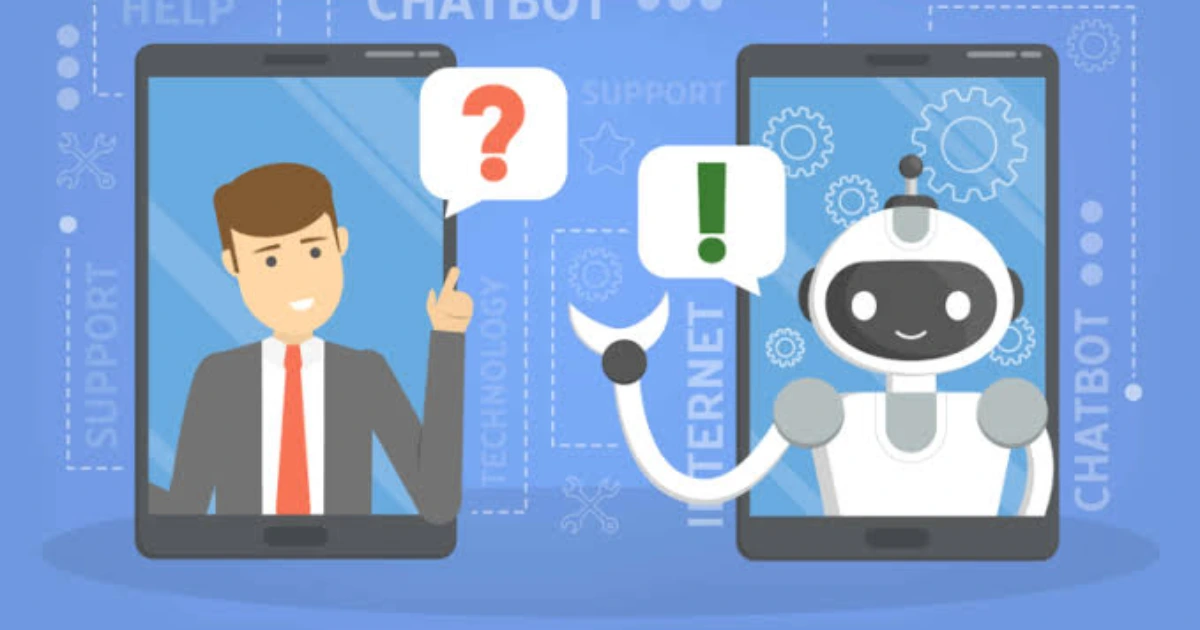
A customer contacts support at 11 PM because an order shows as delivered, but the package is missing. An AI chatbot might immediately retrieve the tracking status and explain the next steps. A human live chat agent could investigate delivery notes, recognize that the customer has already contacted support twice, and decide whether the case needs escalation.
That difference is central to AI Chatbot Automation vs Live Chat for Customer Support. One approach is designed to handle conversations automatically, while the other relies on people who can investigate, interpret circumstances, and make decisions.
Neither is automatically better. AI automation works particularly well for frequent, predictable requests. Human agents remain valuable when problems are complicated, sensitive, or require judgment. For many businesses, combining the two is more useful than choosing one exclusively.
The important question is not which system replies faster. It is which one actually solves the customer’s problem.
What Is the Difference Between AI Chatbot Automation and Live Chat?
AI chatbot automation uses software to interpret customer messages and provide responses or perform permitted actions. Live chat connects customers with human support agents who investigate and resolve their requests.
Both operate through messaging interfaces, but the work happening behind those interfaces is different.
What AI Chatbot Automation Actually Does
An AI chatbot receives a message, identifies what the customer is asking, and uses available information to prepare a response.
Depending on its configuration, it might search a knowledge base, retrieve an order status, or create a support ticket.
There is an important distinction between answering a question and completing a task. A chatbot might explain a refund policy without having permission to issue a refund.
Actual account changes, payments, and order updates require appropriate system integrations and authorization.
How Human Live Chat Support Works
With live chat, a customer communicates with an available support agent. The agent reads the message, checks relevant records, asks follow-up questions, and determines what action is appropriate.
Agents may have access to internal tools that customers cannot use directly.
They can also recognize unusual circumstances and escalate problems that fall outside standard procedures.
AI Chatbot vs Live Chat Comparison Table
| Factor | AI chatbot automation | Human live chat |
| Response speed | Usually immediate | Depends on queue and staffing |
| Availability | Can operate 24/7 | Depends on working hours |
| Human involvement | Limited until escalation | Direct involvement |
| Accuracy | Depends on data and configuration | Depends on agent knowledge |
| Personalization | Uses available customer context | Can interpret personal circumstances |
| Scalability | Handles many conversations concurrently | Requires sufficient staffing |
| Operating costs | Software, integrations, and usage | Salaries, training, and management |
| Complex problems | Limited by tools and permissions | Better suited to investigation and judgment |
These are operational tendencies, not guaranteed outcomes. A poorly configured chatbot can be less useful than a well-trained agent, while an overloaded human support team may struggle with simple requests.
How AI Chatbots and Live Chat Handle Customer Conversations
Consider what happens after a customer sends a message. The visible chat window may look identical, but the steps behind it determine whether the issue gets solved or merely acknowledged.
How an Automated Customer Support Conversation Works
Imagine a customer asking, “Where is my order?”
An automated support system generally follows a sequence:
- Receives the customer’s message.
- Identifies the request as order tracking.
- Retrieves relevant information from an authorized source.
- Generates a response based on that information.
- Offers further assistance or escalates when necessary.
If the chatbot is connected to the order management system, it may retrieve the latest delivery status.
Without that connection, it can only explain how the customer might find the information themselves.
This distinction matters because conversational intelligence does not automatically provide access to business records.
How a Live Chat Conversation Works
A human agent receives the request through a support dashboard.
The agent may check the customer’s order, review previous conversations, contact another department, or investigate conflicting information.
For a straightforward delivery question, these additional steps might be unnecessary.
For a missing package with contradictory tracking information, they could be essential.
Why AI Chatbots Are Different From Rule-Based Bots
Not every automated chatbot uses AI to understand natural language.
A rule-based chatbot follows predefined conditions, buttons, or decision trees. An AI-powered chatbot can interpret a wider variety of customer expressions, although it still needs boundaries and reliable information.
Consider a customer saying, “My package went to the wrong house, and I need it before Friday.”
A basic rule-based bot might offer buttons for tracking, returns, or delivery questions.
An AI chatbot may recognize both the delivery problem and the deadline, then guide the customer toward an appropriate resolution.
The distinction explored in AI Chatbot Automation vs Rule-Based Chatbots matters when businesses are deciding whether fixed conversation flows can handle their actual support requests.
AI is more flexible, but flexibility does not guarantee correct decisions.
AI Chatbot Automation vs Live Chat: Key Differences
A useful automation comparison needs to examine more than the features displayed on a software pricing page.
The real differences become apparent when customers need accurate answers, problems require investigation, or support demand increases unexpectedly.
Response Time and Availability
- AI chatbots can respond immediately, including outside normal business hours.
- Human live chat depends on agent availability, staffing schedules, and current conversation volume.
- That makes automation useful for businesses receiving questions across multiple time zones.
- However, response time and resolution time are different measurements.
A chatbot that replies in two seconds but fails to solve the problem has not necessarily provided better service than an agent who responds after a short wait and resolves the issue.
Accuracy and Problem Resolution
AI chatbot accuracy depends heavily on the information available to the system.
If a knowledge base contains an outdated return policy, the chatbot may confidently provide incorrect instructions.
Human agents can also make mistakes, especially when they are poorly trained or working with outdated records.
The difference is that an experienced agent may recognize contradictions, investigate unusual circumstances, and seek clarification.
Neither approach should operate without quality controls.
Personalization and Customer Understanding
Modern AI chatbots can use customer names, order histories, account information, and previous messages when these details are available through authorized integrations.
That creates useful contextual responses.
But personalization is not the same as understanding emotional circumstances.
A customer whose account was unexpectedly suspended may need someone who can investigate the reason, explain the decision, and consider exceptions.
Human agents are generally better positioned to handle these situations, provided they have the necessary authority.
Handling High Support Volumes
Automation is particularly useful when hundreds of customers ask similar questions.
An AI chatbot can process many conversations concurrently, subject to platform capacity and usage limits.
Human agents have finite attention. Supporting more simultaneous conversations can increase workload and mistakes.
Automation can reduce that pressure by resolving repetitive requests before they reach an agent.
Operating Costs and Scalability
AI chatbot costs typically include software subscriptions, implementation, integrations, maintenance, and potentially usage-based charges.
Human support costs involve staffing, training, supervision, scheduling, and equipment.
Automation may lower the cost of handling repetitive requests at scale, but complicated workflows can introduce substantial implementation expenses.
The meaningful financial comparison is not the price of one automated message versus one agent reply.
It is the cost of successfully resolving a customer’s issue without creating additional work.
Benefits and Limitations of AI Chatbot Automation
Automation becomes valuable when businesses apply it to problems that can be handled consistently.
It becomes frustrating when companies expect it to make decisions without sufficient information, permissions, or safeguards.
Where AI Chatbots Save Time
Consider an ecommerce store receiving the same delivery questions throughout the day.
Customers want to know when orders will arrive, how returns work, and whether particular products are available.
A properly connected chatbot can answer many of these requests without requiring an agent.
The same principle applies to appointment confirmations, subscription information, operating hours, and basic technical troubleshooting.
For example, a SaaS chatbot might guide a customer through password reset instructions before creating a support ticket.
This reduces repetitive work and allows human agents to concentrate on requests that require investigation.
Where Automated Support Can Fail
The biggest problems usually involve information quality, integrations, and escalation.
A chatbot might provide an incorrect answer because its knowledge base is outdated. It might misunderstand a request or continue asking questions that the customer has already answered.
Another common failure occurs when the chatbot recognizes a problem but cannot perform the necessary action.
For instance, it might understand that a customer needs a refund but lack access to the refund system.
Worse, a poorly designed workflow may repeatedly return the customer to the same menu.
Businesses can reduce these failures by maintaining accurate knowledge sources, testing realistic conversations, restricting sensitive actions, and making human escalation accessible.
An Ai Chatbot Automation guide can help teams understand these foundational workflows before introducing more complicated integrations.
Benefits and Limitations of Human Live Chat
Human live chat provides something automated systems cannot reliably reproduce in every situation: flexible investigation supported by judgment and organizational authority.
That advantage comes with operational responsibilities.
Where Human Agents Provide Better Support
Consider a customer who has been charged twice, received conflicting explanations, and now wants the issue corrected.
A human agent can review the payment history, recognize the inconsistency, and involve the billing department.
Human support is particularly useful for disputes, unusual technical failures, complaints, sensitive account issues, and requests requiring negotiation.
Agents can also adjust their explanations when customers appear confused or frustrated.
However, human involvement does not guarantee a good outcome.
An agent without adequate training, information, or permission may be unable to resolve the problem.
Why Human-Only Support Can Become Expensive
Human support requires scheduling, salaries, training, supervision, and enough agents to handle busy periods.
Coverage becomes more complicated when customers expect assistance during evenings, weekends, or across different time zones.
A small business may struggle to maintain continuous live chat without significant staffing expenses.
Staffing is not only about headcount. An agent juggling multiple conversations may miss a detail, especially when the same basic questions keep arriving.
When agents spend most of their time answering repetitive questions, they have less attention available for difficult cases.
This is where carefully selected automation can improve human support rather than replace it.
When Should Businesses Use AI Chatbots Instead of Live Chat?
The best approach depends on what customers are asking, what information is available, and how much risk is involved in giving an incorrect answer.
Routine Questions and Order Tracking
AI chatbots are well suited to questions with clear, verifiable answers.
Examples include shipping policies, business hours, appointment schedules, and product specifications.
Order tracking is also a strong use case when the chatbot can securely retrieve current information from the order management system.
Without that integration, its usefulness is limited.
Billing Issues and Technical Troubleshooting
Some billing and technical requests can be partially automated.
A chatbot might explain subscription plans, provide invoice download instructions, or guide users through basic troubleshooting.
However, disputed charges, unusual account activity, and unresolved technical errors often require human involvement.
Businesses should avoid allowing automated systems to make sensitive account changes without appropriate authorization and verification.
Complaints, Refunds, and Sensitive Requests
A chatbot can collect information about a complaint or refund request.
It might verify eligibility against a clear policy and initiate an approved workflow.
But exceptions, disagreements, suspected fraud, and sensitive circumstances require stronger controls.
Human review is often the safer approach when the decision could significantly affect the customer.
Ecommerce, SaaS, and Service Business Examples
An ecommerce store may automate delivery updates and return instructions while directing disputed refunds to an agent.
A SaaS company might automate common setup questions but assign complicated account failures to technical support.
A service business could automate appointment availability while leaving custom quotations and complaints to staff.
These examples also illustrate the distinction between customer-facing conversations and internal process automation.
The comparison in AI Chatbot Automation vs RPA becomes relevant here. Conversational automation handles customer interaction, while robotic process automation generally executes structured tasks across business systems.
The two can work together, but they solve different problems.
How AI Chatbots and Human Agents Work Together
For many support teams, the most practical arrangement is a hybrid system.
Automation handles suitable requests first, while human agents remain available for situations that require investigation or judgment.
How a Hybrid Support Workflow Operates
A customer contacts support and explains the problem.
The chatbot identifies the request and checks whether it can provide a reliable answer or complete an authorized action.
If the request involves order tracking, the chatbot may retrieve the relevant information and resolve the conversation.
If the customer reports an unexplained account suspension, the system can collect basic details and transfer the request to an appropriate agent.
This arrangement helps reduce unnecessary agent workload without forcing every customer through automation indefinitely.
The test is whether the customer reaches a useful next step. If the bot cannot verify an order, it should explain the limitation and route the request instead of inventing a status.
When AI Should Transfer a Customer to a Human
Escalation should occur when automation is unlikely to resolve the request safely.
Useful triggers include repeated unsuccessful answers, missing account information, low-confidence responses, sensitive billing problems, and requests outside the chatbot’s permissions.
Customers should also be able to request a human directly.
A chatbot that repeatedly ignores that request can turn a simple support interaction into a frustrating experience.
Businesses should define escalation rules before launching automation, rather than waiting for complaints to reveal the problems.
How to Avoid Making Customers Repeat Information
A good handoff carries forward the work already done. That means the agent sees the issue, relevant identifiers, any verification status, and the steps the chatbot attempted—not just a notification that someone wants help.
Suppose a customer tells a chatbot that an order arrived damaged and uploads a photograph.
When the conversation reaches an agent, the agent should ideally receive the order reference, the customer’s explanation, the image, and a short summary of actions already attempted.
The agent can then begin investigating instead of asking the customer to start again.
This requires the support platform to preserve and transfer conversation context.
If the platform cannot do that, the business should acknowledge the limitation and collect only the information the agent genuinely needs.
An effective hybrid system should make escalation feel like a continuation of support, not a restart.
AI Chatbot vs Live Chat Costs: What Businesses Actually Pay
Comparing support costs requires looking beyond subscription prices and employee salaries.
A cheap support system that fails to resolve requests may create more expense through repeated contacts, refunds, complaints, and manual corrections.
AI Chatbot Setup, Subscription, and Usage Costs
AI chatbot expenses may include platform subscriptions, API usage, messaging charges, system integrations, and ongoing maintenance.
Some providers charge according to conversations, messages, resolutions, or usage volume.
More advanced implementations may require developers to connect order systems, customer databases, and ticketing platforms.
Businesses should also account for testing, monitoring, and correcting inaccurate responses.
Human Agent Staffing and Support Costs
Human live chat requires employees or outsourced support providers.
Expenses include salaries, training, management, software, equipment, and coverage across shifts.
A small team may be affordable when support volume is limited.
As demand grows, maintaining acceptable response times can require additional staffing.
How to Calculate Cost per Resolved Conversation
A useful starting calculation is:
Consider a hypothetical business spending $2,000 per month on support and successfully resolving 1,000 conversations.
Its cost per resolved conversation is $2.
If automation increases message volume but customers repeatedly contact support about unresolved problems, the cost per response may look attractive while the actual resolution cost worsens.
Businesses should use consistent definitions of successful resolution and examine repeat contacts alongside this calculation.
Common Mistakes When Replacing Live Chat With AI Automation
Most unsuccessful automation projects do not fail simply because the chatbot lacks advanced language capabilities.
They fail because the business gives automation responsibilities that the system cannot reliably handle.
Automating Problems That Require Human Judgment
A chatbot should not independently approve complicated exceptions, resolve sensitive disputes, or make decisions beyond its authorization.
Businesses should separate routine, policy-based actions from requests requiring discretionary judgment.
Approval rules and permission limits need to be established before deployment.
Making Human Support Difficult to Access
Some businesses treat every escalation as an automation failure.
That creates systems designed to keep customers talking to a chatbot even when it cannot help.
The result is repeated questions, unnecessary delays, and frustrated customers.
Human handoff should be a normal part of the support process.
Using Outdated Information or Unchecked AI Answers
Automation is only as dependable as its information sources and operating controls.
Outdated refund policies, missing product updates, and incorrect troubleshooting instructions can produce misleading answers.
Teams should review failed conversations, update knowledge sources, and test common customer requests after meaningful policy or system changes.
An effective chatbot requires ongoing maintenance, not just an initial setup.
How to Choose the Right Customer Support Approach
The decision should begin with actual customer requests rather than assumptions about what AI can accomplish.
A business handling mostly routine inquiries has different requirements from one managing complicated technical support or sensitive financial complaints.
Review Your Most Common Customer Requests
Examine a representative sample of recent support conversations.
Identify which requests occur most frequently, how complicated they are, and whether incorrect answers could create significant problems.
For example, shipping questions may be frequent and relatively straightforward.
Account access disputes may occur less often but require careful investigation.
This distinction helps identify useful automation opportunities.
Decide What Can Be Automated Safely
Start with requests that have clear answers, reliable information sources, and limited consequences if clarification is needed.
Then consider which actions require system integrations, identity verification, or human approval.
Do not automate sensitive decisions merely because a chatbot can generate a convincing response.
Pilot a small set of workflows using real, anonymized support scenarios. Test successful requests, ambiguous wording, missing records, repeated failures, and requests for a person. Only expand after checking how often the bot resolves the issue correctly and how it behaves when it cannot.
Track Resolution Quality and Customer Satisfaction
Businesses should measure outcomes rather than simply counting chatbot conversations.
Useful indicators include successful resolution rate, escalation rate, repeat contact rate, customer satisfaction, and cost per resolved conversation.
A high escalation rate is not necessarily bad if the chatbot is correctly identifying requests that need human attention.
Similarly, a low escalation rate is not impressive when customers abandon conversations without receiving help.
Compare these measurements before and after implementation, and review actual conversations to understand the reasons behind changes.
Review the transcripts behind the numbers. If customers keep contacting support about the same issue, investigate the workflow rather than celebrating the first-response metric.
AI Chatbot Automation vs Live Chat: Which Is Better?
The choice is less about whether AI can answer a message and more about whether it can finish the job safely. For routine questions with reliable information and approved integrations, automation can remove unnecessary waiting. When a customer needs an exception, a careful investigation, or a sensitive decision, a capable human agent is the better route.
For teams handling both types of requests, start with a hybrid workflow: automate the predictable, set clear escalation rules, and pass conversation context to agents. Measure resolved issues and repeat contacts—not just fast replies. A customer who gets a correct answer and knows what happens next has received better support, regardless of who typed it.
You Might Be Interested In
- How AI Data Analysis Finds Patterns?
- Setting Escalation Rules for Automated Chatbot Conversations
- How AI Machine Learning Learns from Data?
- How AI Email Automation Organizes Messages?
- What an AI Automation Platform Does?
Conclusion
Choosing between AI Chatbot Automation vs Live Chat depends on the types of customer requests your business receives and how much human involvement those requests require. AI chatbots work well for repetitive questions, order tracking, and basic troubleshooting, while human agents are better equipped to handle complicated complaints, sensitive issues, and situations requiring judgment.
For many businesses, combining automation with human live chat is the most practical approach. Chatbots can handle routine conversations around the clock, while support agents step in when a problem needs deeper investigation.
Ultimately, faster replies don’t always mean better customer support. What matters is whether customers receive accurate answers and have their problems resolved without unnecessary frustration.
Recommended placement: Put this conclusion after “How to Choose the Right Customer Support Approach” and before the five FAQs. Remove the existing “Which Is Better?” closing section to prevent duplication.
