

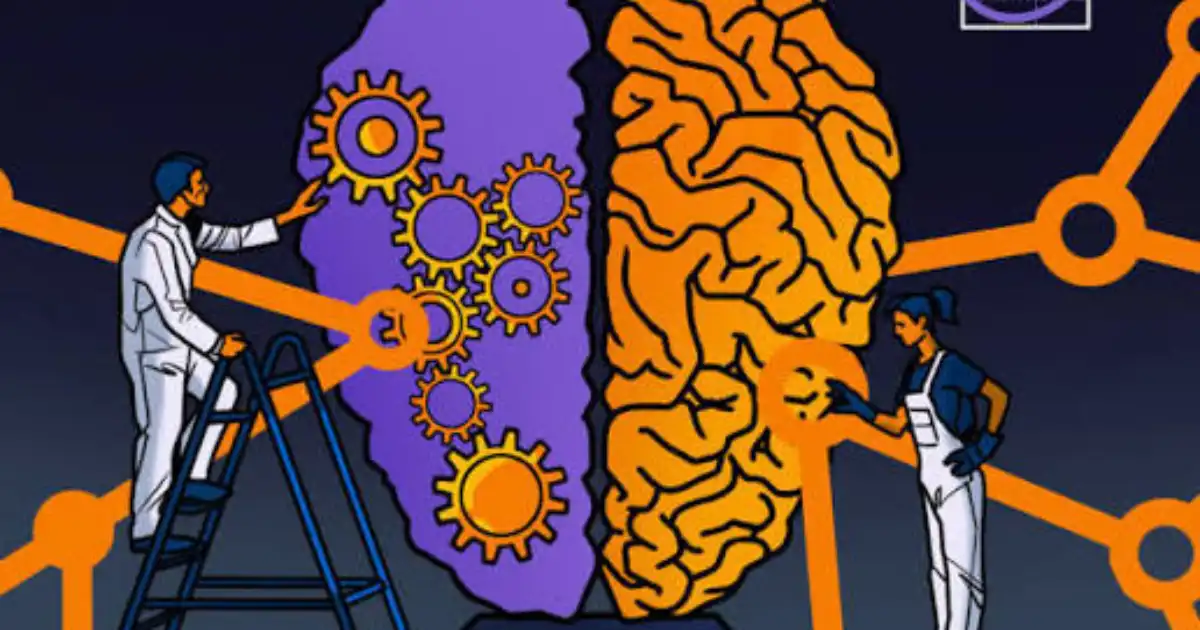
Artificial intelligence often feels mysterious because people describe it as if machines “think” or “understand” the world like humans. In reality, AI does something very different. It learns by analyzing large amounts of data, finding patterns, and improving its predictions based on experience.
When people ask, “How does AI learn?”, they are usually imagining a computer being taught like a student in a classroom. But machine learning does not work through explanations, opinions, or human-like understanding. Instead, AI models study examples, identify mathematical relationships, and use those relationships to make decisions or predictions.
For example, when a recommendation system suggests a movie you might enjoy, it is not because the AI knows your personality. It has analyzed patterns from your previous activity, similar users’ behavior, viewing history, and many other data points. It predicts what you may like based on patterns found in data.
The same idea applies to spam detection, voice assistants, image recognition, fraud detection, and medical AI systems. Behind every AI application is a process where data becomes information, information becomes patterns, and patterns become predictions.
Understanding how AI Machine Learning Learns from Data starts with understanding one important idea: data is the experience that allows an AI system to improve.
What Does It Mean for AI to Learn From Data?
Traditional computer programs usually work through instructions written by developers. A programmer creates rules, and the computer follows those rules exactly.
For example, a traditional program for calculating taxes may have rules such as: if income is above a certain amount, apply a specific tax rate. The computer does not discover anything by itself. It simply follows programmed instructions.
Machine learning works differently. Instead of telling the computer every possible rule, developers provide examples and allow machine learning algorithms to discover patterns within those examples.
Imagine trying to create a system that identifies whether an email is spam. A traditional approach would require programmers to manually create thousands of rules, such as “emails containing this word are probably spam” or “emails from this type of sender should be blocked.” This becomes extremely difficult because spam constantly changes.
With machine learning, developers provide the AI model with thousands or millions of examples of spam and non-spam emails. The model analyzes these examples and learns patterns that often appear in unwanted messages.
The AI does not understand that an email is “annoying” or “dangerous” in a human sense. It learns statistical relationships between words, structures, senders, and behaviors.
This is the foundation of AI learning. The system does not memorize a simple list of answers. It creates a mathematical model that can make predictions when it sees new information.
Why Data Is the Foundation of Machine Learning
Data is the raw material that allows artificial intelligence systems to learn. Without data, machine learning models have nothing to analyze and no examples from which to discover patterns.
A machine learning system learns from training data. This data can come in many forms, including text, images, audio recordings, videos, numbers, and user behavior.
For example, an AI system designed to recognize animals in images needs thousands or millions of labeled pictures. A healthcare AI system may need medical images and patient records. A recommendation system may analyze searches, purchases, ratings, and viewing behavior.
However, having more data does not automatically create better AI.
One common mistake people make is assuming that larger amounts of data always lead to smarter systems. In practice, data quality is often more important than data quantity.
If an AI model is trained using incorrect, incomplete, or biased information, it can produce unreliable results.
For example, imagine training an AI system to recognize different types of vehicles, but most training images only show cars during daylight. The model may struggle when seeing vehicles at night or in unusual conditions because it has not learned from enough variety.
The quality of training data directly affects the quality of AI predictions.
How AI Machine Learning Learns From Data Step by Step
The AI learning process involves several stages. Although modern AI systems can be highly complex, the basic journey remains:
Data collection → Data preparation → Model training → Pattern recognition → Improvement → Predictions
Each stage plays an important role in creating useful AI models.
Collecting Data
The first step in machine learning is gathering information that the AI system can learn from.
Different AI applications require different types of data.
Text data is used for language models, search systems, and chatbots. These systems learn from examples of human language, sentences, conversations, and written information.
Image data is used for computer vision systems. For example, an AI model that detects objects in photographs needs many images showing different objects from different angles.
Audio data helps AI systems understand speech. Voice assistants learn from recordings of spoken language, pronunciation patterns, and different accents.
Video data is useful for systems that need to understand movement and activities, such as security monitoring or self-driving vehicles.
Numerical data is common in areas like finance, healthcare, and predictive analytics. Examples include transaction records, temperature measurements, customer behavior, or medical information.
User behavior data is another important source. Recommendation platforms learn from actions such as clicks, searches, purchases, and viewing history.
The goal is not simply to collect information. The goal is to collect useful examples that represent the real-world situation the AI will handle.
Preparing and Cleaning Data
Many people imagine that the hardest part of AI is creating complicated algorithms. In real-world machine learning projects, data preparation is often one of the most difficult and time-consuming steps.
Before data can be used for machine learning training, it usually needs to be cleaned and organized.
Real-world data is often messy. It may contain missing information, duplicate records, incorrect labels, or inconsistent formats.
For example, if an AI model is learning to identify cats and dogs from images, each image needs the correct label. If many dog images are accidentally labeled as cats, the model receives incorrect information during training.
This process is called data preprocessing.
Data preprocessing may include removing errors, organizing information, converting data into usable formats, and selecting the most important information.
Good data preparation helps AI models learn accurate patterns instead of learning mistakes.
Feeding Data Into Machine Learning Algorithms
After data preparation, the information is provided to machine learning algorithms.
An algorithm is a method that helps the AI model analyze data and discover relationships.
During this stage, the model examines examples and looks for patterns that can help it make predictions.
Consider a house price prediction system. The AI may analyze thousands of examples containing information such as location, size, number of rooms, and previous selling prices.
Over time, the model identifies relationships between these factors and house prices.
It may discover that houses in certain areas usually cost more, larger homes tend to have higher prices, and some features influence value more than others.
The AI is not manually told these rules. It discovers them through analysis.
Finding Patterns
Pattern recognition is the core ability behind machine learning.
AI models look for repeated relationships in data. These patterns allow them to make predictions about new situations.
For example, an image recognition system does not see a dog the same way a person does. Humans recognize a dog because of experience, memory, and understanding.
An AI model analyzes mathematical patterns such as shapes, colors, textures, and arrangements of pixels.
During training, the model learns that certain combinations of visual features often represent a dog.
Similarly, a customer behavior model may discover that people who buy certain products often purchase related items later.
These patterns allow AI systems to perform tasks such as recommendations, forecasting, classification, and automation.
Learning Through Feedback and Improvement
Machine learning models improve through feedback.
During training, the AI makes predictions and compares those predictions with the correct answers.
If the prediction is wrong, the model adjusts its internal parameters and tries again.
This process happens repeatedly, sometimes millions of times.
For example, an AI model learning to recognize handwritten numbers may first make many mistakes. After analyzing more examples and correcting errors, it gradually becomes better at identifying numbers accurately.
This improvement process is a key part of machine learning training.
The model is not becoming intelligent like a human. It is becoming better at finding patterns that help it produce accurate results.
What Happens During Machine Learning Training?
Machine learning training is the stage where an AI model learns from examples.
Developers usually divide data into different groups.
Training data is used to teach the model. This is where the AI discovers patterns.
Validation data is used during development to check whether the model is improving.
Testing data is used to evaluate how well the final model performs on information it has never seen before.
A major challenge is making sure the AI has actually learned patterns instead of simply memorizing examples.
This problem is called overfitting.
An overfitted AI model performs extremely well on training data but struggles with new situations because it has memorized specific examples instead of learning general patterns.
A good AI model should be able to handle new information accurately.
Different Ways AI Learns From Data
Supervised Learning
Supervised learning is one of the most common approaches in machine learning.
In supervised learning, the AI learns from labeled examples. The correct answer is already provided during training.
For example, an email dataset may include messages labeled as “spam” or “not spam.” The AI studies these examples and learns how to classify future emails.
Other examples include predicting house prices, identifying objects in images, and detecting medical conditions.
Unsupervised Learning
Unsupervised learning works with data that does not have predefined labels.
Instead of being told what to look for, the AI searches for hidden patterns.
For example, a company may use unsupervised learning to group customers based on purchasing behavior. The AI may discover different customer segments without being given categories beforehand.
It is also used for finding unusual activity, such as detecting possible fraud.
Reinforcement Learning
Reinforcement learning is based on learning through rewards and mistakes.
The AI system takes actions, receives feedback, and improves its future decisions.
This approach is commonly used in robotics, game-playing AI, and systems that need to make decisions over time.
For example, a robot learning to move may receive positive feedback when it completes a task correctly and negative feedback when it makes mistakes.
How Neural Networks Help AI Learn Complex Data
Neural networks are a type of machine learning model inspired loosely by the structure of the human brain.
They are especially useful for handling complex information such as images, speech, and language.
A neural network contains layers that process information step by step.
For image recognition, an early layer may detect simple features like edges and colors. Later layers combine these features into more complex patterns, eventually recognizing objects.
The process may look like:
Pixels → Shapes → Features → Objects → Recognition
Deep learning uses neural networks with many layers, allowing AI systems to learn complex patterns from large amounts of data.
Neural networks power many modern AI applications, including speech recognition, image generation, language models, and computer vision systems.
Real-World Examples of AI Learning From Data
Recommendation Systems
Recommendation systems learn from user behavior.
They analyze information such as searches, clicks, viewing habits, ratings, and purchases.
Over time, AI models identify patterns and predict what content or products a user may prefer.
The system does not know your personal interests like a friend would. It simply recognizes similarities between your behavior and patterns found among millions of users.
Voice Assistants
Voice assistants learn from speech data.
They analyze pronunciation, language patterns, and context to understand spoken requests.
The AI improves by processing more examples of human speech and learning how people communicate.
Healthcare AI
Healthcare AI systems use medical images, patient information, and historical data to identify patterns.
For example, AI can assist doctors by analyzing medical scans and highlighting areas that may require attention.
However, healthcare AI requires careful testing because incorrect predictions can have serious consequences.
Self-Driving Vehicles
Self-driving systems learn from cameras, sensors, maps, and driving data.
They analyze examples of roads, vehicles, pedestrians, and different driving conditions.
The goal is to recognize patterns that help vehicles make safer decisions.
Does AI Really Understand What It Learns?
AI can recognize patterns extremely well, but it does not understand information in the same way humans do.
A language model can generate sentences, but it does not have emotions, personal experiences, or human awareness.
An image recognition system can identify a dog, but it does not understand what a dog means emotionally or culturally.
This difference is important because AI can produce impressive results while still making mistakes when faced with situations outside its training experience.
Challenges and Limitations of AI Learning From Data
Poor Data Quality
AI systems depend heavily on the information they receive.
Incorrect or incomplete data can create inaccurate predictions.
The quality of AI output is limited by the quality of its input.
Bias in Training Data
AI models can learn biases that exist in their training data.
If historical data contains unfair patterns, an AI system may reproduce those patterns.
This is why careful data selection and testing are important.
Overfitting
Overfitting happens when AI memorizes training examples instead of learning general patterns.
A model that performs well during testing but fails in real situations may have this problem.
Privacy Concerns
Many AI systems require large amounts of data, creating concerns about how personal information is collected, stored, and used.
Responsible AI development requires protecting user privacy.
Computing Requirements
Advanced AI models require significant computing power, storage, and infrastructure.
Training large neural networks can require specialized hardware and substantial resources.
Future of AI Learning From Data
AI learning methods continue to improve, but the future is likely to focus on making AI more efficient, reliable, and responsible.
Researchers are developing smaller AI models that require less computing power while maintaining strong performance.
Future AI systems may also learn more efficiently from smaller amounts of data and work alongside humans rather than simply replacing human decision-making.
The most useful AI systems will likely be those that combine machine capabilities with human judgment, creativity, and experience
How AI Machine Learning Learns From Data?
Artificial intelligence often seems like magic because people see the final result without seeing the process behind it. A voice assistant answers questions, a streaming platform recommends a movie, or an AI tool creates content within seconds. This can make it feel like machines somehow “understand” information the way humans do.
The reality is different. AI does not learn through human experience, emotions, or common sense. It learns by analyzing data, finding patterns, and improving its ability to make predictions.
When we talk about how AI Machine Learning Learns from Data, we are really talking about a process where machines receive examples, study relationships inside those examples, and build mathematical models that can handle new situations.
A simple way to think about it is this: data is the experience, machine learning algorithms are the learning method, and AI models are the result of that learning process.
For example, a spam detection system does not know what a “bad email” means. It studies thousands or millions of examples of spam and normal messages. It notices patterns such as unusual wording, suspicious links, sender behavior, and email structure. Over time, it becomes better at predicting whether a new email is likely to be spam.
The same learning process happens in image recognition, healthcare systems, recommendation engines, fraud detection, and many other AI applications.
Understanding this process helps remove the mystery around AI. Behind every intelligent-looking system is a structured journey:
Data collection → Data preparation → Machine learning training → Pattern recognition → Model improvement → Predictions
What Does It Mean for AI to Learn From Data?
Machine learning is a method that allows computers to improve their performance by learning from examples instead of relying only on manually written instructions.
Traditional software follows fixed rules. A programmer writes instructions, and the computer executes them. If you want the program to handle a new situation, someone usually has to add new rules.
Machine learning takes a different approach.
Instead of writing every possible rule, developers provide large amounts of data and allow the system to discover relationships inside that information.
Imagine building a system that can identify whether a photo contains a dog. A traditional program would require thousands of manually created rules describing what makes something a dog. This would be extremely difficult because dogs appear in different colors, sizes, environments, and positions.
A machine learning system approaches the problem differently. Developers provide many examples of dog images and non-dog images. The AI model analyzes these examples and learns patterns that are commonly associated with dogs.
It may learn that certain combinations of shapes, textures, colors, and features usually represent a dog.
However, the AI does not actually know what a dog is. It does not understand animals, emotions, or the meaning behind the image. It recognizes patterns that help it make accurate predictions.
This difference is important because many people assume AI thinks like humans. In reality, AI learning is based on mathematics, probability, and pattern recognition.
Why Data Is the Foundation of Machine Learning
Every machine learning system begins with data. Without data, an AI model has nothing to study and no examples from which to learn.
Data provides the information that allows AI systems to discover relationships.
- Different AI applications require different types of data.
- A language-based AI system learns from text, conversations, documents, and examples of human communication.
- An image recognition system learns from pictures and visual information.
- A speech recognition system learns from audio recordings and language patterns.
- A financial prediction system learns from numbers, transactions, and market information.
- A recommendation system learns from user behavior, such as searches, clicks, purchases, and viewing habits.
- The type of data determines what an AI system can learn.
However, one of the biggest lessons from real-world AI projects is that more data does not automatically create better results.
Many people assume that collecting millions of examples will always improve AI performance. In practice, poor-quality data can damage an AI model even when the dataset is extremely large.
For example, imagine training an AI system to recognize medical conditions using thousands of medical images. If those images contain incorrect labels or inconsistent information, the model may learn the wrong patterns.
An AI model is only as reliable as the information it learns from.
This is why data quality, accuracy, diversity, and proper preparation are some of the most important parts of machine learning.
How AI Machine Learning Learns From Data Step by Step
The AI learning process involves several stages. Each stage transforms raw information into a system capable of making useful predictions.
Collecting Data
The first stage is collecting relevant data.
AI systems need examples that represent the real situations they will handle.
For example, an AI model designed to recognize human speech needs thousands or millions of audio examples from different speakers, accents, speaking speeds, and environments.
A self-driving vehicle system needs information from cameras, sensors, maps, and driving situations.
A recommendation system needs user behavior data, including what people watch, search, click, or purchase.
Data can come from many sources:
- Text data helps AI understand language patterns.
- Image data helps AI recognize visual information.
- Audio data helps AI understand speech and sounds.
- Video data helps AI analyze movement and activities.
- Numerical data helps AI identify trends and relationships.
- User behavior data helps AI predict preferences and actions.
The goal is not simply collecting large amounts of information. The goal is collecting useful and representative examples.
Preparing and Cleaning Data
Before AI can learn, data usually needs to be prepared.
This step is called data preprocessing.
In real-world projects, collected data is rarely perfect. It may contain missing values, duplicate information, incorrect labels, or inconsistent formats.
For example, if an AI system is learning to identify different types of vehicles, every training image needs the correct label. If a picture of a truck is labeled as a car, the AI receives incorrect information during learning.
Small errors in training data can create larger problems later.
Data preparation may involve:
- Removing incorrect information.
- Fixing missing details.
- Organizing data into useful formats.
- Checking labels for accuracy.
- Selecting important information.
This stage often requires significant human effort. Many people focus on algorithms and models, but experienced AI developers know that preparing good data is often one of the hardest parts of creating reliable AI.
Feeding Data Into Machine Learning Algorithms
After data preparation, the information is provided to machine learning algorithms.
Algorithms are methods that allow computers to analyze information and identify patterns.
During this stage, the AI model examines examples and tries to understand relationships between different elements.
Consider an AI system that predicts house prices.
The model receives examples containing information such as:
- Location.
- House size.
- Number of rooms.
- Previous sale prices.
- Nearby facilities.
The algorithm analyzes thousands of examples and begins identifying relationships.
It may discover that larger homes usually cost more, certain locations have higher values, and specific features influence pricing.
The AI is not given a simple rule saying “large houses are expensive.” Instead, it discovers patterns through analysis.
Finding Patterns
- Pattern recognition is the core of machine learning.
- AI models search for repeated relationships inside data.
For example, an AI system that detects fraud may analyze thousands of transactions and discover that certain combinations of activities are unusual.
A recommendation system may notice that people who watch one type of content often enjoy similar content.
A healthcare AI system may recognize patterns in medical images that are difficult for humans to detect quickly.
These systems do not understand situations in a human way. They identify statistical relationships that help them predict outcomes.
Learning Through Feedback and Improvement
Machine learning models improve by making predictions, comparing results, and adjusting themselves.
- During training, the AI produces an output.
- The system checks how close that output is to the correct answer.
- If the prediction is inaccurate, the model adjusts its internal calculations.
- This process repeats many times.
For example, an AI model learning image recognition may initially confuse different objects. After analyzing more examples and correcting mistakes, it gradually becomes more accurate.
This process is the foundation of AI model training.
The model improves because errors provide information about what needs to change.
What Happens During Machine Learning Training?
Machine learning training is the stage where an AI model learns from data.
- Developers usually divide available data into different groups.
- Training data teaches the model.
- Validation data helps developers measure improvement during development.
- Testing data checks whether the model works correctly on new information.
- A major challenge is making sure the AI has learned general patterns rather than memorizing examples.
- This problem is known as overfitting.
For example, a student who memorizes answers for a test without understanding the subject may perform well on familiar questions but struggle with new problems.
AI models can behave similarly. A model that memorizes training examples may appear accurate but fail in real situations.
Good machine learning training focuses on creating models that can handle information they have never seen before.
Different Ways AI Learns From Data
Supervised Learning
- Supervised learning is one of the most common machine learning approaches.
- In this method, AI learns from labeled data. Each example includes the correct answer.
- For example, an email dataset may contain thousands of messages labeled as spam or not spam.
- The AI studies these examples and learns patterns that help it classify future emails.
- Supervised learning is commonly used for image classification, customer predictions, medical analysis, and forecasting.
Unsupervised Learning
Unsupervised learning allows AI to discover hidden patterns without predefined answers.
The system analyzes data and identifies groups or relationships by itself.
For example, a business may use unsupervised learning to understand customer groups based on purchasing behavior.
The AI may discover different customer patterns without being told what categories to create.
This approach is useful for finding trends, detecting unusual behavior, and exploring complex datasets.
Reinforcement Learning
Reinforcement learning works through rewards and mistakes.
The AI takes actions, receives feedback, and improves future decisions.
This approach is often used in robotics, games, and systems that need to make decisions over time.
For example, a robot learning how to move may receive positive feedback when it performs correctly and negative feedback when it makes mistakes.
How Neural Networks Help AI Learn Complex Data
Neural networks are advanced machine learning models designed to handle complex patterns.
They are inspired by the way human brains process information, although they do not work exactly like human brains.
Neural networks contain layers that process information step by step.
For image recognition, the process may look like:
Pixels → Simple shapes → Features → Objects → Recognition
Early layers detect basic details.
Middle layers combine those details into meaningful patterns.
Later layers help identify complete objects.
Deep learning uses neural networks with many layers, allowing AI systems to process highly complex information.
Neural networks are used in speech recognition, image generation, language systems, and many modern AI applications.
Real-World Examples of AI Learning From Data
Recommendation Systems
Recommendation systems learn from user activity.
They analyze searches, purchases, viewing history, ratings, and interactions.
The AI identifies patterns between user behavior and content preferences.
This allows platforms to predict what someone may want to watch, buy, or explore.
Voice Assistants
Voice assistants learn from speech patterns.
They analyze pronunciation, language structures, and context.
The system improves by processing more examples of human communication.
Healthcare AI
Healthcare AI learns from medical images, patient information, and historical records.
It can help identify patterns that support medical professionals in diagnosis and decision-making.
However, human oversight remains important because medical decisions require careful judgment.
Self-Driving Vehicles
Self-driving systems learn from cameras, sensors, maps, and driving examples.
They analyze roads, vehicles, pedestrians, and environmental conditions.
The goal is to recognize patterns that help vehicles respond safely.
Does AI Really Understand What It Learns?
AI can process information and recognize patterns, but it does not understand the world like humans.
A chatbot can generate meaningful sentences, but it does not have feelings or personal experiences.
An image model can recognize a face, but it does not understand the person’s identity or emotions.
This limitation matters because AI can sometimes produce incorrect results while appearing confident.
Understanding the difference between pattern recognition and true understanding helps people use AI more responsibly.
Challenges and Limitations of AI Learning From Data
Poor Data Quality
Poor-quality data can create poor AI results.
If training information is inaccurate, incomplete, or outdated, the model may learn incorrect patterns.
Bias in Training Data
AI can inherit biases from the data it learns from.
If historical information contains unfair patterns, AI models may reproduce those issues.
Careful testing and responsible development are necessary.
Overfitting
Overfitting occurs when AI memorizes training examples instead of learning general patterns.
This reduces performance when the model encounters new situations.
Privacy Concerns
AI systems often require large amounts of information.
Collecting and storing personal data creates important privacy challenges.
Computing Requirements
Advanced AI models require powerful computers, large storage systems, and significant resources.
Training complex models can be expensive and technically demanding.
Future of AI Learning From Data
The future of AI will likely focus on creating systems that learn more efficiently and responsibly.
Researchers are working on smaller AI models that require fewer resources, improved learning methods, and better ways to combine human expertise with machine intelligence.
AI will continue becoming more useful, but realistic expectations are important.
The most valuable AI systems will not simply replace human thinking. They will support people by handling complex data analysis, finding patterns, and assisting with better decisions.
You Might Be Interested In
- How Smart Devices Connect to the Internet?
- What AI Predictive Analytics Can Do?
- How AI Document Automation Saves Time?
- How AI Customer Support Improves Service?
- What Web Hosting Does for Websites?
Conclusion
AI machine learning is not about computers thinking like humans or magically becoming intelligent. At its core, it is a process of learning from examples, discovering patterns, and improving predictions through experience with data.
The journey begins with collecting useful information, preparing and cleaning that data, and feeding it into machine learning algorithms. The AI model then analyzes relationships, identifies patterns, learns from mistakes, and becomes better at handling new situations.
The quality of data plays one of the biggest roles in determining how well AI performs. Good data helps AI models make accurate predictions, while poor or biased data can lead to unreliable results. This is why real-world AI development involves much more than creating algorithms. Careful data preparation, testing, and continuous improvement are essential.
FAQs
How does AI learn from data?
AI learns from data by analyzing large amounts of examples and identifying patterns that help it make predictions or decisions. During the machine learning process, AI models are given training data that contains information related to the task they need to perform. Machine learning algorithms examine this data, detect relationships between different elements, and adjust the model based on the accuracy of its results.
For example, an AI system designed to recognize images learns by studying thousands or millions of labeled pictures. It does not memorize every image individually. Instead, it learns patterns such as shapes, colors, textures, and features that help it identify similar objects in new images. The more accurate and relevant the training data is, the better the AI model can perform.
Does AI need a lot of data to learn?
AI systems often benefit from having large amounts of data because more examples allow machine learning models to discover more patterns and improve their predictions. Large datasets are especially useful for complex tasks such as language understanding, image recognition, speech processing, and predictive analytics, where many different situations need to be considered.
However, having more data does not always guarantee better results. The quality of data is often more important than the quantity. If an AI model learns from incorrect, incomplete, outdated, or biased information, it may produce inaccurate results. Well-prepared, diverse, and reliable training data usually creates better AI performance than a large dataset filled with errors.
Can AI learn without being programmed?
AI cannot learn without programming because developers must create the algorithms, machine learning models, and systems that allow learning to happen. The computer needs instructions about how to process data, identify patterns, and improve its performance.
However, machine learning changes the way computers are programmed. Instead of developers manually writing every rule for every possible situation, they create systems that allow AI models to learn from examples. The model discovers patterns from data on its own rather than relying only on fixed instructions. This ability to learn from experience is what makes machine learning different from traditional software programming.
What happens if AI learns from bad data?
If AI learns from bad data, the quality of its results can suffer significantly. Machine learning models depend on training data to understand patterns, so incorrect or incomplete information can cause the AI to learn inaccurate relationships. This can lead to wrong predictions, poor decisions, or unreliable outputs.
For example, if an image recognition system is trained with incorrectly labeled images, it may struggle to identify objects correctly. Similarly, if a hiring AI system is trained on biased historical data, it may learn and repeat those existing biases. This is why data preprocessing, testing, monitoring, and responsible AI development are important parts of creating reliable AI systems.
Is machine learning the same as artificial intelligence?
Machine learning is a part of artificial intelligence, but the two terms do not mean exactly the same thing. Artificial intelligence is the broader concept of creating computer systems that can perform tasks that normally require human intelligence, such as understanding language, recognizing images, solving problems, and making decisions.
Machine learning is one of the main approaches used to build AI systems. Instead of programming every decision manually, machine learning allows AI models to learn from data and improve their performance over time. Other areas of artificial intelligence include robotics, expert systems, natural language processing, and computer vision, but many modern AI applications rely heavily on machine learning because of its ability to learn from large amounts of data.
