

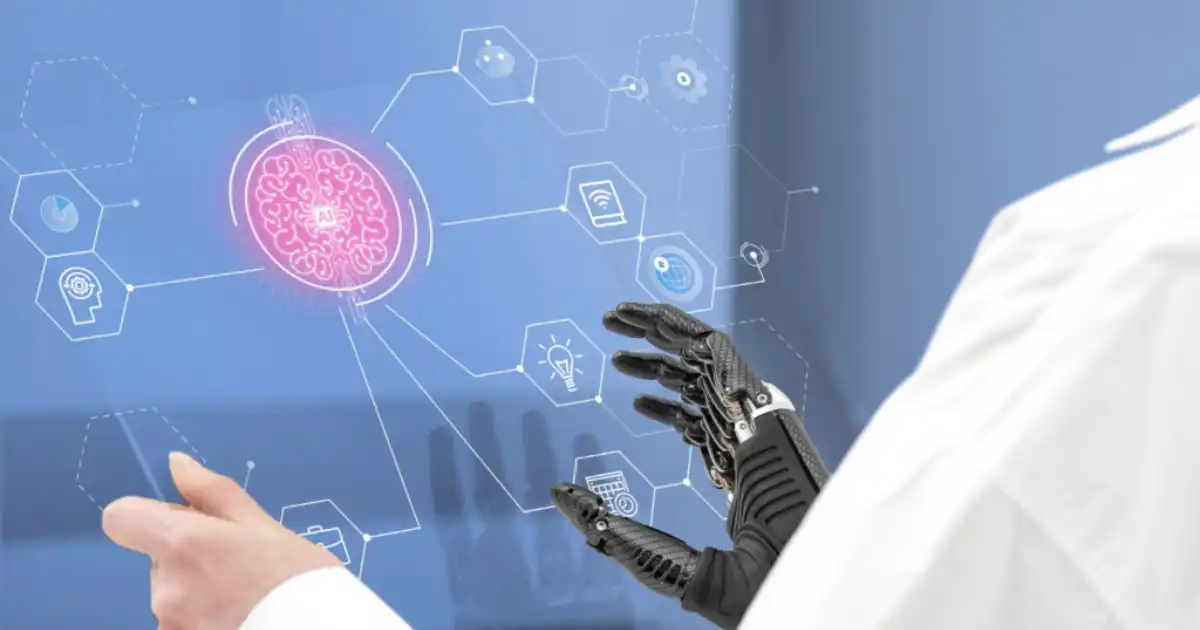
Imagine a world where diseases that once took decades to find treatments for can now be addressed in just a fraction of the time. Artificial Intelligence (AI) is revolutionizing modern medicine, and nowhere is its impact more transformative than in drug discovery. The traditional process of bringing a drug to market is painfully slow and expensive, often stretching beyond a decade and costing billions of dollars. This creates delays in finding cures and treatments that patients urgently need.
Now, picture a future where those bottlenecks are dismantled. With AI in drug discovery, researchers can analyze massive datasets, identify drug candidates, and simulate molecular interactions at a pace that was unimaginable a decade ago. The result? Faster treatments, reduced costs, and breakthroughs that could change the face of healthcare forever.
This isn’t science fiction; it’s happening right now. AI-powered drug discovery is already driving results in cancer treatment, rare diseases, and even pandemics. Pharmaceutical giants and biotech startups alike are embracing this technology, making it not just a trend but a paradigm shift in global healthcare. In this comprehensive guide, we’ll explore how AI in drug discovery speeds up cures, the technologies behind it, real-world applications, and what the future holds.
Understanding Drug Discovery
The Traditional Drug Discovery Process
Before diving into the role of AI in drug discovery, it’s important to understand the challenges of the traditional process. On average, developing a new drug involves:
-
Target Identification and Validation
Finding the biological pathway or protein responsible for a disease.
-
Lead Compound Discovery
Screening millions of molecules to find those that can influence the target.
-
Preclinical Testing
Testing the safety and effectiveness in cell cultures and animal models.
-
Clinical Trials
Testing in human subjects, typically spanning three major phases.
-
Regulatory Approval
Gaining approval from agencies like the FDA.
This process often takes 10–15 years and costs up to $2.6 billion per drug. The high rate of failure, especially in late-stage clinical trials, makes the process both risky and inefficient.
Why AI Matters in Drug Discovery
AI in drug discovery addresses these inefficiencies by bringing speed, precision, and predictive power. Using machine learning models, AI can sift through vast datasets to identify promising molecules, predict side effects, and optimize clinical trials—all in record time. Instead of manually screening millions of compounds, AI can reduce the pool to a manageable number of high-probability candidates within weeks.
How AI is Transforming Drug Discovery
1. Target Identification and Validation
One of the first steps in drug development is identifying a biological target. Traditionally, this required years of laboratory experiments. AI in drug discovery accelerates this by analyzing genomics, proteomics, and biomedical literature to find disease-causing pathways.
For example, deep learning algorithms can analyze genetic mutations and protein structures to identify potential drug targets for cancers and neurological diseases. This not only saves time but also uncovers novel targets that human researchers may overlook.
2. Compound Screening and Generation
AI doesn’t just analyze existing molecules—it can design new ones. Using generative models, such as Generative Adversarial Networks (GANs) or reinforcement learning, AI can create novel chemical structures optimized for effectiveness and safety.
For instance, instead of testing millions of molecules in the lab, AI in drug discovery can narrow down the list to the top few hundred candidates. This drastically cuts down costs and time, making it possible to move from theory to testing much faster.
3. Predicting Drug-Target Interactions
One of the biggest challenges in drug discovery is predicting how a drug will interact with its biological target. AI models can simulate these interactions at a molecular level, reducing reliance on trial-and-error methods.
Molecular docking simulations, combined with AI-powered predictive analytics, allow researchers to forecast not only efficacy but also potential side effects and toxicity. This ensures safer candidates move forward to clinical testing.
4. Optimizing Clinical Trials
Clinical trials are one of the costliest and slowest stages in drug discovery. AI in drug discovery helps by identifying ideal patient groups, predicting patient responses, and even suggesting adjustments in trial design.
For example, AI can analyze patient records to recruit individuals who are most likely to respond positively to a new drug. This not only speeds up the trial but also increases its chances of success.
5. Drug Repurposing
Drug repurposing—finding new uses for existing drugs—has gained massive attention, especially during the COVID-19 pandemic. AI in drug discovery can rapidly scan databases of approved drugs and predict which ones might work against new diseases. This bypasses many regulatory hurdles since safety profiles are already known, leading to much faster deployment of treatments.
Real-World Applications of AI in Drug Discovery
AI and Cancer Research
Cancer treatment is notoriously complex, with countless subtypes and genetic mutations. AI in drug discovery helps by analyzing genetic data, predicting tumor behavior, and designing personalized treatment options. Companies like BenevolentAI and Atomwise are already pioneering AI-driven cancer research.
Rare Diseases
Rare diseases often receive little attention due to small patient populations. However, AI in drug discovery can make these conditions more approachable by reducing costs and accelerating target identification. Platforms like Healx focus on AI-driven solutions for rare diseases, offering hope where traditional research lags.
Infectious Diseases and Pandemics
During the COVID-19 pandemic, AI in drug discovery played a key role in identifying existing drugs that could be repurposed. AI models rapidly screened antiviral drugs and even helped in designing vaccine candidates.
Neurological Disorders
Diseases like Alzheimer’s and Parkinson’s have resisted traditional drug discovery approaches. With AI’s predictive power, researchers are uncovering novel compounds and therapeutic pathways to tackle these conditions more effectively.
Key Technologies Powering AI in Drug Discovery
Machine Learning and Deep Learning
Machine learning algorithms analyze massive datasets of molecules, proteins, and patient data. Deep learning models, such as convolutional neural networks (CNNs), specialize in analyzing molecular structures and protein folding.
Natural Language Processing (NLP)
A huge amount of biomedical knowledge exists in research papers. AI in drug discovery leverages NLP to extract insights from millions of scientific documents, clinical reports, and patents. This accelerates literature review and hypothesis generation.
Reinforcement Learning
Reinforcement learning helps in optimizing chemical compounds. AI systems learn from trial and error, adjusting chemical structures until they achieve desired properties.
Quantum Computing and AI
The future may see a powerful combination of AI and quantum computing. Quantum simulations can model molecular interactions at an atomic level with unmatched accuracy, while AI helps manage and interpret the results.
Benefits of AI in Drug Discovery
-
Speed
Reduces years of research to weeks or months.
-
Cost Savings
Minimizes unnecessary lab work and clinical trial failures.
-
Precision Medicine
Enables tailored treatments based on patient genetics.
-
Higher Success Rates
Improves prediction of efficacy and safety.
-
Drug Repurposing
Finds new uses for old drugs quickly.
Challenges and Limitations
Despite its promise, AI in drug discovery faces challenges:
-
Data Quality and Availability
AI relies on high-quality, diverse datasets. Incomplete or biased data can limit effectiveness.
-
Interpretability
AI models can be “black boxes,” making it difficult to understand how predictions are made.
-
Regulatory Concerns
Agencies like the FDA need robust frameworks for AI-driven drug approvals.
-
Ethical Issues
Questions of data privacy, bias, and accountability remain unresolved.
The Future of AI in Drug Discovery
The future looks bright for AI in drug discovery. With advances in genomics, precision medicine, and quantum computing, AI’s role will only grow stronger. We may soon see a world where personalized drug discovery is routine, and treatments are delivered at record speed.
Pharmaceutical companies are increasingly investing in AI partnerships, and governments are funding AI-driven biomedical research. In the next decade, the synergy between AI and human expertise could reshape the very foundations of medicine.
Comprehensive Guide: Step-by-Step Impact of AI
Step 1: Data Gathering and Integration
AI integrates data from genomics, proteomics, imaging, and electronic health records to create holistic models.
Step 2: Target Discovery
Algorithms identify disease-associated proteins and pathways, saving years of lab experiments.
Step 3: Compound Generation
Generative AI creates new molecules optimized for efficacy and safety.
Step 4: Preclinical Testing Simulations
AI predicts toxicity and side effects, minimizing failed experiments.
Step 5: Clinical Trial Optimization
Patient recruitment, dosage prediction, and trial adjustments become smarter and faster.
Step 6: Regulatory Support
AI helps generate data-driven reports to assist with FDA submissions.
Step 7: Post-Market Monitoring
AI continues monitoring real-world drug performance, identifying long-term risks and new opportunities.
You Might Be Interested In
- Why Can Confidence Scores Leak Training Data?
- What Is The Difference Between Ml and Rl?
- What Sectors Is Humain Focusing On health, Finance, Education, Security?
- AI Supercomputing 2023: Fueling Optimism to the Future of Technology
- What Is A Smart City And How Is Ai Used To Run It?
- Why Does Underfitting Happen After Heavy Regularization?
- What Are The Best Ways Teachers Can Use Ai For Lesson Planning?
- How Does Software As A Service Work?
- How Does Ai Help With Early Disease Prediction And Prevention?
- What Is The Main Idea Of The Genetic Algorithm?
Conclusion
The integration of AI in drug discovery marks a turning point in healthcare innovation. By drastically reducing time, cost, and uncertainty, AI is unlocking pathways to treatments that once seemed impossible. From target identification to clinical trials and drug repurposing, AI is rewriting the playbook of modern medicine. Its power lies not just in automation but in its ability to uncover patterns, predict outcomes, and accelerate discoveries beyond human capacity.
While challenges remain—such as data quality, ethical considerations, and regulatory adaptation—the momentum is undeniable. As pharmaceutical companies, research institutions, and governments embrace this transformation, the dream of faster, safer, and more personalized cures is becoming reality.
In the coming years, AI in drug discovery will not just speed up cures—it will redefine how we understand, prevent, and treat disease. The promise of AI isn’t a distant future. It’s here, reshaping medicine today and laying the foundation for a healthier tomorrow.
FAQs about Drug Discovery
What are the benefits of AI in drug discovery?
AI in drug discovery brings enormous benefits because it helps scientists explore millions of chemical compounds quickly, something that would take humans years to do manually. Instead of spending decades testing each possibility in labs, AI uses algorithms to predict which compounds are most likely to be effective against a disease. This saves both time and resources, making the process much more efficient.
Another major benefit is precision. AI can analyze massive datasets, including genetic information, medical histories, and disease patterns, to identify potential drug candidates that fit specific patient needs. This allows researchers to design drugs with fewer side effects and a higher chance of success. By reducing trial and error, AI not only lowers costs but also increases the speed at which new medicines reach patients.
What can AI development do for drug treatment?
AI development is transforming drug treatment by making it more personalized and effective. Traditional treatments often take a “one-size-fits-all” approach, but AI can process patient data, such as DNA, lifestyle, and health records, to suggest treatments that work best for each individual. This means patients can receive therapies that are specifically tailored to their conditions, improving recovery rates and reducing harmful side effects.
Furthermore, AI can predict how patients will respond to certain drugs before they even take them. By simulating these effects, doctors can avoid prescribing medicines that may not work or could cause complications. Over time, this leads to safer, more reliable treatment plans and helps healthcare professionals make better decisions for their patients.
How AI enables therapies quicker and more accurate diagnosis?
AI enables quicker and more accurate diagnosis by analyzing large volumes of medical data, such as scans, blood tests, and genetic information, much faster than a human doctor could. For example, AI-powered imaging systems can detect tiny abnormalities in X-rays or MRIs that might be overlooked by the human eye. This allows doctors to catch diseases at much earlier stages, which makes treatments more successful.
Once a diagnosis is made, AI also helps match patients with the right therapy faster. By comparing patient data to global medical databases, AI can identify the most effective treatment plans in a matter of minutes. This not only speeds up the process but also improves accuracy, ensuring that patients start receiving the right therapy without unnecessary delays.
Are data and AI helping to get medicines to patients faster?
Yes, data and AI are playing a key role in getting medicines to patients faster. By analyzing clinical trial results and patient records, AI can identify which drugs show the most promise and which ones are less likely to succeed. This prevents wasted effort on ineffective options and accelerates the development of treatments that truly work.
Additionally, AI helps streamline the approval process by predicting safety outcomes and reducing the need for overly long trials. With faster identification of safe and effective drugs, companies can bring new medicines to the market sooner, ensuring patients in need don’t have to wait years for life-saving treatments.
Can AI speed up medical research?
Absolutely, AI can significantly speed up medical research. Instead of spending years analyzing data, researchers can use AI to process and understand information in a fraction of the time. This includes scanning millions of scientific papers, identifying patterns in genetic codes, or even simulating how a drug interacts with the human body—all tasks that would otherwise take much longer.
By automating these complex tasks, AI frees up scientists to focus on innovation and deeper research. The result is not only faster discoveries but also more accurate ones, since AI reduces human error and highlights connections that might have been overlooked. This acceleration of research means new cures, treatments, and medical knowledge can be developed and shared much more rapidly across the world.
