

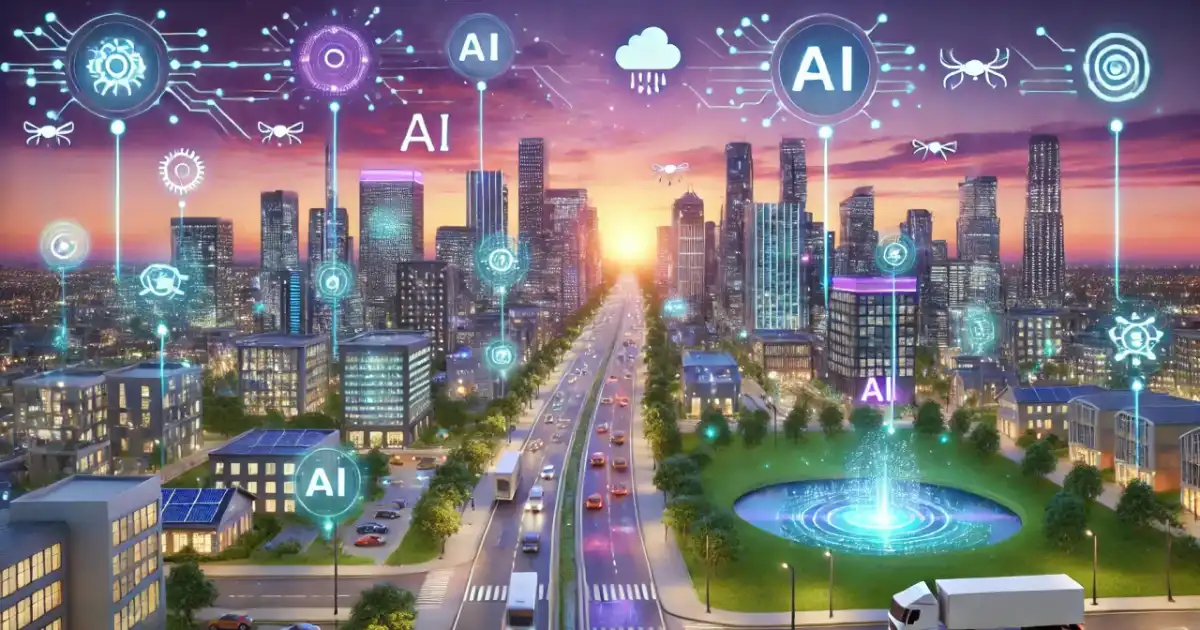
A Smart City is a modern urban area that uses technology to improve daily life for people. It focuses on making cities safer, cleaner, faster, and more efficient. In a Smart City, data, digital tools, and intelligent systems work together to manage traffic, energy, water, waste, and public services. The main goal of a Smart City is to improve the quality of life while using resources wisely.
Today, artificial intelligence plays a major role in shaping every Smart City. From traffic signals to emergency response systems, AI helps cities think, learn, and act in real time. This guide explains what a Smart City is, how AI supports it, and why AI-powered smart cities are becoming essential for the future of urban living.
Concept of a Smart City
A Smart City is not just about technology. It is about using technology to solve real urban problems. Population growth, traffic congestion, pollution, and energy shortages are major challenges for cities today. A Smart City uses data-driven solutions to manage these issues more effectively.
In simple terms, a Smart City collects information through sensors, cameras, and digital platforms. This data is then analyzed to make better decisions. For example, streetlights may turn on only when needed, or garbage trucks may follow optimized routes. These improvements save time, money, and energy.
A Smart City also focuses on people. Technology is used to improve healthcare, education, safety, and transportation. The goal is to create a city that works smoothly for everyone.
Key Features That Define a Smart City
A Smart City has several important features that set it apart from traditional cities.
Data-Driven Decision Making
In a Smart City, data is the foundation of all decisions. Sensors collect information about traffic flow, air quality, energy use, and water supply. AI systems analyze this data and suggest better solutions.
Digital Connectivity
Strong internet connectivity is essential for a Smart City. High-speed networks allow devices and systems to communicate in real time. This helps city services respond faster and more accurately.
Sustainability and Efficiency
A Smart City focuses on reducing waste and saving resources. Smart energy grids, efficient public transport, and water management systems help cities become more sustainable.
Citizen-Centered Services
A Smart City puts citizens first. Mobile apps, online portals, and digital platforms make it easier for people to access services, report issues, and stay informed.
What Is Artificial Intelligence in Smart Cities?
Artificial intelligence in smart cities refers to the use of machines that can think, learn, and make decisions like humans. AI systems analyze large amounts of data and identify patterns that humans may miss. In a Smart City, AI acts as the brain behind smart systems.
AI helps cities predict problems before they happen. For example, AI can predict traffic jams, power outages, or water leaks. This allows city authorities to act early and prevent bigger issues.
Artificial intelligence in smart cities also improves accuracy. Machines do not get tired or distracted. They can monitor systems 24/7 and provide consistent results.
Role of AI in Urban Development
The role of AI in urban development is critical for building modern cities. AI helps planners design better roads, buildings, and public spaces. It also supports long-term planning by analyzing trends and future needs.
AI models can simulate how a city will grow over time. This helps governments make smarter decisions about housing, transportation, and infrastructure. The role of AI in urban development ensures that cities grow in a balanced and organized way.
In a Smart City, AI also supports social development. It helps improve healthcare access, education quality, and public safety. This makes urban life more inclusive and fair.
Smart City Technologies Powering Modern Cities
Smart city technologies are the tools that make a Smart City work. These technologies collect, process, and act on data.
Internet of Things (IoT)
IoT devices are everywhere in a Smart City. Sensors on roads, buildings, and vehicles collect real-time data. AI uses this data to control systems automatically.
Big Data Analytics
A Smart City generates huge amounts of data every day. Big data analytics helps process this information quickly. AI finds useful insights that help improve services.
Cloud Computing
Cloud platforms store and manage city data. They allow different departments to access information easily. This improves coordination and efficiency.
Machine Learning
Machine learning is a type of AI that improves over time. In a Digital City, machine learning systems learn from past data to make better predictions and decisions.
Smart City Infrastructure Explained
Digital City infrastructure includes roads, buildings, energy systems, and communication networks designed for intelligence and efficiency. This infrastructure supports digital systems and AI applications.
Smart Transportation Systems
In a Smart City, traffic lights adjust automatically based on traffic flow. Public transport schedules change based on demand. AI reduces congestion and travel time.
Smart Energy Grids
Smart city infrastructure includes intelligent energy grids. These grids balance supply and demand using AI. Renewable energy sources are integrated smoothly.
Smart Buildings
Buildings in a Smart City use AI to control lighting, heating, and cooling. This reduces energy waste and improves comfort.
Smart Water and Waste Systems
AI detects leaks in water pipelines and predicts maintenance needs. Waste collection is optimized based on real-time data.
How AI-Powered Smart Cities Manage Traffic
Traffic congestion is a major problem in urban areas. AI-powered smart cities use intelligent traffic management systems to solve this issue.
AI analyzes traffic patterns using cameras and sensors. Traffic signals change automatically to reduce congestion. Navigation apps guide drivers through less crowded routes.
In a Smart City, AI also supports public transport. Buses and trains run on optimized schedules. This encourages people to use public transport instead of private vehicles.
AI in Public Safety and Security
Public safety is a top priority for any Smart City. AI helps monitor public spaces and respond to emergencies quickly.
AI-powered cameras detect unusual behavior and alert authorities. Emergency response systems use AI to identify the fastest routes for ambulances and fire trucks.
Artificial intelligence in smart cities also helps predict crime patterns. This allows police to patrol high-risk areas more effectively.
AI in Healthcare Services of a Smart City
Healthcare services improve greatly in a Smart City. AI supports early disease detection, patient monitoring, and hospital management.
Smart health systems analyze patient data and suggest treatments. Wearable devices track health conditions and send alerts when needed.
In a Smart City, AI also helps manage hospitals. It reduces waiting times and improves resource allocation.
Smart Education Systems in a Digital City
Education is another area transformed by AI in a Digital City. Smart classrooms use digital tools to enhance learning.
AI-powered platforms personalize education based on student needs. Teachers receive insights into student performance.
A Digital City also supports lifelong learning through online courses and digital libraries.
Environmental Benefits of Digital City Technologies
A Smart City aims to protect the environment. AI helps monitor air quality, noise levels, and pollution sources.
Digital City technologies optimize energy use and reduce carbon emissions. Green spaces are managed efficiently using data.
AI-powered smart cities also support climate change planning. They predict environmental risks and suggest solutions.
Economic Impact of a Smart City
A Smart City boosts economic growth by attracting businesses and investors. Efficient infrastructure reduces operational costs.
New job opportunities are created in technology, data analysis, and urban planning. Innovation thrives in a Digital City environment.
Artificial intelligence in smart cities also supports small businesses by improving logistics and customer services.
Challenges Faced by Smart Cities
Despite many benefits, a Digital City faces challenges.
Data Privacy and Security
Large amounts of data raise privacy concerns. Protecting citizen data is critical.
High Implementation Costs
Building a Digital City requires large investments. Developing countries may face financial barriers.
Technology Gaps
Not all citizens have equal access to technology. A Digital City must ensure digital inclusion.
Future of Smart City Development
The future of a Smart City looks promising. AI will become more advanced and affordable.
AI-powered smart cities will focus more on sustainability and resilience. Cities will become more adaptive to change.
The role of AI in urban development will continue to grow, shaping smarter and more livable cities.
You Might Be Interested In
- How To Deploy Machine Learning Models?
- Top 10 Agritech Innovations Ending Global Hunger
- What Is A Continuous Integration Pipeline?
- What Is Epoch In Machine Learning?
- Stargate’s Potential Impact On Uae’s Logistics Sector
- How Ai In Tax Automation Saves Time?
- What Is Software Architecture Design?
- How To Make A Picture On ChatGPT?
- How Do Companies Migrate To The Cloud Step By Step?
- What Is The Difference Between AI and ML?
Conclusion
A Digital City represents the future of urban living. It combines technology, data, and human-centered design to solve modern challenges. With artificial intelligence in smart cities, urban systems become more efficient, safe, and sustainable.
AI-powered smart cities improve transportation, healthcare, education, and public safety. They reduce waste and protect the environment. Most importantly, a Smart City improves the quality of life for its citizens.
As cities continue to grow, the Digital City model will become essential. By embracing smart city technologies and smart city infrastructure, governments can build cities that are ready for the future.
FAQs about Smart City
What is a Smart City in simple terms?
A Smart City is a city that uses digital technology, data, and intelligent systems to make everyday life better for its people. Instead of relying only on manual processes, a Digital City uses sensors, connected devices, and software to manage services like traffic, electricity, water, and public transport more efficiently. The main idea is to reduce problems such as congestion, pollution, and wasted resources while improving comfort and safety.
In simple words, a Smart City works like a smart system that can sense what is happening, think using data, and respond quickly. For example, traffic lights adjust based on traffic flow, streetlights turn off when no one is around, and city services become faster and more reliable for citizens.
How does AI help run a Smart City?
Artificial intelligence in smart cities acts as the decision-making brain behind smart systems. AI collects and analyzes large amounts of data from sensors, cameras, and digital platforms across the city. Based on this data, AI can predict traffic congestion, manage energy usage, detect system failures, and improve public services without constant human intervention.
In a Smart City, AI also learns over time. This means systems become smarter and more accurate as they process more data. For example, AI can improve traffic signal timing every day or optimize waste collection routes based on real usage patterns, making city operations more efficient and cost-effective.
Are Smart Cities safe for personal data?
Data safety is one of the biggest concerns in a Smart City because large amounts of personal and public data are collected daily. This data may include traffic movement, energy usage, or service requests. To address this, Smart Cities use advanced cybersecurity tools, encryption, and strict data policies to protect information from misuse or hacking.
However, complete safety depends on proper planning and regulation. Governments must ensure transparency, limit unnecessary data collection, and follow strong privacy laws. When managed correctly, a Smart City can balance technological benefits with the protection of citizen privacy.
Can developing countries build Smart Cities?
Yes, developing countries can build Smart Cities, but the approach is usually gradual. Instead of building everything at once, many cities start with basic Digital City technologies such as smart traffic systems or digital public services. Over time, these systems expand as funding, skills, and infrastructure improve.
A Digital City does not have to be expensive at the start. With proper planning and the right use of AI, even limited resources can create meaningful improvements. Many developing cities focus on areas like energy efficiency, transportation, and public safety to get the most benefit early on.
What is the future of Smart City technologies?
The future of Digital City technologies is closely linked to advancements in artificial intelligence and data analytics. As AI becomes more powerful and affordable, AI-powered smart cities will be able to predict problems before they occur and respond even faster. Cities will become more adaptive, flexible, and resilient to challenges like population growth and climate change.
In the coming years, Digital City infrastructure will focus more on sustainability, citizen well-being, and environmental protection. The role of AI in urban development will continue to grow, helping cities become not just smarter, but also more livable and inclusive for everyone.
