

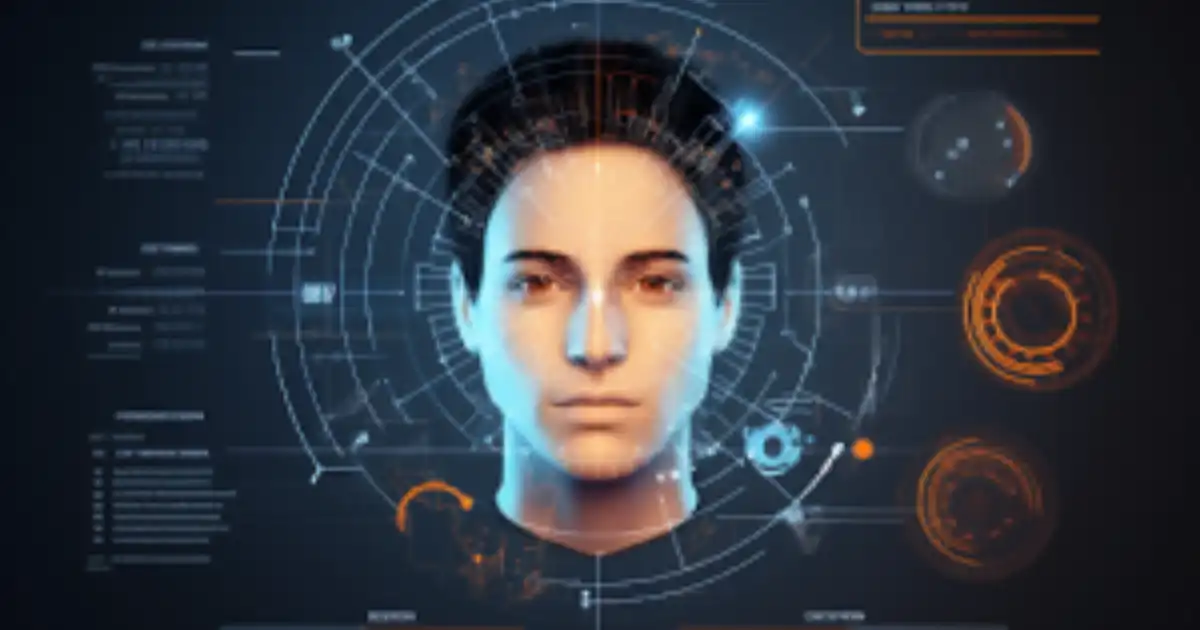
Imagine walking into a stadium filled with 60,000 people, and within seconds, a silent scan determines whether anyone poses a threat. No alarms. No delays. Just pure, seamless security. Sounds like science fiction? Not anymore.
Across airports, schools, banks, and even your smartphone, Facial Recognition powered by Artificial Intelligence is silently reshaping how we view safety. This is not just about unlocking your phone faster — it’s about recognizing danger before it strikes, identifying missing persons in crowds, or ensuring only the right people access secure areas.
What if your child’s school could automatically block unauthorized visitors? Or your company’s data center allowed access only to verified employees, no keycards needed? These are not futuristic dreams; they’re real-world applications of AI-powered Facial Recognition. It’s revolutionizing safety — making our homes, cities, and institutions smarter and more secure.
In this comprehensive guide, we’ll break down how AI-driven Facial Recognition systems work, the various ways they enhance safety, the benefits and challenges, and what the future holds for this rapidly evolving technology. Whether you’re a parent, business owner, policymaker, or just a curious reader — this article will leave you informed and inspired.
What Is AI-Powered Facial Recognition?
Facial Recognition is a type of biometric technology that identifies or verifies a person’s identity using their facial features. Traditional Facial Recognition systems relied on static images and basic matching algorithms. However, with AI (Artificial Intelligence), these systems now use deep learning and neural networks to analyze facial patterns with extraordinary accuracy.
AI enhances the system’s ability to detect, learn, and identify faces in real-time, even under poor lighting, extreme angles, or with age changes and disguises. In short, AI has made Facial Recognition smarter, faster, and more secure — ideal for safety applications.
How AI Improves Traditional Facial Recognition
1. Real-Time Analysis
With AI, Facial Recognition systems can process images in real-time. This is critical for security situations where every second matters — like detecting a wanted suspect at a train station or verifying identities during an emergency.
2. High Accuracy and Low Error Rates
AI-driven systems can now distinguish between twins, identify people wearing masks or glasses, and reduce false positives — which used to be a major problem in earlier Facial Recognition technologies.
3. Continuous Learning
AI allows Facial Recognition systems to learn from new data. This means they can adapt to changing facial features over time (like aging) and improve with every scan, making them more reliable in safety-critical environments.
4. Integration with Other Security Tools
AI-powered Facial Recognition can work alongside surveillance cameras, access control systems, alarms, and databases — forming a complete, unified safety network.
Key Applications of Facial Recognition in Safety
Public Spaces
Crowded areas like shopping malls, concerts, and stadiums are difficult to monitor manually.
AI-based Facial Recognition enables authorities to:
-
Identify known criminals or terrorists
-
Monitor for suspicious activity
-
Alert security teams in real time
This proactive approach can prevent incidents before they happen.
Law Enforcement
Police departments worldwide use AI Facial Recognition to:
-
Find missing persons
-
Match surveillance footage with criminal databases
-
Track repeat offenders in public areas
It’s a game-changer in investigative speed and accuracy.
Airports and Border Control
Airports are some of the most security-sensitive zones. With Facial Recognition:
-
Passengers are verified without showing documents
-
Threats are flagged instantly
-
Immigration processes are streamlined
Many countries now use Facial Recognition at e-gates to reduce wait times while improving security.
Education
AI-powered Facial Recognition is being used in schools and universities to:
-
Prevent unauthorized access
-
Monitor attendance
-
Respond to emergency lockdowns efficiently
It’s especially beneficial in protecting students and staff during threats.
Workplaces and Offices
Security at corporate offices, banks, and data centers is enhanced by:
-
Replacing ID cards with facial authentication
-
Allowing entry only to authorized personnel
-
Logging entries and exits for audit trails
This reduces insider threats and enhances accountability.
Healthcare
Hospitals and clinics use Facial Recognition for:
-
Secure access to restricted areas
-
Patient identity verification
-
Monitoring patient activity in high-risk wards
It ensures both safety and improved patient care.
Benefits of Using Facial Recognition for Safety
1. Speed and Efficiency
No more checking ID cards or passwords. Facial Recognition works instantly — identifying people within seconds and freeing up human resources for other safety tasks.
2. Non-Invasive Security
Unlike fingerprint scanners or retina scans, Facial Recognition works from a distance, without requiring physical contact — ideal for hygiene-sensitive environments.
3. Scalability
Whether monitoring a single room or an entire city, AI-based Facial Recognition can scale up efficiently. Cloud-based systems make it easy to expand coverage.
4. Crime Prevention and Deterrence
When people know that Facial Recognition is in place, they are less likely to commit offenses. It acts as a strong deterrent against theft, vandalism, and violence.
5. Automated Alerts and Actions
AI can be programmed to take automatic actions — like locking doors or notifying authorities — when it detects unauthorized faces or suspicious behavior.
6. Evidence Collection
Video footage linked with Facial Recognition data becomes more powerful evidence in legal and investigative cases. Time-stamped and identity-tagged footage strengthens prosecution.
Challenges and Ethical Considerations
1. Privacy Concerns
One of the biggest criticisms of Facial Recognition is the potential for misuse. Surveillance without consent, data leaks, or unauthorized tracking can violate civil liberties.
Solution:
Establish transparent policies, inform the public, and ensure consent wherever possible.
2. Bias and Discrimination
AI systems have shown bias against certain races or ethnicities due to unbalanced training data.
Solution:
Train AI on diverse datasets, continuously audit systems for fairness, and involve ethics boards in deployment decisions.
3. Data Security
Stored facial data must be protected from hackers and unauthorized access. Breaches can lead to identity theft and personal harm.
Solution:
Use encrypted databases, strict access controls, and periodic audits.
4. Over-Reliance on Technology
Technology is not infallible. Sole reliance on Facial Recognition without human judgment can lead to false accusations or errors.
Solution:
Combine human oversight with automated systems for balanced security.
Future Trends in AI and Facial Recognition
1. Emotion Detection and Behavior Analysis
Beyond identity, AI is being trained to read emotions, stress levels, and suspicious behavior. This adds a predictive layer to safety protocols.
2. Smarter Cameras
Cameras with onboard AI chips can process data locally without sending it to servers — improving speed and reducing network load.
3. Decentralized Systems
Future systems may store facial data on individual devices rather than central databases — giving users more control over their information.
4. Facial Recognition in Smart Cities
In smart cities, Facial Recognition will play a key role in:
-
Traffic management
-
Law enforcement
-
Public event safety
-
Citizen services
All integrated under AI-powered urban governance systems.
How to Implement Facial Recognition Safely
Step 1: Define Objectives Clearly
Understand what you want to achieve — whether it’s access control, surveillance, or attendance tracking. Clear goals prevent overreach and misuse.
Step 2: Choose Trusted Vendors
Opt for vendors with proven AI capabilities, transparency, and a strong reputation for ethical use of technology.
Step 3: Train Your Teams
Staff should know how to operate Facial Recognition systems, interpret results, and respond to alerts appropriately.
Step 4: Engage Stakeholders
Include legal teams, community leaders, and IT professionals in the planning phase. This ensures smoother implementation and public trust.
Step 5: Monitor and Audit
Continuously monitor system performance. Conduct audits to assess accuracy, security, and bias. Regular updates are key.
Step 6: Inform and Protect Users
Clearly communicate with users about where and how their faces will be scanned. Use signage, apps, or policy documents to build transparency.
You Might Be Interested In
- How To Download Ai Dungeon 2?
- AI-driven Personal Finance Assistants You Need
- Ai For Hyper-personalized Banking Customer Service
- What Are The Top Cloud Security Best Practices For Small Businesses?
- The Role Of Ai In Accelerating Drug Discovery
- How AI transform the future of healthcare industry?
- How Does Cloud Network Management Improve Reliability?
- Why Is Cloud Gpu Infrastructure Used For Ai?
- How To Play Ai Dungeon?
- What Data Should Never Go Into Public LLMs?
Conclusion
AI-powered Facial Recognition is not just a fancy tech buzzword — it’s a transformative tool for enhancing safety in every corner of society. From public security and law enforcement to schools and hospitals, this technology offers unmatched speed, precision, and efficiency.
But it must be handled with care. With great power comes great responsibility. As we integrate Facial Recognition into our daily lives, we must also prioritize privacy, ethics, and human dignity.
When implemented correctly, AI-powered Facial Recognition can create safer spaces without compromising freedom. It’s a future worth building — and protecting.
FAQs about Facial Recognition
How does facial recognition enhance security?
Facial recognition enhances security by using technology to identify and verify a person’s face. This means that it can allow only authorized people to enter secure places like office buildings, airports, or even smartphones. Because every face is unique, facial recognition systems can quickly check who someone is by comparing their face with images stored in a database. This helps prevent strangers or criminals from accessing private areas or information.
In public spaces, facial recognition can also help law enforcement by identifying suspects or missing persons from security cameras in real time. This makes it easier to respond to emergencies faster. Overall, it adds an extra layer of protection because it’s harder to fake a face than to steal a password or ID card.
How does AI enhance safety and security?
AI, or artificial intelligence, improves safety and security by making smart decisions using large amounts of data. For example, AI systems can watch over security cameras and immediately alert security teams if they detect something unusual, like a break-in or a fire. This kind of fast response can help stop accidents or crimes before they get worse.
AI is also used in cybersecurity, where it protects digital data by spotting hacking attempts or viruses quickly. It learns from patterns and keeps updating itself to handle new threats. In places like factories or chemical plants, AI can predict dangers before they happen, like equipment failures or gas leaks, keeping workers and the environment safe.
How does AI help facial recognition?
AI helps facial recognition by giving it the ability to “learn” and recognize faces better over time. It uses machine learning, which means it studies lots of face images to understand different features like the distance between your eyes, the shape of your jaw, or the way you smile. The more data it gets, the better it becomes at telling people apart, even if they wear glasses or change their hairstyle.
AI also makes facial recognition faster and more accurate. Instead of a person checking thousands of photos manually, the AI can scan and match faces in seconds. This is especially useful in crowded places, like airports or sports events, where finding someone quickly can help improve safety and security.
How do AI-powered sensors improve chemical safety?
AI-powered sensors improve chemical safety by constantly checking the environment for any signs of danger, like leaks, spills, or harmful gases. These sensors use artificial intelligence to understand what normal conditions look like, so they can spot anything unusual right away. This helps prevent accidents before they happen by giving early warnings to workers and safety systems.
In chemical plants or laboratories, these smart sensors can also keep track of temperature, pressure, and other important factors. If something is not right, AI can either alert people or automatically shut down machines to stop an accident. This kind of technology makes chemical handling safer for workers and helps protect the environment from dangerous chemical exposure.
How does AI minimize human error in chemical safety?
AI minimizes human error in chemical safety by helping people make better decisions and reducing the chances of mistakes. Humans can get tired, distracted, or misread instructions, especially when working with complex chemical processes. AI systems, on the other hand, are consistent and can monitor everything 24/7 without getting tired. They can quickly analyze data, check for errors, and alert workers if something is wrong.
For example, if someone sets the wrong chemical mixture or temperature, the AI system can notice the mistake and stop the process before it becomes dangerous. It can also remind workers of safety rules or provide step-by-step instructions. This makes the workplace safer, lowers the chance of accidents, and helps protect both people and the environment from chemical hazards.
