

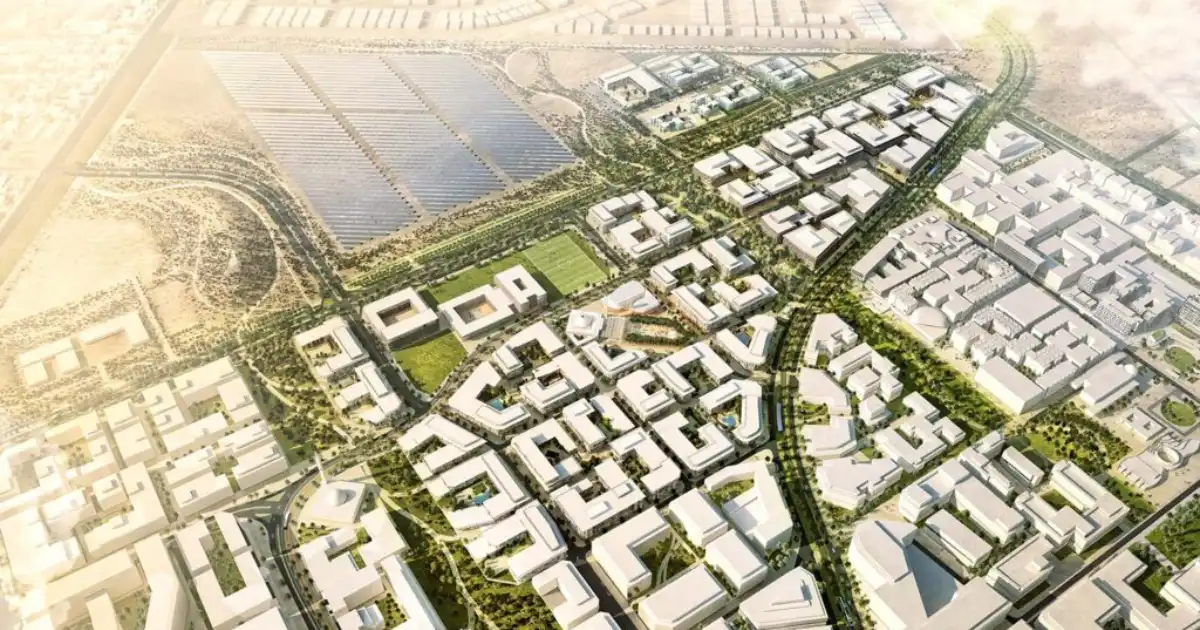
Masdar City is one of the few places where you can actually study smart urban planning as a full stack: urban form, building performance, district infrastructure, pilots, and a governance model that had to survive real-world money, politics, and “oh wow this is harder than the renderings” moments. That mix is why Masdar City case studies are worth your time. What Are The Best Case Studies From Masdar City For Smart Urban Planning?
But here’s the reality-check: Masdar started with headline ambitions (zero-carbon, car-free, fast build-out) and then evolved into something more pragmatic as delivery collided with cost, complexity, and the 2008 financial crisis. That evolution isn’t a failure it’s the story.
In this post, I’m going to walk through the best case studies as planning lessons what Masdar actually did, what worked, what didn’t, and what you can copy without inheriting the mistakes. If you’re trying to build a net-zero district, run a smart mobility pilot, or stop “innovation district” from becoming a fancy business park, this is for you.
Quick Facts Box
Quick Facts Masdar City, in planner-speak
-
Location / climate relevance
Abu Dhabi, UAE hot, arid, high solar gain. It’s a stress test for passive cooling urban design and outdoor thermal comfort. Masdar explicitly designs streets/buildings around prevailing winds and shade, aiming for noticeably cooler microclimates than surrounding areas.
-
What it’s known for
Microclimate-first urban form, high-performance buildings (lots of LEED Platinum claims/targets), renewables integration (including a 10 MW PV plant connected in 2009), and transport pilots like PRT (driverless pods).
-
Why planners study it
It’s a real attempt to integrate design + standards + operations + experimentation + economic model not just a gadget showcase.
-
What “smart” lessons it offers
Comfort-first street networks, district operations and energy management, phased renewables with grid realism, and governance that revised targets while keeping delivery moving.
What counts as a smart urban planning case study?
When I say “case study,” I don’t mean a glossy PDF with nice photos and suspiciously few numbers.
A planning case study is
problem → intervention → outcome → replicability.
-
Problem
What pain was the city solving? Heat? Energy bills? Car dependency? Developer delivery risk?
-
Intervention
What did they actually build, fund, regulate, or operate?
-
Outcome
What changed (performance, behavior, costs, adoption, maintenance)?
-
Replicability
What parts transfer to other cities and what depends on local context (climate, codes, governance capacity, budgets)?
smart city” is not “we bought sensors
In practice, smart means you reduce uncertainty and improve decisions often by combining physical design (shade, orientation, building envelopes) with operational systems (metering, controls, maintenance) and governance (standards, incentives, procurement that doesn’t lock you into nonsense).
Masdar is useful because it forces you to see the whole chain: the street geometry affects cooling demand; cooling demand affects district energy; district energy affects carbon; carbon claims affect financing and partnerships. That’s smart urban planning in the only way that matters: the system works end-to-end.
How I’m choosing the “best” case studies
I’m using five criteria. Not academic.
Practical.
-
Urban impact
Did it change the way the place works at a district scale comfort, mobility, energy, or economics not just a single building trick?
-
Evidence (even imperfect)
I prefer things with measurable claims or operational signals (energy reductions, certification, ridership milestones, delivered phases). If the only proof is vibes, I downgrade it.
-
Replicability
Can a normal city with normal procurement copy the principle? If it requires “infinite CAPEX and a benevolent dictator,” it’s interesting but not “best.”
-
Feasibility
I’m weighting what can survive budgets, maintenance, and staff turnover. In my experience, the “smart” part dies in year 3 when the warranty ends and nobody budgeted for calibration.
-
Integration
Masdar’s biggest value is how pieces connect: passive design lowers loads; buildings meet standards; operations keep performance from drifting; pilots generate learning. I’m choosing case studies that show that chain.
The Best Masdar City Case Studies
Case Study 1: Passive urban form & thermal comfort
The planning problem
In Abu Dhabi heat, outdoor public space can become decorative (read: empty) unless you plan for thermal comfort. If people won’t walk, your mobility plan collapses and your energy plan gets wrecked by car dependence and higher cooling demand.
What Masdar actually did
Masdar planned the urban form to fight heat first: narrow, shaded streets; orientation to capture prevailing winds; and a raised podium strategy in the central area to help airflow and comfort. The intent is simple: make the city feel materially cooler than surrounding areas.
What worked (and why it worked)
This approach works because it attacks cooling demand at the source. Shading and wind management reduce radiant exposure and improve comfort so walking becomes plausible for more of the year. And once walking is plausible, everything else (transit, parking, retail viability) becomes less expensive to deliver.
I’ve seen cities spend millions on “smart mobility apps” while ignoring shade. The app can’t shade you. A tree (and a narrow section) can.
What didn’t / limits / tradeoffs
Microclimate-first design is unforgiving: if you value-engineer away shade elements, widen streets for “flexibility,” or allow blank hot façades, you lose the benefit fast. Also, comfort isn’t just geometry it’s maintenance (cleaning, irrigation where used, repairing shade structures) and management (delivery vehicles, event setups).
What to copy in other cities tomorrow
- Set outdoor thermal comfort KPIs (shade coverage, mean radiant temperature targets on key walking routes).
-
Design a continuous shade network between anchors (transit, schools, offices).
-
Require street sections that prioritize shade and low-speed safety before you approve any “smart” tech layer.
-
Budget for shade maintenance like it’s infrastructure because it is.
High-performance buildings as the backbone
The planning problem
District sustainability claims die when buildings are mediocre. You can’t “district-operate” your way out of leaky envelopes and lazy MEP design.
What Masdar actually did
Masdar pushed high-performance building delivery often framed as buildings using significantly less energy and water than conventional baselines and aligning with recognized rating systems.
What worked
Two things matter here:
-
Standards create a floor
When performance requirements are clear, developers stop arguing about whether efficiency is “nice to have” and start competing on how to meet it.
-
Buildings unlock district feasibility
Lower loads mean smaller (cheaper) central systems, smaller electrical infrastructure, and a more believable renewable roadmap.
In practice, this is the least sexy and most important Masdar lesson: your “smart city” is mostly a building performance program.
What didn’t / limits / tradeoffs
Certification and modeled performance are not the same as actual operations. I’ve watched “high-performance” buildings drift badly because controls were overridden, sensors failed, or tenants did tenant things (space heaters, server rooms, you name it). If you don’t fund commissioning and re-commissioning, performance decays.
What to copy in other cities tomorrow (clear actions)
-
Adopt a district performance standard (energy, water, envelope) that’s enforceable.
-
Require commissioning + seasonal tuning as part of handover.
-
Put metering requirements in the building code or development agreement so ops teams can see what’s happening.
-
Don’t just chase plaques tie incentives to measured outcomes.
District operations / energy management (operations-first)
The planning problem
Most “smart districts” fail quietly in operations: systems aren’t integrated, data is messy, and nobody owns performance after ribbon-cutting.
What Masdar actually did
Masdar treated operations as a formal discipline and pursued structured energy management approaches in facilities management framed around systematic improvement (think ISO-style energy management rather than “we installed a dashboard”).
What worked (and why it worked)
Operations-first works because it matches reality: performance is not a one-time design decision; it’s a continuous management activity.
I’ve seen “smart” pilots die because no one asked: Who will maintain this? Who pays for data connectivity? Who responds to alarms at 2 a.m.? Masdar’s operations emphasis is the adult in the room.
What didn’t / limits / tradeoffs
This requires governance maturity and ongoing budget. If you don’t fund an ops team with authority, you get dashboards nobody trusts. Also: operational transparency can create stakeholder tension. That’s good tension, but it must be managed.
What to copy in other cities tomorrow
-
Define an ops operating model early: who owns energy performance, data, and maintenance KPIs?
-
Standardize naming conventions + data architecture for meters and BMS points.
-
Budget for continuous commissioning.
-
Make vendors contractually responsible for integration deliverables not just hardware install.
Case Study 4: Solar strategy (phased, distributed + grid realism)
The planning problem
“100% renewable” is easy to say and hard to operate especially when you’re connected to a real grid, with real tariffs, and real intermittency.
What Masdar actually did
Masdar deployed solar in a phased and pragmatic way, including a 10 MW solar PV plant connected to the Abu Dhabi grid in April 2009, plus broader renewable integration efforts.
What worked
The win is not just “solar exists.” The win is sequencing:
-
Early utility-scale PV gives you immediate generation and learning.
-
Distributed/rooftop layers can expand as buildings come online.
-
Grid connection means you can operate reliably while improving the carbon profile over time.
That’s how sustainable city planning survives contact with engineering.
What didn’t / limits / tradeoffs
Solar doesn’t solve peak cooling demand by itself your worst demand can align with late afternoon/evening loads depending on behavior and systems. Also, the economics can shift with tariff policy and incentive structures.
And let’s be blunt: claiming “net-zero district” requires very careful boundary-setting (what’s included? construction? mobility? imported goods?). Many projects get roasted because they over-claim. Masdar’s evolution toward more pragmatic net-zero framing reflects that reality.
What to copy in other cities tomorrow (clear actions)
-
Build a renewable roadmap tied to development phasing
-
Model cooling peaks and match solar + storage decisions to your load curve.
-
Use grid interconnection as a reliability backbone while you scale.
-
Be honest about carbon accounting boundaries from day one.
Case Study 5: Personal Rapid Transit (PRT) pilot
The planning problem
Masdar wanted internal mobility without conventional cars clean, quiet, and legible for a new district.
What Masdar actually did
It implemented a driverless electric pod system (PRT) as a pilot service an on-demand, automated transit concept designed for short trips within the district.
What worked (and why it worked)
PRT worked as a learning lab:
-
It made autonomy tangible early (useful for innovation positioning).
-
It provided real operational learning on automated mobility in a controlled environment.
-
It demonstrated a car-lite internal circulation concept.
In my experience, pilots like this are valuable when they generate durable lessons (safety, maintenance, user behavior) rather than just press.
What didn’t / limits / tradeoffs
Scaling PRT is hard because the infrastructure is bespoke: guideways, stations, maintenance regimes, and vendor dependencies. Expansion competes with cheaper options (walking improvements, shuttles, e-bikes, low-speed streets). Also, pilots often underestimate lifecycle costs and spares availability autonomy is not “set and forget.”
What to copy in other cities tomorrow (clear actions)
-
Treat autonomy as a bounded pilot with success criteria, not a citywide promise.
-
Write procurement so you avoid vendor lock-in (data access, parts, interoperability).
-
Compare against boring alternatives (shaded walk network + low-speed transit) before scaling.
-
Measure adoption honestly: Who uses it, when, and why?
Walkability + mobility hierarchy (walk-first, low-speed, comfort network)
The planning problem
If a district needs a car for every short trip, you lose public life, inflate parking cost, and push emissions back up.
What Masdar actually did
Masdar prioritized a pedestrian-oriented environment with a mobility hierarchy that supports walking and electric mobility options, consistent with a car-lite vision.
What worked (and why it worked)
This works when walking is not just “allowed” but comfortable and direct. Combine shaded routes with short blocks and you reduce trip friction. Then transit or shared mobility becomes the top-up, not the foundation.
I’m slightly opinionated here: walkability is the highest ROI “smart mobility pilot” you can run. It doesn’t crash, doesn’t need app updates, and works during network outages.
What didn’t / limits / tradeoffs
Heat still wins sometimes. Even great design has seasonal limits, and you must plan for last-mile alternatives that don’t break the public realm (e.g., too many conflicting micromobility devices, delivery vehicles, etc.).
What to copy in other cities tomorrow
-
Map a comfort-first walking network (shade + crossings + seating) before you map vehicle routes.
-
Set low-speed design as default on internal streets.
-
Manage micromobility with clear rules so it supports walking instead of fighting it.
-
Design logistics (deliveries, service access) so it doesn’t destroy the pedestrian realm.
Innovation district economics (anchors, free-zone logic, living lab reality)
The planning problem
“Innovation district” can become a branding exercise unless you solve the boring parts: business formation, anchors, tenancy demand, and a reason for firms to locate there.
What Masdar actually did
Masdar positioned itself as an innovation and business hub (including free-zone style advantages and a clean-tech cluster identity), aiming to attract companies, R&D, and startups using the district as a living lab environment.
What worked (and why it worked)
Anchors matter. If you get institutions, major employers, and a credible regulatory/business setup, you can create an “innovation district” that’s more than coworking space.
Also, a living lab can be real value if pilots are aligned to actual district needs (energy, mobility, waste) and the district can operationalize what works.
What didn’t / limits / tradeoffs
Living labs attract pilots like honey attracts ants. If you don’t govern pilots, you end up with a graveyard of disconnected tech trials and no operational benefit. Another risk: districts over-focus on “innovation” while forgetting everyday urbanism (schools, daily retail, housing diversity).
What to copy in other cities tomorrow (clear actions)
-
Secure anchors first (institutions, major tenants, or public agencies).
-
Build a pilot intake process: what problems you’ll test, data requirements, who owns maintenance, and how you decommission.
-
Tie innovation to district operations (energy, water, mobility) not just PR.
-
Keep mixed-use basics strong so the place feels like a district, not a campus.
Governance & pragmatic evolution
The planning problem
Big sustainability districts often die from perfectionism: too many constraints, too many first-of-kind systems, too much CAPEX upfront.
What Masdar actually did
Masdar scaled back some early ambitions and adjusted timelines and targets based on experience and macroeconomic reality, while continuing development and reframing longer-term net-zero pathways.
What worked (and why it worked)
This is the “grown-up” case study. Phasing keeps optionality:
-
You can start with the parts that work now (passive design, building standards, early renewables).
-
You can pilot high-risk systems (PRT) without betting the whole city.
-
You can revise as technology, finance, and policy evolve.
In delivery terms: phasing is risk management.
What didn’t / limits / tradeoffs
The tradeoff is narrative risk. When targets shift, critics call it failure even if the pivot was necessary. Also, governance transitions (outsourcing, partnerships, changing roles) can create continuity problems if not carefully managed.
What to copy in other cities tomorrow (clear actions)
-
Plan for evolution write targets with phases and clear boundary definitions.
-
Build governance that can say “no” to bad pilots and “yes” to boring performance upgrades.
-
Use development agreements to lock in principles (comfort, performance, ops) while allowing tech choices to change over time.
Common patterns across the case studies
Across these Masdar City case studies, I see 9 principles that actually travel well:
-
Start with physics, not dashboards
Shade, orientation, envelopes, and street geometry reduce loads before you spend money managing loads.
-
Make comfort a KPI
Outdoor thermal comfort is not “urban design poetry.” It’s a mobility and economic development input.
-
High-performance buildings are district infrastructure
Treat building energy/water targets like you’d treat a road standard.
-
Operations is where smart cities are won or lost
If you don’t fund district operations, your performance story degrades every year.
-
Phase renewables like a real utility would
Early wins + grid realism beats all-or-nothing promises.
-
Pilot governance matters more than pilot tech
A smart mobility pilot without rules becomes clutter, liability, and vendor lock-in.
-
Mobility hierarchy must be enforced
“Walk-first” only works when street design, speeds, crossings, and logistics policies back it up.
-
Innovation districts need anchors and purpose
A free-zone or cluster pitch helps, but only if it connects to real services and daily life.
-
Pragmatism is not betrayal it’s delivery
Masdar’s evolution shows what most people misunderstand: plans must adapt to finance, procurement, and what the maintenance team can actually run.
Two “what people get wrong” points I keep seeing:
-
They copy the headline tech and ignore the comfort network
Then they wonder why adoption is low.
-
They treat “smart” as an IT project
But the hard part is governance: standards, contracts, maintenance budgets, and who owns performance after handover.
Replication Checklist
Use this as a practical “can we actually do this?” checklist for applying Masdar lessons elsewhere.
-
Comfort KPIs
-
Define target shade coverage on primary pedestrian routes.
-
Set thermal comfort metrics (not just “add trees”).
-
Identify worst-case months/hours and design for them.
-
-
Shade network
-
Map continuous shaded paths between anchors (transit, schools, offices).
-
Ensure shade is maintained (funding + responsibilities).
-
Require human-scale frontages along key routes (avoid dead edges).
-
-
Performance standards
-
Adopt minimum building energy/water performance targets.
-
Require commissioning + post-occupancy tuning.
-
Mandate metering and data access in development agreements.
-
-
Ops model
-
Establish a district operations entity (public, private, or hybrid).
-
Define KPIs (energy intensity, fault response times, comfort uptime).
-
Budget for continuous commissioning and sensor maintenance.
-
-
Renewable roadmap
-
Phase PV and storage based on development and load curves.
-
Lock in interconnection strategy early.
-
Be explicit about carbon accounting boundaries.
-
-
Mobility pilot rules
-
Define pilot success metrics (ridership, safety, cost per trip, uptime).
-
Require exit plans (decommissioning and data retention).
-
Avoid single-vendor lock-in (interfaces, parts, data rights).
-
-
Data governance
-
Standardize naming conventions and data models for meters/BMS.
-
Ensure cybersecurity and access control are budgeted, not “assumed.”
-
Decide what will be public, what will be internal, and who approves releases.
-
Pitfalls & critiques
If you copy Masdar badly, you’ll copy the parts that make good headlines and skip the parts that make the district function.
The classic failure mode: a city buys “smart” platforms, runs a flashy smart mobility pilot, and calls it innovation while sidewalks bake, building performance drifts, and maintenance budgets get cut first. Then the platform becomes shelfware and everyone pretends it was a “learning experience.”
Other pitfalls I’ve seen:
-
Maintenance funding gaps
Shade structures, sensors, and controls all degrade. If your OPEX model is weak, performance collapses in slow motion.
-
Governance gaps
If no one has authority to enforce standards, every developer negotiates them down.
-
Vendor lock-in
Proprietary systems can trap your district operations team. Write procurement like you expect staff turnover (because you will).
-
Adoption issues
People don’t change behavior because you launched an app. They change because walking is comfortable, services are nearby, and the system is reliable.
-
The hard truth
the “smart” part is mostly the unglamorous delivery discipline.
You Might Be Interested In
- What Is Cloud Hosting?
- Boosting Productivity: The Rise of AI-Powered Virtual Assistants
- What Is Machine Learning Algorithms?
- Does Chat GTP Have Loopholes?
- How Ai Smart City Concepts Reduce Urban Traffic?
Conclusion
If you take three practical takeaways from Masdar:
-
Design for comfort first. In hot climates especially, passive cooling urban design is the foundation. Tech can help but it can’t replace shade and geometry.
-
Treat buildings and operations as the real smart-city core. High-performance buildings plus an operations-first model beats a city full of pilots with no owner.
-
Plan for pragmatic evolution. Ambition is good. Phasing is smarter. Targets will change; what matters is whether you keep delivering real improvements year after year.
Use Masdar City case studies the way they’re most valuable: not as a template to copy-paste, but as a set of tested moves and a reminder that delivery reality is part of the design.
FAQs about What Are The Best Case Studies From Masdar City For Smart Urban Planning.
Did Masdar City achieve “zero-carbon, car-free”?
Not in the strict, literal way people repeat on conference stages. Masdar absolutely launched with that framing “zero-carbon, zero-waste, car-free” was part of the original ambition and how it was positioned publicly early on. The part that matters for practitioners is what happened next: the project hit real constraints (money, build-out pace, systems complexity), and planners adjusted the approach and timeline rather than freezing delivery in pursuit of purity.
On “car-free,” it’s better to think car-managed than car-absent. The design tries to keep internal movement clean and low-emission (walking priority, controlled access, clean mobility options), but the idea that you can run a functioning city district with no car interface at the edges is… let’s say “hard to sustain once the district has to behave like a normal piece of a metro.” In my experience, the win isn’t the slogan it’s the hierarchy and the controls that keep cars from dominating.
What is the most replicable idea from Masdar?
The most replicable idea is boring in the best way: microclimate-first planning. Put thermal comfort at the top of the stack and you get compounding benefits people walk more, short trips stay short, and your cooling and mobility systems don’t have to work as hard to compensate for a hostile public realm. Masdar’s planning and design emphasis on outdoor comfort using form, shade, and climate-responsive urban design keeps showing up as one of the most durable lessons.
What most people misunderstand is that this is not “nice urban design.” It’s infrastructure strategy. If you’re in a hot climate (or even a temperate one with brutal summers), a connected shade-and-comfort network does more for real-world mode shift than a dozen apps. I’ve seen this go wrong when cities treat shade as decoration instead of a continuous system random pergolas, a few trees, then a 400-meter gap of exposed sidewalk that nukes the whole walking trip.
Why didn’t PRT expand everywhere?
PRT is the classic “amazing pilot, painful to scale” story. The pods are real and operational as a concept driverless electric vehicles running on a dedicated guideway and Masdar still presents it as part of its sustainable mobility story. But expanding it across a full district means committing to bespoke infrastructure, stations, maintenance, and a long-term vendor relationship basically, you’re building a whole custom transit system when simpler options can cover more ground for less.
There’s also a specific Masdar reason that planners should tattoo on their brains: the PRT relied on an undercroft/segregated space strategy, and the cost/complexity of extending that approach was a major barrier to expansion beyond the pilot. This is why, in practice, many districts pivot to a mix of shaded walkability, low-speed streets, and flexible clean shuttles/autonomous shuttles. That blend is easier to phase, easier to maintain, and less likely to trap you in one proprietary system.
Is Masdar a “smart city” or “sustainable city”?
It’s both, but if you force me to pick what it’s most useful as a reference, I’d call it a sustainable city planning project that uses “smart” as a delivery method not as a gadget identity. The stuff that makes Masdar interesting isn’t just sensing or automation; it’s the integration of climate-responsive design, performance standards, and an evolving operational model that tries to keep outcomes from drifting after handover.
The label debate is mostly a distraction anyway. In the real world, a “smart city” that can’t maintain its systems becomes dumb fast, and a “sustainable city” that can’t measure or operate performance becomes a marketing brochure. Masdar sits in the messy middle where both sides have to work: you need the physical design fundamentals and the operational discipline to keep performance real.
What should cities copy first: sensors/apps or physical design?
Physical design first. Always. Sensors and apps can help you operate and improve a place, but they can’t rescue a district that’s fundamentally uncomfortable or hostile to walking. Masdar’s most transferable moves are the ones that reduce the problem before you try to manage it: comfort-oriented urban form and climate-responsive public realm thinking.
I’ve watched cities do this backwards: they buy dashboards, launch mobility apps, install “smart poles,” and then wonder why people still drive 900 meters to lunch. If you want the Masdar lesson in one sentence: design the streets so people want to be outside, then use tech to keep that performance from slipping. Tech is an amplifier, not a substitute
