

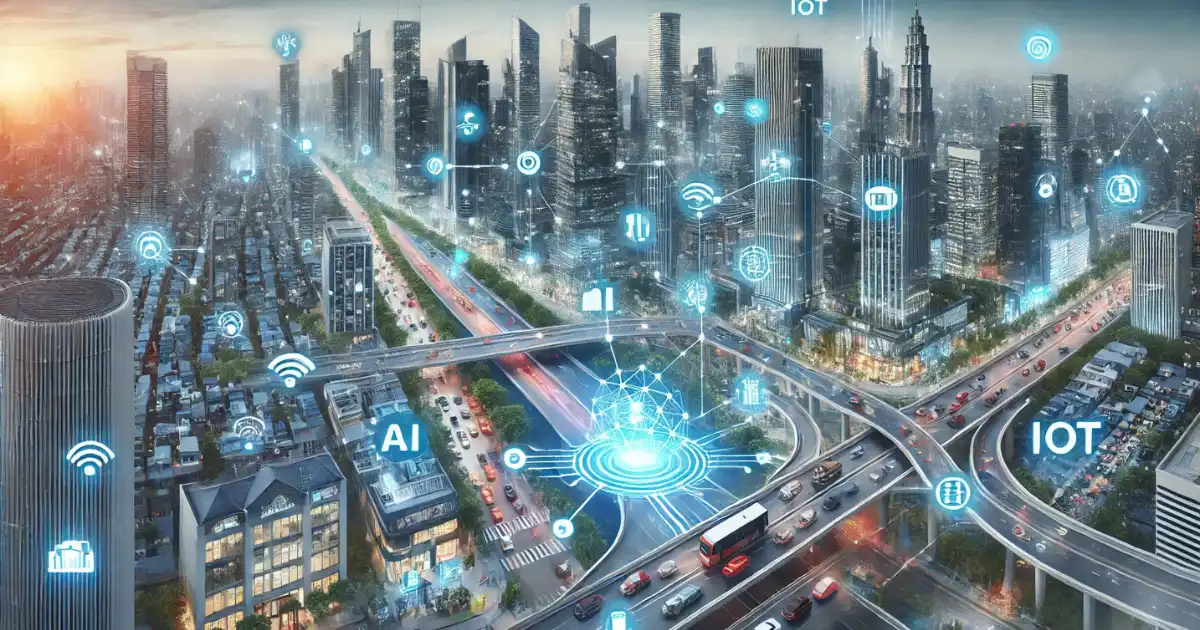
Imagine waking up in a bustling city where traffic jams are no longer part of your daily routine. The sound of honking horns and the frustration of bumper-to-bumper congestion feel like distant memories. This is not a futuristic fantasy—it is the promise of AI smart city concept. As urban populations grow at an unprecedented rate, cities worldwide are facing mounting pressure on their infrastructure, particularly roads and transportation systems. Traditional traffic management methods often fail to keep up, leaving commuters stressed and economic productivity hampered.
This is where AI-driven smart city initiatives come into play. These systems use advanced algorithms, machine learning, and real-time data analysis to optimize traffic flow, reduce congestion, and improve overall urban mobility. The integration of artificial intelligence (AI) into urban planning and traffic management offers cities a transformative solution to age-old traffic problems. By predicting traffic patterns, coordinating public transportation, and even managing autonomous vehicles, AI promises a future where moving through the city is seamless, efficient, and stress-free.
If you’ve ever wondered how your city could evolve to become smarter and more livable, this guide will walk you through the intricate ways AI smart city concepts reduce urban traffic, improve commuter experiences, and reshape the urban landscape.
What is a Smart City?
A smart city is an urban area that leverages AI technologies, Internet of Things (IoT) devices, and big data analytics to manage resources efficiently and improve the quality of life for its residents. Unlike traditional cities, where infrastructure is largely static, smart cities rely on interconnected systems to monitor, analyze, and respond dynamically to urban challenges, including traffic congestion.
Key elements of a smart city include:
-
Intelligent transportation systems (ITS)
These use sensors, cameras, and AI algorithms to monitor traffic in real time and optimize flow.
-
Connected public transportation
AI helps synchronize buses, trains, and subways to minimize wait times and reduce crowding.
-
Autonomous vehicle integration
Self-driving cars can communicate with traffic lights and other vehicles to reduce congestion and accidents.
-
Data-driven decision-making
City planners can use predictive analytics to anticipate traffic spikes and adjust infrastructure accordingly.
By embracing these technologies, cities can not only improve traffic conditions but also reduce pollution, enhance safety, and create a more sustainable urban environment.
How AI Reduces Traffic Congestion
1. Real-Time Traffic Monitoring
One of the most powerful applications of AI smart city concepts is real-time traffic monitoring. Sensors embedded in roads, streetlights, and vehicles collect massive amounts of data about traffic flow, vehicle speed, and congestion points. AI algorithms analyze this data to:
-
Identify bottlenecks before they become severe.
-
Adjust traffic signals dynamically to keep vehicles moving smoothly.
-
Predict traffic patterns based on historical and real-time data.
For instance, a city like Singapore uses AI traffic management systems that continuously monitor traffic conditions and adjust signals to prevent gridlock. This not only saves commuters time but also reduces fuel consumption and emissions.
2. Intelligent Traffic Signal Systems
Traditional traffic lights operate on fixed schedules, often failing to adapt to fluctuating traffic volumes. AI-powered traffic signal systems change this by:
-
Using real-time data to modify light durations dynamically.
-
Prioritizing emergency vehicles, public transport, or high-traffic lanes.
-
Reducing idle times at intersections, which decreases congestion and emissions.
Studies show that cities implementing intelligent traffic signals can reduce waiting times by up to 25% and improve traffic flow efficiency significantly.
3. Predictive Analytics for Traffic Management
AI doesn’t just react to traffic—it predicts it. By analyzing historical data, weather patterns, local events, and even social media activity, predictive models can forecast traffic surges hours or even days in advance. Benefits include:
-
Allowing city planners to reroute traffic preemptively.
-
Scheduling road maintenance during low-traffic periods.
-
Reducing accidents caused by sudden congestion.
This proactive approach transforms traffic management from a reactive process into a strategic operation, saving time and resources.
4. Optimizing Public Transportation
AI smart city concepts extend beyond personal vehicles to public transit systems. AI helps optimize:
-
Bus and train schedules to match real-time passenger demand.
-
Route planning to avoid congested areas.
-
Predictive maintenance to prevent unexpected breakdowns that disrupt traffic.
Cities like Barcelona and Helsinki have implemented AI-driven transit systems that seamlessly adjust operations, encouraging more people to use public transportation and reducing the number of cars on the road.
5. Integration of Autonomous Vehicles
Autonomous vehicles (AVs) are set to revolutionize urban mobility. When integrated into AI smart city networks, AVs can:
-
Communicate with traffic signals to reduce stop-and-go patterns.
-
Form platoons that drive efficiently, reducing gaps and congestion.
-
Minimize accidents caused by human error, which are major contributors to traffic jams.
Widespread adoption of AVs, supported by AI traffic management, could dramatically reduce congestion in densely populated urban areas.
Role of IoT in Traffic Reduction
The Internet of Things (IoT) plays a crucial role in enabling AI smart city concepts. Connected devices provide real-time data that AI systems analyze to optimize traffic. Key applications include:
-
Smart sensors
Detect vehicle count, speed, and types to optimize signal timings.
-
Connected streetlights
Adjust lighting based on traffic and pedestrian activity.
-
Parking sensors
Direct drivers to available spaces, reducing time spent searching for parking.
IoT devices provide the data backbone that AI needs to make informed decisions and manage urban traffic effectively.
Case Studies: Cities Leading the Way
1. Singapore
Singapore has been a pioneer in AI smart city traffic management. Its Intelligent Transport System monitors traffic across the city in real time, adjusting traffic lights, coordinating public transport, and providing live updates to drivers through mobile apps. The result: fewer traffic jams, reduced travel times, and improved air quality.
2. Barcelona
Barcelona uses a network of sensors, cameras, and AI algorithms to manage traffic flow and optimize public transportation. Its smart traffic lights adapt to real-time conditions, while predictive models help the city plan roadworks and special events without causing major disruptions.
3. Los Angeles
Los Angeles implemented an AI-driven traffic management system that analyzes traffic patterns to improve signal timings. The system has reduced congestion on major routes and enabled emergency services to reach destinations faster.
Environmental and Economic Benefits
Reducing traffic congestion through AI smart city concepts offers significant environmental and economic benefits:
-
Lower emissions
Less idling and smoother traffic flow reduce greenhouse gas emissions.
-
Fuel savings
Optimized routes and traffic signals help drivers save fuel.
-
Time efficiency
Commuters spend less time in traffic, boosting productivity.
-
Reduced accidents
AI predicts and prevents congestion-related accidents.
These benefits contribute to a sustainable, healthier, and more livable urban environment.
Challenges and Considerations
While the potential of AI smart city concepts is immense, there are challenges to address:
-
Data privacy
Collecting real-time traffic data raises concerns about surveillance and personal privacy.
-
Infrastructure costs
Upgrading city infrastructure to integrate AI and IoT can be expensive.
-
Technical reliability
AI systems must be robust and fail-safe to prevent accidents or gridlock.
-
Public adoption
Citizens must trust and accept AI-driven traffic systems.
Overcoming these challenges requires careful planning, transparent policies, and continuous technological improvement.
The Future of AI in Urban Traffic Management
The future of urban traffic management is closely tied to advancements in AI. Emerging trends include:
-
Predictive traffic routing
AI will guide drivers along optimal routes before congestion occurs.
-
Dynamic tolling
AI will adjust toll prices in real time to manage traffic flow.
-
Integration with smart grids
Traffic management will coordinate with energy systems to optimize electric vehicle charging.
-
Multimodal transportation planning
AI will seamlessly integrate cars, bikes, buses, trains, and even drones into a single, efficient network.
These innovations promise cities that are not only smarter but also safer, cleaner, and more efficient.
You Might Be Interested In
- What Are The Best Case Studies From Masdar City For Smart Urban Planning?
- Understanding Hybrid Cloud Infrastructure Solutions
- Implementing Zero-trust Architectures With Ai Tools
- Top 5 Ai-driven Tutoring Systems Today
- Why Is Saas Security Important?
- Why Is Cloud Gpu Infrastructure Used For Ai?
- What Is Software Lifecycle Management Used For?
- Why Ai In Crowd Behavior Analysis Matters?
- What Is A Continuous Integration Pipeline?
- What Is Machine Learning In Medical Diagnostics?
Conclusion
The integration of AI smart city concepts into urban traffic management is transforming the way cities operate. From real-time traffic monitoring and intelligent signals to autonomous vehicles and predictive analytics, AI offers solutions that reduce congestion, improve commuter experiences, and make cities more sustainable. By harnessing the power of data, IoT, and machine learning, urban centers can evolve into intelligent ecosystems where traffic jams are minimized, air quality improves, and economic productivity rises.
As cities continue to adopt these technologies, the dream of efficient, safe, and environmentally friendly urban transportation becomes increasingly attainable. With strategic planning, public cooperation, and continued technological advancement, AI smart city concepts can redefine the urban experience for generations to come.
FAQs about Ai Smart City
How is AI helpful in traffic management in smart cities?
AI is very helpful in managing traffic in smart cities because it can analyze large amounts of data from sensors, cameras, and GPS devices in real time. By understanding traffic patterns, AI can predict areas where congestion is likely to happen and suggest ways to prevent it. For example, it can adjust traffic lights automatically to make sure vehicles move smoothly or provide drivers with alternate routes to avoid heavy traffic.
AI can also help public transportation run more efficiently. By predicting passenger demand, it can adjust bus or train schedules, making commuting faster and less stressful. Over time, AI learns from traffic trends and improves its decisions, helping cities save time, reduce accidents, and make travel more convenient for everyone.
How can AI reduce traffic?
AI reduces traffic by making smarter decisions about how vehicles move in a city. It can control traffic lights, monitor accidents, and guide drivers to less crowded roads. By predicting rush hours and congestion, AI can suggest better routes or change traffic flow patterns to avoid jams.
Additionally, AI can encourage people to use public transportation or carpooling by analyzing which routes are most crowded. With AI, emergency vehicles can also get priority on roads, ensuring faster response times and reducing blockages. In short, AI helps traffic move more smoothly, saves travel time, and reduces stress on drivers.
What is the role of AI in urban planning for smart cities?
AI plays an important role in urban planning because it helps city planners make better decisions using data. It can analyze traffic patterns, population growth, and land use to design roads, highways, and public transport systems more efficiently. AI can even predict future problems, like areas that might become too crowded, so cities can plan ahead.
Beyond traffic, AI can improve energy use, waste management, and emergency response. By collecting and analyzing real-time data from the city, AI helps create urban areas that are safer, more sustainable, and easier to live in. It ensures that city resources are used in the best way possible to support the needs of residents.
How smart city technology can be used to improve traffic management and reduce congestion?
Smart city technology, like sensors, cameras, and connected devices, can collect real-time information about traffic. This information can be used to control traffic lights, alert drivers about accidents, and suggest alternative routes. By monitoring traffic patterns continuously, cities can prevent jams before they happen.
These technologies also help manage public transport systems, allowing buses and trains to run on time based on real-time demand. In addition, smart parking solutions can guide drivers to available parking spots, reducing unnecessary driving and congestion. Overall, smart city technology creates a more organized and efficient traffic system that saves time and reduces frustration for everyone.
What techniques help reduce congestion in urban traffic?
There are several techniques to reduce traffic congestion in cities. One common method is adjusting traffic light timings using AI so that vehicles move more smoothly through busy intersections. Another technique is using real-time traffic monitoring to guide drivers to less crowded routes, avoiding jams before they happen.
Cities can also encourage the use of public transport, cycling, or carpooling to reduce the number of vehicles on the road. Smart parking solutions and road management systems help prevent unnecessary driving in search of parking spots. By combining these techniques with AI and smart technologies, cities can make traffic flow more efficiently and reduce delays for everyone.
