

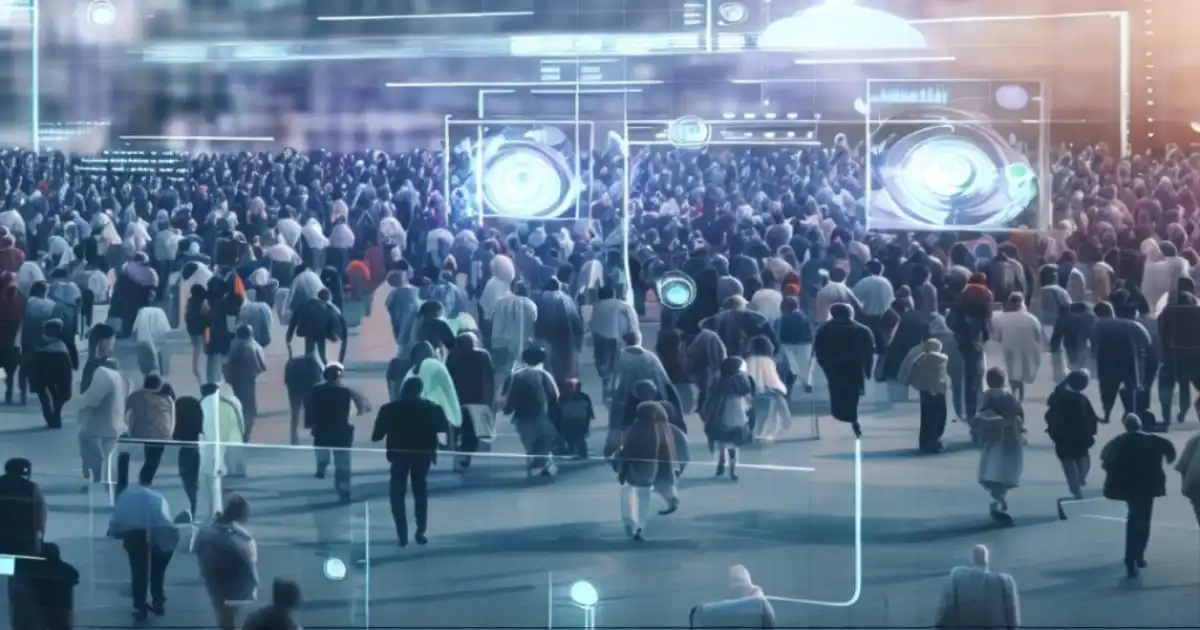
Imagine being in a packed stadium, a music festival, or a busy airport. Thousands of people moving, interacting, and reacting in real time. Suddenly, a disturbance breaks out—a fight, a medical emergency, or worse, a potential security threat. In that critical moment, how do authorities predict what happens next, prevent escalation, and keep everyone safe? The answer lies in AI in crowd behavior analysis.
Crowds are powerful. They can be joyful, energetic, and inspiring—but they can also turn dangerous, chaotic, and unpredictable. From concerts and protests to shopping malls and public transportation, understanding how people behave in groups has always been a challenge. Traditional monitoring methods, like security cameras and on-the-ground staff, simply aren’t enough anymore. Artificial intelligence offers a way to decode patterns, predict risks, and ensure safety before things spiral out of control.
Now, picture a system that can scan live camera feeds, analyze human movement, detect unusual behaviors, and alert authorities in real time. No delays. No second-guessing. Just instant insights that could save lives, protect property, and maintain order. That’s why AI-powered crowd behavior analysis matters—it transforms safety, efficiency, and even the experience of being in large groups.
In this guide, we’ll dive deep into why AI is revolutionizing crowd analysis, how it works, where it’s being used, and what the future holds. Whether you’re a policymaker, event organizer, security professional, or simply curious about technology’s role in society, this article will give you the knowledge and clarity you need.
What is Crowd Behavior Analysis?
Crowd behavior analysis refers to the study of how groups of people act, move, and interact in public or private spaces. It seeks to understand collective dynamics, detect patterns, and identify abnormalities that may indicate potential risks.
Traditionally, this field relied on human observation, manual video monitoring, and statistical models. However, with modern AI in crowd behavior analysis, systems can process massive amounts of data in real time, identifying behaviors that the human eye might miss.
Key areas of focus include:
-
Movement patterns
How people flow through a space
-
Anomalous behavior detection
Spotting irregular activities like sudden panic, aggression, or stampedes
-
Density estimation
Measuring how crowded an area is
-
Predictive modeling
Anticipating potential dangers before they escalate
Why AI is a Game-Changer in Crowd Behavior Analysis
Speed and Efficiency
AI processes data faster than any human team could. A single operator cannot monitor dozens of CCTV feeds effectively, but AI can analyze thousands of inputs simultaneously.
Real-Time Insights
Instead of waiting until after an incident occurs, AI-powered systems provide instant alerts. This proactive approach enables quicker decision-making and faster response times.
Accuracy and Pattern Recognition
AI can distinguish between normal crowd dynamics (like cheering at a concert) and suspicious behavior (like sudden stampede-like movements). Machine learning models improve over time, increasing accuracy.
Scalability
Whether it’s a small shopping center or an international sports arena, AI systems can be scaled up or down depending on the size and nature of the crowd.
How AI Works in Crowd Behavior Analysis
1. Computer Vision
AI in crowd behavior analysis heavily relies on computer vision. Cameras feed real-time video into AI systems, which then process frames to identify individuals, groups, and movement trends.
2. Machine Learning Algorithms
AI uses algorithms to learn what “normal” crowd behavior looks like. Once trained, these systems can detect unusual activity and raise alarms.
3. Predictive Analytics
By analyzing past data and current patterns, AI can predict potential risks. For instance, if a certain area is becoming too crowded, AI might suggest redirecting foot traffic.
4. Behavioral Biometrics
Beyond movement, AI also studies posture, gestures, and group interactions, which helps detect signs of aggression or panic.
Real-World Applications of AI in Crowd Behavior Analysis
Public Safety and Security
-
Detecting fights, thefts, or suspicious activities in real time
-
Preventing stampedes at religious gatherings, concerts, or sports events
-
Identifying abandoned objects that may pose security risks
Transportation Hubs
-
Monitoring congestion in airports, bus terminals, and train stations
-
Managing crowd flows to avoid bottlenecks
-
Enhancing passenger safety with automated alerts
Event Management
-
Optimizing entry and exit routes at large venues
-
Tracking crowd satisfaction through behavior monitoring
-
Ensuring compliance with safety regulations
Smart Cities
-
Integrating AI into urban planning to improve pedestrian flow
-
Detecting protests or sudden gatherings for quicker response
-
Managing evacuation during natural disasters
Retail and Commercial Spaces
-
Analyzing customer movement to improve store layouts
-
Detecting shoplifting or suspicious activity
-
Enhancing customer experience through better crowd management
Benefits of AI in Crowd Behavior Analysis
Enhanced Safety
The most obvious benefit is saving lives. By detecting potential threats early, AI systems give authorities the upper hand.
Operational Efficiency
AI reduces the need for excessive manual monitoring. This means fewer resources wasted and better allocation of staff.
Cost Savings
While initial investment may be high, AI reduces long-term operational costs by minimizing incidents and optimizing resources.
Data-Driven Decision Making
Insights gained from AI in crowd behavior analysis help organizations make informed decisions about space design, staffing, and event planning.
Improved User Experience
When crowds are well-managed, people feel safer and more comfortable, whether they’re at an airport, festival, or shopping mall.
Challenges and Ethical Considerations
While AI offers tremendous benefits, it’s not without challenges.
Privacy Concerns
Surveillance and facial recognition raise issues around personal privacy. Striking a balance between safety and privacy is critical.
Bias in AI Algorithms
If AI systems are trained on biased datasets, they may misinterpret behaviors, leading to false alarms or discriminatory practices.
High Costs of Implementation
For smaller organizations, the cost of deploying AI-powered systems may be prohibitive.
Dependence on Technology
Overreliance on AI could reduce human vigilance, creating vulnerabilities if systems fail.
Future of AI in Crowd Behavior Analysis
The future looks promising. Advances in machine learning, edge computing, and 5G networks will make AI faster and more reliable. We can expect:
-
Smarter predictive analytics to anticipate crowd movements with greater accuracy
-
Integration with drones and autonomous robots for real-time monitoring
-
More privacy-conscious solutions, such as anonymized data tracking
-
Wider adoption in everyday public infrastructure, not just high-risk events
Best Practices for Implementing AI in Crowd Behavior Analysis
-
Define Clear Goals
Know whether you want to enhance safety, improve efficiency, or optimize design.
-
Invest in Quality Data
High-quality training data reduces bias and increases accuracy.
-
Combine AI with Human Oversight
AI should assist, not replace, human decision-makers.
-
Ensure Compliance with Privacy Laws
Protect individual rights while maintaining public safety.
-
Regularly Update and Train Systems
AI models improve with new data and continuous refinement.
Case Studies: AI in Action
Case Study 1: Airports
Several international airports now use AI in crowd behavior analysis to manage passenger flow. By analyzing density in security checkpoints, AI reduces waiting times and prevents overcrowding.
Case Study 2: Sports Stadiums
Stadiums equipped with AI-powered surveillance have successfully prevented stampedes by identifying risky crowd behaviors in real time.
Case Study 3: Smart Cities
Cities in Asia and Europe use AI for crowd control during festivals and protests, ensuring public safety while maintaining order.
You Might Be Interested In
- What Are The Top Cloud Security Best Practices For Small Businesses?
- What Is Network Security?
- What Is Precision and Recall In Machine Learning?
- 5 Best AI Copywriting Tools for 2023 (Not ChatGPT)
- What Are The 4 Applications of Artificial Intelligence?
- What Is Ai Hallucination In Large Language Models?
- How Do Wireless Earbuds Connect?
- What Technologies Power Masdar City Transport And Mobility Systems?
- Does Chat GTP Have Loopholes?
- How Does Ai Chatbot Automation Work?
Conclusion
Crowds are both fascinating and unpredictable. Managing them requires more than just manpower—it requires intelligence, foresight, and rapid response. AI in crowd behavior analysis delivers exactly that. It transforms how we approach public safety, event management, and urban planning. By leveraging real-time insights, predictive modeling, and data-driven strategies, AI makes spaces safer, more efficient, and more enjoyable for everyone.
Yes, challenges exist—privacy, cost, and reliance on technology—but the benefits far outweigh the drawbacks. The future of AI in this field is not just about preventing disasters; it’s about shaping environments where people can gather with confidence, security, and peace of mind.
As technology continues to advance, AI in crowd behavior analysis will become a cornerstone of modern society, influencing how we design cities, organize events, and ensure the well-being of communities worldwide.
FAQs about Behavior Analysis
What is user behavior analysis using AI?
User behavior analysis using AI is the study of how people interact with websites, apps, or digital systems by using artificial intelligence to find patterns in their actions. This includes looking at things like the pages they visit, how long they stay, what they click on, or how they make decisions online. AI helps process huge amounts of this data quickly and can notice patterns that humans might miss.
For example, AI can tell if someone is losing interest in a website, if they are about to leave their shopping cart without buying, or if they are showing unusual behavior that could be linked to security risks. Businesses use this information to improve user experience, keep customers engaged, and even protect against fraud. In short, AI makes it possible to understand users better by looking at their behavior in a smarter and faster way.
How is AI used in applied behavior analysis?
In applied behavior analysis (ABA), which is often used to help people with learning difficulties or autism, AI can support therapists by making the process more accurate and efficient. For example, AI can track a person’s responses to certain activities, analyze how often specific behaviors happen, and give suggestions about which teaching methods work best. This reduces the amount of manual work for therapists and makes data collection much easier.
AI can also personalize learning programs by predicting what strategies might help an individual progress faster. Some AI tools can even use video or motion tracking to automatically record behaviors and provide real-time feedback to caregivers or teachers. This makes ABA more effective because decisions are based on clear evidence, and it helps create a more supportive environment for learning and growth.
How can AI be used in analysis?
AI can be used in analysis by collecting, organizing, and studying large amounts of data to find meaningful insights. Unlike traditional methods, where people have to manually look through numbers or records, AI can process massive datasets in seconds. It can recognize trends, predict outcomes, and even spot unusual patterns that might go unnoticed.
For example, in business, AI can analyze sales data to show which products are popular or forecast future demand. In healthcare, AI can study medical records to detect early signs of diseases. In education, it can analyze student performance to suggest better teaching methods. In short, AI makes analysis faster, more accurate, and more useful across many different fields.
Which AI tool is best for analysis?
There isn’t a single “best” AI tool for analysis because the choice depends on what kind of data you are working with and what you want to achieve. For businesses, tools like Google Analytics, Tableau, and Microsoft Power BI are very common, as they help organize and visualize data clearly. For more advanced tasks, AI platforms like TensorFlow, IBM Watson, and RapidMiner are popular because they can handle complex machine learning models and predictive analytics.
Each tool has its strengths. Some are easy to use for beginners, while others are powerful but require more technical knowledge. The best tool is the one that matches your needs, whether that is studying customer behavior, forecasting sales, analyzing scientific data, or improving decision-making in an organization.
What is the benefit of using AI in data analysis?
The biggest benefit of using AI in data analysis is that it makes the process much faster, more accurate, and more insightful. Humans can take hours or days to analyze large sets of data, but AI can do it in seconds. This allows people to focus on making decisions instead of spending all their time just sorting through information.
Another major advantage is that AI can detect hidden patterns that are not obvious to the human eye. It can predict future trends, reduce human error, and even provide suggestions for better actions. For businesses, this means smarter decisions and higher efficiency. For science, it means discovering new knowledge faster. For everyday life, it can mean more personalized experiences, like movie recommendations or health tips. Overall, AI transforms data into meaningful knowledge that can be used to improve many parts of life.
