

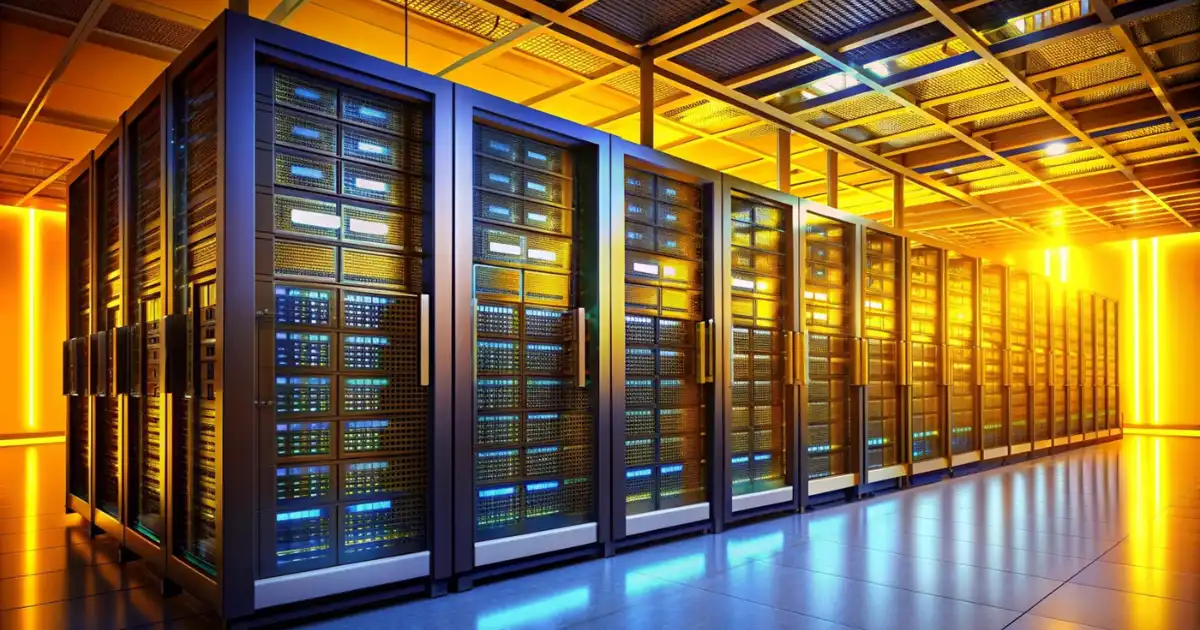
AI cloud servers have quietly become the backbone of almost everything people now associate with modern AI. When you use ChatGPT, generate an image, run a recommendation feed, or even get fraud alerts from your bank, there is a good chance a fleet of GPU-powered cloud machines is doing the heavy lifting behind the scenes.
What people usually miss is that these are not just “faster servers.” They are completely different systems designed for workloads that behave nothing like traditional web apps. I’ve seen teams struggle when they try to treat AI workloads like normal backend services. It usually breaks the moment GPU limits, memory bandwidth, or distributed scaling enter the picture.
This is a practical breakdown of how AI cloud servers actually work in real systems, what they are used for, and why companies depend on them so heavily today. No theory for the sake of theory. Just how things behave in real deployments.
What Are AI Cloud Servers?
In simple terms, AI cloud servers are cloud-based machines built specifically to run artificial intelligence workloads. The key difference from normal cloud servers is not just performance, it is architecture.
A normal cloud server is optimized for general computing. Web requests, APIs, databases, background jobs. These workloads are mostly CPU-heavy and relatively predictable.
AI cloud servers, on the other hand, are built around GPUs or TPUs. These chips are designed for massive parallel computation. That matters because AI models, especially deep learning models, are basically huge mathematical pipelines that need to process millions or billions of operations simultaneously.
A simple way I like to explain it is this:
A normal CPU server is like a highly skilled chef cooking multiple dishes one at a time.
A GPU-based AI server is like a full industrial kitchen where hundreds of cooks are chopping, frying, and assembling at the same time.
That parallelism is what makes modern AI possible.
How AI Cloud Servers Work in Practice
On paper, the flow looks simple. In reality, it is a carefully coordinated pipeline involving compute, memory, and networking working together under pressure.
First, data enters the system. This could be text prompts, images, audio, or structured datasets. That input is broken into chunks and sent into memory systems that feed the GPU.
Next comes the GPU compute layer. This is where most of the work happens. The model’s parameters, sometimes billions of them, are loaded into GPU memory (VRAM or HBM). The GPU then performs matrix multiplications at massive scale. This is where architectures like NVIDIA GPUs or TPU pods become critical.
But here is what people underestimate: the GPU is rarely the bottleneck alone. Memory bandwidth and data movement often matter just as much. I’ve seen systems where GPUs were 70 percent idle simply because data could not be fed fast enough.
In larger deployments, a single model does not live on one machine. It is split across multiple GPUs and sometimes multiple servers. This is where distributed systems come in. Frameworks coordinate how different GPUs handle different parts of the model or batch of requests.
Finally, results are sent back through storage and networking layers to the application layer, which returns outputs like text, images, or predictions to users.
So the real pipeline looks like this:
data input → storage → GPU compute → distributed coordination → output delivery
Simple concept, but extremely complex in execution.
What Are AI Cloud Servers Used For?
This is where AI cloud servers actually prove their value. In real systems, they are not just “for AI.” They are for very specific categories of workloads that cannot run efficiently anywhere else.
AI Model Training
Training is where AI cloud servers get pushed to their limits.
When a company trains a large model, it is feeding billions of examples through a neural network repeatedly. Each step updates model weights based on error correction. This is extremely GPU-intensive and memory-heavy.
In practice, training does not happen on a single server. It is distributed across hundreds or thousands of GPUs. These GPUs constantly sync gradients, which means networking becomes just as important as compute.
What people often misunderstand is that training is not a smooth process. It is noisy, unstable, and full of bottlenecks. A slow node can drag down an entire cluster. I’ve seen training jobs fail simply because one GPU instance had slightly different performance characteristics.
AI Inference
Inference is what most users actually interact with. When you ask a chatbot a question or get a recommendation, that is inference.
Unlike training, inference is about speed and consistency. The model is already trained, so the system just runs forward passes to generate outputs.
In real deployments, inference systems are heavily optimized. Engineers try to batch requests, cache intermediate results, and reduce latency as much as possible. Even a 100 millisecond delay can matter in user-facing applications.
The tricky part is scaling inference. Traffic is unpredictable. One minute you have low load, the next minute millions of requests hit the system. AI cloud servers handle this using auto-scaling GPU clusters, but it is never perfect. Sudden spikes still cause latency jumps in many real systems.
Generative AI
This is the most visible use case today.
Generative AI models like language models, image generators, and video synthesis systems are extremely compute-heavy. Each output requires multiple passes through large neural networks.
For example, generating a single high-quality image can involve thousands of GPU operations. Video generation is even more demanding because it adds temporal consistency across frames.
In practice, companies often separate these workloads into dedicated inference clusters because they behave differently from normal AI workloads. Text generation needs low latency. Image generation can tolerate higher compute time but needs higher GPU memory.
Data Analytics and Prediction Systems
AI cloud servers are also heavily used in predictive analytics.
This includes forecasting demand, analyzing user behavior, and detecting patterns in massive datasets. Unlike traditional analytics systems, AI-based prediction models can process unstructured data like images, logs, or raw text.
What I’ve seen in real systems is that these workloads often run in batch mode. Companies collect data throughout the day, then run large GPU jobs overnight to generate insights.
The challenge here is cost control. Many teams overuse GPU clusters for tasks that could run on CPUs, simply because AI tooling makes it easy to scale up.
Enterprise Automation
In enterprise systems, AI cloud servers quietly power a lot of background automation.
Fraud detection systems analyze transaction patterns in real time. OCR systems extract text from documents. Customer support systems classify and route queries automatically.
These systems need high reliability more than raw performance. A missed fraud detection or a delayed support response can have real business consequences.
In practice, these workloads often run as hybrid systems. Lightweight models run on CPUs for quick decisions, while heavier models on GPUs handle edge cases.
Scientific and Advanced Simulations
AI cloud servers are also used in scientific research, especially where traditional simulation is too slow.
This includes drug discovery, climate modeling, and physics simulations. Instead of running purely mathematical models, researchers now use AI to approximate complex systems.
These workloads are extremely GPU-hungry and often run for days or weeks continuously. Stability matters more than speed here. If a cluster fails mid-run, it can waste enormous amounts of compute time.
Why Companies Use AI Cloud Servers
The biggest reason is simple: flexibility.
Buying and maintaining GPU hardware on-premise is expensive and inflexible. AI workloads are unpredictable. Some months you need massive compute, other months almost none.
Cloud AI infrastructure solves this by allowing companies to scale up and down instantly.
There is also a hidden reality here. GPU hardware becomes outdated fast. New generations of chips can outperform older ones dramatically. Cloud providers absorb that upgrade cycle so companies do not have to.
Another important factor is ecosystem. Cloud platforms already provide distributed training frameworks, storage systems, and networking optimized for AI workloads. Building that internally is extremely hard and expensive.
Key Components Behind AI Cloud Servers
AI cloud servers are not just GPUs sitting in isolation. They are entire ecosystems.
GPUs or TPUs are the compute core. They handle matrix operations and parallel processing.
Storage systems feed data into the compute layer. This includes high-speed SSD arrays and distributed storage like object stores.
Networking connects everything. High-speed interconnects like InfiniBand or NVLink are critical because GPUs constantly exchange data during training.
Orchestration layers like Kubernetes manage workload distribution. They decide which GPU runs what, when to scale, and how to recover from failures.
In real systems, the performance of the whole stack depends on the weakest link. A powerful GPU means nothing if storage or networking is slow.
Real-World Examples
Major cloud providers like AWS, Microsoft Azure, and Google Cloud all operate large-scale AI infrastructure built around GPU clusters.
NVIDIA plays a central role in this ecosystem because most AI training frameworks are optimized for its hardware stack.
Real-world systems include:
- ChatGPT-style assistants running on large distributed GPU clusters
- Recommendation engines used by platforms like YouTube or Netflix
- Autonomous systems in robotics and self-driving research
- Enterprise AI tools embedded into CRM and support platforms
What is interesting is that most of these systems are not fully “AI-native.” They are hybrid systems combining traditional software with AI inference layers.
Challenges and Limitations
AI cloud servers are powerful, but they are not magic.
The biggest challenge is cost. GPUs are expensive to run, and inefficiencies scale quickly. I’ve seen teams burn through budgets simply because models were not optimized.
Scaling is another issue. Distributed AI systems are fragile. One slow node can reduce performance across the entire cluster.
Latency is also a major constraint for real-time systems. Even with powerful GPUs, network delays and batching strategies can introduce lag.
Data privacy is a growing concern too. Many companies hesitate to send sensitive data to external cloud systems, especially in regulated industries.
Finally, operational complexity is high. Running AI workloads is not just “deploy and forget.” It requires constant tuning, monitoring, and debugging.
You Might Be Interested In
- Can Early Stopping Cause Underfitting in Neural Networks?
- How Do Data Centres Ensure Disaster Recovery And Business Continuity?
- How Do Data Centres Reduce Energy Consumption And Improve Efficiency?
- Top 10 Agritech Innovations Ending Global Hunger
- What Is Precision and Recall In Machine Learning?
Conclusion
The industry is clearly moving toward more specialized and efficient hardware.
We are seeing better GPUs with higher memory bandwidth, more efficient interconnects, and tighter integration between compute and storage layers.Another direction is hybrid cloud-edge systems. Instead of sending everything to the cloud, some inference will move closer to users on edge devices. This reduces latency and cost.
There is also a strong push toward efficiency. Not every AI workload needs massive models. Smaller, optimized models are becoming more common in production systems.What I do not expect is a simple future where everything becomes cheap and effortless. AI infrastructure will still be complex, just more optimized.
FAQs
What are AI cloud servers used for?
AI cloud servers are mainly used for running workloads that need heavy computation and cannot realistically run on normal CPU-based servers. In real systems, this includes training machine learning models, serving real-time AI applications like chatbots, powering recommendation systems, and handling large-scale data analysis. Whenever you interact with an AI feature that feels instant or intelligent, there is usually a GPU cluster behind it doing fast matrix calculations in the background.
What people often misunderstand is that these servers are not only used for “AI research.” In production environments, they are deeply embedded into everyday business systems. Fraud detection in banking, automated customer support, image recognition in apps, and even search ranking systems all rely on AI cloud infrastructure. Without these servers, most modern AI-driven products would simply not scale beyond small experiments.
How are AI cloud servers different from normal cloud servers?
Normal cloud servers are built for general-purpose computing like running websites, databases, APIs, or background services. They rely heavily on CPUs, which are good at handling many small, sequential tasks efficiently. AI cloud servers are fundamentally different because they are built around GPUs or TPUs, which are designed for massive parallel computation rather than sequential processing.
In practice, this difference is huge. A normal server might handle thousands of web requests smoothly, but it would struggle with AI workloads that involve billions of mathematical operations per second. AI cloud servers are also paired with high-speed memory and specialized networking because AI models constantly move large amounts of data between compute nodes. This is why you cannot just “upgrade a normal server” and expect it to perform like an AI server. The entire architecture is different.
Are AI cloud servers expensive?
Yes, they are expensive, and in real deployments the cost is often one of the biggest engineering concerns. The price is not just about renting GPUs. You are also paying for high-speed storage, network traffic, orchestration systems, and the inefficiencies that come with running large distributed workloads. A single high-end GPU instance can cost significantly more per hour than a full traditional server.
What I’ve seen in practice is that costs tend to spiral when systems are not optimized properly. For example, poorly batched inference requests or inefficient model architecture can double or triple compute usage without anyone noticing immediately. This is why companies spend a lot of time optimizing models, using techniques like quantization, caching, and load balancing. So while AI cloud servers are powerful, they are also something you have to actively manage from a cost perspective, not just consume passively.
Can small businesses use AI cloud servers?
Yes, small businesses can absolutely use AI cloud servers today, and this is actually one of the biggest shifts in the industry. Cloud providers allow access to GPU-powered infrastructure on a pay-as-you-go basis, which means you do not need to invest in expensive hardware upfront. This has opened the door for startups and small teams to build AI products that would have been impossible a few years ago.
However, there is a practical limitation that people often overlook. Access does not automatically mean efficiency. Small teams can easily overspend if they run large models without optimization or proper scaling strategies. In real-world usage, the difference between a well-optimized AI system and a naive one can be a 10x cost gap. So while the infrastructure is accessible, using it effectively still requires some understanding of how AI workloads behave under load.
Do you need coding skills to use them?
It depends on what you want to do. For simple use cases, like using pre-built AI models or APIs, you do not need deep coding skills. Many cloud platforms now provide ready-made tools where you can integrate AI features into apps with minimal setup. This is why so many non-technical startups can still use AI today.
But once you move into building custom models, training workflows, or optimizing performance at scale, coding becomes essential. In real systems, engineers often work with frameworks like PyTorch or TensorFlow, manage distributed training jobs, and tune infrastructure parameters to get acceptable performance and cost balance. So while entry-level usage is easy, serious AI cloud work still requires strong technical skills behind the scenes.
