

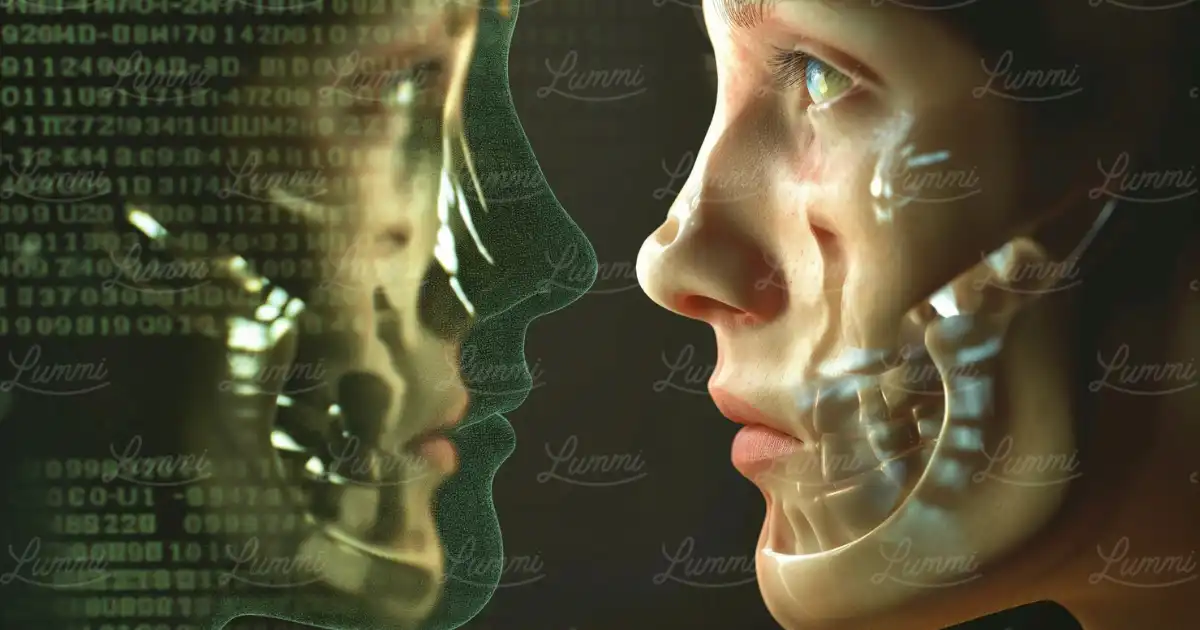
Deepfakes used to be a novelty. A celebrity’s face pasted onto a movie scene. A meme. Something you laughed at and moved on. What Are Warning Signs Of Deepfakes In Videos?
In the last few years, I’ve analyzed deepfake clips used in scams, political manipulation, fake CEO fraud attempts, and straight-up reputation attacks. They’re getting better. Faster. Cheaper to produce. And the scariest part? Most people don’t question them.
Spotting deepfake warning signs isn’t about becoming paranoid. It’s about not being gullible in a world where AI video manipulation is getting disturbingly good. Let’s break this down from the real world not theory.
What a Deepfake Video Actually Is
A deepfake video is typically created using AI models trained to swap faces, clone voices, or generate entirely synthetic people. Tools built on generative adversarial networks (GANs) or diffusion models analyze thousands of images or video frames of a person, then reconstruct their face or voice onto another body or script.
That’s the technical side.
Here’s what it looks like in the real world:
-
A CEO appears to announce a sudden investment opportunity.
-
A politician “confesses” to something outrageous.
-
A celebrity promotes crypto on a livestream.
-
A family member “calls” asking for emergency money.
The face looks right. The voice sounds close enough. The lighting mostly matches.
But something feels… slightly off.
That’s usually your first clue.
Deepfakes aren’t magic. They’re pattern-matching machines. They predict what a face should look like frame by frame. When conditions get complex unusual angles, fast motion, poor lighting the illusion starts to crack.
And that’s where we begin.
Why Deepfakes Are Hard to Detect
Here’s the honest truth: if you’re expecting obvious glitches like melting faces or cartoon-level distortion, you’re about five years behind.
Modern deepfakes can survive casual viewing.
In my experience, detection is hard because:
-
Our brains want to believe video.
-
Most people watch on small screens.
-
We don’t scrutinize familiar faces.
-
Social media compression hides imperfections.
I’ve seen people re-share deepfake clips with captions like, “I can’t believe they admitted this.” They didn’t question it because the person looked right.
Another problem? Overconfidence. People think they can easily detect deepfake videos. Most can’t. Even trained analysts sometimes need frame-by-frame inspection.
The best fakes don’t scream “fake.” They whisper it.
Key Deepfake Warning Signs in Video Content
Now let’s get practical.
These are the warning signs I actually look for when I analyze suspicious videos.
Lip-Sync Issues
This is still one of the biggest tells.
I slow the video down. I watch the mouth carefully.
What I look for:
-
Slight delays between speech and lip movement
-
Teeth that look “painted in”
-
Words that don’t fully match mouth shapes
-
Lips blurring during fast speech
Why it matters:
Speech involves complex micro-movements tongue placement, subtle asymmetry, jaw tension. AI often approximates this rather than perfectly recreating it.
I once reviewed a fake executive announcement. It looked convincing at normal speed. But at 0.5x playback, the mouth formed an “O” while the audio clearly had an “E” sound.
That mismatch doesn’t happen naturally.
Unnatural Blinking Patterns
Early deepfakes barely blinked. That problem has improved.
But blinking is still weird sometimes.
Things I watch for:
-
Blinks that are too symmetrical
-
Blinks that look digitally smoothed
-
No blinking during long monologues
-
Blink timing that feels robotic
Humans blink unpredictably. AI tends to smooth patterns out.
It’s subtle. But once you notice it, you can’t unsee it.
Lighting and Shadow Inconsistencies
Lighting is hard for AI.
If a person turns their head, light should shift across their face naturally. Shadows should deepen and fade dynamically.
Deepfake faces sometimes:
-
Stay evenly lit during head movement
-
Show mismatched shadow direction
-
Have softer lighting than the rest of the body
I’ve seen fake interviews where the face lighting didn’t match the room lighting. The body had sharp directional shadows. The face looked studio-lit.
That’s a red flag.
Edges Around the Face
This one is old-school, but still relevant.
Look at:
-
The jawline
-
Hairline
-
Ear boundaries
-
Neck transitions
Sometimes you’ll see:
-
Slight blurring around the edges
-
Flickering borders
-
Skin tone mismatch near the neck
Compression can hide this. But on high-resolution clips, these artifacts show up.
Odd Facial Expressions
AI is good at neutral expressions. It struggles with complex emotions.
When someone laughs hard, squints, frowns deeply the face muscles behave in layered, organic ways.
Deepfakes sometimes:
-
Flatten expressions
-
Over-smooth wrinkles
-
Fail to wrinkle the eyes naturally
-
Produce stiff smiles
In one manipulated political speech I analyzed, the “anger” expression looked pasted on. The mouth was tense, but the eyes stayed neutral.
Real emotion affects the whole face.
Audio Mismatches
Audio deepfakes have improved dramatically. But sync and tone still give clues.
I listen for:
-
Slight metallic echo
-
Overly clean voice texture
-
Breath patterns that don’t match speech
-
Emotional tone mismatch
For example, a person speaking about a crisis should show vocal stress. If the voice remains oddly calm and perfectly modulated, that’s suspicious.
AI-generated voices sometimes lack micro-variations those tiny imperfections that make speech human.
Body Movement Doesn’t Match the Face
Deepfake systems often manipulate just the face.
Watch for:
-
Body posture that doesn’t match emotional tone
-
Neck movement slightly out of sync
-
Shoulders staying unnaturally still
If someone is passionately speaking but their body looks like it’s in idle mode, that’s weird.
Humans move when they talk. Even subtly.
Compression and Glitch Artifacts
Ironically, social media compression helps deepfakes but it also hides clues.
On original-resolution videos, you might notice:
-
Pixelation around the mouth
-
Frame warping during fast movement
-
Brief distortions when the head turns quickly
These are often moments where the model “recalculates” facial placement.
Other Non-Visual Red Flags
Here’s where most people completely miss things.
Not all deepfake warning signs are visual.
Sometimes the biggest clue is context.
Source Reliability
Where did the video originate?
If it’s:
-
A random repost account
-
A brand-new profile
-
An anonymous Telegram channel
-
A clipped excerpt with no original source
I always trace videos back to their earliest upload. If the supposed speaker hasn’t posted it themselves or credible outlets haven’t reported it, that’s telling.
Sensational Content
Deepfakes often exploit outrage.
If the video:
-
Feels designed to shock
-
Pushes a dramatic confession
-
Promotes urgency (“act now!”)
-
Triggers anger instantly
Pause.
Manipulators know emotional content spreads fastest.
Context Inconsistencies
Does the background match the setting?
Does the clothing match the event timeline?
I’ve seen fake videos where:
-
The person wore clothes from a different year
-
The background logo was outdated
-
The event location didn’t exist
Simple fact-checking kills many deepfakes.
Missing Metadata or Edited Files
When possible, I inspect file metadata.
Deepfakes shared via direct file transfer may:
-
Lack original camera metadata
-
Show editing software signatures
-
Contain encoding anomalies
This isn’t always accessible on social platforms, but when available, it helps.
Tools and Methods for Fake Video Detection
Let’s be honest. There’s no magic “deepfake detector” that’s 100% accurate.
There are AI-based detection tools that analyze:
-
Facial warping patterns
-
Inconsistent pixel behavior
-
Synthetic artifact traces
Some are developed by major research labs and cybersecurity firms. They’re improving.
But here’s the catch:
As AI video manipulation improves, detection tools constantly play catch-up.
In practice, I use:
-
Frame-by-frame video inspection
-
Audio waveform comparison
-
Reverse image search on key frames
-
Contextual verification (news, official sources)
-
AI detection software as supporting evidence not sole proof
Human judgment still matters.
Tools assist. They don’t replace critical thinking.
Tips If You Suspect a Deepfake
Here’s what I tell people:
-
Don’t share it immediately.
-
Slow it down and rewatch.
-
Check the source.
-
Look for official statements.
-
Compare with verified past footage.
If it involves financial requests?
Call the person directly using a known number.
Most fake videos fall apart under patience.
The Hard Truth: Detection Is Getting Tougher
Some deepfakes today are extremely convincing.
High-budget operations can combine:
-
Professional lighting
-
Skilled editing
-
Social engineering tactics
At that point, you may not detect deepfake videos through visuals alone.
That’s why context and source analysis matter more than pixel-level inspection.
The future of fake video detection isn’t just technical it’s behavioral. It’s about skepticism without paranoia.
You Might Be Interested In
Conclusion
Deepfake warning signs are out there subtle inconsistencies in lips, blinking, lighting, or even body movement. Audio oddities, context mismatches, and source reliability also tip you off. But the truth is, detection isn’t always obvious. Some fakes are so polished they’ll pass casual viewing without raising suspicion.
In my experience, the best defense isn’t obsessing over pixels. It’s slowing down, watching critically, checking sources, and asking: Does this make sense? Combine careful observation with context verification and a healthy dose of skepticism.
AI video manipulation is only going to get better. Your ability to detect it relies less on technology and more on awareness and critical thinking. Stay calm, stay sharp, and remember: in today’s world, seeing is not always believing verifying is.
FAQs about What Are Warning Signs Of Deepfakes In Videos?
How accurate are deepfake detection tools?
Detection tools can be surprisingly helpful, but in my experience, they’re far from foolproof. Many tools are designed to spot older, lower-resolution deepfakes by analyzing pixel inconsistencies, facial warping, or subtle artifacts. They perform well enough for casual verification, but high-quality, professionally produced deepfakes often slip through undetected. These tools are best used as a supplementary check rather than definitive proof.
You also need to remember that AI detection is a cat-and-mouse game. As the fakes get better, detection algorithms have to constantly evolve. I’ve seen tools flag videos as suspicious when they’re actually real, and miss fakes that are technically flawless. The takeaway? Use detection software, but don’t rely on it blindly human judgment and context verification remain critical.
Can you always detect deepfake videos by looking closely?
No, and this is one of the hardest lessons for most people to accept. Some deepfakes are so polished that even trained eyes struggle to catch subtle cues like slight lip-sync errors, unnatural micro-expressions, or minor lighting inconsistencies. Close observation helps, but it’s not guaranteed. In my experience, what really separates real from fake is combining careful visual inspection with contextual clues where the video came from, what’s happening, and whether it aligns with known facts.
The human brain is great at pattern recognition, but it also wants to believe what it sees. That’s why even obvious warning signs can be overlooked if you’re emotionally invested or viewing on a small screen. The best approach is to slow down the video, scrutinize critical frames, and cross-check against trusted sources rather than assuming a convincing face equals truth.
Are deepfakes illegal?
Deepfakes themselves aren’t automatically illegal it’s how they’re used that matters. In practice, I’ve seen people create deepfake content for entertainment, memes, or satire without running afoul of the law. But the moment they cross into fraud, harassment, identity theft, defamation, or political manipulation, they become a serious legal risk. Laws vary by country, and enforcement is still catching up, but you can’t rely on “it’s just AI” as a defense.
For example, scammers often use deepfake audio or video to impersonate executives and trick employees into wiring money. This is clearly illegal. Similarly, creating deepfake videos to damage someone’s reputation can lead to civil lawsuits, and in some regions, criminal charges. Awareness of the law is critical because the technology is accessible to anyone, but accountability still applies.
What’s the most common deepfake scam?
From my hands-on experience, the most frequent scams involve impersonation for financial gain. Scammers often clone a CEO’s voice or a family member’s face in a video call to create a sense of urgency “wire the money now, it’s an emergency!” These scams rely on AI video manipulation to bypass normal suspicion.
Political or sensational deepfakes also circulate widely, but they rarely involve direct financial loss. In those cases, the goal is influence or outrage, not cash. In my work analyzing such videos, I’ve noticed that the common denominator is emotional manipulation: fear, trust, or urgency. If a video pressures you to act quickly without verification, consider it a major red flag.
Will deepfakes become impossible to detect?
Not impossible, but detection is getting harder fast. Some high-budget deepfakes are so convincing that even experts struggle to spot them without advanced tools or context verification. I’ve reviewed manipulated videos where facial expressions, lighting, and voice were nearly perfect even frame-by-frame analysis didn’t reveal obvious glitches.
That said, detection won’t vanish entirely because there will always be tiny inconsistencies, contextual mismatches, or traceable sources. The future of detection will likely lean on a mix of technical verification such as digital signatures or authentication systems combined with critical thinking and context checks. In practice, this means that while spotting deepfakes is more challenging, staying vigilant and skeptical remains your best defense.
