

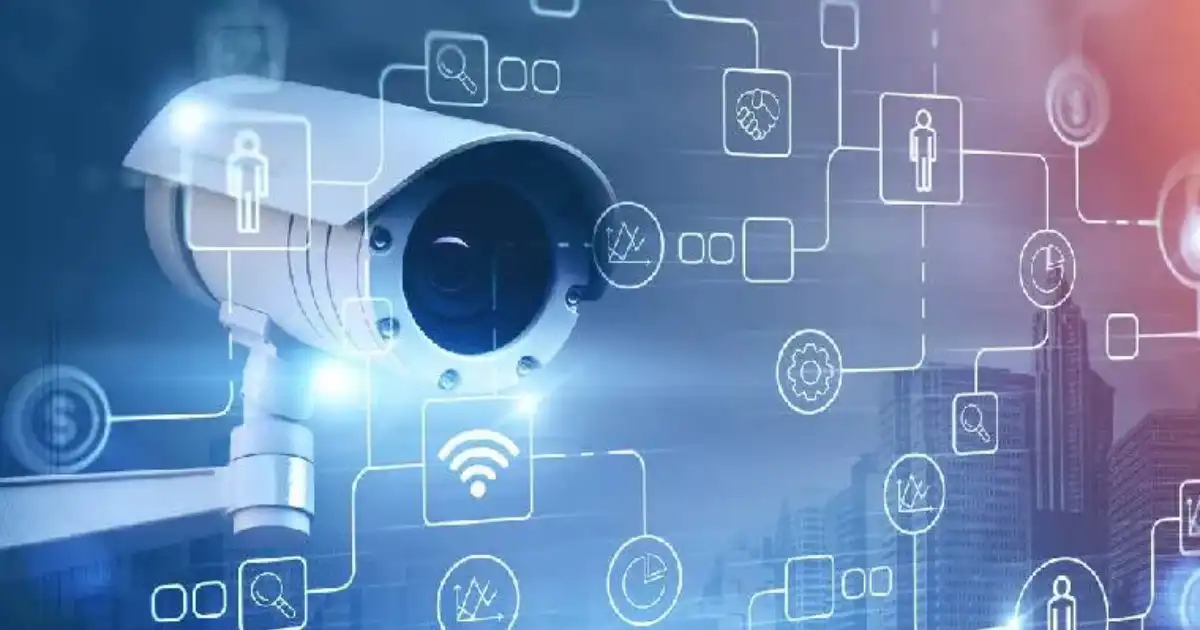
Imagine a city where cameras not only see but understand what’s happening. A place where security systems detect unusual activity instantly, recognize faces in seconds, and predict threats before they occur. This isn’t a futuristic movie scene—it’s happening now, thanks to Machine Learning in video surveillance.
For decades, video surveillance relied on human operators to monitor endless streams of footage. This approach was time-consuming, error-prone, and reactive rather than proactive. But Machine Learning has transformed the game. By teaching computers to analyze video the way humans do—only faster, more accurately, and at scale—security systems can now detect suspicious activities in real time, identify patterns, and even predict potential incidents.
Whether you’re responsible for protecting a retail store, managing citywide traffic monitoring, or securing sensitive facilities, integrating Machine Learning into your video surveillance system can drastically improve efficiency and safety. It’s not just about recording events anymore—it’s about understanding them.
In this comprehensive guide, we’ll break down exactly what Machine Learning is in the context of video surveillance, how it works, its applications, benefits, challenges, and the future trends you should watch for. By the end, you’ll know how to harness its full potential to make your security smarter, faster, and more reliable.
Machine Learning in Video Surveillance
What Is Machine Learning?
At its core, Machine Learning is a branch of artificial intelligence that enables computers to learn from data without being explicitly programmed. Instead of following a rigid set of instructions, an ML model improves its performance by identifying patterns in large datasets. In the case of video surveillance, these datasets come from recorded or live camera footage.
For example, a Machine Learning model can be trained to recognize the difference between a person walking casually and someone moving suspiciously near a restricted area. Once trained, the model applies this knowledge to new footage, flagging potential security incidents automatically.
How Machine Learning Works in Video Surveillance
Step 1: Data Collection
Video surveillance generates massive amounts of data from CCTV, IP cameras, drones, and other sources. Machine Learning thrives on large datasets, so this footage is a goldmine for training algorithms.
Step 2: Data Annotation
Before an ML model can learn, the video data must be labeled. This process—known as annotation—tags objects, people, and actions within the footage. For example, a frame might be labeled with “person,” “car,” or “running.”
Step 3: Training the Model
The labeled footage is fed into a Machine Learning algorithm, such as a convolutional neural network (CNN), which specializes in image recognition. The algorithm learns to identify objects, actions, and anomalies from this data.
Step 4: Real-Time Analysis
Once trained, the system can process live video feeds, detecting specific events or behaviors instantly. If someone leaves an unattended bag in a crowded station, the system can alert security within seconds.
Key Applications of Machine Learning in Video Surveillance
1. Object Detection and Classification
Machine Learning enables cameras to detect and classify objects automatically—whether it’s identifying a suspicious vehicle, recognizing a specific type of bag, or detecting weapons.
2. Facial Recognition
Facial recognition powered by Machine Learning can identify individuals even in crowded spaces. This is crucial for law enforcement, border control, and high-security areas.
3. Behavior Analysis
ML models can analyze body language and movement patterns to detect unusual behavior, such as loitering, running in prohibited areas, or erratic driving.
4. License Plate Recognition (LPR)
Machine Learning algorithms can read and record license plates in real time, aiding in vehicle tracking and crime prevention.
5. Crowd Management
In large gatherings, ML systems can detect overcrowding, unusual movement patterns, or potential stampedes before they escalate.
6. Perimeter Security
By recognizing movement patterns around fences, gates, or walls, Machine Learning helps detect intrusion attempts instantly.
Benefits of Machine Learning for Video Surveillance
Improved Accuracy
Unlike humans who may overlook details after hours of monitoring, Machine Learning algorithms maintain consistent attention and accuracy.
Real-Time Alerts
ML systems can send alerts the moment they detect suspicious activity, reducing response time dramatically.
Cost Efficiency
Automating surveillance analysis reduces the need for large monitoring teams, cutting operational costs.
Scalability
Whether monitoring a single store or an entire city, Machine Learning systems scale effortlessly.
Predictive Insights
By analyzing historical data, ML models can forecast potential incidents, enabling proactive security measures.
Challenges of Machine Learning in Video Surveillance
Data Privacy Concerns
Facial recognition and behavior tracking raise significant privacy issues. Ensuring compliance with regulations like GDPR is essential.
False Positives and Negatives
Even the best Machine Learning models can make mistakes, either by flagging harmless activities as threats or missing genuine incidents.
High Initial Setup Cost
Training and deploying an advanced ML surveillance system can be expensive initially, though long-term savings often outweigh the cost.
Data Quality Requirements
Poor lighting, low-resolution footage, or camera blind spots can reduce the effectiveness of ML models.
The Technology Behind Machine Learning for Video Surveillance
Computer Vision
A subset of AI that enables machines to interpret visual information. It’s the foundation of ML-based video surveillance.
Neural Networks
Deep learning models like CNNs and RNNs form the backbone of video analysis, allowing the system to recognize patterns and sequences.
Edge Computing
Processing data closer to the source (i.e., on the camera or a nearby device) reduces latency for real-time detection.
Cloud Integration
Cloud platforms store large datasets and run powerful ML models without the need for on-premises hardware.
Real-World Examples
Smart Cities
Cities like Singapore use Machine Learning in surveillance to manage traffic, detect accidents, and improve public safety.
Retail Security
Stores deploy ML-powered cameras to prevent shoplifting by detecting suspicious shopper behavior.
Transportation Hubs
Airports and train stations use ML systems for crowd management, facial recognition, and unattended baggage detection.
Future Trends in Machine Learning for Video Surveillance
Predictive Surveillance
ML models will increasingly predict potential crimes based on behavior patterns.
Multi-Sensor Integration
Combining data from cameras, motion sensors, and audio inputs will create more accurate surveillance systems.
Autonomous Drones
Drones equipped with Machine Learning will patrol areas, respond to alerts, and provide aerial monitoring.
Federated Learning
A privacy-friendly method where ML models learn from decentralized data without sharing raw footage.
Best Practices for Implementing Machine Learning in Video Surveillance
-
Define Clear Objectives
Identify whether you need object detection, behavior analysis, or both.
-
Invest in High-Quality Cameras
Better video quality means better ML performance.
-
Regularly Update Models
Continuously retrain your models with fresh data.
-
Ensure Compliance
Stay within legal boundaries to avoid privacy violations.
-
Monitor System Performance
Track false positives/negatives and improve over time.
You Might Be Interested In
- How Does Ai Optimize Traffic Signals And Reduce Congestion?
- Humain’s Approach To Ai In Arabic Language Tech
- What Is Ai Model Infrastructure?
- How Do Ai Accelerator Learning Systems Work?
- How Does Ai Personalized Learning Work In Classrooms?
- What Is Software Lifecycle Management Used For?
- How Do Banks Use Machine Learning For Anti money Laundering aml?
- How Does Web Development Work?
- How Does Machine Learning Detect Anomalies In Network Traffic?
- Top 5 Ai For Gun Detection Systems
Conclusion
Machine Learning has revolutionized video surveillance, transforming it from a passive, reactive tool into a proactive, intelligent security solution. By enabling real-time object detection, facial recognition, behavior analysis, and predictive insights, ML systems make environments safer, more efficient, and easier to manage.
While challenges like privacy concerns, setup costs, and occasional inaccuracies remain, the benefits far outweigh the drawbacks for most applications. As technology advances, we can expect Machine Learning to integrate seamlessly into more aspects of surveillance, from smart cities to personal home security systems.
The future is clear—security won’t just watch; it will think. And in an increasingly complex world, that might be the smartest move we can make.
FAQs about Machine Learning
How is AI used in video surveillance?
AI is used in video surveillance to make monitoring more intelligent, efficient, and accurate. Instead of relying only on human operators to watch security camera footage, AI systems can automatically analyze video in real-time. They can detect unusual activities, recognize faces, identify license plates, and even track the movement of people or objects. This makes it easier to spot potential threats, suspicious behavior, or emergencies without delay. For example, if someone leaves a bag unattended in a public area, an AI-powered system can quickly detect it and send an alert to security staff.
AI surveillance systems also learn over time, which means they become better at spotting patterns and reducing false alarms. They can work in low-light or crowded environments, making them useful in places like airports, train stations, schools, and shopping centers. By automating much of the work, AI allows human security teams to focus on responding to real incidents instead of constantly scanning hours of video footage.
What is a device used for video surveillance?
A device used for video surveillance is typically a security camera, also known as a CCTV (Closed-Circuit Television) camera. These cameras can be analog or digital, and modern systems often use IP (Internet Protocol) cameras that connect to networks for easier storage and monitoring. Surveillance devices may also include motion sensors, video recorders (DVRs or NVRs), and software that allows users to watch live or recorded footage remotely on computers or smartphones.
In advanced setups, these devices are combined with AI technology to provide features like facial recognition, motion tracking, and automatic alerts. For example, a smart camera in a store can help prevent theft by detecting suspicious behavior, while cameras in public places can help law enforcement monitor for safety threats. These devices are designed to work 24/7 and can store footage for days, weeks, or even months depending on the system’s capacity.
What is meant by machine learning?
Machine learning is a branch of artificial intelligence where computers are trained to learn from data and improve their performance without being directly programmed for every task. Instead of following fixed instructions, a machine learning system uses patterns and examples from large amounts of data to make predictions or decisions. For instance, a machine learning program for email might learn to recognize spam messages by analyzing thousands of examples and finding common patterns.
Over time, as the system processes more data, it becomes more accurate in its predictions. Machine learning is used in many areas of daily life, such as online recommendations, voice assistants, fraud detection, and even medical diagnosis. The key idea is that the system keeps improving its ability to solve problems as it learns from past experiences.
How is machine learning used in video games?
Machine learning is used in video games to make gameplay smarter, more realistic, and personalized for each player. Traditional game AI follows pre-set rules, but with machine learning, characters and systems can adapt based on a player’s actions. For example, enemies in a game can learn to respond differently depending on how you play, making the game more challenging and dynamic.
It’s also used to create realistic graphics, improve animations, and even generate new game levels automatically. In some cases, machine learning helps detect cheating by spotting unusual player behavior. Developers use it to study player patterns so they can design better experiences and keep players engaged for longer.
How will AI be used in video games?
In the future, AI will make video games even more immersive and interactive. Players might encounter characters that have human-like conversations, remember past interactions, and adapt their personalities over time. This could make game worlds feel more alive and responsive. AI could also create unique quests or storylines for each player, ensuring that no two playthroughs are exactly the same.
Additionally, AI will help with real-time game balancing, adjusting the difficulty so that players always feel challenged but not frustrated. It could also be used to instantly generate vast, detailed game worlds without requiring years of manual design. As AI technology advances, the line between game reality and real life will blur, creating gaming experiences that are personalized, unpredictable, and endlessly engaging.
