

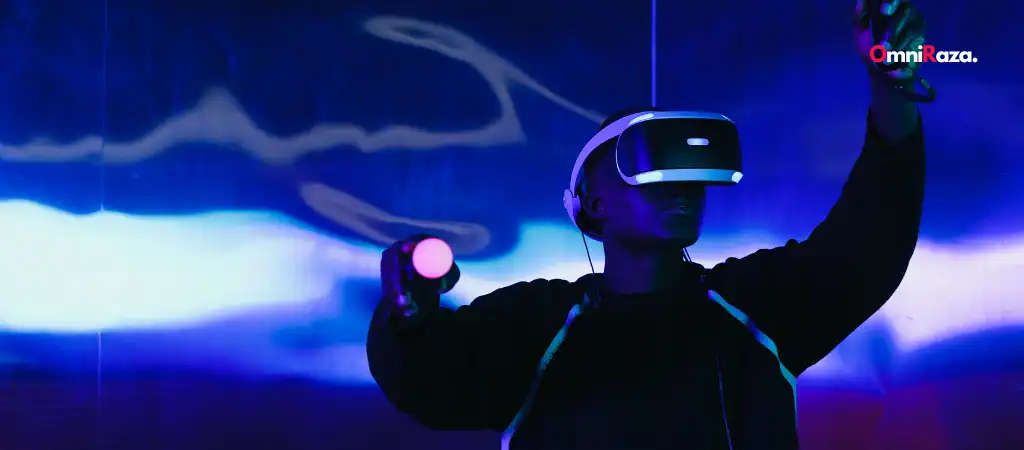
In the realm of technology, there exists a domain that transcends the boundaries of the physical world, offering an immersive experience that blurs the line between reality and imagination. This domain is none other than Virtual Reality, commonly abbreviated as VR.
In this comprehensive guide, we delve into the intricate layers of VR, exploring its definition, history, applications, challenges, and future prospects.
Understanding VR: Definition and Concept
Virtual Reality, often referred to as VR, is a computer-generated simulation of an environment that enables users to interact with and experience a seemingly real-world environment. The essence of VR lies in its ability to transport users into a simulated reality through the use of specialized equipment, such as headsets and controllers. By stimulating the senses of sight, sound, and even touch, VR creates a sensory-rich environment that can mimic the real world or transport users to fantastical realms beyond imagination.
Evolution of VR: A Brief History
The concept of VR traces its roots back to the mid-20th century when pioneers in the field of computer science and technology began exploring the possibilities of immersive simulations.
One of the earliest examples of VR can be found in the Sensorama, a machine developed by Morton Heilig in the 1950s, which aimed to provide users with a multi-sensory experience through stereoscopic 3D visuals, sound, and even scent.
However, it wasn’t until the late 20th and early 21st centuries that VR truly began to take shape as a viable technology. The emergence of powerful computers, advanced graphics rendering techniques, and innovative display technologies laid the foundation for the modern era of VR.
Companies like Oculus, HTC, and Sony pioneered the development of consumer-grade VR headsets, making immersive experiences more accessible to the masses.
Components of VR: Hardware and Software
At the heart of any VR system lies a combination of hardware and software components that work in harmony to create immersive experiences.
Headsets
The cornerstone of any VR setup, headsets are wearable devices that house displays and motion-tracking sensors, allowing users to view and interact with virtual environments. Modern VR headsets come in various forms, ranging from standalone devices to tethered systems that rely on powerful PCs or gaming consoles.
Controllers
In addition to headsets, VR systems often incorporate handheld controllers equipped with buttons, triggers, and motion sensors. These controllers enable users to manipulate objects and navigate virtual spaces with precision, enhancing the sense of immersion and interactivity.
Tracking Systems
To accurately track the movements of users within virtual environments, VR systems utilize tracking systems such as infrared sensors, cameras, or external base stations. These tracking systems capture the position and orientation of users and their controllers in real-time, allowing for seamless interaction within the virtual world.
Software Platforms
On the software side, VR experiences are powered by specialized platforms and applications that render virtual environments, simulate physics, and facilitate user interaction. From immersive games and simulations to educational experiences and virtual tours, the range of VR software is vast and diverse, catering to a wide range of interests and industries.
Applications of VR: From Entertainment to Education
The versatility of VR extends far beyond the realm of entertainment, finding applications across various industries and domains.
Entertainment
Perhaps the most well-known application of VR, entertainment encompasses a wide range of experiences, including immersive gaming, virtual concerts, and cinematic VR experiences. With VR, users can step into the shoes of their favorite characters, explore fantastical worlds, and engage in thrilling adventures like never before.
Education
In the field of education, VR holds immense potential as a tool for immersive learning and training. From virtual field trips and historical reenactments to interactive science experiments and medical simulations, VR allows students to explore complex concepts and environments in a hands-on manner, enhancing retention and understanding.
Healthcare
In healthcare, VR is revolutionizing patient care, medical training, and therapy. VR simulations can help medical professionals practice surgical procedures, diagnose conditions, and empathize with patients experiencing various ailments. Additionally, VR-based therapies are being used to treat phobias, PTSD, and chronic pain, offering a non-invasive and immersive alternative to traditional treatments.
Architecture and Design
Architects and designers leverage VR to visualize and prototype buildings, interiors, and urban spaces in a realistic and interactive manner. By immersing clients and stakeholders in virtual environments, architects can solicit feedback, iterate on designs, and ensure that final structures meet the needs and expectations of end-users.
Challenges and Limitations of VR
While VR holds immense promise, it is not without its challenges and limitations.
Cost
The initial cost of VR hardware, including headsets and controllers, can be prohibitive for some consumers, limiting the widespread adoption of the technology.
Motion Sickness
For some users, prolonged exposure to VR experiences can induce motion sickness and discomfort, stemming from disparities between visual stimuli and vestibular cues.
Content Quality
Despite advancements in VR content creation, the quality and depth of experiences vary widely, with some applications lacking polish and depth.
Accessibility
Accessibility remains a concern in the realm of VR, with certain demographics, such as individuals with disabilities, facing barriers to access and participation.
The Future of VR: Trends and Prospects
Looking ahead, the future of VR appears bright, with continued advancements poised to drive innovation and adoption across various sectors.
Improved Hardware
As technology continues to evolve, VR hardware is expected to become more compact, affordable, and capable, paving the way for mainstream adoption and new use cases.
Enhanced Content
Developers are increasingly focusing on creating high-quality, immersive VR experiences across gaming, entertainment, education, and beyond, catering to diverse audiences and preferences.
Social Integration
The integration of social features and multiplayer experiences is on the rise, enabling users to connect, collaborate, and interact with friends and strangers in virtual spaces.
Enterprise Adoption
Businesses are recognizing the value of VR for training, collaboration, and customer engagement, driving increased investment and integration of VR technologies into corporate workflows.
You Might Be Interested In
- What Is the Difference Between Deepfake Audio and Normal Audio Glitches?
- The Cognitive Tech Infrastructure Revolution: 5 Paramount Insights – Pioneering Tomorrow
- Which Goals Are Available In Google Analytics?
- What are 4 Types Of Biotechnology?
- Which Of The Following Groups Of Environmental Science Careers Are Most Similar?
Conclusion
In conclusion, VR, short for Virtual Reality, represents a transformative technology that has the potential to reshape how we work, play, and interact with the world around us. From immersive gaming experiences to revolutionary applications in education, healthcare, and beyond, VR offers a glimpse into a future where the boundaries between the physical and digital realms blur, and the possibilities are limited only by our imagination.
FAQs About VR Virtual Reality
What exactly is VR (Virtual Reality)?
Virtual Reality (VR) refers to a computer-generated simulation of an environment that enables users to interact with and experience a seemingly real-world environment. Through the use of specialized equipment such as headsets and controllers, VR immerses users in a simulated reality by stimulating their senses of sight, sound, and sometimes touch.
How does VR technology work?
VR technology relies on a combination of hardware and software components to create immersive experiences. This includes VR headsets, which contain displays and motion-tracking sensors, as well as controllers for user interaction. Tracking systems, such as infrared sensors or cameras, capture the movements of users within virtual environments, allowing for real-time interaction and immersion.
What are the main applications of VR?
VR finds applications across various industries and domains, including entertainment, education, healthcare, and architecture. In entertainment, VR enables immersive gaming experiences and virtual concerts. In education, VR facilitates immersive learning through virtual field trips and simulations. In healthcare, VR is used for medical training, patient care, and therapy. In architecture, VR aids in visualizing and prototyping buildings and interiors.
What are some challenges and limitations associated with VR?
Despite its promise, VR faces challenges such as cost, as the initial investment in hardware can be prohibitive for some consumers. Motion sickness is another limitation, as prolonged exposure to VR experiences can induce discomfort for some users. Content quality varies, and accessibility remains a concern, particularly for individuals with disabilities who may face barriers to access and participation.
What does the future hold for VR?
The future of VR looks promising, with continued advancements expected to drive innovation and adoption. Improvements in hardware, including affordability and capabilities, are anticipated, paving the way for mainstream adoption. Enhanced content quality, social integration, and increased enterprise adoption are also on the horizon, suggesting a bright future for VR across various sectors.
