

Data Centre Cooling is the backbone of every modern digital service. From social media and cloud storage to banking systems and artificial intelligence, all depend on data centres that run 24/7. Inside these facilities, thousands of servers work continuously and generate massive amounts of heat. Without proper cooling, this heat can damage equipment, slow performance, and even cause complete system failure.
Data Centre Cooling is not just about comfort or air conditioning. It is a carefully planned system designed to control temperature, humidity, and airflow. As data centres grow in size and power usage, cooling has become one of the biggest challenges for operators. It also accounts for a large part of energy costs, making efficiency more important than ever.
In this comprehensive guide, you will learn what Data Centre Cooling is, why it matters, how different data centre cooling systems work, and which cooling methods are the most efficient today. The guide is written in simple language for a 12th-grade audience, using short paragraphs and clear explanations to make complex ideas easy to understand.
Data Centre Cooling
Data Centre Cooling refers to the technologies and processes used to remove excess heat from data centre equipment. Servers, storage devices, and networking hardware produce heat when electricity passes through them. If this heat is not managed, temperatures rise quickly.
Data centre cooling systems are designed to keep equipment within safe temperature limits. Most servers work best within a narrow temperature range. When temperatures go beyond that range, hardware lifespan shortens and errors become more common.
Data Centre Cooling also involves managing humidity. Too much moisture can cause corrosion, while very dry air can lead to static electricity. Effective data centre temperature management balances both heat and humidity to protect equipment.
Why Data Centre Cooling Is So Important
Data Centre Cooling plays a direct role in reliability. Overheating can cause sudden shutdowns, data help corruption, and permanent damage to expensive equipment. Even short temperature spikes can affect performance.
Energy consumption is another major reason why Data Centre Cooling matters. Cooling systems often use nearly as much energy as the IT equipment itself. This makes cooling one of the highest operating costs in a data centre.
Efficient data centre cooling methods also support environmental goals. Lower energy use means fewer carbon emissions. As sustainability becomes a global priority, cooling infrastructure for data centres is under increasing scrutiny.
Heat Generation Inside Data Centres
Every electronic component generates heat. In a data centre, this heat comes mainly from CPUs, GPUs, memory modules, power supplies, and storage drives.
High-density racks produce more heat in smaller spaces. Modern servers are far more powerful than older ones, which increases the heat load. This makes Data Centre Cooling more complex than ever.
Airflow patterns also affect heat buildup. Poor airflow design can trap hot air around servers, making cooling less effective. That is why data centre cooling systems focus heavily on airflow management.
Basics of Data Centre Temperature Management
Data centre temperature management involves monitoring and controlling temperature at multiple levels. This includes room temperature, rack temperature, and even individual server temperatures.
Sensors are placed throughout the data centre to track conditions in real time. These sensors help operators detect hot spots before they become serious problems.
Good Data Centre Cooling strategies aim for consistency. Sudden temperature changes can be just as harmful as high temperatures. Stable and predictable conditions protect hardware and improve efficiency.
Traditional Air-Based Cooling Systems
Air-based cooling is the most common form of Data Centre Cooling. It uses chilled air to absorb heat from servers and then removes that heat from the facility.
Computer Room Air Conditioners, often called CRAC units, are widely used. They cool air and distribute it through raised floors or overhead ducts.
While air cooling is familiar and relatively simple, it has limitations. Air is not very efficient at carrying heat, especially in high-density environments. This has led to the development of more advanced data centre cooling technologies.
Hot Aisle and Cold Aisle Containment
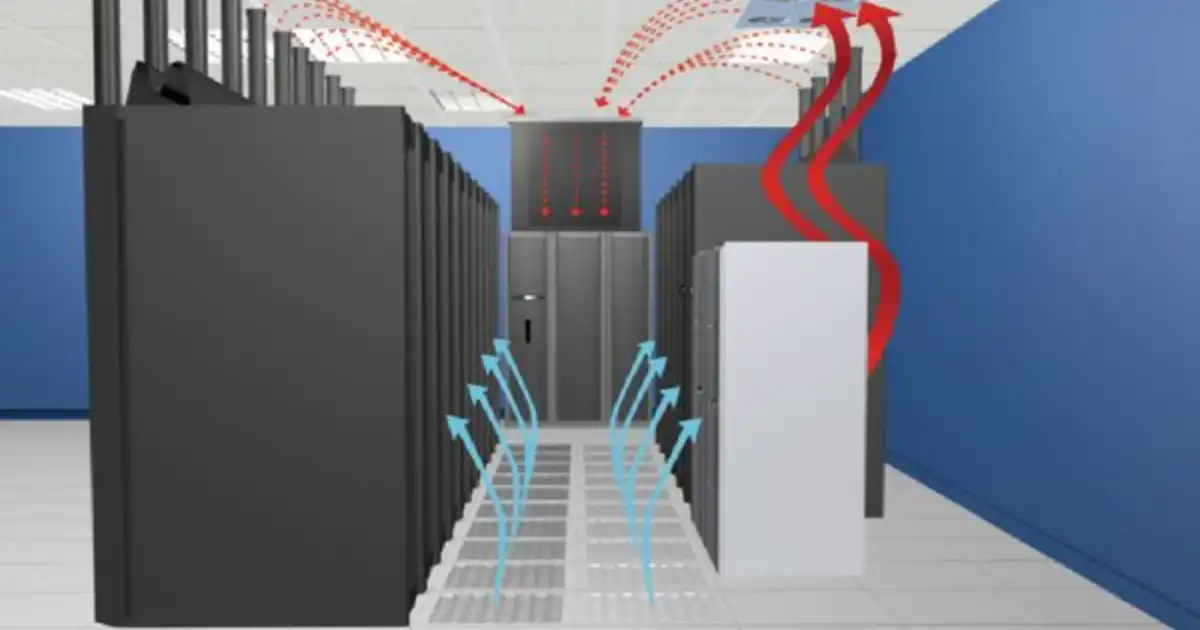
Hot aisle and cold aisle containment is an airflow management technique used in Data Centre Cooling. Server racks are arranged in rows so that cold air intakes face one aisle, while hot air exhausts face another.
Containment systems physically separate hot and cold air. This prevents mixing and improves cooling efficiency.
This method enhances data centre temperature management without major changes to existing infrastructure. It is considered one of the most cost-effective upgrades for air-based data centre cooling systems.
Chilled Water Cooling Systems
Chilled water systems are another popular approach to Data Centre Cooling. These systems use water to absorb heat from air or directly from equipment.
Water is much better at carrying heat than air. This makes chilled water systems more efficient, especially for larger data centres.
However, these systems require more complex plumbing and maintenance. Leaks are a risk, so careful design and monitoring are essential for reliable cooling infrastructure for data centres.
Direct Expansion Cooling
Direct expansion cooling uses refrigerant-based systems similar to household air conditioners. The refrigerant absorbs heat directly from the air inside the data centre.
This method is often used in smaller facilities. It is simple to install and does not require water infrastructure.
While direct expansion systems are easy to deploy, they may not scale well. As data centres grow, energy efficiency can become a challenge compared to other data centre cooling technologies.
Free Cooling and Economization
Free cooling uses outside air or water to reduce cooling costs. When outdoor conditions are favorable, data centres can rely less on mechanical cooling.
Air-side economizers bring in cool outdoor air. Water-side economizers use cooling towers and heat exchangers to remove heat without chillers.
Free cooling can significantly improve Data Centre Cooling efficiency. However, it depends heavily on climate and requires advanced filtration to protect equipment from dust and pollution.
Liquid Cooling Technologies
Liquid cooling is gaining popularity as server densities increase. In this approach, liquid is brought closer to heat sources, such as CPUs and GPUs.
Direct-to-chip liquid cooling circulates coolant through cold plates attached to processors. This removes heat more efficiently than air cooling.
Liquid immersion cooling takes this further by submerging servers in non-conductive liquid. These advanced data centre cooling technologies offer excellent efficiency but require specialized equipment and expertise.
Immersion Cooling Explained
Immersion cooling involves placing servers directly into a specially designed liquid. The liquid absorbs heat and carries it away from components.
This method provides very uniform cooling. It eliminates the need for fans inside servers, reducing power consumption and noise.
Although immersion cooling is one of the most efficient data centre cooling methods, adoption is still limited. High initial costs and unfamiliar maintenance processes slow its widespread use.
Edge Data Centre Cooling Challenges
Edge data centres are smaller facilities located closer to users. They support applications that need low latency, such as streaming and smart cities.
Data Centre Cooling at the edge is challenging due to space constraints and limited access to infrastructure. Traditional cooling methods may not fit well.
Compact and efficient data centre cooling systems are essential for edge environments. Liquid cooling and advanced air management are becoming more common solutions.
Energy Efficiency in Data Centre Cooling
Energy efficiency is a key measure of Data Centre Cooling performance. Power Usage Effectiveness, or PUE, is commonly used to track efficiency.
Lower PUE values mean less energy is wasted on cooling and support systems. Efficient data centre cooling methods aim to reduce PUE as much as possible.
Modern cooling infrastructure for data centres combines smart controls, efficient hardware, and optimized airflow to achieve better energy performance.
Automation and Smart Cooling Systems
Automation plays a growing role in Data Centre Cooling. Sensors, analytics, and AI tools adjust cooling systems in real time.
Smart systems respond to changing workloads and temperatures. They deliver cooling only where and when it is needed.
This improves data centre temperature management and reduces energy waste. Automation is becoming a standard feature of advanced data centre cooling technologies.
Environmental Impact of Data Centre Cooling
Data Centre Cooling has a significant environmental footprint. Energy use contributes to greenhouse gas emissions.
Water consumption is another concern, especially for water-based cooling systems. Responsible water management is essential.
Sustainable Data Centre Cooling strategies focus on renewable energy, efficient systems, and reduced resource consumption. These efforts help balance performance with environmental responsibility.
Comparing Cooling Methods for Efficiency
When comparing data centre cooling systems, efficiency depends on several factors. These include climate, facility size, server density, and budget.
Air cooling is simple and widely used but less efficient at high densities. Chilled water systems offer better performance but higher complexity.
Liquid cooling and immersion cooling are among the most efficient data centre cooling methods available today. They excel in high-performance environments but require careful planning.
Choosing the Right Cooling Infrastructure
Selecting cooling infrastructure for data centres is not a one-size-fits-all decision. Each facility has unique needs.
Operators must consider current requirements and future growth. Scalability is critical for long-term success.
A balanced approach often works best. Combining air-based cooling with targeted liquid cooling can deliver efficiency without excessive cost.
Future Trends in Data Centre Cooling
The future of Data Centre Cooling is focused on efficiency, sustainability, and automation. As workloads grow, cooling technologies must evolve.
Liquid cooling adoption is expected to increase. AI-driven cooling management will become more common.
Innovations in materials, sensors, and system design will continue to improve data centre cooling systems and reduce energy use.
You Might Be Interested In
- What Is Ai Hallucination In Large Language Models?
- What Is The Difference Between Supervised and Unsupervised Machine Learning?
- Top 5 Ai Bias Mitigation Regulations
- How Many LLMS Are There?
- What Is Meant By Machine Learning?
- How Does Web Development Work?
- How Bing AI Image Creator is Changing the Game?
- Top 10 Digital Transformations In Saudi Banking Sector
- How Ai Tutors Provide Support For Homework Assistance?
- How Does UEBA Spot Risky Insider Behavior Patterns?
Conclusion
Data Centre Cooling is a critical part of modern digital infrastructure. Without it, data centres would not be able to operate safely or reliably. From basic air cooling to advanced liquid and immersion solutions, cooling technologies have evolved to meet growing demands.
Efficient data centre cooling methods are no longer optional. They are essential for controlling costs, improving performance, and reducing environmental impact. Proper data centre temperature management ensures stable operations and extends the life of expensive equipment.
When considering which method is most efficient, liquid-based solutions stand out, especially for high-density environments. However, the best choice depends on specific needs, location, and budget. A well-designed Data Centre Cooling strategy combines efficiency, reliability, and sustainability for long-term success.
FAQs about Data Centre Cooling
What is Data Centre Cooling and why is it needed?
Data Centre Cooling is the process of controlling heat, airflow, and humidity inside a data centre to keep IT equipment operating safely. Servers, storage systems, and networking devices generate a large amount of heat while running continuously. If this heat is not removed efficiently, internal temperatures rise quickly, leading to performance issues, unexpected shutdowns, and permanent hardware damage. Proper Data Centre Cooling ensures that all components stay within their recommended temperature range at all times.
Beyond protecting hardware, Data Centre Cooling is also essential for maintaining service reliability. Overheating can cause data errors and system instability, which may disrupt online services and business operations. By using well-designed data centre cooling systems, operators can maintain stable performance, reduce downtime, and extend the lifespan of expensive equipment.
Which data centre cooling systems are most common today?
Air-based cooling systems remain the most widely used solution in data centres today. These systems rely on chilled air delivered through raised floors or overhead ducts to remove heat from server racks. Techniques like hot aisle and cold aisle containment are commonly used to improve airflow and prevent hot and cold air from mixing, making air cooling more effective.
At the same time, newer data center cooling technologies are gaining traction. Chilled water systems and hybrid designs are increasingly used in medium to large facilities. While air cooling is familiar and easier to maintain, modern data centres are gradually adopting more advanced solutions to handle higher server densities and improve overall cooling efficiency.
What are the most efficient data centre cooling methods?
The most efficient data centre cooling methods are those that remove heat as close to the source as possible. Liquid cooling, especially direct-to-chip cooling, is highly efficient because liquids absorb and transfer heat much better than air. This allows data centres to manage higher heat loads while using less energy compared to traditional air-based systems.
Immersion cooling is considered one of the most efficient options available today. By submerging servers in a special non-conductive liquid, heat is removed evenly and quickly. While these methods offer excellent efficiency and lower power consumption, they are typically used in high-performance or specialized environments due to higher initial costs and infrastructure requirements.
How does data centre temperature management affect costs?
Data centre temperature management has a direct impact on operational costs. Poor temperature control forces cooling systems to work harder, increasing electricity consumption and energy bills. Overheating also accelerates hardware wear, leading to more frequent equipment failures and higher replacement costs.
On the other hand, efficient data centre temperature management helps optimize energy use and reduce unnecessary cooling. By maintaining stable and well-monitored temperature conditions, data centres can lower their Power Usage Effectiveness and achieve long-term cost savings. This balance between performance and efficiency is a key goal of modern Data Centre Cooling strategies.
Can small data centres use advanced cooling infrastructure?
Yes, small data centres can benefit from advanced cooling infrastructure for data centres, even with limited space and budgets. Compact air-based systems with smart airflow management are often suitable for smaller facilities. These solutions improve cooling performance without requiring major structural changes.
In some cases, small data centres also adopt targeted liquid cooling for high-density racks or critical equipment. While full-scale immersion cooling may not always be practical, selective use of advanced data centre cooling technologies can significantly improve efficiency, reliability, and scalability for growing operations.
