

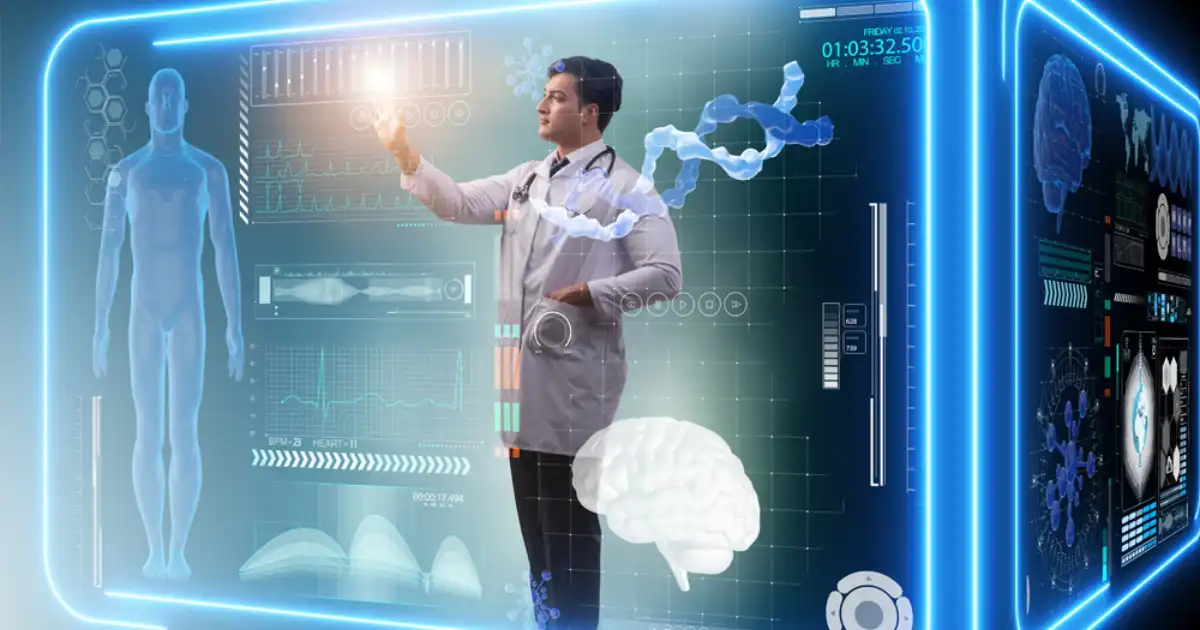
Ai In Hospitals Today is no longer a future concept—it is a practical reality transforming how healthcare is delivered across the world. From faster diagnoses to smarter patient care, artificial intelligence is becoming a trusted partner for doctors, nurses, and hospital administrators. Hospitals now rely on intelligent systems to reduce errors, save time, and improve outcomes for patients.
Artificial intelligence in healthcare helps hospitals handle growing patient numbers, complex medical data, and rising operational costs. With AI-powered tools, hospitals can analyze images, predict diseases, automate routine tasks, and personalize treatment plans. These real-world AI healthcare solutions are already making hospitals safer, more efficient, and more patient-centered.
This comprehensive guide explores the most important hospital AI use cases in simple, easy-to-understand language. You will learn how AI applications in hospitals work today, where they are used, and why they matter for the future of healthcare.
AI in Hospitals
What AI Means in Healthcare
AI in hospitals refers to computer systems that can think, learn, and make decisions similar to humans. These systems analyze large amounts of data, recognize patterns, and provide insights that support medical professionals.
Artificial intelligence in healthcare includes machine learning, natural language processing, computer vision, and predictive analytics. Together, these technologies help hospitals turn raw data into useful medical knowledge.
Why Hospitals Need AI Today
Hospitals face many challenges every day. Doctors deal with limited time, heavy workloads, and complex cases. Nurses manage patient care while handling paperwork. Administrators work to control costs and improve efficiency.
AI applications in hospitals help solve these problems by automating routine tasks, improving accuracy, and supporting faster decision-making. This allows healthcare staff to focus more on patient care.
AI-Powered Medical Imaging and Diagnostics
Faster and More Accurate Image Analysis
One of the most successful hospital AI use cases is medical imaging. AI systems can analyze X-rays, CT scans, MRIs, and ultrasounds with impressive accuracy.
AI in hospitals helps detect tumors, fractures, infections, and internal bleeding faster than traditional methods. These systems highlight problem areas, allowing doctors to review results quickly and confidently.
Early Disease Detection
Artificial intelligence in healthcare plays a key role in early diagnosis. AI tools can detect signs of cancer, heart disease, and neurological disorders at early stages.
Early detection means better treatment options, lower costs, and higher survival rates. Real-world AI healthcare solutions are already saving lives through early intervention.
AI in Clinical Decision Support
Supporting Doctors, Not Replacing Them
AI applications in hospitals support doctors by providing evidence-based recommendations. These systems analyze patient history, lab results, and medical guidelines to suggest possible diagnoses or treatments.
AI in hospitals today acts as a second opinion, helping doctors reduce mistakes and improve care quality.
Personalized Treatment Plans
Artificial intelligence in healthcare helps create personalized treatment plans. AI systems consider genetics, lifestyle, medical history, and response to previous treatments.
This personalized approach improves outcomes and reduces side effects, making hospital care more effective and patient-focused.
AI in Patient Monitoring and Care
Real-Time Patient Monitoring
Hospitals use AI to monitor patients in real time. AI-powered systems track vital signs such as heart rate, oxygen levels, and blood pressure.
When something goes wrong, AI alerts medical staff immediately. This reduces response time and prevents serious complications.
Predicting Patient Deterioration
One of the most valuable hospital AI use cases is predictive monitoring. AI can identify early warning signs of patient deterioration before symptoms become severe.
AI in hospitals today helps prevent emergencies by enabling proactive care rather than reactive treatment.
AI in Hospital Operations and Administration
Smarter Scheduling and Resource Management
Artificial intelligence in healthcare improves hospital operations by optimizing schedules for staff, operating rooms, and equipment.
AI applications in hospitals reduce waiting times, improve bed management, and ensure resources are used efficiently.
Reducing Administrative Burden
AI automates administrative tasks like billing, coding, and documentation. This reduces paperwork and minimizes human error.
Real-world AI healthcare solutions free up staff time, allowing hospitals to focus on patient care instead of paperwork.
AI in Electronic Health Records (EHRs)
Making Sense of Medical Data
Hospitals collect massive amounts of patient data. AI helps organize and analyze electronic health records efficiently.
AI in hospitals today extracts key information from medical notes, lab results, and reports, making data easier to access and understand.
Improving Data Accuracy
Artificial intelligence in healthcare reduces errors in data entry and documentation. Accurate records lead to better clinical decisions and safer patient care.
AI in Predictive Analytics and Risk Management
Predicting Disease Outbreaks
AI applications in hospitals can analyze trends to predict disease outbreaks. This helps hospitals prepare resources and respond quickly.
Predictive analytics improves public health planning and reduces the spread of infectious diseases.
Managing Patient Risk
Hospital AI use cases include predicting patient readmissions, complications, and treatment risks. AI identifies high-risk patients and supports preventive care strategies.
AI in Robotic Surgery and Assistance
Precision in Surgery
AI-powered robotic systems assist surgeons with complex procedures. These systems provide precision, stability, and control beyond human capability.
AI in hospitals today improves surgical outcomes, reduces recovery time, and minimizes complications.
Training and Skill Enhancement
Artificial intelligence in healthcare supports surgical training. AI simulations help surgeons practice procedures in a safe environment.
This leads to better skills and improved patient safety.
AI in Pharmacy and Medication Management
Reducing Medication Errors
Medication errors are a major concern in hospitals. AI systems check prescriptions for dosage accuracy, drug interactions, and allergies.
AI in hospitals today significantly reduces medication-related risks.
Optimizing Pharmacy Operations
AI applications in hospitals manage inventory, predict medication demand, and reduce waste. This improves efficiency and lowers costs.
AI in Mental Health and Behavioral Care
Supporting Mental Health Diagnosis
Artificial intelligence in healthcare helps identify mental health conditions through speech patterns, behavior analysis, and patient data.
Hospitals use AI tools to support early diagnosis and personalized treatment plans.
Continuous Mental Health Monitoring
AI-powered apps and tools monitor patient behavior and emotional health. This helps hospitals provide ongoing mental health support.
AI in Emergency Departments
Faster Triage and Decision-Making
Emergency departments use AI to prioritize patients based on severity. AI analyzes symptoms, vital signs, and history to guide triage decisions.
AI in hospitals today reduces wait times and improves emergency care outcomes.
Predicting Emergency Room Crowding
AI applications in hospitals forecast patient flow and crowding. This helps hospitals allocate staff and resources more effectively.
Ethical and Safety Considerations of AI in Hospitals
Ensuring Patient Privacy
Artificial intelligence in healthcare must protect patient data. Hospitals use strict security measures to ensure data privacy and compliance.
Trust is essential for successful AI adoption in healthcare.
Addressing Bias and Fairness
AI systems must be trained on diverse data to avoid bias. Hospitals continuously monitor AI performance to ensure fair and equal care for all patients.
Challenges of Implementing AI in Hospitals
High Costs and Infrastructure Needs
Implementing AI requires investment in technology, training, and infrastructure. Smaller hospitals may face challenges in adoption.
However, long-term benefits often outweigh initial costs.
Training Healthcare Staff
Doctors and nurses need training to use AI tools effectively. Successful AI in hospitals today depends on collaboration between technology and human expertise.
The Future of AI in Hospitals
Smarter and More Connected Systems
AI will continue to evolve, integrating with wearable devices, telemedicine, and remote monitoring systems.
Future AI applications in hospitals will deliver even more personalized and accessible care.
Human-AI Collaboration
Artificial intelligence in healthcare will not replace doctors. Instead, it will enhance human decision-making and improve patient outcomes.
The future of hospitals lies in strong human-AI partnerships.
You Might Be Interested In
- The Social And Community Design Of Masdar City
- What Is The Most Basic Machine Language?
- How Ai In Fraud Prevention Saves Money?
- What Is Ai Reporting Automation And Why Is It Useful?
- AI-driven Personal Finance Assistants You Need
- Why Are Ai Productivity Tools Becoming Essential At Work?
- Top 5 Ways Ai In Health Improves Patient Care
- What Is Ai Workflow Automation?
- What Is A Saas Platform?
- Where To Find Ai News Without Hype Sources?
Conclusion
AI in hospitals today is transforming healthcare in powerful and practical ways. From diagnostics and treatment planning to operations and patient monitoring, artificial intelligence in healthcare is improving accuracy, efficiency, and patient outcomes. Hospitals now rely on AI applications to support doctors, reduce errors, and manage complex systems with confidence.
Real-world AI healthcare solutions are already making hospitals safer and more responsive. While challenges such as cost, training, and ethics remain, the benefits of hospital AI use cases are undeniable. As technology continues to evolve, AI will become even more integrated into everyday hospital operations.
The future of healthcare depends on smart collaboration between humans and machines. By embracing AI responsibly, hospitals can deliver better care, save lives, and build a more efficient healthcare system for everyone.
FAQs about Cases Of Ai In Hospitals
How is AI in hospitals today helping doctors make better decisions?
AI in hospitals today helps doctors by turning large amounts of medical data into clear, useful insights. These systems analyze patient records, lab results, imaging scans, and previous treatment outcomes within seconds. By identifying patterns that may not be obvious to humans, AI supports doctors in diagnosing diseases earlier and more accurately. This reduces guesswork and helps clinicians feel more confident about their decisions.
Artificial intelligence in healthcare also keeps doctors updated with the latest medical guidelines and research. When treating complex cases, AI applications in hospitals can suggest possible diagnoses or treatment options based on real-world data. Doctors remain fully in control, but AI acts like a knowledgeable assistant that improves speed, accuracy, and overall quality of care.
Are AI applications in hospitals safe for patients?
AI applications in hospitals are built with patient safety as a core priority. These systems go through extensive testing and validation before being used in real clinical environments. Hospitals also follow strict healthcare regulations to ensure that AI tools meet safety, quality, and ethical standards. Human oversight is always present, meaning medical professionals review and approve AI-generated insights.
Artificial intelligence in healthcare also includes strong data protection measures. Patient information is encrypted and securely stored to prevent misuse. Real-world AI healthcare solutions are continuously monitored and updated to fix errors, reduce bias, and improve accuracy, making them a reliable and safe addition to hospital care.
Can artificial intelligence in healthcare reduce hospital costs?
Artificial intelligence in healthcare can significantly reduce hospital costs by improving efficiency and reducing waste. AI in hospitals today automates time-consuming tasks such as documentation, billing, and scheduling. This lowers administrative expenses and allows staff to focus more on patient care instead of paperwork.
Hospital AI use cases also help reduce costly medical errors and unnecessary tests. By improving diagnosis accuracy and predicting patient risks, AI applications in hospitals prevent complications and reduce hospital readmissions. Over time, these improvements lead to better financial management and more sustainable healthcare systems.
What are the most common hospital AI use cases today?
The most common hospital AI use cases today include medical imaging analysis, patient monitoring, and clinical decision support. AI in hospitals today is widely used to read X-rays, CT scans, and MRIs, helping doctors detect diseases faster and more accurately. These tools are especially valuable in busy hospitals where time and resources are limited.
Other popular AI applications in hospitals focus on operations, such as managing patient flow, optimizing staff schedules, and improving electronic health records. Artificial intelligence in healthcare is also used in pharmacy management, emergency departments, and predictive analytics, making hospitals smarter and more responsive.
Will AI replace healthcare workers in hospitals?
AI will not replace healthcare workers in hospitals. Instead, AI in hospitals today is designed to support and enhance the work of doctors, nurses, and staff. While AI can handle data analysis and routine tasks, it cannot replace human judgment, empathy, and communication, which are essential in patient care.
Artificial intelligence in healthcare works best when combined with human expertise. By reducing workload and minimizing errors, AI applications in hospitals allow healthcare workers to spend more time with patients. This human-AI collaboration leads to better outcomes, higher job satisfaction, and improved overall healthcare quality.
