

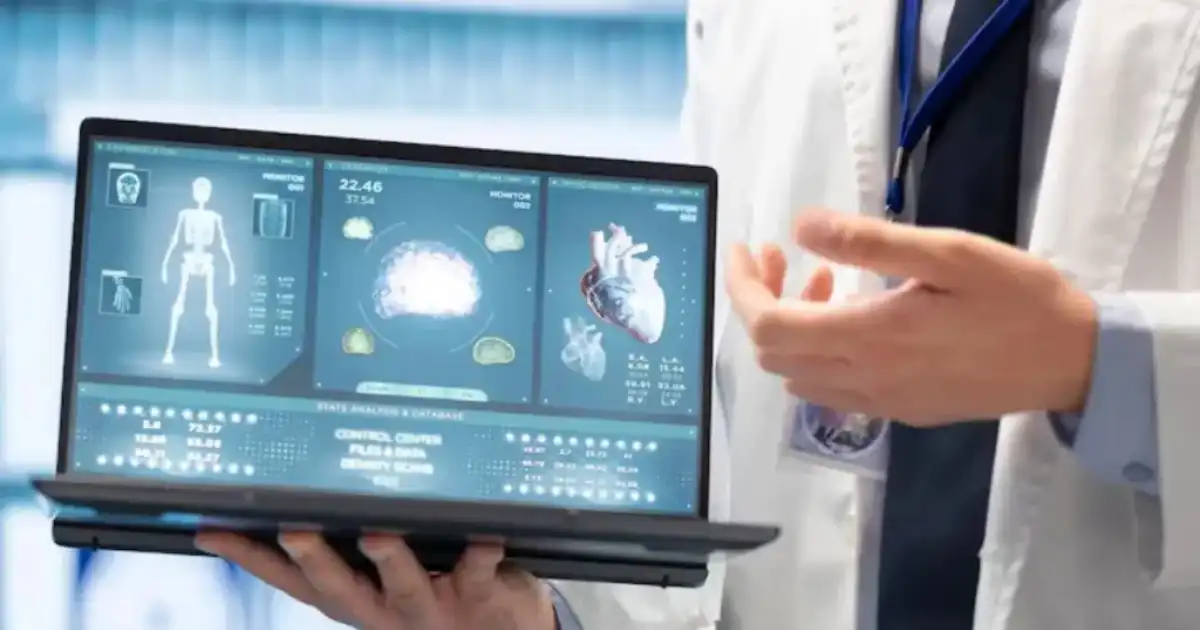
Imagine a world where your health no longer requires you to be tethered to hospitals or clinics. You’re at home, in your bed, or even out in the park—yet your doctor is still monitoring how you’re doing. Your heart beat, your oxygen level, your activity, your medication adherence—all of this being watched, analysed, responded to in real time. That world is no longer science fiction. With the rapid advances in artificial intelligence (AI) and connected devices, remote healthcare has taken a giant leap.
Let’s dive deeper. In the realm of healthcare, the role of remote patient monitoring systems has expanded dramatically. And when you bring AI into that picture, you get a powerful new model: one that listens, learns, predicts and acts. These systems not only collect data but use it meaningfully to detect problems early, personalise care, reduce hospital visits and empower patients. For a 12th grade reader (you!), this means that the technology once reserved for big hospitals is now moving into everyday life.
Don’t you want a healthcare system that cares for you, adapts to you, and doesn’t wait until things worsen? Don’t you want to be part of a system that prevents problems, instead of just reacting? That’s what AI-assisted remote patient monitoring is offering. Whether you are a patient with a chronic condition, a caregiver, a healthcare provider, or just someone curious about how health tech is evolving — you’ll want to understand how this works and how it can benefit you or someone you care about.
So in this guide, you’ll get a full walk-through: what remote patient monitoring is, how AI is integrated, the benefits, the steps in implementation, current use-cases, challenges, and what to look out for. By the end you’ll be ready to ask the right questions, consider how this might apply in a Pakistani context, and more. Let’s begin.
What Are Remote Patient Monitoring Systems?
Before we talk about how AI assists them, we must define what we mean by remote patient monitoring systems (RPM systems).
At its core, an RPM system allows for the collection of health data from patients outside of traditional clinical settings (such as hospitals or clinics) and transmits that data to a healthcare provider for review and action. That could mean devices at home, wearables, sensors, apps, etc.
In a broader sense, the term Patient Monitoring Systems covers any system that tracks a patient’s vital signs (heart rate, blood pressure, oxygen saturation, respiratory rate) or other health indicators — but when we say remote we emphasise the part where monitoring happens at a distance, outside direct face-to-face care.
In practise, that looks like:
-
A wearable that tracks your heart rhythm and sends data over WiFi to a clinician.
-
A mobile app where you log your blood sugar daily and it alerts your doctor if trends go wrong.
-
A home sensor that notices your activity dropping and predicts a risk of fall or deterioration.
Today, the combination of sensors + connectivity + analytics is making RPM systems ever more powerful.
Why AI Makes a Difference in Remote Patient Monitoring
You might ask: “We could already measure things remotely, so why do we need AI?” Good question. The answer is: data volume + complexity + speed + decision-making. Let’s explore the reasons.
Real-time analysis of large data volumes
Remote monitoring generates a lot of data: continuous readings, multiple patients, multiple sensors, multiple parameters. A human being (clinician) cannot monitor every single data point in real time for many patients. That’s where AI comes in. AI algorithms can sift through vast volumes of data, spot patterns, detect anomalies, raise alerts. For example, one article states: “An AI algorithm can analyse vital signs, lab values and social determinants of health to find patterns quickly, saving time, resources and lives.”
Predictive insights and early detection
Rather than simply reacting when something is wrong, AI enables prediction: spotting subtle changes that might signal upcoming risk. For example: “AI algorithms continuously analyse patient data to identify subtle changes in vital signs or symptoms that may indicate potential health risks.” In other words: instead of a patient waiting until they feel bad, an AI-enhanced RPM system can pick up a trend and alert earlier.
Personalisation of care
Every patient is different: age, gender, lifestyle, co-morbidities, medications. AI can help tailor monitoring and treatment to the individual. As one source says: “A new era of personalised healthcare has ushered in with AI in remote patient monitoring. AI algorithms can create individualised patient care and treatment plans by analysing vast patient data…”
Better patient engagement and self-management
AI can engage patients directly: through apps, chatbots, virtual assistants. These can remind you to take your medication, guide you in behaviour change, help you track metrics. For RPM systems this matters because patient adherence and engagement are big factors in success.
Efficient use of resources and reduced cost
Hospitals are expensive. Emergency admissions are costly and sometimes avoidable. AI-powered RPM can reduce hospital readmissions, keep patients safe at home, free up clinical time. For example: one article says that AI in RPM helps reduce hospital readmissions by monitoring high-risk patients and minimising unnecessary emergency department visits.
Speed and access in remote or underserved areas
Especially in places with fewer doctors or clinics, remote monitoring aided by AI offers access. Continuous monitoring, remote alerts, even remote diagnosis or triage become possible.
In short: AI turns remote patient monitoring from passive data collection into an active, intelligent system that learns, predicts, intervenes.
How AI Works Within Remote Patient Monitoring Systems
Let’s break down the anatomy of an AI-assisted RPM system, so you understand the parts and how they fit together.
1. Data capture and devices
The first step: capturing patient data remotely. This can include:
-
Vital signs (heart rate, blood pressure, oxygen saturation, respiratory rate)
-
Activity data (step count, movement, sleep)
-
Medication adherence (did patient take meds?)
-
Patient-reported data (symptoms, pain scale, mood)
-
Contextual data (environment, lifestyle, social determinants)
These devices might be wearables, home sensors, mobile apps. Once data is captured, it is transmitted (via WiFi, cellular, Bluetooth) to a monitoring platform.
2. Data integration and preprocessing
Raw data is messy. AI systems must integrate data from multiple sources, filter out noise, handle missing data, normalise it. Many sensors may malfunction, generate duplicates, or produce irrelevant data. Preprocessing is the role of data engineering and initial algorithms. Research emphasises this step: integrating AI technologies into remote monitoring requires handling real-time tracking of vital and health indicators and ensuring data is reliable.
3. Analytics and modelling
Here is where AI (machine learning, deep learning) comes in. The system analyses the data to:
-
Detect anomalies (e.g., sudden drop in oxygen level)
-
Recognise patterns (e.g., activity declining over days)
-
Predict risks (e.g., high risk of readmission, heart failure exacerbation)
-
Recommend interventions (e.g., notify clinician, suggest medication review, instruct patient)
For example, one use-case article notes that AI monitors adherence via wearables and uses predictive models to identify potential non-adherence risks.
4. Alerts and decision support
Once the AI model identifies something significant, it triggers alerts. These may be:
-
To the clinician (e.g., “Patient X’s blood pressure trending upward – review needed”)
-
To the patient (e.g., “Your heart rate is high; consider resting and contact your provider”)
-
To care team or family (depending on system)
Decision support tools may give suggestions, but typically final decisions rest with humans.
5. Feedback loop and learning
AI systems improve over time. They may learn from outcomes (what happened next), incorporate more data, refine models. This continuous loop makes the system smarter, more accurate. Some papers emphasise this: the future of AI-enhanced RPM includes feedback, generative AI data augmentation, bias correction. Frontiers
6. Patient engagement and interface
An often-underestimated part: how patients interact with the system. AI may power chatbots, apps that remind patients, display visualisations of their health trends, provide educational content. This interaction helps ensure that the Patient Monitoring Systems aren’t just passive but actively engage the person being monitored.
Key Use Cases of AI in Remote Patient Monitoring
Let’s look at how this works in different real situations.
Chronic disease management
For patients with long-term conditions like diabetes, hypertension, heart failure, COPD.
-
Example: For a patient with diabetes, an AI-powered RPM system might track glucose levels, physical activity, diet logs and use algorithms to recommend personalised meal plans or flag when glycaemic control is deteriorating.
-
Example: For heart failure, an AI system monitors heart rate, blood pressure, respiratory rate and detects early signs of exacerbation so that intervention can occur before hospitalisation.
These systems can drastically improve outcomes by shifting from reactive to proactive care.
Medication adherence and behaviour monitoring
Medication non-adherence is a huge challenge. AI helps:
-
Monitoring via wearables + EHR + patient input.
-
Predictive models identify those at risk of non-adherence, then virtual assistants send reminders, motivate behaviour change.
This means the Patient Monitoring Systems not only track health signs but also track and assist the behaviour required for health.
Early detection and acute care risk mitigation
AI in RPM is increasingly used to detect acute deterioration:
-
Many algorithms pick up subtle changes in vital signs, or combinations of parameters that the human eye would miss.
-
Real-world device examples: tools that monitor movement and detect fall risk, sensors to monitor for cardiovascular event risk.
Thus alarms, early interventions can reduce emergency visits, hospital readmissions and improve outcomes.
Personalised care and remote diagnostics
AI enables tailored care plans, and in some cases, remote diagnostics:
-
Analysing historical data + lifestyle + sensor readings → customised alerts, treatment suggestions.
-
In rural or under-resourced settings, remote monitoring + AI can bridge the gap: fewer hospital visits, more care at home.
Resource optimisation and healthcare system efficiency
Hospitals and healthcare systems are under pressure, financially and capacity-wise. AI-enabled RPM helps optimise resources:
-
Predicting which patients need escalation, which can be managed at home.
-
Reducing unnecessary hospital admissions, which cut costs and free beds.
-
Providing continuous surveillance without requiring continuous human monitoring.
The Benefits of AI-Assisted Remote Patient Monitoring Systems
Let’s highlight the major benefits in clearer bullet-form because there’s a lot to unpack here.
-
Improved patient outcomes
Early detection, personalised care, more timely intervention means better health.
-
Reduced hospitalisation and readmissions
By catching problems earlier, many readmissions or emergencies can be avoided. KMS Healthcare
-
Greater patient convenience and comfort
Patients can stay at home, reduce travel, reduce disruption.
-
Enhanced patient empowerment and engagement
Patients are more involved in their care via apps, feedback, reminders.
-
Better management of chronic diseases
These conditions require continuous monitoring; AI-assisted RPM makes that feasible at scale.
-
Cost savings and system efficiency
Fewer hospital days, less emergency care, better resource allocation.
-
Increased reach and access
Especially for remote or underserved areas, these systems expand access.
-
Data-driven healthcare
More objective measurement, continuous insights, better decision-making.
In essence, you transform a reactive healthcare system (you go to the hospital when sick) into a proactive one (you’re monitored, issues are caught early, interventions are timely).
Implementation: How to Build and Deploy an AI RPM System
Okay — now that we understand what it is and why it’s powerful, let’s walk through how it can be implemented (in general terms). If you or your organisation want to adopt such systems, this section will help you understand the journey.
Step 1: Define objectives and patient population
-
Identify which patients will benefit (e.g., heart failure patients, diabetes patients, elderly with multiple comorbidities).
-
Set clear goals: reduce hospital readmissions by X%, improve medication adherence, reduce cost per patient.
-
Determine which health indicators you will monitor.
Step 2: Choose the monitoring devices and sensors
-
Select wearables, home sensors, mobile apps that will capture the required data (vital signs, activity, etc).
-
Ensure connectivity: devices must reliably send data to central portal.
-
Consider patient-friendly design: usability, comfort, ease of charging, data connectivity.
Step 3: Data infrastructure and integration
-
Set up a platform to receive, store, integrate data from devices, apps, EHRs.
-
Ensure data quality, preprocessing, cleaning and integration.
-
Address data security, privacy, compliance with regulations (especially for health data).
Step 4: AI model development and analytics
-
Build or acquire AI models for anomaly detection, prediction, decision support. Many recent studies show how to do this.
-
Train the models on relevant data, validate them, ensure they are clinically meaningful.
-
Develop dashboards and alerts for clinicians and patients.
Step 5: Workflow integration with clinical team
-
Define how alerts will be handled: who receives them? What actions are taken?
-
Integrate the RPM system with the clinician’s workflow—so it doesn’t create burden but becomes a tool.
-
Provide training for staff and protocols for care pathways.
Step 6: Patient engagement and training
-
Educate patients on how to use the devices, how to respond to alerts.
-
Use AI-powered apps to provide reminders, educational materials, feedback loops.
-
Encourage adherence and continuous use (non-use undermines effectiveness).
Step 7: Launch, monitor and iterate
-
Start with a pilot programme, monitor key metrics (readmissions, patient satisfaction, cost).
-
Use feedback to refine models, interfaces, workflows.
-
Scale gradually once the pilot shows results.
Step 8: Regulatory, ethical, data governance
-
Address local regulations regarding medical devices and software. For example, in the U.S., the Food and Drug Administration (FDA) regulates many AI/medical software combinations. PMC+1
-
Maintain patient data privacy, consent, anonymisation.
-
Address biases in algorithms (for example different patient demographics). Frontiers
Step 9: Measure outcomes and demonstrate value
-
Track patient outcomes, cost reductions, hospital admission rates, patient satisfaction.
-
Use data to justify continued investment, refinement, scaling.
-
Publish results if possible to share best practices.
By following these steps, healthcare providers can implement an AI-assisted remote patient monitoring system that is not just a gadget but a full care model.
Specific Applications and Real-World Examples
To make this more concrete, here are specific examples of how AI is being applied in RPM systems, drawing from recent literature and news.
Example 1: Cardiovascular monitoring
In the U.S. market, many AI-RPM solutions focus on cardiovascular diseases: ECG-based arrhythmia detection, monitoring hemodynamics and vital signs. One study saw that 74% of reviewed AI RPM solutions fell into cardiovascular applications. PMC
Example 2: Diabetes and chronic metabolic conditions
AI-enabled remote monitoring helps track glucose, physical activity, diet and tailor interventions. As said: “A patient with diabetes may utilise an AI-powered remote patient monitoring system that tracks their blood glucose levels, physical activity, and dietary habits. Based on this data, the AI algorithm recommends personalised meal plans and exercise routines.”
Example 3: Medication adherence
A use-case: AI monitors via wearables, EHR and patient inputs to deliver personalised reminders.
Example 4: Remote diagnostics and rural access
In regions with limited specialist access, AI-RPM systems enable remote diagnosis support. For instance: “In a rural clinic with limited access to specialised radiologists, an AI-powered remote patient monitoring system analyses chest X-rays to diagnose early-stage lung cancer.”
While this reference is more general, it illustrates the remote potential.
Example 5: Device platform integration
A platform described: ML-based software to monitor and predict clinically relevant changes via wearable sensors; a mobile app for patients; clinician dashboard.
These examples demonstrate that the concept is not theoretical — it’s actively being used and evolving.
Special Considerations for Implementation in Pakistan / Emerging Markets
Since you are in Pakistan (Lahore) and likely understand the regional context, let’s talk about how AI-assisted RPM systems can be tailored for emerging markets, what special challenges and opportunities exist.
Opportunities
-
High potential for impact
In many areas, access to specialist clinics is limited; having remote monitoring helps bridge that gap.
-
Chronic disease burden
Conditions like diabetes, hypertension, heart disease are common in South Asia; monitoring can help.
-
Mobile penetration and connectivity
Many people have smartphones; wearable tech is becoming more affordable.
-
Cost-savings
Hospitals are expensive; remote monitoring can reduce burden on the system.
-
Local adaptation
AI models can be tuned to local population characteristics (genetics, lifestyle, social determinants) to improve performance.
Challenges
-
Infrastructure and connectivity
Some areas may have weak internet, poor device reliability.
-
Digital literacy
Patients may need training in using devices/apps.
-
Cost and affordability
Devices and subscriptions may be too expensive for low-income groups.
-
Data privacy and regulation
Need local frameworks for data protection, medical device regulation.
-
Cultural and behavioural factors
Patients may resist monitoring, may not adhere to devices.
-
Integration with existing healthcare system
Hospitals and clinics may lack readiness to adopt new digital workflows.
Strategies to overcome challenges
-
Use affordable devices and mobile-first solutions.
-
Provide training and support for patients (especially older adults) on how to use them.
-
Partner with local healthcare providers to integrate remote monitoring with in-person care.
-
Use cloud-based platforms that require minimal local hardware.
-
Scale gradually: start in urban centres with better connectivity, then expand.
-
Engage patients by emphasising personal benefit: “This device lets you stay at home and still be safe.”
-
Ensure robust data security, privacy, and local compliance.
In Pakistan, implementing AI-assisted remote monitoring in private clinics, tele-health startups or public health programmes could lead to significant improvements in chronic disease management, elder care, and rural access.
Challenges, Risks and Ethical Considerations
While the benefits are huge, there are also important challenges and risks in deploying AI-enabled remote patient monitoring. It’s critical to be aware of these for safe and effective implementation.
Data quality and reliability
-
Sensor data may be noisy or inaccurate; data gaps may exist. Models built on bad data produce poor results.
-
Some remote systems may have connectivity issues, lag, or missing readings. Research emphasises the need for real-time tracking and reliability.
Algorithm bias and fairness
-
AI models may be biased if trained on non-diverse data (e.g., mostly U.S. patients, not South Asian).
-
This could lead to poorer predictions for certain populations. Ethical frameworks are needed.
Clinical validation and trust
-
Medical decisions are high stakes. Algorithms must be validated, well-understood by clinicians, and transparent.
-
“Black box” AI models (ones whose decision process is not transparent) raise concerns. For example, one paper on “Explainable AI for Quantitative Analysis in Patient Monitoring Systems” emphasises the importance of explainability.
Patient privacy and data security
-
Remote systems collect sensitive health data. Ensuring encryption, secure transmission, storage, and compliance with regulation is vital.
-
Patients must consent and understand how their data is used.
Regulatory and legal frameworks
-
In many countries, medical device regulation, software as a medical device (SaMD), is evolving. For example, the FDA has frameworks for AI/ML-based medical devices.
-
Local jurisdictions may lack clear rules, making deployment harder.
Patient engagement and adherence
-
Technology will fail if patients don’t use it properly. Engagement, training, human factors matter.
-
Systems must be user-friendly, culturally sensitive, and accessible.
Ethical concerns
-
Who is responsible if an AI model misses a warning?
-
How do we balance monitoring and patient autonomy/privacy?
-
How do we prevent over-surveillance or “big brother” feelings?
These must be handled thoughtfully.
Interoperability and healthcare workflow integration
-
If the RPM system doesn’t connect with EHRs, clinician dashboards, care teams, then it becomes just another silo.
-
Healthcare providers may resist new workflows if they create extra burden.
Recognising these risks and planning for them is essential for success.
Best Practices and Guidelines for Success
Based on the literature and real-world experience, here are best practices you should consider when planning or evaluating an AI-assisted remote patient monitoring system.
-
Start with a clear clinical purpose don’t deploy the tech just for its own sake. Define the problem (e.g., reduce heart failure readmissions) and map out how the RPM system addresses it.
-
Engage stakeholders early clinicians, patients, IT staff, administrators. Get buy-in from users.
-
Ensure data governance and patient safety Define how data will be used, accessed; ensure security and privacy.
-
Choose scalable, interoperable technologies devices should connect to cloud platforms; integrate with existing systems (EHRs, hospital information systems).
-
Design for usability Patient apps must be intuitive; alerts must be actionable; devices must be easy to operate.
-
Ensure transparency and explainability clinicians should understand how the AI reached conclusions; models should be auditable.
-
Monitor performance and outcomes Use key performance indicators (KPIs) such as reduction in hospital visits, improvement in clinical metrics, patient satisfaction.
-
Iterate and improve Use feedback to refine algorithms, workflows, devices. Machine learning means change and improvement over time.
-
Address equity and access Make sure the system doesn’t exclude those with limited connectivity, digital literacy, or affordability.
-
Plan for regulatory compliance and liability Understand local laws, obtain approvals, consider liability if things go wrong.
Following these practices increases the chance that your Patient Monitoring Systems—enhanced by AI—will actually deliver value.
The Future of AI in Remote Patient Monitoring Systems
What does the next 5-10 years look like? Several trends are emerging that will shape the future of AI and remote monitoring.
More advanced predictive analytics and early intervention
AI models will become better at forecasting events (e.g., heart attack, stroke, diabetic complication) with longer lead times, enabling pre-emptive care rather than reactive. Many recent papers focus on predictive frameworks in RPM.
More seamless integration with wearables and IoT devices
Sensors will become more ubiquitous, smaller, cheaper. IoT frameworks will connect everything, enabling continuous monitoring. One research paper explores a novel IoT-driven framework for remote cardiovascular monitoring.
Generative AI and explanation frameworks
Generative AI might be used to simulate patient trajectories, augment scarce data, help build better models. Explainable AI will be more important so clinicians trust the results.
More personalised, adaptive care
AI will integrate more data types: genetics, lifestyle, social determinants of health, environment. So remote monitoring will become more holistic and tailored.
Larger scale adoption and system level change
As adoption grows, healthcare systems will shift: remote patient monitoring becomes standard of care for many chronic conditions. Cost pressures, ageing populations and pandemic lessons will drive this.
Ethical, regulatory and policy evolution
Regulators will develop clearer frameworks for AI in medical devices, remote monitoring, and patient data. With that, more RPM systems will gain approval and acceptance.
Global access and equity focus
Efforts will be made to ensure RPM systems are accessible globally, including low-income and rural areas. Tailoring for local contexts (including Pakistan) will matter more.
In summary, the future is promising — but it will require thoughtful implementation and adaptation.
Potential Impact on Your Life or Practice
Let’s bring this closer to home. If you’re a patient, caregiver, or healthcare provider in Pakistan (or anywhere), how might this impact you?
For patients
-
You could have a wearable or home device tracking your condition, alerting your doctor if things go off track.
-
You may reduce hospital visits, save time, reduce travel costs and hassles.
-
You’ll get more personalised insights, reminders, and feel more in control of your health.
-
For chronic conditions like diabetes, heart disease, hypertension, this means fewer complications and better life quality.
For caregivers/family members
-
You can feel safer knowing your loved one is being monitored.
-
Early alerts might prevent emergencies, giving peace of mind.
-
You’ll see the patient become more engaged in their own care.
For healthcare providers
-
You can monitor more patients more efficiently.
-
You’ll get actionable insights, hopefully improving outcomes.
-
You’ll reduce readmissions and chronic disease complications.
-
You’ll use your clinical time more efficiently (less emergency reactive work, more proactive care).
For healthcare systems and society
-
Reduced healthcare costs from fewer emergency admissions and complications.
-
Better management of chronic diseases means less burden on hospitals.
-
More equitable access to care in remote or underserved areas.
-
Data collected can drive public health insights, policy decisions, prevention strategies.
Given the high prevalence of non-communicable diseases in Pakistan and South Asia, the adoption of AI-enabled Patient Monitoring Systems has the potential to greatly improve population health and reduce costs.
Realistic Roadmap: What to Expect and What Not to Expect
It’s important to keep expectations grounded. Here’s a realistic view of what’s gradually achievable and what remains challenging:
What you can expect in the short-to-mid term
-
RPM systems for chronic diseases (heart failure, diabetes, hypertension) will grow.
-
Mobile apps + wearables with AI support will enter home use.
-
More patients will be able to track their vital signs and send data to clinicians in real time.
-
Healthcare providers will begin to adopt these systems, especially in private sector.
-
Early alerts and reductions in hospitalisation will begin to show results.
What remains challenging / may take longer
-
Full replacement of in-person visits: remote monitoring complements but doesn’t fully replace clinics.
-
Coverage in rural and low-income populations will take time due to cost/infrastructure.
-
AI models that are 100% accurate or replace clinician judgement: this is unlikely in the near term.
-
Global regulatory alignment and large-scale integration across healthcare ecosystems in developing countries will take years.
-
Data privacy norms and ethical frameworks universally accepted will evolve slowly.
What you should not expect
-
That RPM+AI is a magic bullet: it supports care, but doesn’t eliminate the need for doctors, hospitals or human judgement.
-
That one size fits all: local adaptation is required.
-
Instant results: benefits may take months to roll out and show impact.
You Might Be Interested In
- How Bing AI Image Creator is Changing the Game?
- What Are Website Hosting Solutions Used For?
- How Does Cloud Cost Optimization Work finops In 2025?
- Why Do People Use A Mechanical Keyboard?
- When Do Security Teams Need an AI Risk Register?
- Right Tools: A Comprehensive Review of AI Solutions for Small Businesses
- Ai Smart City Tools For Disaster Response Planning
- Ai-driven Chatbots For Enhanced Financial Inclusion
- Why Is Saas Security Important?
- How Ai-driven Predictive Policing Works?
Conclusion
The convergence of AI and remote patient monitoring is ushering in a new era of healthcare—one where monitoring happens beyond hospital walls, where patients are more actively engaged, and where care is timely, personalised and data-driven. When you bring together intelligent algorithms, connected devices and human clinical expertise, you unlock new possibilities.
For you—whether patient, caregiver or healthcare professional—the message is: start paying attention now. Consider how such systems might integrate into your care, your workflow, your life. Ask the right questions: “How will my data be used?”, “How does the system alert my doctor?”, “What happens when an alert triggers?”, “Is the device user-friendly?”, “Is the system adapted to my local context and needs?”
In a world with rising chronic diseases, ageing populations, and stretched healthcare systems, the marriage of AI and remote monitoring offers a path forward. In short: it’s not just about measuring health—it’s about managing health.
Let us embrace a future where our Patient Monitoring Systems are smart, seamless, supportive—and centred around you.
FAQs about Monitoring System
How is AI used in remote patient monitoring?
AI is used in remote patient monitoring (RPM) to collect, analyze, and interpret data from patients without requiring them to visit a hospital or clinic. Through wearable devices and smart sensors, AI continuously tracks vital signs such as heart rate, blood pressure, oxygen levels, and glucose readings. This data is then processed by AI algorithms that can detect unusual patterns or early signs of potential health problems. For example, if a patient’s heart rate suddenly increases or their blood sugar levels drop too low, the AI system can instantly alert healthcare providers or even send emergency notifications to family members.
Beyond detecting anomalies, AI also helps doctors make better decisions by providing predictive insights. It can analyze large volumes of health data from multiple patients to identify trends, predict disease progression, and recommend personalized treatment plans. This allows doctors to provide timely care, prevent hospital readmissions, and improve overall patient outcomes—all while reducing the burden on healthcare systems.
What is RPM in AI?
RPM in AI refers to Remote Patient Monitoring powered by Artificial Intelligence. It’s a system where AI technologies work alongside digital health tools to keep track of a patient’s health in real time. Using smart devices such as fitness trackers, wearable ECG monitors, and connected scales, data about the patient’s body is collected continuously and sent to a central system. AI then processes this information to identify changes or risks that might need medical attention.
For instance, AI algorithms can learn a patient’s normal health patterns and instantly recognize when something unusual occurs, like irregular heartbeats or unstable blood sugar levels. This makes it possible for doctors to intervene before a condition worsens. Essentially, AI transforms RPM from a passive data collection method into an intelligent system that actively monitors, predicts, and supports better patient health.
What is the role of AI in remote sensing?
AI plays a crucial role in remote sensing by helping analyze large and complex sets of data gathered from satellites, drones, and other sensors that observe the Earth’s surface. It automates the process of identifying patterns and changes in environmental conditions, such as deforestation, pollution levels, weather patterns, or agricultural productivity. Traditional data analysis methods take a long time, but AI can process images and sensor data much faster and with greater accuracy.
By using AI models like machine learning and deep learning, scientists and researchers can classify terrain, detect anomalies, and even predict future environmental changes. In healthcare, remote sensing combined with AI can also be used to track disease outbreaks or monitor air quality and its effects on population health. Overall, AI enhances remote sensing by making it more efficient, reliable, and predictive.
How can AI be used in monitoring?
AI can be used in monitoring across many fields—from healthcare and security to environmental science and manufacturing. In healthcare, AI monitors patients’ vital signs, detects irregularities, and alerts caregivers in real time. In security systems, AI analyzes surveillance footage to identify suspicious activities, unauthorized access, or safety hazards. It can even predict potential threats by recognizing behavioral patterns that humans might overlook.
In industries, AI-powered monitoring systems oversee machinery and production lines, detecting malfunctions or inefficiencies before they lead to breakdowns. Environmental monitoring is another powerful use, where AI examines climate data, air quality, and wildlife movements to predict natural disasters or pollution risks. In all these areas, AI reduces human workload, improves accuracy, and enables faster, data-driven decision-making.
What are the 4 types of AI tools?
The four main types of AI tools are Reactive Machines, Limited Memory, Theory of Mind, and Self-Aware AI. Reactive Machines are the simplest form—they only respond to specific inputs and do not store past experiences. A good example is IBM’s Deep Blue, the chess-playing computer that could analyze possible moves but had no memory. Limited Memory AI, which is used in most modern applications like self-driving cars and healthcare monitoring systems, can learn from past data to make better predictions.
Theory of Mind AI is more advanced and still in development. It aims to understand human emotions, intentions, and social behaviors, enabling more natural and empathetic interactions between humans and machines. Finally, Self-Aware AI represents the future stage of artificial intelligence—machines that possess consciousness and self-awareness. Although still theoretical, this form of AI could revolutionize every aspect of technology by thinking and reasoning like humans.
