

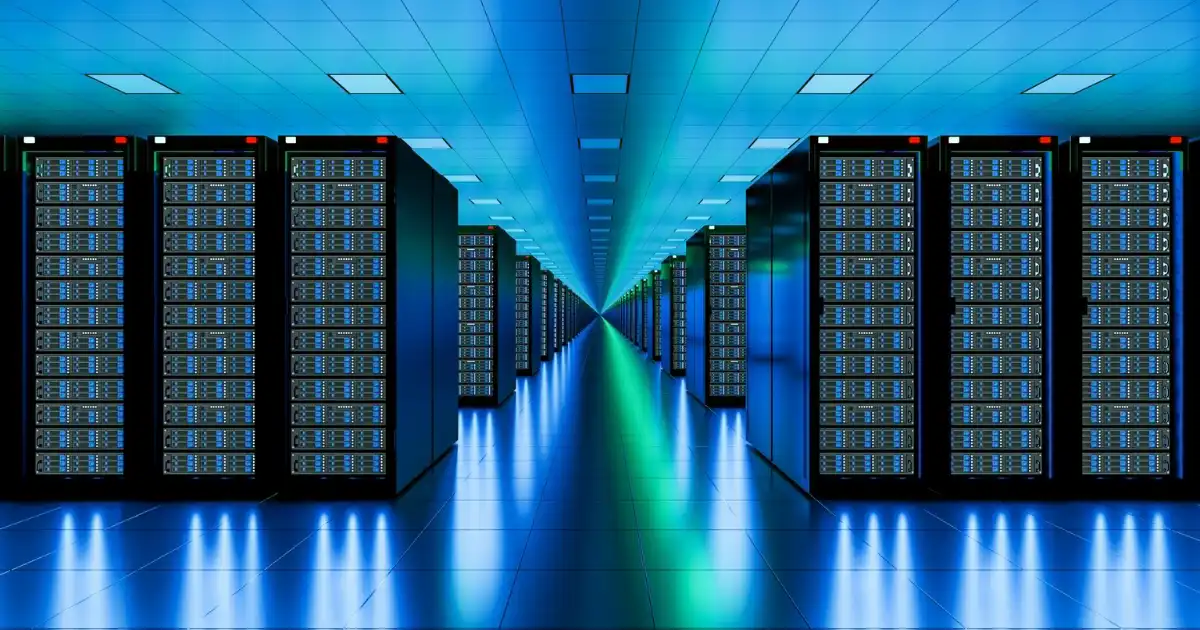
The word hyperscale gets thrown around a lot in IT, usually alongside cloud, AI, or “next-gen infrastructure.” Most people assume it just means really big. In practice, that assumption misses the point.
Hyperscale exists as a term because traditional ways of thinking about data centers stopped working once platforms started serving millions or billions of users simultaneously. When you’re running a few hundred servers, you optimize for reliability per machine. When you’re running hundreds of thousands, that mindset breaks. Hyperscale is what happens when failure becomes normal, growth never really stops, and manual operations simply don’t scale.
In this article, I’ll break down what actually makes a data center hyperscale, based on how these environments operate in the real world not vendor slides or academic definitions. I’ll also be honest about where the model shines, where it struggles, and why copying hyperscale ideas blindly can backfire.
What “Hyperscale” Actually Means
Hyperscale does not mean “a very large data center with expensive hardware.” Size is a consequence, not the definition.
At its core, hyperscale is about scale-out architecture. Instead of building a few massive, highly reliable systems, you build thousands of relatively simple ones and design the software to expect failures. You don’t try to prevent every outage you assume things will break constantly and make sure the platform keeps running anyway.
What hyperscale doesn’t mean:
-
It doesn’t mean every server is top-of-the-line.
-
It doesn’t mean zero downtime at the hardware level.
-
It doesn’t mean human operators are touching systems daily.
In fact, most hyperscale environments rely on hardware that would look almost boring in a traditional enterprise data center. The magic isn’t in the box. It’s in the operating model.
A good mental test is this: if adding 10,000 more servers feels like a major organizational or architectural event, you’re probably not hyperscale. In hyperscale environments, growth is assumed, planned for, and mostly routine.
Core Characteristics That Make a Data Center Hyperscale
Massive Scalability and the Growth Model
Hyperscale data centers are built with the assumption that today’s capacity will be insufficient tomorrow. Growth isn’t a special project it’s a constant.
What I’ve seen in real hyperscale environments is that capacity planning happens at a level above individual sites. Entire regions are designed knowing they’ll expand repeatedly. Power feeds, land use, fiber routes, and cooling envelopes are all planned with future phases in mind.
This is very different from traditional data centers, where expansion often means painful retrofits or expensive migrations. Hyperscale flips that: build for growth first, optimize later.
Modular, Standardized Infrastructure
Standardization is non-negotiable at hyperscale. You can’t support tens of thousands of unique configurations without drowning in complexity.
Everything becomes modular:
-
Server designs are standardized
-
Racks follow repeatable layouts
-
Power and cooling units are interchangeable
-
Entire halls are cloned rather than custom-designed
I’ve watched teams roll out new capacity by essentially copying an existing “known good” module. Not reinventing. Not tweaking. Just repeating. That repeatability is what enables speed and reliability at scale.
Heavy Automation and Minimal Human Touch
If humans have to touch every system regularly, you’ll never scale. Hyperscale data centers assume hands-off operations by default.
Provisioning, monitoring, firmware updates, workload placement, and even failure response are automated. Humans intervene mostly when automation fails or when something unusual happens.
One thing that surprises newcomers is how few people are physically present in massive hyperscale facilities. The goal isn’t to eliminate people; it’s to ensure humans aren’t the bottleneck.
High-Density Compute and Storage
Density matters when land, power, and cooling are limiting factors which they always are at hyperscale.
Higher density allows operators to extract more compute from the same footprint, but it comes with trade-offs. Thermal management becomes harder. Maintenance windows shrink. Hardware failures can cascade faster if design isn’t solid.
This is why hyperscale operators obsess over airflow, rack design, and workload placement. Density is not just a hardware problem it’s an operational one.
High-Speed, Resilient Networking
At hyperscale, the network is the computer.
East-west traffic (server-to-server) dominates, especially for distributed systems, storage replication, and AI workloads. Latency consistency often matters more than raw throughput.
Hyperscale networks are designed to fail gracefully. Links drop. Switches reboot. The architecture assumes this and routes around it automatically. If your application can’t tolerate that, it doesn’t belong there or it needs to be redesigned.
Power, Cooling, and Energy Reality at Hyperscale
Power is the first real constraint hyperscale operators hit. Not servers. Not land. Power.
Modern hyperscale data centers draw tens to hundreds of megawatts. Securing that capacity requires coordination with utilities years in advance. I’ve seen projects delayed not because of technical issues, but because the grid simply couldn’t support the load yet.
Cooling strategies vary air, liquid, evaporative but the goal is always the same: move heat efficiently with minimal energy overhead. Hyperscale operators aggressively pursue low PUE (Power Usage Effectiveness), but chasing perfect numbers can be misleading. Sometimes higher efficiency on paper introduces operational risk in practice.
Energy efficiency is not just about cost. It’s about survivability. As AI workloads push power densities higher, cooling and power delivery become existential challenges, not optimization exercises.
Reliability, Redundancy, and Security in Practice
Here’s a truth that surprises people: hyperscale hardware fails all the time.
Disks die. Memory errors spike. Power supplies burn out. At hyperscale, this isn’t alarming it’s expected. Reliability comes from software and architecture, not individual components.
Redundancy is applied selectively. You don’t triple-protect everything. You protect what matters and accept failure elsewhere. This is where theory often breaks down for people coming from enterprise IT, where redundancy is frequently layered everywhere “just in case.”
Security follows a similar philosophy. Perimeter security matters less than internal isolation, identity, and automation. At hyperscale, you assume breaches are attempted constantly, and you design systems so that a single compromise doesn’t become catastrophic.
How Hyperscale Data Centers Support Modern Workloads
Cloud computing wouldn’t exist in its current form without hyperscale. Elastic compute, global object storage, managed databases these all rely on hyperscale principles.
AI workloads push hyperscale even further. Training large models demands enormous bursts of compute, specialized hardware, and fast interconnects. Hyperscale data centers absorb this by pooling resources globally and shifting workloads dynamically.
Big data platforms, streaming services, and global SaaS products all benefit from the same traits: scale-out design, automation, and fault tolerance.
Hyperscale vs Traditional Data Centers
Traditional data centers optimize for control and predictability. Hyperscale optimizes for scale and resilience.
In traditional environments:
-
Change is cautious
-
Hardware is protected
-
Failures are incidents
In hyperscale environments:
-
Change is constant
-
Hardware is disposable
-
Failures are background noise
Hyperscale ideas don’t always translate well to smaller environments. I’ve seen teams try to mimic hyperscale automation without the engineering maturity to support it and end up less reliable than before.
Scale determines whether hyperscale patterns make sense. Below a certain size, simplicity often wins.
Challenges, Constraints, and Where Hyperscale Breaks Down
Hyperscale is not infinite.
Energy availability is the biggest limiter. Grid infrastructure wasn’t designed for this level of concentrated demand. Sustainability goals add further pressure, especially as AI accelerates consumption.
There are also human constraints. Hyperscale systems are complex, and operational mistakes scale just as fast as successes. Automation amplifies both good and bad decisions.
Finally, latency and data sovereignty impose hard boundaries. Not everything can or should live in hyperscale environments.
You Might Be Interested In
Conclusion
A data center becomes hyperscale not because it’s massive, but because it’s designed to grow endlessly, tolerate failure, and operate with minimal human intervention.
Hyperscale is a mindset as much as an architecture. It prioritizes scale-out thinking, automation, and resilience over individual perfection. When done well, it enables the global platforms we rely on daily. When misunderstood, it becomes an expensive imitation.
Understanding that difference is what separates real hyperscale from the buzzword.
FAQs
What qualifies a data center as hyperscale?
A data center qualifies as hyperscale when it’s built around scale-out architecture, heavy automation, and an operating model that assumes hardware failure is normal rather than exceptional. In real hyperscale environments, individual servers are not treated as precious assets; they’re interchangeable resources managed by software. The defining factor isn’t just the number of servers, but the ability to add large amounts of capacity quickly without redesigning systems or increasing operational complexity.
In practice, hyperscale also means minimal human involvement in day-to-day operations. Provisioning, monitoring, workload placement, and recovery are automated end to end. If a data center requires frequent manual intervention to stay stable, it may be large, but it isn’t truly hyperscale.
How big is a hyperscale data center?
Most hyperscale data centers operate at a scale that traditional enterprises never reach, often housing tens or hundreds of thousands of servers and drawing tens to hundreds of megawatts of power. That said, there’s no official size cutoff. I’ve seen facilities smaller than expected that clearly operated at hyperscale because their design and growth model matched hyperscale principles.
What really matters is intent and architecture. Hyperscale data centers are designed to grow continuously over time, often in modular phases. A site that starts “small” but is engineered to double or triple capacity repeatedly without disruption can still be hyperscale in practice.
Who uses hyperscale data centers?
Hyperscale data centers are primarily used by large cloud providers, global platforms, and companies operating services at massive scale. This includes public cloud operators, social media platforms, search engines, streaming services, and increasingly, AI-focused organizations running large training and inference workloads.
These users have one thing in common: their services must scale globally, handle unpredictable demand, and remain available despite constant component failures. Hyperscale isn’t chosen because it’s trendy it’s chosen because other data center models simply don’t work at that level of demand.
Are hyperscale data centers more efficient than traditional ones?
At large scale, hyperscale data centers are usually far more efficient than traditional enterprise facilities. Standardized hardware, optimized power distribution, advanced cooling strategies, and aggressive automation allow hyperscale operators to extract more useful compute from every watt consumed.
However, that efficiency only appears at scale. Smaller organizations trying to copy hyperscale designs often lose efficiency because they lack the volume, tooling, and operational maturity needed to make those optimizations worthwhile. Hyperscale efficiency is real, but it’s not universally transferable.
Why are hyperscale data centers critical for AI and cloud computing?
AI and cloud computing demand enormous amounts of compute, storage, and network bandwidth, often in short bursts and at global scale. Hyperscale data centers make this possible by pooling resources across massive fleets and shifting workloads dynamically based on demand, availability, and cost.
From my experience, AI workloads in particular expose the limits of traditional data centers very quickly. Training large models stresses power delivery, cooling, and networking in ways enterprise environments were never designed for. Hyperscale data centers are currently the only model capable of supporting these workloads reliably and at scale.
