

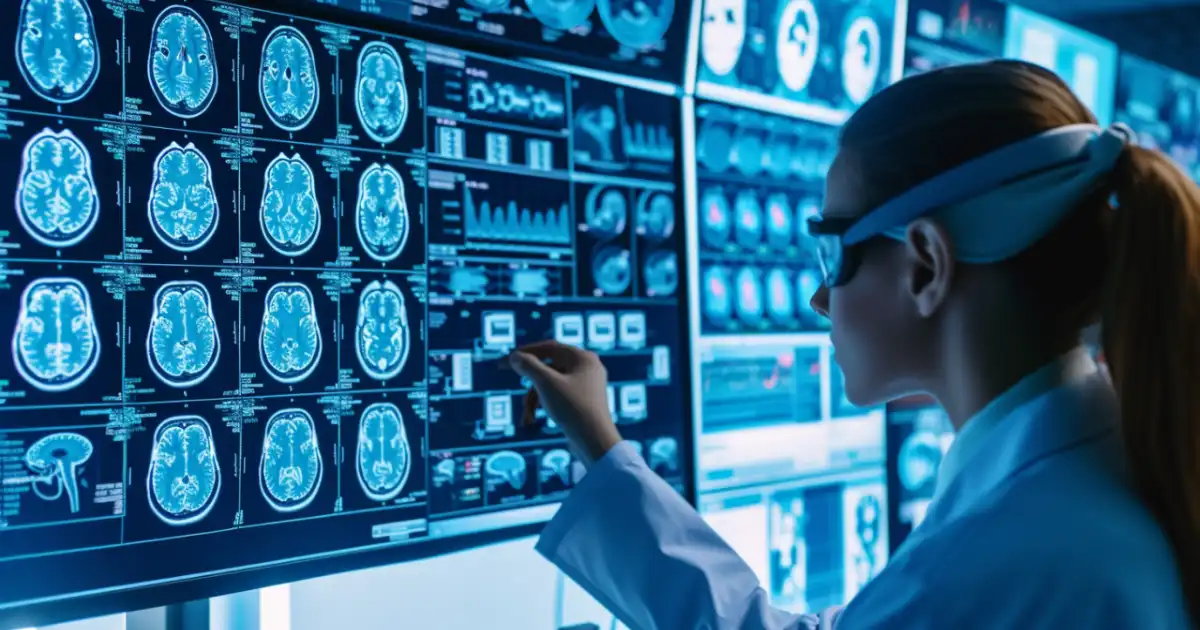
Imagine a world where a single scan could reveal the earliest traces of cancer, heart disease, or neurological disorders—long before symptoms ever appear. Now, imagine that instead of relying solely on the human eye, AI-powered radiology imaging processes every pixel, compares it with millions of past cases, and delivers near-instant insights with unmatched accuracy. That world is no longer a dream—it’s here.
Traditional radiology has always been a cornerstone of medicine, but radiologists face growing challenges: rising patient loads, complex imaging data, and the ever-present risk of human error. Studies show that even highly trained professionals can miss subtle abnormalities when fatigue or workload interferes. Enter artificial intelligence—a tool designed not to replace radiologists, but to augment their abilities, increase efficiency, and enhance diagnostic confidence.
With AI-powered radiology imaging, healthcare systems worldwide are witnessing transformative results: earlier disease detection, fewer diagnostic errors, faster turnaround times, and more personalized patient care. Whether it’s distinguishing malignant tumors from benign ones or predicting treatment response, AI is rewriting the rules of modern medicine.
In this comprehensive guide, we will explore why AI-powered radiology imaging is a game changer, how it works, its benefits, challenges, and the future it promises for patients, physicians, and healthcare systems. By the end, you’ll understand why this technology isn’t just an innovation—it’s a revolution.
The Evolution of Radiology
Radiology has always been at the forefront of medical technology. From Wilhelm Roentgen’s discovery of X-rays in 1895 to the development of CT, MRI, and PET scans, radiology has shaped the way we diagnose disease. However, with each innovation came a new challenge: the explosion of imaging data.
-
A single modern MRI can generate hundreds of high-resolution images.
-
Radiologists are expected to review thousands of scans per week.
-
Human interpretation, while expert-driven, has natural limitations.
This overwhelming data landscape created the perfect opportunity for AI-powered radiology imaging to step in.
What Is AI-powered Radiology Imaging?
At its core, AI-powered radiology imaging refers to the use of artificial intelligence—specifically machine learning (ML) and deep learning (DL)—to analyze medical images such as X-rays, CT scans, MRIs, and ultrasounds.
Key Features:
-
Pattern Recognition
AI algorithms detect patterns invisible to the human eye.
-
Data Training
Systems are trained on millions of labeled images.
-
Continuous Learning
AI improves over time as more data is processed.
For example, a deep learning algorithm can be trained to differentiate between pneumonia, lung cancer, and tuberculosis in chest X-rays with astonishing accuracy.
How AI Transforms Diagnostic Accuracy
Traditional radiology relies heavily on visual interpretation. While radiologists are highly skilled, even the best eyes can miss subtle anomalies. AI-powered radiology imaging mitigates this by:
-
Early Detection
Spotting microcalcifications in mammograms that indicate early-stage breast cancer.
-
Error Reduction
Lowering false negatives and false positives.
-
Speed
Delivering near-instant preliminary reports.
-
Consistency
AI does not fatigue, ensuring uniform accuracy across cases.
Studies have shown AI algorithms performing at par—or even surpassing—human experts in certain diagnostic tasks.
Benefits for Radiologists and Healthcare Systems
For Radiologists:
-
Reduced workload by pre-analyzing scans.
-
Assistance in complex cases.
-
Enhanced diagnostic confidence.
For Healthcare Systems:
-
Faster turnaround times for patients.
-
Cost efficiency by reducing unnecessary follow-up tests.
-
Improved patient outcomes through early intervention.
In short, AI-powered radiology imaging is not about replacing radiologists but making them more effective.
Real-world Applications Across Specialties
AI in radiology is not confined to one area—it’s revolutionizing multiple specialties:
-
Oncology
Detecting cancer earlier and classifying tumor types.
-
Cardiology
Identifying heart disease risks from CT angiograms.
-
Neurology
Spotting early signs of Alzheimer’s or stroke.
-
Pulmonology
Diagnosing lung infections and chronic conditions.
-
Orthopedics
Analyzing fractures and bone density scans.
These applications prove that AI-powered radiology imaging is truly multidisciplinary.
Case Studies of AI in Radiology
Case Study 1: Breast Cancer Detection
AI models trained on mammography data have shown detection rates that rival human radiologists. Some pilot programs reduced false negatives by 20%, saving countless lives.
Case Study 2: COVID-19 Diagnosis
During the pandemic, AI algorithms analyzed chest CT scans to identify COVID-19 pneumonia with high accuracy, easing the burden on overwhelmed radiology departments.
Case Study 3: Stroke Management
AI tools now identify strokes from CT scans within minutes, expediting treatment and improving survival rates.
Challenges and Ethical Considerations
While promising, AI-powered radiology imaging is not without challenges:
-
Data Bias
Algorithms trained on limited datasets may underperform across diverse populations.
-
Interpretability
AI’s “black box” nature raises questions about transparency.
-
Ethical Concerns
Patient privacy, consent, and accountability must be addressed.
-
Integration
Incorporating AI into existing hospital systems can be complex.
Thus, while revolutionary, AI must be implemented responsibly.
The Future of AI-powered Radiology Imaging
Looking ahead, the role of AI in radiology will only grow stronger:
-
Personalized Medicine
AI will tailor treatments based on imaging data and genetic profiles.
-
Predictive Analytics
Algorithms will predict disease risk before symptoms occur.
-
Global Access
Remote regions with few radiologists will benefit from AI-enabled teleradiology.
-
Hybrid Models
Radiologists and AI working together, ensuring accuracy and empathy.
The ultimate vision? A world where AI-powered radiology imaging enables earlier interventions, better outcomes, and healthier lives.
Comprehensive Guide to Implementation in Hospitals
For healthcare institutions considering adoption, here’s a roadmap:
Step 1: Assess Needs
Identify areas where radiology workload is highest or accuracy most critical.
Step 2: Choose the Right AI Solution
Evaluate vendors, FDA-approved tools, and compatibility with existing systems.
Step 3: Train Radiologists
Provide workshops to familiarize radiologists with AI tools.
Step 4: Pilot Programs
Start with small-scale implementations before full integration.
Step 5: Monitor Performance
Continuously evaluate accuracy, efficiency, and patient outcomes.
Step 6: Address Legal & Ethical Issues
Ensure compliance with HIPAA, GDPR, and local regulations.
When executed carefully, hospitals can maximize the benefits of AI-powered radiology imaging while minimizing risks.
You Might Be Interested In
- Top 10 Benefits Of Cloud Computing For Startups
- What Does the EU AI Act Mean for High-Risk Security Tools?
- Top 10 Green Data Centre Innovations Saving The Planet
- Top 10 Digital Transformations In Saudi Banking Sector
- How Ai-powered Facial Recognition Enhances Safety?
- What Creeps People Out In Ai Personalization?
- What Does Shadow AI Look Like in Remote Teams?
- Where To Find Ai News Without Hype Sources?
- Using Ai To Develop Critical Thinking Skills In Class
- How Ai In Tax Automation Saves Time?
Conclusion
AI-powered radiology imaging is more than just another technological trend—it’s a paradigm shift in healthcare. By combining the precision of algorithms with the expertise of radiologists, it creates a powerful partnership that enhances diagnosis, reduces errors, and improves patient care.
The journey is not without challenges, but the potential is undeniable. From cancer detection to stroke management, from rural clinics to global hospitals, AI is redefining what’s possible in radiology.
In the coming years, this technology will not only support radiologists but also empower patients with faster, more accurate diagnoses. Those who embrace it early will lead the next era of healthcare.
AI is not here to replace human judgment—it’s here to amplify it. And that’s why AI-powered radiology imaging is truly a game changer.
FAQs about Radiology Imaging
Why is AI a game changer?
AI is a game changer because it has the power to analyze huge amounts of data faster and more accurately than humans ever could. This allows industries, from healthcare to business, to make better decisions, save time, and reduce costs. AI systems can spot patterns that people might miss, which leads to more effective solutions and discoveries. For example, AI is used in predicting diseases, improving customer service through chatbots, and even driving autonomous vehicles.
What makes AI truly transformative is its ability to keep learning and improving over time. Instead of just following fixed instructions, AI can adapt based on new information, which makes it smarter and more reliable. This adaptability gives it endless potential to change how we live, work, and solve problems, making it a revolutionary force in modern society.
How is AI changing radiology?
AI is changing radiology by helping doctors read medical images like X-rays, CT scans, and MRIs more quickly and accurately. It can detect tiny details in images that the human eye might overlook, such as early signs of cancer, fractures, or other hidden conditions. This allows for earlier diagnoses, which often leads to better treatment outcomes for patients.
Additionally, AI reduces the workload for radiologists by automating routine tasks like measuring tumor sizes or comparing current scans with past ones. This frees up doctors to spend more time focusing on patients instead of getting stuck in repetitive work. By improving speed, accuracy, and efficiency, AI is becoming an essential tool in modern radiology.
Why is artificial intelligence important in radiology?
Artificial intelligence is important in radiology because it enhances both the accuracy and efficiency of medical imaging. Radiology is all about analyzing complex images, and even the most skilled doctors can sometimes miss small but important details. AI provides a second set of “eyes” that never gets tired and can analyze thousands of scans within minutes. This increases the chances of catching diseases early, when treatment is most effective.
Another reason AI is so valuable is that the demand for radiology services is growing worldwide, but there aren’t enough radiologists to keep up. AI helps fill this gap by supporting doctors with faster readings and better analysis. It doesn’t replace radiologists but works as a powerful partner, improving the quality of patient care while reducing delays in diagnosis.
Why is AI a game changer for the pharmaceutical industry?
AI is a game changer for the pharmaceutical industry because it speeds up the process of discovering and developing new drugs. Traditionally, creating a new medicine takes years of research, testing, and trial-and-error. With AI, researchers can quickly analyze millions of chemical compounds and predict which ones are most likely to work against certain diseases. This shortens the time it takes to develop life-saving drugs and makes the process much more cost-effective.
AI also helps personalize treatments by analyzing patient data to find the best medicine for each individual. For example, instead of giving everyone the same drug, AI can help predict how different people will respond to it. This leads to more effective treatments and fewer side effects. In short, AI is transforming the pharmaceutical industry by making drug discovery faster, safer, and more precise.
How is AI proving as a game changer in manufacturing?
AI is proving to be a game changer in manufacturing by improving efficiency, quality, and productivity. It allows factories to use smart machines that can predict when equipment might break down, reducing costly downtime. By analyzing data in real time, AI helps companies keep their machines running smoothly and avoid unexpected problems.
AI is also used to improve product quality by identifying defects during the production process. This ensures that customers receive safer and more reliable products. In addition, AI-driven robots and automation systems can handle repetitive or dangerous tasks, keeping workers safe while increasing output. With its ability to streamline operations and cut costs, AI is revolutionizing the way modern manufacturing works.
