

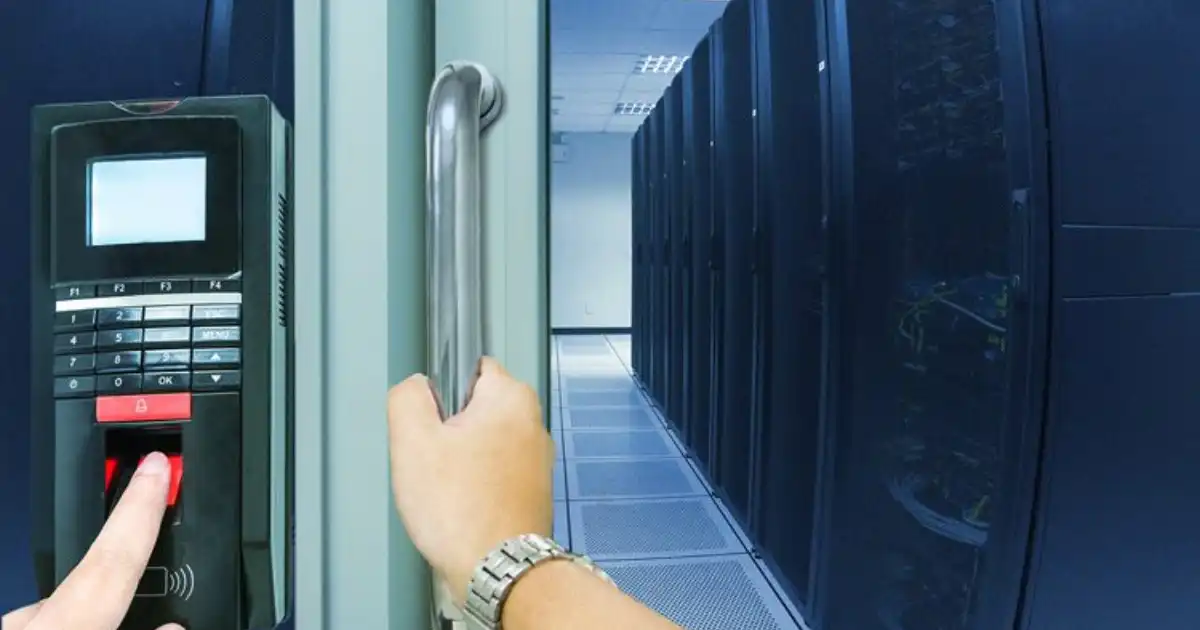
In my years managing data centers, I’ve learned that physical security is often underestimated. Everyone talks about firewalls, encryption, and cybersecurity but if someone can walk through your front door or disable your AC, all those digital defenses don’t matter.
Physical access risks are real, and a single lapse can cost millions in downtime, stolen data, or damaged equipment. Physical Security For Data Centers: Threats + Controls
What most people misunderstand is that data center physical security isn’t just about cameras and locks. It’s a layered system of controls, policies, and training that work together to make unauthorized access extremely difficult. From perimeter fences to surveillance, from access control badges to emergency protocols, every layer matters.
I’ve seen well-funded operations fail because leadership skipped basics like secure doors or environmental monitoring assuming technology alone was enough. Conversely, a well-implemented defense-in-depth approach prevents both obvious threats (like break-ins) and subtle ones (like accidental environmental hazards). This guide goes beyond theory, showing you what works in practice, what can fail, and how to build a security posture you can actually trust.
Table of Contents
ToggleCommon Threats to Data Center Physical Security
Unauthorized Access
The first, and most obvious, risk is unauthorized access. People sometimes assume “if we have a keycard system, we’re safe,” but reality is messier. I’ve seen employees lend badges to contractors, or security cameras overlooked, creating blind spots. Insider threats staff with legitimate access can be just as dangerous as external intruders. Physical access risks aren’t always about someone sneaking in at night; they can happen during normal operations if controls aren’t enforced consistently.
Theft & Vandalism
Hardware theft is surprisingly common. Even small components like SSDs can contain sensitive data. I’ve seen cases where contractors or visitors grabbed equipment from staging areas when no one was looking. Vandalism isn’t always malicious, either overzealous cleaning crews or improperly handled equipment can damage servers or network gear. It sounds basic, but locking down storage rooms and enforcing check-in/check-out procedures makes a huge difference.
Environmental Threats
Beyond people, the environment itself can be a threat. Heat, humidity, water leaks, and poor airflow can damage servers faster than most attackers. I’ve been in data centers where a single AC failure led to emergency shutdowns affecting hundreds of clients. Temperature and humidity sensors, redundant cooling, and regular inspection routines are critical.
Natural Disasters
Floods, earthquakes, hurricanes they’re low-probability but high-impact events. If you operate in a floodplain, a raised floor and water sensors are essential. In seismic zones, racks must be anchored and infrastructure braced. I’ve witnessed data centers that ignored these risks because “it won’t happen here,” only to learn the hard way during unexpected storms.
Operational Risks
Even day-to-day operations pose threats. Unsecured deliveries, mismanaged access for temporary contractors, or even poorly documented maintenance can create vulnerabilities. Human error is often the weak link. I’ve seen entire server rooms accidentally powered down because someone bypassed a lockout procedure. Understanding these risks means looking at every interaction with your facility not just the dramatic break-in scenarios.
Physical Security Controls & Defensive Layers
Perimeter Security
Your first line of defense is the perimeter. Fences, gates, barriers, and security lighting are basic, but effective. I always check for weak points like overgrown trees that allow scaling or gates that can be lifted manually. A high-tech camera won’t help if someone can bypass the fence.
Controlled Entry Points
Every door, loading dock, and elevator should be controlled. Mantraps double-door entry systems are surprisingly effective at stopping tailgating. I’ve installed these systems in several facilities, and they prevent casual unauthorized access more than any camera alone. Don’t forget emergency exits; they need alarms and monitoring without creating escape routes for intruders.
Access Control Systems
Keycards, biometrics, PINs these are standard. But I’ve learned that policies matter as much as technology. Deactivating badges immediately when someone leaves the company, auditing access logs, and ensuring contractors have limited, time-bound permissions prevent insider misuse. Never assume badges are self-enforcing; someone will always test the system.
Surveillance & Monitoring
Cameras, motion detectors, and video analytics are essential, but they’re not foolproof. Cameras must be positioned to cover blind spots and regularly maintained. I’ve seen cameras with dirty lenses or disconnected DVRs that rendered months of footage useless. Integrating surveillance with real-time monitoring and alerts ensures issues are caught early.
Internal Barriers
Inside the facility, not all spaces are equal. Critical servers should be in locked cages or secure rooms. I’ve seen open-access server rooms where cleaning staff had unrestricted entry this is asking for trouble. Segmentation reduces risk, so even if someone gains entry to the building, sensitive areas remain protected.
Environmental Controls
Physical security isn’t just about keeping people out; it’s about keeping your environment stable. Redundant HVAC systems, leak detectors, fire suppression, and proper airflow management are critical. I’ve seen cooling failures that went unnoticed for hours because sensors weren’t connected to alerts preventable disasters that shut down production.
Administrative & Policy Controls
Security Policies & Procedures
A lot of data center problems come from missing or outdated policies. Clear, enforced procedures for visitors, deliveries, maintenance, and emergency situations make a huge difference. I always document every step and test it. Policies without practice are just paper.
Roles & Responsibilities
Everyone needs to know their role. Who authorizes access? Who monitors cameras? Who responds to alarms? Confusion leads to mistakes. I’ve been in centers where responsibility was “assumed,” and that’s how breaches happen.
Personnel Training
Even the best policies fail if staff don’t understand them. Regular training, drills, and refreshers keep everyone sharp. I’ve seen operators ignore alarms because they thought it was “probably nothing.” Training builds respect for procedures and reduces human error.
Integration with Cybersecurity
Physical and digital security are intertwined. Servers stolen or damaged can bypass the strongest firewalls. I always integrate access logs with IT monitoring so unusual badge activity triggers cybersecurity alerts.
Defense-in-depth isn’t just layers of doors and cameras; it’s coordinating physical and cyber defenses. An attacker who can manipulate one often tries the other.
Best Practices & Defense-in-Depth
From my experience, defense-in-depth works because no single layer is perfect. Fences, locks, cameras, policies, training, environmental controls they all reinforce each other. Always assume someone will test your system, and design to detect and respond quickly.
Regular audits, scenario drills, and continuous improvement separate a secure facility from one that’s just “compliant on paper.”
Case Studies / Real-World Examples
I once saw a contractor bypass a poorly enforced mantrap and almost accessed a core server room. Fortunately, surveillance caught them before any damage occurred. Another example: a minor water leak went unnoticed because sensors weren’t monitored, leading to hours of downtime.
These incidents highlight that even small lapses procedural or technical can have outsized consequences. Real-world practice is always about attention to detail.
You Might Be Interested In
- Data Center Networking Basics: Spine-leaf Explained
- Green Data Centers: Practical Sustainability Checklist
- How Data Centers Power The Internet Simple Guide?
- Data Center Compliance: Soc 2 Vs Iso 27001
- Data Center Cooling Methods Compared
Conclusion
Data center physical security is about more than locks and cameras it’s a mindset. You need layered defenses, trained personnel, robust policies, and environmental awareness. Small oversights compound quickly; even minor mistakes can cascade into major failures.
When done right, security is invisible: it works in the background, preventing problems before they occur. In my experience, investing in practical, enforceable, and testable security measures pays dividends that theory alone can’t deliver.
FAQs about Physical Security For Data Centers: Threats + Controls
What is data center physical security?
Data center physical security is the set of measures designed to protect the physical infrastructure of a data center from unauthorized access, theft, environmental hazards, and operational mishaps. In my experience, many people think of security as just cameras or locks, but it’s far more comprehensive. It involves layers of protection: fences, gates, controlled entry points, biometric access, surveillance systems, internal barriers, and environmental monitoring. All of these are supported by well-defined policies, procedures, and trained personnel.
The real-world goal of physical security is not just preventing a break-in it’s ensuring uptime, protecting sensitive data, and maintaining operational continuity. Even a small lapse, like a door left propped open or an unmonitored delivery, can compromise the entire facility. Physical security is about proactively managing risk, creating layers that deter, detect, and respond to threats before they escalate into major incidents.
How do unauthorized access risks occur?
Unauthorized access risks often come from both outsiders and insiders, and in my experience, the insiders are just as dangerous. Tailgating where someone follows an authorized employee through a door is surprisingly common, even in high-security environments. I’ve seen contractors and temporary staff accidentally or intentionally bypass controls when monitoring was lax, and sometimes employees share badges or access codes without thinking. These small lapses are exactly what attackers look for.
The key to preventing unauthorized access is strict adherence to access control policies, regular audits, and awareness training. Even with keycards or biometric systems, human behavior is the weak link. Without vigilance, people can exploit blind spots, unsecured doors, or poorly enforced procedures, creating opportunities for theft, sabotage, or data breaches. A robust system anticipates these behaviors rather than assuming technology alone will suffice.
What environmental threats affect data centers?
Environmental threats are often underestimated, but in my experience, they cause as much damage as deliberate attacks. Heat and humidity fluctuations, water leaks from plumbing or HVAC systems, and even dust or debris can degrade equipment and trigger unexpected downtime. I’ve seen minor AC failures spiral into full server shutdowns because monitoring systems weren’t configured to alert staff promptly.
Mitigating environmental risks means layering controls. Redundant cooling, humidity and temperature sensors, leak detection systems, and routine inspections are essential. It’s not enough to install these tools they must be monitored and maintained. In practice, environmental issues are often slow-moving threats that compound quietly, so a proactive approach saves significant costs and downtime.
How important are policies and training?
Policies and training are the backbone of effective physical security. I’ve observed many data centers with cutting-edge technology fail simply because staff didn’t know how to use it properly or ignored procedures. Clear security policies define who can access what, under what circumstances, and what steps to follow during normal operations or emergencies. They ensure consistency and accountability.
Training brings those policies to life. Regular drills, refreshers, and scenario-based exercises teach staff how to respond to incidents, spot suspicious behavior, and avoid mistakes that can compromise the facility. In practice, well-trained personnel reduce errors, enforce procedures consistently, and act as an active layer of security. Without this human element, even the most advanced technology can fail.
How does physical security integrate with cybersecurity?
Physical security and cybersecurity are deeply intertwined. A physical breach can completely bypass network defenses if someone steals a server or gains access to wiring closets, even the best firewalls and encryption become irrelevant. In my experience, integrating these systems is crucial. Access logs from badge systems should feed into cybersecurity monitoring, and unusual activity like after-hours access to critical areas should trigger alerts for IT teams.
This integration also improves incident response. Cybersecurity teams can correlate physical access events with network activity to quickly detect potential threats. Defense-in-depth works best when physical and digital security reinforce each other, creating multiple layers that attackers must navigate. In practice, the combination of the two dramatically reduces both the likelihood and impact of breaches.
