

Imagine a crowded train station, a large music festival, or even a bustling city street late at night. In that moment, one face among thousands could belong to a person wanted for a serious crime, a missing individual, or someone who poses a real threat to public safety. What if a system could instantly scan a sea of faces, spot that one person, alert the authorities and help prevent tragedy before it happens? That’s no longer science fiction—it’s the promise of AI-powered facial recognition.
The idea sounds powerful: a tool that gives law-enforcement agencies and public safety teams a real-time edge. A system that transforms surveillance cameras, CCTV footage or body-cams into proactive guardians. A system that doesn’t just record crime, but helps stop it. With advances in artificial intelligence, neural networks and biometric mapping, such systems are indeed being deployed across cities and countries. But the story doesn’t stop at “wow technology”. There are complex layers of accuracy, bias, privacy, policy, ethics and public trust. How the technology works, its benefits, its risks and how we deploy it responsibly—all of these matter.
As citizens, we want safe communities. We want public spaces where our loved ones can move freely, where missing persons can be found, where criminals are identified and apprehended swiftly. When used correctly, facial recognition tools offer that hope. For governments and agencies, the value is huge: faster investigations, stronger evidence, better resource allocation. But for individuals, the question is: can it be done without giving up our privacy or risking unfair treatment? Can we harness the power of AI facial recognition and still protect civil liberties, reduce error and maintain trust? Yes—it’s about choosing the right balance.
In this comprehensive guide, we’ll dive deeply into the world of AI-powered facial recognition for public safety. We’ll start by explaining how it works; then explore real-world uses and benefits; review the challenges and risks; discuss legal, ethical and policy issues; highlight best practices; and conclude with what this means for the future. By the end you’ll have a clear picture of what this technology can do—and what questions still need answers. Let’s get started.
What Is AI-Powered Facial Recognition?
How It Works
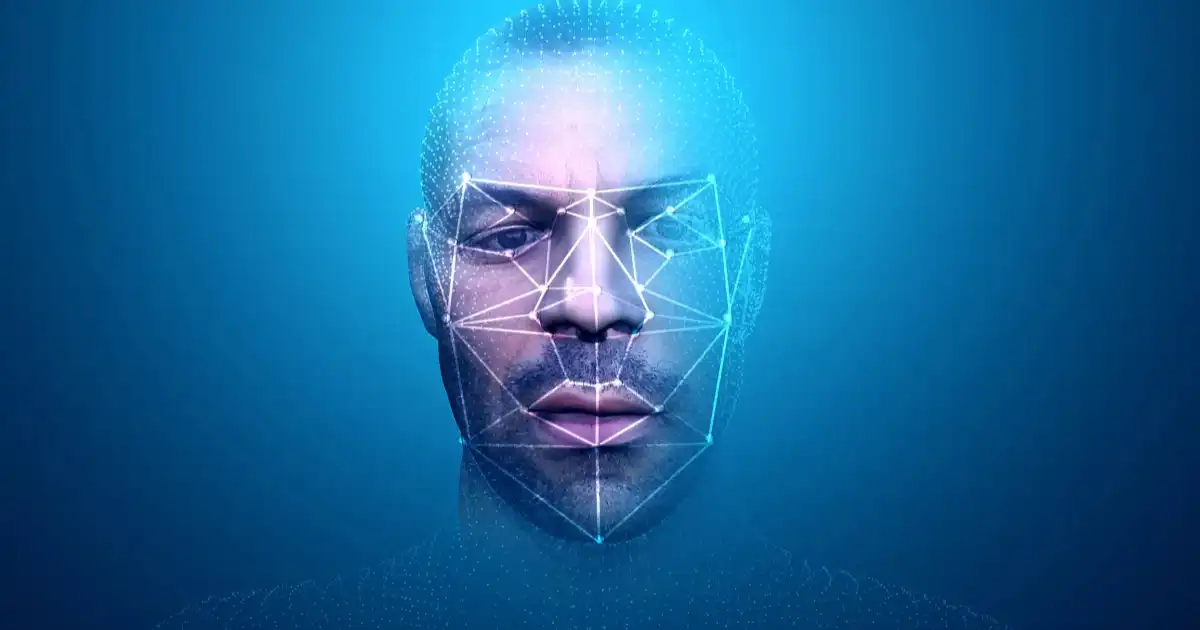
At the heart of the system lies biometric recognition, where software examines a face, extracts key facial features (for example, the corner of the eyes, the bridge of the nose, the curve of the lips) and converts them into a mathematical “faceprint”. Modern systems often mark dozens of distinct data points on the face (even 68 or more) and then feed those patterns into a deep-learning model that matches them to a database. The Regulatory Review+1
Here’s a simple breakdown:
-
Image Capture
A camera (still or video) captures a face.
-
Detection & Alignment
The system recognises a human face, aligns it (rotates/flips if needed) for optimal comparison.
-
Feature Extraction
The system calculates key facial metrics (distances, angles, shapes) and transforms them into a numeric vector.
-
Matching
The face vector is compared with stored vectors in a database to find potential matches. If similarity is high, the system signals a potential match.
-
Decision & Action
Depending on the system, the match may trigger an alert, log the event, send a human review, or integrate with other law-enforcement tools.
Why “AI-Powered”?
While early facial recognition systems relied on rigid rules, modern ones use artificial intelligence, specifically deep neural networks, to learn from millions of images. These networks continuously improve their recognition accuracy by “seeing” more data, refining feature extraction, and reducing false matches. As some research notes: “face recognition has reached a high technical maturity … but use needs careful assessment.” arXiv
Key Terms to Know
-
Biometric data unique physical or behavioural characteristics used for identification (face, iris, fingerprint).
-
Faceprint / facial template the numerical representation of facial features.
-
Watch-list / gallery database of faces (suspects, missing persons, persons of interest) used for matching.
-
Live Facial Recognition (LFR) real-time scanning of faces in public or semi-public spaces, comparing against watch-lists.
-
Retrospective matching analysing previously recorded images/video and comparing against databases.
Why Facial Recognition for Public Safety?
In public safety, time and accuracy can make the difference between disaster and prevention. Here are the major benefits of deploying AI-powered facial recognition in public safety contexts.
Rapid Identification
Without automated systems, law-enforcement agencies often rely on human review of footage, manual database checks and slow steps. Facial recognition can drastically reduce that time. According to one provider, technology can quickly identify suspects, witnesses or victims even in crowded scenes. Clearview AI+1
Enhanced Investigations & Solving Cold Cases
Facial recognition helps link unknown individuals captured on surveillance to existing records (mug-shots, missing persons, known offenders). That can unlock investigations, help locate people faster and bring closure to cases. Lexipol+1
Better Resource Allocation
Manual surveillance of hours of video is labour-intensive and inefficient. With facial recognition systems, agencies can automate initial screening, freeing human resources for follow-up, community policing, prevention and strategic planning.
Cross-Referencing Databases & Integration
One strong benefit is integrating facial recognition into broader databases—immigration, missing persons, criminal records, social welfare systems. The automated cross-referencing means matches can be made faster and across datasets previously unlinked. Clearview AI
Potential Reduction in Violent Crime
Emerging studies suggest that careful deployment of facial recognition applications correlates with reductions in certain types of crime. For instance, one 2024 research article reported that police facial recognition applications “facilitate reductions in the rates of felony violence and homicide without contributing to …” negative outcomes. ScienceDirect
Deterrence and Public Confidence
When criminals know that public spaces are monitored by intelligent systems, there may be deterrent effects. In parallel, the public may feel safer knowing agencies have tools to act quickly.
Real-World Use Cases & Examples
Airport and Border Control
Many airports have implemented face-scan gates where travellers are recognised by systems rather than traditional passport checks. The system speeds flows while enhancing border security. Agencies also deploy facial recognition at border crossings and immigration checkpoints.
City Surveillance & Smart Cameras
In cities, CCTV networks paired with AI facial recognition can help spot wanted persons wandering public areas, locate missing children or monitor large events. Some metropolitan police forces have expanded live facial recognition deployments. The Guardian
Event Security & Stadiums
Large venues (concerts, major sports events) pose elevated security risk due to crowds. Facial recognition systems can flag persons of interest from watch-lists entering the area, allowing security to act proactively.
Missing Persons / Victims Assistance
For missing persons, victims of crime or human-trafficking situations, facial recognition enables agencies to scan large sets of images (public cameras, transport hubs, retail CCTV) and match them to existing records, speeding location efforts.
Law-Enforcement Investigations & Forensics
In investigations, agents often have few leads beyond a grainy photo or a surveillance clip. Facial recognition can scan it against large databases, flag matches, and help build leads. It’s used retrospectively and in real time. Lexipol
School Security and Institutional Use
Some schools and institutions are exploring facial recognition for attendance, access control and safety monitoring. Note: this area is controversial because of children’s privacy. The Times of India
Key Benefits Summarised
-
Speed: Faster identification of persons-of-interest.
-
Scale: Ability to scan thousands or millions of faces quickly.
-
Integration: Links multiple databases for greater reach.
-
Effectiveness: Enhances the capacity of public‐safety agencies.
-
Deterrence: May reduce crime by raising risk for offenders.
-
Enhanced evidence: Provides visual data that can support prosecution or clearance.
Major Challenges & Risks
While the benefits are significant, deployment of AI-powered facial recognition in public safety is not without serious challenges. Ignoring them risks undermining the technology’s trust and legitimacy.
Accuracy & Bias
One critical risk is that facial recognition systems misidentify individuals, especially from certain demographic groups. Research has shown higher error rates for women, older persons and people with darker skin tones. Lexipol+1
Bias in the training data, poor image quality, motion blur, occlusions (hats, masks) and lighting can all degrade accuracy. In one study, leading systems had error rates “up to 100 times higher for Black and Asian faces” compared to white faces. The Regulatory Review+1
When misidentification leads to a wrong arrest or detention, the consequences are severe—personally for the individual and reputationally for the agency.
Privacy and Surveillance Concerns
Facial recognition systems can enable near-mass surveillance. The idea that your face can be scanned in public, tracked across spaces, logged in a database—even when you’ve done nothing wrong—raises major privacy and civil-liberty questions. AIMultiple
Public trust erodes quickly if surveillance is perceived as unchecked, anonymous or biased. Some jurisdictions have responded by banning agency use of facial recognition. WIRED
Data Security and Misuse
Biometric data is sensitive. Unlike a password, you can’t change your face. If a facial-recognition database is breached, the risk of identity misuse or stigmatization rises. Also, once images are collected, how long are they retained? Who can access them? Without strong controls, the system becomes vulnerable to abuse. AIMultiple
False Positives / Confirmation Logic
A match from a system is a possible match—not definitive. Yet in some deployments the result is treated as fact or acted on as if it were. The problem is compounded when agencies rely solely on the automated result without independent verification. A Washington Post investigation found multiple wrongful arrests in the U.S. where facial recognition output was treated as unquestionable. The Washington Post
Legal and Regulatory Gaps
Many jurisdictions lack clear laws governing face surveillance, biometric databases and live facial recognition. The U.S. has piecemeal state and municipal laws; there is no unified federal regulation. U.S. Commission on Civil Rights+1
Regulation lags the technological deployment. That imbalance raises risk of misuse, legal challenges, litigation and public backlash.
Ethical & Social Implications
Beyond technical issues, there are deeper questions:
-
Are we comfortable with public spaces where everyone’s face might be captured and analysed?
-
Could facial recognition deepen social inequalities by disproportionately misidentifying minority communities?
-
Will the technology chill freedom of assembly or protest if people don’t want their face scanned in public?
These are not trivial questions but essential ones for safe, responsible deployment. The Regulatory Review
Technical Limitations in Real-World Conditions
Real-world deployments face challenges: low-resolution cameras, motion blur, occlusions (hats, glasses, face masks), multiple people in frame, crowd scenes, poor lighting. These degrade accuracy and increase risk of false matches. AIMultiple
Ethical, Legal & Policy Considerations
Given the benefits and risks, successful and responsible deployment of facial recognition in public safety requires strong governance, transparency, oversight and public engagement.
Legal Frameworks
-
Many experts call for clear legislation governing biometric data collection, retention, consent, and usage. The EU’s proposed AI Act takes steps toward this by restricting live facial recognition by law-enforcement in public spaces. Lexipol
-
In the U.S., the Government Accountability Office (GAO) found that several federal agencies used facial recognition without adequate policies on civil-rights protections or required training. Government Accountability Office
-
Some cities have taken matters into their own hands: e.g., San Francisco banned local government use of facial recognition entirely. WIRED
Transparency & Oversight
Agencies need to:
-
Publish clear usage policies (what systems are used, when, why).
-
Ensure human review of matches—not just automated output.
-
Provide redress mechanisms for individuals wrongly flagged.
-
Monitor bias and error rates, conduct independent audits.
-
Limit data retention and define deletion policies.
Ethical Principles
Some widely agreed principles include:
-
Necessity and proportionality
Use facial recognition only when truly required, for appropriate severity, and avoid blanket or indiscriminate scans. arXiv
-
Fairness
Ensure system performance is equitable across demographics.
-
Accountability
Keep a record of deployments, matches, decisions, appeals.
-
Privacy
Collect minimal data, anonymise where possible, limit scope.
-
Public participation
Engage the community, explain deployment, get feedback.
Training and Human Oversight
Technical systems should never be the sole decision-maker. Agencies must provide robust training, ensure that investigators understand system capabilities and limitations, and treat matches as leads, not confirmations. Lexipol
Use Case Limits
Facial recognition is more appropriate for serious crime investigation, locating missing persons or high-risk security venues—not for everyday casual surveillance of innocents. Some frameworks propose tiered risk levels and restrict use in low-risk settings. The Regulatory Review
Privacy Impact Assessments
Before deployment, agencies should carry out Privacy Impact Assessments (PIAs) to evaluate risks, mitigation, community impact and define governance.
Best Practices for Implementation in Public-Safety Settings
If an agency (or city) plans to deploy AI-powered facial recognition, these best-practice steps can increase the chances of responsible success.
-
Define clear objectives
We will use facial recognition to locate missing children at major events” is better than “We’ll use it everywhere for crime”.
-
Select appropriate use cases
High severity, high risk crimes, large gatherings, missing persons; avoid low-risk, broad surveillance.
-
Choose technology with audited performance
Prefer systems with independent accuracy/bias reporting; prioritise vendors who publish error-rates.
-
Pilot before full rollout
Run test cases, evaluate accuracy in real-world conditions (lighting, crowd, motion) and review false-match incidents.
-
Ensure human review of matches
System output = lead. Investigator reviews, corroborates, collects further evidence.
-
Monitor bias and performance
Track errors by demographic group; adjust thresholds; retrain or refine as needed.
-
Limit and protect data
Store only what’s needed, encrypt biometric data, define retention/ deletion policies, log access.
-
Maintain transparency and public trust
Inform the public where facial recognition is used, how data is handled, how matches are reviewed, how errors are handled.
-
Allow for challenge and correction
If someone is falsely flagged, there must be a process for correction, removal and remedy.
-
Regular audits and oversight
Third-party reviews, internal audit trails, compliance with policy and human-rights standards.
-
Policy alignment with law/ethics
Ensure governance aligns with data protection laws, civil-rights oversight, human-rights frameworks.
-
Community engagement
Especially in public spaces, involve local communities, explain benefits and risks, listen to concerns.
Key Considerations Specific to Public Safety
Because public-safety uses of facial recognition involve walking a fine line between protecting the community and protecting individuals, these considerations are especially important:
-
Crowds and events
Deployments at large events (stadiums, festivals) have benefit but also risk mass scanning of innocents. Use limited scans, define watch-lists clearly.
-
Missing persons and vulnerable populations
Strong benefit if used carefully: locating missing kids or Alzheimer’s patients, for example, can be life-saving.
-
Criminal investigations
High value when used retrospectively (after a crime) to identify suspects from footage, rather than browsing through millions of faces in real time.
-
Real-time live scanning
Riskier because of false positives, privacy concerns and potential for sweeping surveillance. Should be used only under strict governance.
-
Cross-border / multi-agency data sharing
High value (e.g., matching international missing persons) but raises additional data-security, jurisdiction and consent issues.
-
Access control vs public space
Using facial recognition for access (secure facility) is lower risk than scanning every face in a public square without awareness.
-
Legal admissibility
Matches should be treated as investigative leads; prosecution must rely on corroborative evidence. Courts may question reliability of algorithm alone.
Risks to Watch Out For and How to Mitigate Them
| Risk | Description | Mitigation |
|---|---|---|
| High False-Match Rates / Misidentification | Especially in poor conditions or biased systems. | Use high quality cameras, controlled conditions; human review; conservative thresholds; vendor accuracy reports. |
| Algorithmic Bias | Higher error for certain groups (e.g., women, darker skin) Lexipol+1 | Diverse training data, bias testing, independent audits, fairness metrics, regular re-training. |
| Privacy and Mass Surveillance | Capturing faces of innocents, tracking movements without consent. | Limit use case to specific watch-lists; informed notices; restricted retention; opt-out where feasible. |
| Data Breaches / Misuse of Biometric Data | Once compromised, biometric data cannot be changed. | Encrypt data, limit access, retention limits, incident response. |
| Over-reliance by Investigators (“automation bias”) | Treating match as fact rather than lead. The Washington Post | Training, policy: match = lead only; human must verify; internal checks. |
| Legal and Regulatory Non-Compliance | Using tech without legal basis leads to litigation / bans. Le Monde.fr | Assess local laws, conduct privacy impact assessment, secure approvals, keep records. |
| Public Trust and Acceptability | Community opposition if rollout feels secretive or unjust. | Public transparency, community engagement, show accuracy metrics, allow oversight. |
Case Studies & Findings
Study: Impact on Violent Crime
Research in 2024 found that police facial recognition applications “facilitate reductions in the rates of felony violence and homicide without contributing to …” some negative outcomes. ScienceDirect This suggests real, measurable benefit when deployed properly.
Regulatory Audit: U.S. Federal Agencies
The GAO found that among seven federal law-enforcement agencies, only three had policies specifically addressing facial recognition and only two required training before use. Government Accountability Office This gap between technology use and policy is a warning sign—not a condemnation—but signals the need for frameworks before large-scale deployment.
Bias & Fairness Research
Studies (e.g., by Joy Buolamwini) have shown that facial recognition systems perform worse for darker-skinned women compared to lighter-skinned men. Wikipedia These findings have driven calls for vendor transparency on dataset composition, auditing and external review.
Public/Private Sector Deployment
Some cities engage in broad live scanning of public faces. For example, a major European city reportedly scanned nearly 5 million faces in one year. Le Monde.fr While these numbers demonstrate scale, they also raise serious questions of consent, oversight and fairness.
Implementation Checklist for Public-Safety Agencies
Before launching a facial-recognition program, agencies should ask:
-
Do we have a clear policy outlining when, how, and why we will use facial recognition?
-
Have we defined specific use cases (for example, missing children at events, repeat offender tracking) and excluded broad scans?
-
Do we have vendor information on accuracy, bias results, dataset diversity and auditing?
-
Have we pilot-tested the system in the environments where it will be used (crowds, lighting, occlusions)?
-
Will each match be subject to human review, and will it be logged?
-
Do we have training programmes for officers/operators about limitations, human oversight and data ethics?
-
Is there a transparency plan (public notice, community engagement, reporting on outcomes)?
-
What are our data governance policies: retention, deletion, encryption, access logs?
-
How will we monitor bias and performance over time?
-
Is there an independent audit/oversight mechanism (internal or external)?
-
Are there redress mechanisms if someone is erroneously flagged?
-
Have we conducted a Privacy Impact Assessment (PIA) and legal review?
-
Are we prepared to adjust or halt operation if performance drops, bias appears or public trust erodes?
Future of Facial Recognition in Public Safety
Enhanced Technology
We can expect continual improvements: better image-enhancement (low light, occluded faces), improved model fairness, multi-modal biometrics (face + iris + gait), and faster processing.
Better Governance and Standards
As public awareness grows, expect more rigorous regulation, standards (like the National Institute of Standards and Technology AI Risk Management Framework applied to surveillance tech). arXiv
Integration with Smart Cities
Facial recognition may become part of broader “smart city” ecosystems: traffic cams, transport hubs, event venues, border controls—connected systems that share and cross-reference biometric, behaviour or threat data.
Ethics and Social Acceptability
Public discourse and civil-liberties advocacy will shape how far this technology can go. Deployment will likely require greater transparency and consent frameworks—especially in public spaces.
Focus Shift: From Mass Surveillance to Targeted Deployment
Rather than “scan everyone, everywhere”, the future likely lies in targeted, high-impact use cases (e.g., major events, airports, missing persons). The more controversial mass-scanning scenarios may face backlash or legal limitations.
You Might Be Interested In
- How Can Ai Reduce False Positives In Security Monitoring?
- Top 5 Ai-driven Tutoring Systems Today
- How To Learn CNC Machining?
- How To Become a Machine Learning Engineer?
- How Ai Detects Deepfakes: 10 Tools Saving Democracy?
- How Does Retrieval Reduce Hallucinations in Enterprise Chatbots?
- Why Is A Code Review Process Important?
- What Is A Frontend Development Framework?
- How Stargate Fosters Public-private Partnerships?
- How Does UEBA Spot Risky Insider Behavior Patterns?
Conclusion
The deployment of AI-powered facial recognition for public safety sits at a crossroads. On one side lies remarkable potential: faster identity checks, improved investigations, better resource use, safer public spaces. On the other side lie serious concerns: unfair bias, privacy erosion, mass surveillance, misidentifications, public distrust.
If we focus only on the “tech can do it” narrative, we risk ignoring what matters most—trust, fairness, oversight and rights. But if we focus only on the risks without acknowledging the benefits, we might lose a powerful tool to save lives, support victims and strengthen community safety.
The smart path is balanced. For public-safety agencies: pursue clear objectives, restrict use to proportionate scenarios, invest in accuracy and fairness, build transparent governance, monitor outcomes, and always treat the system output as a lead, not a final decision. For the public: stay informed, ask questions, demand accountability. Because in shared environments—streets, airports, stadiums—our trust shapes how safe we truly feel.
At the end of the day, facial recognition is not a silver bullet—but when used responsibly, it can be a strong tool in the safety toolkit. The true measure will be whether we deploy it well—and whether we keep the balance between safety and freedom.
FAQs about Facial Recognition
How is AI used in public safety?
AI is transforming public safety by helping authorities predict, prevent, and respond to threats more effectively. Through the use of advanced data analysis, AI systems can detect unusual patterns in surveillance footage, analyze emergency calls, and identify potential criminal activity before it escalates. For example, smart city networks use AI to monitor traffic cameras, recognize suspicious behavior, and alert law enforcement in real time. This allows for quicker intervention and more efficient allocation of police resources.
AI is also used in disaster management and emergency response. It can process massive amounts of data from sensors, drones, and satellites to predict natural disasters like floods or wildfires, helping rescue teams prepare faster. Additionally, AI chatbots assist in communicating critical information to citizens during crises. Overall, AI strengthens public safety by enhancing awareness, improving response times, and making communities more secure.
How can AI be used in facial recognition?
AI powers facial recognition by analyzing and comparing facial features in images or videos to identify individuals. Using deep learning algorithms, AI systems learn to detect patterns in facial structures such as the distance between eyes, the shape of the nose, or the contour of the jawline. Once trained, the system can match faces across different images—even if lighting, angles, or facial expressions vary. This makes it highly effective for identity verification, surveillance, and access control.
In everyday life, AI-driven facial recognition is used for unlocking smartphones, verifying identity at airports, and securing online payments. In security applications, it can quickly scan public areas, identify wanted individuals, or confirm identities at checkpoints. However, while it offers great convenience and protection, it also raises important ethical questions about privacy and consent. Responsible use and regulation are key to ensuring that AI facial recognition remains both safe and fair.
What are the four areas where AI powered face recognition is being used?
AI-powered face recognition is widely used in four main areas: security, law enforcement, consumer technology, and retail. In security, it helps control access to sensitive locations such as airports, government buildings, and workplaces by verifying identities automatically. Law enforcement agencies use facial recognition to track suspects, solve crimes faster, and locate missing persons by comparing faces captured on CCTV footage with criminal databases.
In consumer technology, facial recognition has become part of everyday life through smartphones, laptops, and smart home systems. It enables quick, secure login without passwords, making digital experiences more convenient. Lastly, in retail, businesses use AI facial recognition to analyze customer behavior, prevent theft, and personalize shopping experiences. These four areas demonstrate how AI facial recognition blends safety, convenience, and business intelligence—reshaping how people interact with technology and society.
Can ChatGPT do facial recognition?
No, ChatGPT cannot perform facial recognition. It is designed to understand and generate text, not analyze or identify faces in images or videos. While ChatGPT can explain how facial recognition technology works or discuss its applications and ethics, it does not have the ability to see, scan, or compare human faces. Its main function is to process written information and respond with relevant, accurate text-based answers.
Facial recognition requires visual data processing through specialized AI models trained on image datasets—something that ChatGPT does not handle. In short, while ChatGPT can provide valuable insights about the topic, the actual task of recognizing or verifying faces is performed by entirely different AI systems built for computer vision, not natural language understanding.
Can ChatGPT identify people in images?
No, ChatGPT cannot identify people in images. It does not have access to personal data or image recognition capabilities. Even when shown an image, ChatGPT can only describe general visual elements if allowed—it cannot determine or confirm who someone is. This is because identifying people involves privacy-sensitive data and specialized computer vision models trained for that specific purpose.
The system is intentionally designed this way to protect user privacy and prevent misuse of personal information. ChatGPT can help interpret image-related information, such as describing objects, settings, or visual styles, but it will never identify real individuals. Its role is to ensure information remains ethical, secure, and focused on learning—not on personal identification.
