

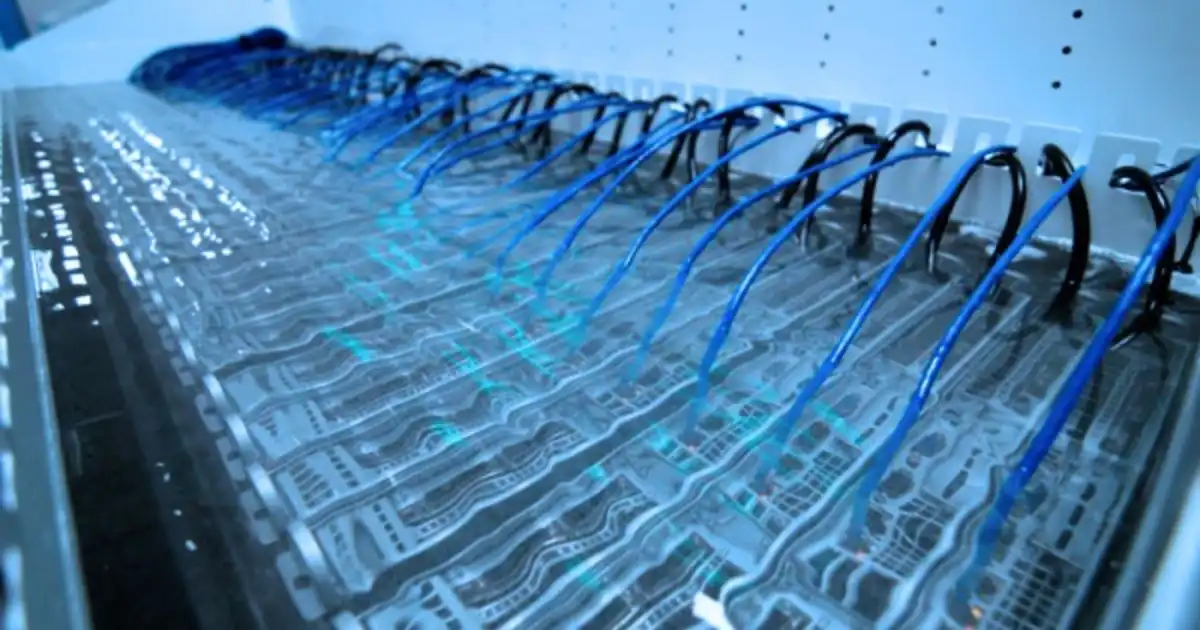
If you’ve ever stared at a server rack and thought, “Wow, how much heat is this thing generating?” you’re not alone. Cooling is one of the trickiest, most expensive parts of running a data center. Traditional air cooling is simple, familiar, but also increasingly inefficient as server densities rise. That’s where liquid immersion cooling comes in a technique that sounds like sci-fi but is very real, and increasingly practical.
In my experience working in high-performance computing environments, I’ve seen immersion cooling both shine and stumble. It’s not just about dunking servers in liquid it’s about understanding the physics, the maintenance requirements, and the trade-offs involved. Get it right, and you can drastically cut energy costs, improve reliability, and handle workloads that would fry conventional systems. Get it wrong, and you’re dealing with leaks, corrosion, or expensive downtime.
This guide is meant to give you more than textbook definitions. I’ll walk you through how liquid immersion cooling actually works, the benefits, risks, and real-world applications, and compare it with other cooling methods so you can make informed decisions.
What is Liquid Immersion Cooling?
At its core, liquid immersion cooling is exactly what it sounds like: you submerge servers or components in a thermally conductive, electrically insulating liquid. This liquid absorbs heat much more efficiently than air. Unlike traditional air-cooled racks, where fans fight against physics to move heat, immersion cooling lets liquid do the heavy lifting.
There are two main approaches: single-phase and two-phase immersion. In single-phase systems, the liquid heats up but doesn’t change state. In two-phase systems, the liquid actually boils, carrying heat away through vaporization. Both have pros and cons, but in my experience, single-phase systems are easier to maintain and scale in enterprise environments, while two-phase can achieve slightly higher thermal efficiency but at the cost of complexity and potential reliability headaches.
It’s important to note that immersion cooling isn’t magic. Servers need compatible hardware, fluids have to be chosen carefully, and maintenance routines change dramatically. I’ve seen teams underestimate the need for fluid monitoring or compatibility checks, which leads to corrosion or poor thermal performance. Done right, though, it’s a game-changer. The servers run cooler, quieter, and often last longer.
How It Works
Liquid immersion cooling works by replacing air with a specially designed dielectric fluid that won’t short-circuit electronics. The fluid surrounds servers, absorbing heat directly from CPUs, GPUs, and memory modules. The warmed liquid is then circulated to heat exchangers or chillers, where the heat is removed and the liquid recirculated.
In single-phase systems, the fluid’s temperature rises steadily as it absorbs heat. Fans are mostly gone liquid moves the heat instead. In two-phase systems, hot components cause the fluid to boil; vapor rises, condenses on cooling coils, and returns to liquid form. This phase change transfers heat very efficiently, but the system is more sensitive to leaks, pressure variations, and fluid chemistry.
I’ve also noticed in real-world deployments that fluid selection matters far more than many manuals suggest. Fluids with low viscosity reduce pump energy, while high boiling-point fluids allow higher operating temperatures. Contamination, dust, and residues from manufacturing processes can reduce thermal performance dramatically. If you skip proper filtration and fluid monitoring, the “efficiency” advantage evaporates quickly literally.
Another thing: not all components behave the same. Some GPUs have hot spots that need direct cooling plates even in immersion systems. Ignoring these nuances can lead to throttling or premature failure, so hands-on testing is essential before full deployment.
Benefits
The benefits of liquid immersion cooling are why I keep advocating for it in high-density and HPC environments:
Energy Efficiency
Air cooling fights physics. Fans and chillers consume enormous amounts of power just to move heat out of a rack. Immersion systems cut fan usage drastically, often reducing overall data center power usage by 20–40%. In some HPC facilities I’ve worked in, energy costs dropped significantly after switching to immersion, even after factoring in pumps and chillers.
Higher Density
With air cooling, cramming more servers into a rack often leads to hotspots. Immersion fluid doesn’t care how dense the components are the liquid carries the heat away uniformly. This makes it ideal for GPU clusters or AI workloads where density is critical.
Reduced Noise and Vibration
Without screaming fans, the environment becomes quieter and gentler on hardware. I’ve walked into labs with immersion racks and noticed the almost eerie silence compared to conventional setups. This also reduces mechanical stress on components.
Reliability and Component Longevity
Keeping temperatures lower and more consistent reduces thermal cycling stress. I’ve seen memory modules and GPUs last longer in immersion systems, and failure rates drop when you eliminate localized hotspots.
Potential for Heat Reuse
Some advanced data centers use warm fluid leaving the racks to heat office spaces or nearby facilities. It’s a bonus for sustainability-minded operators.
Scalability and Overclocking
For HPC or AI workloads, immersion allows safe overclocking, as the liquid removes heat much more effectively than air. In one HPC cluster I worked on, we could push GPUs harder without fear of thermal throttling.
Despite the advantages, the key is careful planning: fluid choice, component compatibility, and monitoring are not optional. Done poorly, you risk leaks, chemical damage, and expensive downtime. But done right, the benefits are transformative.
Risks & Challenges
Immersion cooling is powerful, but it’s not without pitfalls. I’ve seen teams excited by the energy savings only to hit snags that could have been avoided with careful planning.
Hardware Compatibility
Not every server or component is immersion-ready. Plunging incompatible parts into dielectric fluid can lead to corrosion or failure. In practice, you need either purpose-built immersion servers or careful modification of standard hardware. Even minor oversights, like a non-sealed capacitor, can lead to chemical damage.
Fluid Management
Dielectric fluids are expensive, and contamination can drastically reduce performance. Dust, residue from solder flux, or even water ingress will degrade thermal conductivity. Maintaining fluid purity requires filtration, monitoring, and sometimes replacement schedules, which are more labor-intensive than air filters.
Maintenance Complexity
You can’t just swap a fan or pull out a hot server in the same way you would in an air-cooled rack. In immersion setups, downtime planning, handling of fluids, and cleaning become critical. I’ve seen teams underestimate the time and care needed, leading to slower maintenance cycles.
Risk of Leaks or Spills
While dielectric fluids are non-conductive, spills can be messy, slippery, and damaging to non-server equipment. Containing fluid and preventing leaks requires solid tank design and careful installation.
Cost & Procurement
Initial investment is higher than traditional air cooling custom tanks, pumps, chillers, and fluids all add up. ROI depends on energy savings, density gains, and longevity improvements. In some smaller or conventional data centers, the upfront cost may not justify the switch.
Monitoring and Sensor Limitations
Immersion changes how you monitor temperature. Standard air-based sensors won’t tell you the full picture. In practice, adding inline fluid sensors and thermal probes is essential to avoid hotspots.
Bottom line: immersion cooling solves a lot of problems, but it introduces new ones. Success requires operational discipline and an honest assessment of your workload, team expertise, and budget.
Real-World Applications
Liquid immersion cooling isn’t just a niche experiment it’s increasingly mainstream in high-performance computing, AI clusters, and hyperscale data centers.
I’ve worked on GPU-heavy AI clusters where air cooling couldn’t keep up. Switching to immersion allowed us to double density without hitting thermal limits, and power usage dropped noticeably. Similar setups exist in cryptocurrency mining operations, where every kilowatt matters, and in research supercomputing centers that push CPUs and GPUs to the max.
Edge computing is another emerging application. Compact immersion-cooled nodes can operate in hot environments without massive HVAC infrastructure, making them ideal for remote or industrial deployments.
Even mainstream cloud providers are experimenting with it. Microsoft’s Project Natick, a submerged datacenter, showed that immersion can work underwater, combining cooling efficiency with sustainability. In practice, though, these setups are still complex and require meticulous planning.
Comparison with Other Cooling Methods
Compared to air cooling, immersion is far more efficient at removing heat and supporting high-density racks. Air is cheap and simple but hits limits with high-performance workloads.
Chilled water systems
can compete on efficiency but often require complex plumbing and higher facility-level energy costs. Immersion can reduce or eliminate the need for extensive CRAC units and large airflow infrastructure.
Direct-to-chip liquid cooling
(cold plates) shares some advantages with immersion but usually adds piping complexity and less uniform cooling. Immersion covers everything in a single bath, providing even temperature distribution.
The trade-offs are clear: immersion requires higher initial investment, careful fluid and hardware management, and specialized maintenance but rewards you with energy savings, higher density, and better thermal control.
Future Trends & Adoption
The adoption of immersion cooling is accelerating as workloads become hotter and denser. AI, HPC, and crypto mining continue to push thermal limits, and conventional air systems are struggling to keep up.
In my experience, the biggest future trend will be integration with sustainable energy practices using waste heat for district heating or optimizing fluid loops to reduce energy consumption. Expect more turnkey immersion solutions from major OEMs, making deployment easier for medium and large data centers.
Costs are gradually dropping, and standardization around hardware compatibility and fluid management is improving. I’ve seen early adopters moving from pilot projects to full-scale deployments, which is a strong signal that immersion is leaving the “experimental” phase.
Conclusion
Liquid immersion cooling isn’t a silver bullet, but it’s one of the most powerful tools in the modern data center operator’s toolkit. Done right, it can drastically reduce energy costs, support high-density deployments, and extend component life. Done wrong, it can introduce unexpected maintenance headaches, leaks, and hardware failures.
In my experience, success comes from respecting the technology: choose compatible hardware, monitor fluids carefully, plan maintenance meticulously, and don’t underestimate the learning curve. If you invest the effort upfront, immersion cooling can transform the way your data center handles heat quietly, efficiently, and impressively.
FAQs
Can I just dunk my existing servers into any liquid?
Absolutely not. Not all liquids are created equal, and submerging standard servers in water or other conductive fluids is a fast track to disaster. Immersion cooling requires dielectric fluids, which are electrically insulating and chemically stable around electronics.
Even within dielectric fluids, there are different types some are single-phase, some two-phase, some optimized for viscosity, others for thermal conductivity. Using the wrong fluid can lead to corrosion, chemical reactions with solder or capacitors, or reduced thermal performance.
In my experience, careful testing of each component with the chosen fluid is essential before full-scale deployment, and you also need to verify compatibility with power connectors, heatsinks, and memory modules.
Is immersion cooling cheaper than air cooling?
Operationally, immersion cooling often delivers significant savings, especially in power-hungry, high-density environments. By removing the need for large fan arrays and reducing chiller load, energy consumption can drop 20–40% in real-world deployments. However, it’s not a plug-and-play cost saver. The initial investment tanks, pumps, fluid, and compatible servers can be substantial.
In practice, the return on investment depends on your workload, energy costs, and server density. I’ve seen organizations justify immersion cooling when running AI clusters or HPC systems, while smaller, less dense data centers may not see enough savings to offset upfront costs.
Do I still need fans?
In most immersion cooling setups, fans become almost entirely unnecessary. Heat moves from the components into the surrounding fluid, which then circulates to heat exchangers or chillers. Some designs still use small, local fans or pumps to ensure fluid movement, but the overall noise and energy consumption drop drastically compared to traditional air-cooled racks.
I’ve walked into data centers with immersion racks and noticed an almost eerie silence a stark contrast to conventional setups where fans hum relentlessly. Reducing fan use also decreases mechanical stress on components, which can improve hardware longevity.
What happens if there’s a leak?
Even though dielectric fluids are non-conductive and won’t fry electronics, a leak is never trivial. Spilled fluid can be messy, slippery, and damaging to floors, other equipment, and office spaces if containment isn’t in place.
From my experience, a small leak that goes unnoticed can escalate into a larger operational headache, especially if it reaches areas not designed to handle liquid exposure. Proper tank design, spill containment, and regular monitoring are critical to prevent and manage leaks before they become a serious problem.
Can all workloads benefit?
Not every workload gains the same advantage from immersion cooling. High-density, heat-intensive operations like AI training clusters, HPC simulations, or cryptocurrency mining see the biggest efficiency and thermal benefits.
For standard office servers, web hosting, or low-density workloads, the investment might not pay off, as air cooling may already be sufficient and cheaper to maintain. In my experience, the real game-changer is workload intensity combined with server density; the hotter and denser the system, the more dramatic the performance and energy benefits.
