

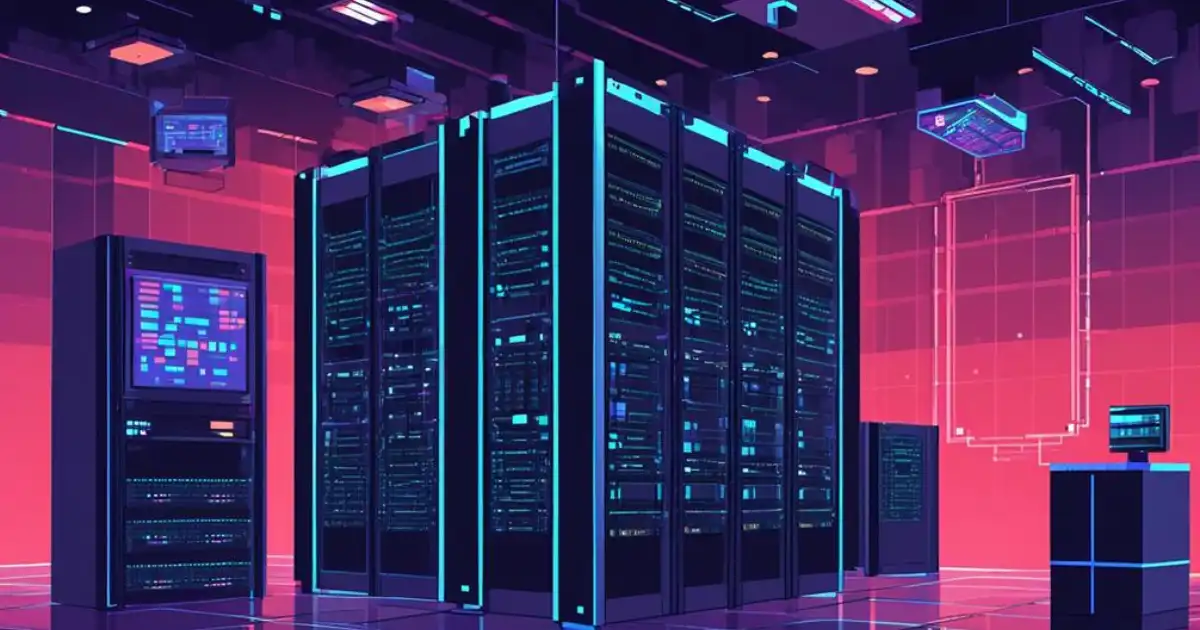
Data Centres are evolving at an unprecedented pace due to the rapid growth of artificial intelligence (AI) technologies. The way AI workloads operate demands a rethink of traditional data center architecture.
AI-driven data center optimization is no longer optional—it is critical for handling the high compute requirements that modern AI applications demand. Companies deploying AI workloads need data centers designed not just for storage and networking, but for intensive AI processing, high-performance computing infrastructure, and energy efficiency.
In this comprehensive guide, we will explore how AI workloads are transforming data center design, the infrastructure needed to support Impact Of Ai Workloads, and strategies for energy-efficient and GPU-accelerated data centers.
By understanding these changes, businesses can ensure their data centers remain competitive and capable of meeting AI-driven demands.
AI Workloads and Their Unique Demands
AI workloads are fundamentally different from traditional IT workloads. Unlike typical applications that focus on storing and retrieving data, AI processes involve massive amounts of computation, particularly in training and running machine learning models.
Training AI models requires continuous, parallel processing of large datasets, which demands specialized hardware such as GPUs and TPUs. These AI compute requirements place a significant load on data center infrastructure, leading to higher power consumption and the need for more sophisticated cooling systems.
Furthermore, AI inference workloads—running pre-trained models—require high-speed memory access and low latency networking to deliver real-time results. Data centres that are not optimized for these workloads often face performance bottlenecks, slower processing times, and higher operational costs.
Data Center Architecture for AI
Designing a data center for AI workloads requires a different architectural approach compared to traditional data centers. The focus shifts from storage-centric to compute-centric infrastructure.
High-performance computing infrastructure becomes a core component. This includes GPU-accelerated servers that can handle parallel computations efficiently. Unlike CPUs, GPUs can perform thousands of calculations simultaneously, making them ideal for deep learning model training.
AI workload management in data centers also requires intelligent resource allocation. Software platforms that monitor and distribute workloads dynamically can prevent overloading certain servers while underutilizing others. AI-driven data center optimization tools can predict workload demands, balance resources, and reduce energy waste.
Energy-Efficient Data Centres for AI
One of the biggest challenges in modern data center design is energy consumption. AI workloads significantly increase power usage due to high-performance GPUs and large-scale computations. Energy-efficient data centers for AI are now a priority for both cost reduction and environmental sustainability.
Techniques to improve efficiency include advanced cooling systems, such as liquid cooling, which is more effective for GPU-heavy servers than traditional air cooling. Additionally, renewable energy sources and energy-aware workload scheduling are becoming standard practices. AI can also be used to optimize energy usage dynamically, adjusting power based on real-time demand and workload intensity.
GPU-Accelerated Data Centres
GPU-accelerated data centers are specifically designed to meet the demands of AI workloads. These data centers house servers equipped with high-end GPUs capable of processing complex AI algorithms faster than traditional CPU-based servers.
The layout of a GPU-accelerated data center must account for heat dissipation, power distribution, and network connectivity. Dense GPU clusters generate considerable heat, making advanced cooling strategies essential. Efficient network design ensures that data moves quickly between nodes, reducing latency and improving overall AI performance.
Storage Considerations for AI Workloads
AI applications require rapid access to vast datasets, meaning storage systems must be both high-capacity and high-speed. Traditional storage solutions often become bottlenecks in AI compute environments.
Data centers designed for AI leverage NVMe storage and high-throughput networked storage solutions to provide low-latency access to large datasets. This ensures AI models can be trained efficiently without delays caused by slow data retrieval. AI-driven data center optimization tools also help manage storage allocation dynamically, ensuring that critical datasets are prioritized for faster access.
Network Design and AI Workloads
Network design plays a crucial role in AI-focused data centers. AI workloads often involve transferring massive datasets between servers and storage nodes. Without optimized networking, AI applications can suffer from latency and bandwidth limitations.
High-speed interconnects such as InfiniBand or 400GbE Ethernet are commonly used in AI-ready data centers. Additionally, software-defined networking allows dynamic routing of data based on workload requirements. AI-driven data center optimization can also monitor network traffic patterns to prevent congestion and ensure high throughput.
AI Workload Management in Data Centers
Effective AI workload management ensures that resources are used efficiently. AI workloads can vary in intensity throughout the day, and static resource allocation can lead to underutilization or bottlenecks.
AI-based scheduling systems dynamically allocate compute, storage, and networking resources based on real-time demand. These systems can predict spikes in AI training workloads and preemptively provision additional GPU nodes. This not only enhances performance but also reduces operational costs by minimizing idle resources.
Cooling Strategies for AI Data Centres
Cooling is a significant concern in AI data centers due to high-density GPU servers. Traditional air cooling may not be sufficient for these heat-intensive setups.
Liquid cooling and immersion cooling are advanced methods that provide more efficient heat transfer. Liquid cooling circulates coolant directly to the server components, while immersion cooling involves submerging servers in thermally conductive but non-electrically conductive fluids. Both approaches significantly reduce the energy needed for cooling while maintaining optimal operating temperatures for high-performance AI hardware.
Security Considerations
AI workloads often handle sensitive data, making security an essential aspect of data center design. GPU-accelerated data centers must ensure that access control, encryption, and network security are robust.
Segmentation of AI workloads and sensitive datasets helps prevent unauthorized access. Additionally, monitoring tools can detect unusual patterns in AI workload execution, which could indicate security breaches or operational anomalies.
Scalability and Future-Proofing
AI technologies continue to evolve rapidly, and data centers must be designed with scalability in mind. This means the ability to add more GPU nodes, increase storage capacity, and expand network bandwidth without major overhauls.
High-performance computing infrastructure should be modular, allowing incremental expansion. AI workload management tools must also be flexible to adapt to new AI workloads and computing paradigms. By future-proofing data center design, organizations can accommodate the increasing demands of AI without constant redesigns.
You Might Be Interested In
- How Does Cloud Ai Storage Support Models?
- Climate Science vs. Climate Change: AI’s Positive Power Struggle – 5 Key Insights
- When Do Security Teams Need an AI Risk Register?
- Creativity: Exploring the World of Furry AI Art Generators
- Why Ai In Education Personalizes Learning Paths?
- How Do Smart Home Gadgets Work?
- What Is Machine Learning In Public Policy?
- What Ai Text Generator Can Do For Your Creative Projects?
- What Sectors Is Humain Focusing On health, Finance, Education, Security?
- What Is The Difference Between Tier 3 Vs Tier 4 Data Centres?
Conclusion
The rise of AI workloads is reshaping the way data centers are designed and operated. Traditional storage-focused data centers are giving way to compute-centric, GPU-accelerated, energy-efficient infrastructures.
AI-driven data center optimization, dynamic workload management, and advanced cooling systems are now critical for meeting the demands of AI compute requirements.
Organizations that invest in AI-ready data centers can achieve faster model training, reduced latency, and lower operational costs while maintaining environmental sustainability. As AI continues to advance, the importance of designing data centers that are resilient, scalable, and optimized for high-performance computing will only grow.
FAQs about Impact Of Ai Workloads
How are AI workloads different from traditional IT workloads?
AI workloads differ significantly from traditional IT workloads because they involve massive computational demands and extensive parallel processing.
While conventional workloads often focus on routine data storage, retrieval, and transactional processes, AI workloads require continuous processing of large datasets to train machine learning and deep learning models. This high level of computation demands specialized hardware like GPUs and TPUs to accelerate processing.
Moreover, AI workloads require low-latency data access and fast networking to efficiently move data between storage and compute nodes. Inference workloads, where pre-trained AI models generate real-time insights, are particularly sensitive to delays.
Traditional data centers are often not optimized for such demands, leading to bottlenecks, slower processing, and higher energy consumption. AI workload management in data centers is therefore crucial to maintain performance and efficiency.
What makes GPU-accelerated data centers ideal for AI?
GPU-accelerated data centers are ideal for AI because GPUs are designed for massive parallelism, enabling thousands of calculations to run simultaneously.
This makes them far more efficient than CPUs for training complex AI models, which require handling large datasets and performing intricate computations. By leveraging GPU clusters, data centers can significantly reduce the time required to train AI models, leading to faster deployment of AI applications.
In addition to speed, GPU-accelerated data centers provide flexibility in scaling resources. Organizations can add additional GPU nodes as AI workloads grow without major redesigns.
Combined with AI-driven data center optimization, these GPU clusters ensure that high-performance computing infrastructure is used efficiently, delivering maximum performance while minimizing idle resources and operational costs.
How can data centers manage AI workload demands efficiently?
Managing AI workload demands efficiently requires intelligent resource allocation across compute, storage, and networking components. Unlike traditional workloads that have predictable usage patterns, AI workloads can fluctuate significantly based on training schedules and real-time inference needs.
AI-based workload management platforms can monitor these patterns and dynamically distribute resources to prevent bottlenecks and ensure consistent performance.
These systems also help predict peaks in demand, automatically provisioning additional GPU nodes or storage as needed. By using AI-driven data center optimization, organizations can balance workloads in real time, minimizing energy consumption while maintaining high performance.
This dynamic approach ensures that the data center can handle the increasing complexity and scale of modern AI applications without compromising efficiency.
Why is cooling a critical consideration for AI data centers?
Cooling is critical for AI data centers because high-density GPU clusters generate significant heat during operation.
Traditional air cooling systems often cannot handle the thermal load of modern AI servers, which can lead to hardware throttling, reduced performance, or even equipment failure. Efficient cooling is essential to maintain the reliability and longevity of high-performance computing infrastructure.
Advanced cooling methods, such as liquid cooling and immersion cooling, offer superior thermal management. Liquid cooling directly removes heat from server components, while immersion cooling submerges servers in thermally conductive fluids to dissipate heat more effectively.
These cooling strategies not only maintain optimal operating temperatures for GPUs but also reduce energy consumption compared to traditional air cooling, making data centers both high-performing and energy-efficient.
What is the role of energy efficiency in AI-focused data centers?
Energy efficiency is crucial in AI-focused data centers due to the high power demands of GPU-intensive workloads. Training large AI models can consume vast amounts of electricity, and inefficient resource usage can lead to skyrocketing operational costs and a larger carbon footprint.
Energy-efficient data centers for AI focus on reducing power consumption without compromising performance, ensuring sustainability and cost-effectiveness.
AI-driven data center optimization plays a key role in achieving energy efficiency. By monitoring workload intensity in real time, AI systems can adjust power distribution, cooling, and server utilization to match actual demand. Additionally, integrating renewable energy sources and using energy-aware scheduling further reduces overall consumption.
This approach allows data centers to support high-performance AI workloads while minimizing environmental impact and operational expenses.
