

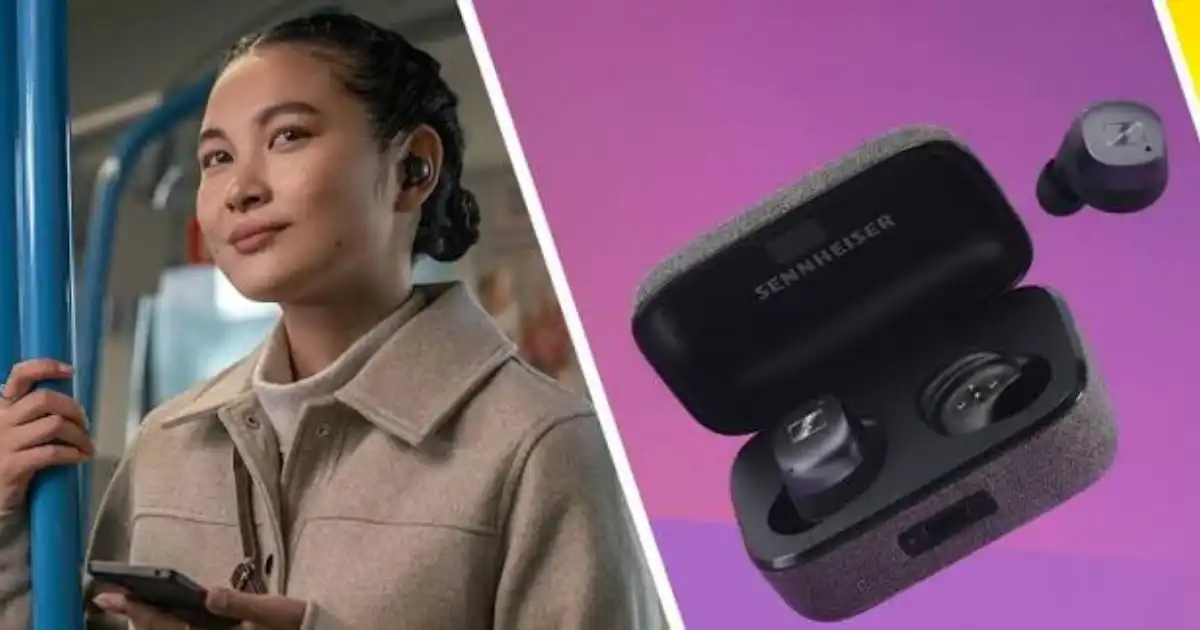
Wireless gadgets have quietly changed the way people interact with technology. A few years ago, many devices still depended heavily on cables for power, data transfer, and communication. Today, it is normal to see someone using wireless earbuds during a commute, checking notifications on a smartwatch, controlling lights through a smart speaker, or charging a phone without plugging in a cable.
The interesting thing about wireless gadgets is that most people do not think about the technology behind them anymore. They simply expect devices to connect quickly, work reliably, and fit naturally into their daily routines. Wireless technology has moved from being an expensive feature found only in premium products to something used by students, professionals, families, and businesses every day.
Common examples include Bluetooth earbuds, wireless headphones, smartwatches, fitness trackers, wireless keyboards, gaming controllers, smart home devices, and wireless chargers. These products are popular because they solve everyday problems. They reduce cable clutter, make devices easier to carry, and give people more freedom in how they use technology.
From my experience observing how people use technology, the biggest reason wireless gadgets became popular is not only because they are technically advanced. It is because they match modern lifestyles. People work from different locations, travel more, use smaller devices, and expect technology to adapt to their movement instead of forcing them to stay connected through cables.
However, wireless gadgets are not automatically better in every situation. They introduce new challenges, including battery management, connection problems, security concerns, and higher costs. Understanding both the advantages and limitations helps people make smarter choices when buying wireless devices.
In this article, we will explore what wireless gadgets actually are, why they became so popular, how wireless technology works behind the scenes, the types of wireless devices people use today, and whether wireless options are always better than traditional wired alternatives.
What Are Wireless Gadgets?
Wireless gadgets are electronic devices that communicate, transfer information, or receive power without requiring a physical cable connection for their main function. Instead of relying on wires, these devices use wireless signals such as Bluetooth, Wi-Fi, NFC, or wireless charging technology to connect and interact with other devices.
A simple example is wireless earbuds. Traditional headphones require a cable connected to a phone or computer. Wireless earbuds remove that physical connection by using Bluetooth technology. The phone sends audio signals through the air, and the earbuds receive and convert those signals into sound.
The same basic idea applies to many other wireless devices. A smartwatch connects with a smartphone to display notifications and track health information. A wireless keyboard sends typing commands to a computer without a USB cable. A smart light receives instructions through a wireless network and changes brightness or color through a mobile app.
The main difference between wired and wireless technology is the method of communication. Wired devices use physical connections such as USB cables, HDMI cables, or audio cables to transfer signals. Wireless devices use radio frequencies or electromagnetic signals to exchange information.
Wired technology still has important advantages. A cable connection is usually more stable, does not require batteries, and often provides faster data transfer. This is why many professional environments still use wired connections for specific tasks.
For example, a professional gamer may prefer a wired mouse because it provides consistent performance with no battery concerns. A video editor may use wired storage devices because they can transfer large files faster. Wireless technology is about convenience and flexibility, not replacing every wired solution.
Modern wireless gadgets usually fall into several categories:
Bluetooth gadgets include earbuds, headphones, speakers, keyboards, mice, and gaming controllers. These devices typically focus on short-range communication with low power consumption.
Wi-Fi-connected devices use wireless networks to communicate over longer distances and often connect to the internet. Smart cameras, smart speakers, smart appliances, and home automation systems commonly use Wi-Fi.
Wearable technology includes smartwatches and fitness trackers that collect information from the user and communicate with smartphones or cloud services.
Wireless accessories include chargers, computer peripherals, mobile stands, and other devices designed to reduce dependence on cables.
The growth of these devices shows how wireless technology has become a normal part of everyday life. People no longer see wireless features as something unusual. They expect their devices to connect, communicate, and work together without requiring complicated setups.
Why Are Wireless Gadgets So Popular?
The popularity of wireless gadgets comes from a combination of convenience, improved technology, changing lifestyles, and better user experiences. People are not choosing wireless devices simply because they are newer. They are choosing them because they often make daily tasks easier.
Wireless Gadgets Provide More Convenience
The biggest reason people prefer wireless gadgets is convenience. Removing cables changes how people interact with technology. A device becomes easier to use because there are fewer physical limitations.
Consider wireless earbuds. A person can listen to music while walking, exercising, commuting, or working without worrying about tangled cables. This small improvement creates a noticeably better experience because the user is free to move naturally.
The same applies to wireless keyboards and mice. Someone working at a desk can position their accessories wherever they feel comfortable instead of being limited by cable length. A cleaner workspace also makes it easier to organize devices.
Smart home devices show this convenience even more clearly. A smart light does not need a direct cable connection to receive commands from a phone or voice assistant. Users can turn lights on or off, adjust settings, or create schedules without manually controlling every device.
What many people misunderstand is that wireless technology is not popular because it removes cables completely. Many wireless devices still need charging cables occasionally. The real benefit is removing cables during everyday use when freedom and flexibility matter most.
Wireless Gadgets Improve Portability and Mobility
Modern lifestyles have become more mobile. Many people work remotely, study from different locations, travel frequently, or use technology outside traditional office environments.
Wireless gadgets fit naturally into this lifestyle because they are designed for movement. A student can carry a wireless mouse and keyboard with a laptop without managing extra cables. A remote worker can create a temporary workspace anywhere. A traveler can pack wireless earbuds, a smartwatch, and portable chargers without carrying multiple wires.
Portable technology has become especially important because smartphones and laptops are now central tools for communication, entertainment, and productivity. Wireless accessories extend the usefulness of these devices without making them harder to carry.
I have seen many people choose wireless accessories not because they need advanced features, but because they want a simpler setup. When someone works from multiple locations, small improvements in convenience become valuable over time.
Wireless Gadgets Reduce Cable Clutter
Cable management is another practical reason wireless gadgets became popular. Modern homes and workplaces often contain many electronic devices, and each device can require different cables.
A desk with a monitor, keyboard, mouse, speakers, charging cables, and other accessories can quickly become difficult to organize. Wireless devices reduce some of this clutter by removing unnecessary connections.
This is especially useful for people who prefer minimal workspaces. A clean desk is not only about appearance. Fewer cables can make cleaning easier, reduce confusion when connecting devices, and create a more flexible workspace.
Smart home installations also benefit from reduced wiring. Installing wireless security cameras, smart lights, and sensors is often easier because users do not need to run cables throughout walls or rooms.
However, reducing cable clutter does not mean eliminating all cables. Power still has to come from somewhere. Many wireless devices simply move the connection problem from cables to batteries and charging systems.
Better Battery Technology Made Wireless Devices More Practical
Early wireless gadgets had a major weakness: poor battery life. Older wireless devices often required frequent charging, had weaker connections, and sometimes delivered inconsistent performance.
Advances in battery technology changed this. Improvements in lithium-ion batteries allowed devices to become smaller while lasting longer between charges. Manufacturers also improved power management systems so devices could use energy more efficiently.
Bluetooth technology also played an important role. Modern Bluetooth versions consume less power while providing more stable connections. This made small devices such as wireless earbuds and fitness trackers practical for everyday use.
For example, early wireless headphones were often criticized because users had to charge them frequently and deal with connection problems. Modern wireless earbuds can last many hours, recharge quickly inside charging cases, and automatically connect with smartphones.
The combination of better batteries, improved wireless communication, and smarter power management turned wireless gadgets from a convenience into a realistic replacement for many wired devices.
How Do Wireless Gadgets Work?
Wireless gadgets may look simple from the outside, but several technologies work together behind the scenes to make them function. When you connect wireless earbuds to a smartphone, control a smart light through an app, or tap a smartwatch to make a payment, information is being transferred through invisible signals.
Instead of sending data through physical wires, wireless devices use radio waves or electromagnetic fields to communicate. The device sending information converts data into a wireless signal, and the receiving device captures that signal and converts it back into useful information.
The exact method depends on the type of wireless technology being used. Different wireless technologies are designed for different purposes. Some focus on short-distance connections and low power consumption, while others are designed for higher speeds or longer ranges.
Understanding these technologies helps explain why different wireless gadgets work differently.
Bluetooth Technology
Bluetooth is one of the most common technologies used in wireless gadgets. It allows devices to communicate over short distances without needing cables or an internet connection.
When someone connects wireless earbuds to a smartphone, Bluetooth creates a direct connection between the two devices. The phone sends audio information through Bluetooth signals, and the earbuds receive that information and play the sound.
Bluetooth is popular because it uses very little power and works well for small portable devices. This is why it is commonly found in earbuds, headphones, smartwatches, keyboards, mice, speakers, and gaming controllers.
Modern Bluetooth versions have improved significantly compared with older versions. Connection stability is better, power consumption is lower, and devices can maintain connections more efficiently.
For example, a fitness tracker does not need a powerful connection because it mainly transfers small amounts of information such as step counts, heart rate data, and notifications. Bluetooth is ideal for this type of communication.
However, Bluetooth also has limitations. Its range is usually limited compared with Wi-Fi, and physical obstacles such as walls can sometimes affect performance. Battery-powered Bluetooth devices also require charging, which is something users need to consider.
Another common issue is device compatibility. While Bluetooth is designed to work across many products, some advanced features may only work properly when devices from the same manufacturer are paired together.
Wi-Fi Connectivity
Wi-Fi is another major technology behind wireless gadgets, but it serves a different purpose than Bluetooth.
Bluetooth is mainly used for direct communication between nearby devices. Wi-Fi connects devices to a wireless network, allowing them to communicate over longer distances and often access the internet.
Smart home devices are one of the biggest examples of Wi-Fi-based wireless technology. Smart cameras, smart speakers, smart televisions, and smart appliances often use Wi-Fi because they need to send and receive larger amounts of data.
A wireless security camera, for example, needs to transmit video footage. This requires more bandwidth than a smartwatch sending health data. Wi-Fi provides the speed and network access needed for these tasks.
Wi-Fi also allows devices to be controlled from outside the immediate area. A person can adjust a smart thermostat, check a security camera, or control home lighting while away from home, as long as the device is connected to the internet.
The downside is that Wi-Fi devices usually consume more power than Bluetooth devices. They also depend on a reliable network connection. If the router has problems or the internet connection goes down, some smart devices may lose functionality.
This is why manufacturers choose wireless technology based on the job a device needs to perform. A wireless mouse does not need Wi-Fi because Bluetooth is simpler and more efficient. A smart camera needs Wi-Fi because it handles much larger amounts of information.
NFC Technology
NFC, which stands for Near Field Communication, is a wireless technology designed for extremely short-range communication.
Unlike Bluetooth and Wi-Fi, NFC works when devices are very close together, usually within a few centimeters. This makes it useful for quick interactions where speed and simplicity matter.
One of the most familiar examples is contactless payment. When someone taps a smartphone or smartwatch on a payment terminal, NFC allows the two systems to exchange information securely and complete the transaction.
NFC is also used for quick device pairing. Some wireless speakers and headphones allow users to connect by simply tapping their phone against the device instead of manually searching through Bluetooth settings.
The advantage of NFC is convenience. It does not require complicated setup, and connections happen almost instantly. The limitation is distance. NFC is not designed for continuous communication over several meters, which is why it is used for specific tasks rather than general wireless connections.
Wireless Charging Technology
Wireless charging is another reason wireless gadgets have become more common. Instead of plugging a cable directly into a device, wireless charging transfers energy through electromagnetic fields.
A wireless charging pad contains a coil that creates a magnetic field when electricity passes through it. A compatible smartphone or device has a receiving coil that captures this energy and converts it into electrical power for the battery.
This technology is commonly used in smartphones, smartwatches, wireless earbuds cases, and other small electronics.
The biggest advantage of wireless charging is convenience. Users can place a device on a charging surface instead of searching for cables or connecting small charging ports.
For example, someone working at a desk can place their phone on a charging stand throughout the day and keep the battery topped up without constantly plugging and unplugging a cable.
However, wireless charging is not perfect. It is usually slower than traditional wired charging, and the device must be positioned correctly on the charging pad. Some cases or accessories can also interfere with charging efficiency.
Many people assume wireless charging means completely cable-free technology, but that is not exactly true. The charging pad itself still requires a power cable connected to an outlet. The benefit is removing the cable connection between the charger and the device.
Popular Types of Wireless Gadgets People Use Today
Wireless technology has become part of almost every category of consumer electronics. Some wireless gadgets focus on entertainment, others improve productivity, and many help people manage daily activities more efficiently.
Wireless Audio Devices
Wireless audio devices are among the most popular wireless gadgets available today. Wireless earbuds, headphones, and Bluetooth speakers have become common because they solve a simple problem: people want high-quality sound without being physically connected to their devices.
Wireless earbuds are especially popular among smartphone users. They are small, portable, and convenient for activities such as commuting, exercising, or working. Features such as noise cancellation, touch controls, and voice assistant support have made them more useful than traditional wired earphones for many users.
Bluetooth speakers are another example. People can carry them to different locations and play music without needing a direct connection to a phone or computer.
The popularity of wireless audio shows how much users value freedom of movement. However, audio professionals and some serious users may still prefer wired headphones because they offer consistent performance, no battery concerns, and sometimes better audio quality.
Wearable Technology
Wearable technology has grown rapidly because wireless connectivity allows small devices to collect information and communicate with smartphones.
Smartwatches and fitness trackers are common examples. They can monitor activity levels, track workouts, measure health-related information, display notifications, and even support mobile payments.
The key advantage of wearable devices is that they stay connected while moving. A smartwatch does not need to be physically connected to a phone all the time to provide useful information.
For many users, these devices become personal assistants that provide quick access to important information without constantly checking a smartphone.
However, wearable technology also depends heavily on battery life. Because these devices are small, manufacturers must balance features with power consumption.
Smart Home Devices
Smart home devices show how wireless connectivity can transform everyday environments.
Wireless smart lights, smart speakers, security cameras, smart locks, and sensors allow users to control different parts of their homes through mobile apps or voice commands.
A person can adjust lighting, play music, monitor security, or control appliances without physically interacting with each device.
The main advantage is automation. Devices can work together and respond to schedules, commands, or user behavior.
However, smart home systems also require careful setup. Poor network coverage, incompatible devices, or security weaknesses can create problems if users do not choose products carefully.
Wireless Computer Accessories
Wireless keyboards, mice, and trackpads are widely used by students, professionals, and remote workers.
These accessories help create cleaner and more flexible workspaces. A laptop user can connect accessories quickly without carrying extra cables, and a desktop user can arrange their workspace more freely.
For everyday productivity, wireless accessories are often more than sufficient. However, professionals who need maximum reliability, such as competitive gamers or people working with specialized equipment, may still prefer wired options.
Wireless Gaming Devices
Gaming is another area where wireless gadgets have become increasingly popular.
Wireless controllers, headsets, keyboards, and mice allow gamers to create cleaner setups and enjoy more freedom of movement.
Modern wireless gaming devices have improved significantly. Many now offer low-latency connections that reduce the delay between user actions and what appears on screen.
Despite these improvements, some competitive gamers continue using wired devices because even small performance differences can matter in professional environments.
The choice depends on priorities. Casual users often appreciate convenience, while competitive users may prioritize maximum reliability.
You Might Be Interested In
- How Consumer Technology Changes Daily Life?
- How Smart Home Devices Work Together?
- How Wearable Technology Tracks Health?
- How Smart Gadgets Make Life Easier?
Conclusion
Wireless gadgets have become popular because they solve practical problems that people experience every day. The main reason behind their growth is not simply that they use newer technology. It is because they make technology easier to use, easier to carry, and better suited for modern lifestyles.
From wireless earbuds and smartwatches to smart home devices and wireless computer accessories, these products give users more freedom and flexibility. They remove unnecessary cables, support mobile work, improve device portability, and allow different devices to communicate with each other more naturally.
The technology behind wireless gadgets has also improved significantly. Better batteries, stronger Bluetooth connections, faster Wi-Fi networks, and more efficient wireless charging have made these devices reliable enough for everyday use. What once felt like an expensive convenience has become a normal part of personal and professional technology.
