Close Menu
    What's Hot

    How AI Voice Assistants Understand Commands?

    August 18, 2026

    How AI Customer Support Improves Service?

    August 17, 2026

    How AI Email Automation Organizes Messages?

    August 16, 2026
    Facebook X (Twitter) Instagram
    OmniRaza Wednesday, August 19
    • Home
    • About Us
    • Privacy Policy
    • Terms
    • Contact
    Facebook X (Twitter) Instagram
    Subscribe
    • Home
    • Artificial Intelligence
    • Development
    • Digitization
    • Innovations
    • Technology
    OmniRaza
    Home»Artificial Intelligence»AI Applications»How Modular Data Centres Enable Rapid Scaling?
    AI Applications

    How Modular Data Centres Enable Rapid Scaling?

    omnirazaBy omnirazaOctober 23, 2025Updated:October 24, 2025No Comments10 Mins Read5 Views
    Facebook Twitter Pinterest Telegram LinkedIn Tumblr Copy Link Email
    Follow Us
    Google News Flipboard
    How Modular Data Centres Enable Rapid Scaling?
    Share
    Facebook Twitter LinkedIn Pinterest Email Copy Link

    Imagine your business suddenly goes viral. Traffic explodes overnight. Customers flood your services. Success is here — but can your infrastructure keep up? Traditional Data Centres can take years to expand, costing time, money, and missed opportunity. What if scaling your digital capacity was as simple as adding another building block — quickly, efficiently, and with minimal disruption?

    Modern enterprises demand flexibility, speed, and resilience. Whether supporting AI workloads, cloud adoption, edge computing, or rapid global expansion, organisations can no longer afford slow-moving infrastructure. Modular facilities provide a transformative solution — scalable, prefabricated units designed for fast deployment while maintaining enterprise-grade performance and security.

    This comprehensive guide explores exactly how modular Data Centres enable rapid scaling — and why they are becoming the infrastructure choice for future-ready businesses.

    Table of Contents

    Toggle
    • What Are Modular Data Centres?
      • Core Characteristics
    • The Problem With Traditional Data Centres
      • Long Construction Timelines
      • High Capital Investment
      • Limited Flexibility
    • How Modular Data Centres Enable Rapid Scaling
      • Faster Deployment
      • Scale as You Grow
      • Consistent Quality and Performance
      • Enhanced Energy Efficiency
      • Reduced Facility Footprint
    • Types of Modular Data Centres
      • IT Modules
      • Cooling Modules
      • Power Modules
      • All-in-One Prefabricated Facilities
    • Real-World Use Cases
      • Cloud and SaaS Providers
      • AI and High-Performance Computing
      • Government and Defence
      • Telecommunications and Edge Networks
      • Disaster Recovery
      • Retail, Finance, and Healthcare
    • Economics of Rapid Scaling
      • Lower Initial Capital
      • Predictable Operating Costs
      • Faster ROI
      • Extended Lifespan
    • Sustainability Advantages
    • Supporting High-Density Workloads
    • Security and Compliance
    • The Role of Digital Twins in Modular Expansion
    • The Future: Fully Autonomous Scaling
      • Step 1: Assess Capacity Needs
      • Step 2: Design a Scalability Roadmap
      • Step 3: Select Technology Partners
      • Step 4: Deploy and Optimise
    • Why the Shift Is Inevitable
    • Final Actionable Takeaways
    • Conclusion
    • FAQs about Data Centres

    What Are Modular Data Centres?

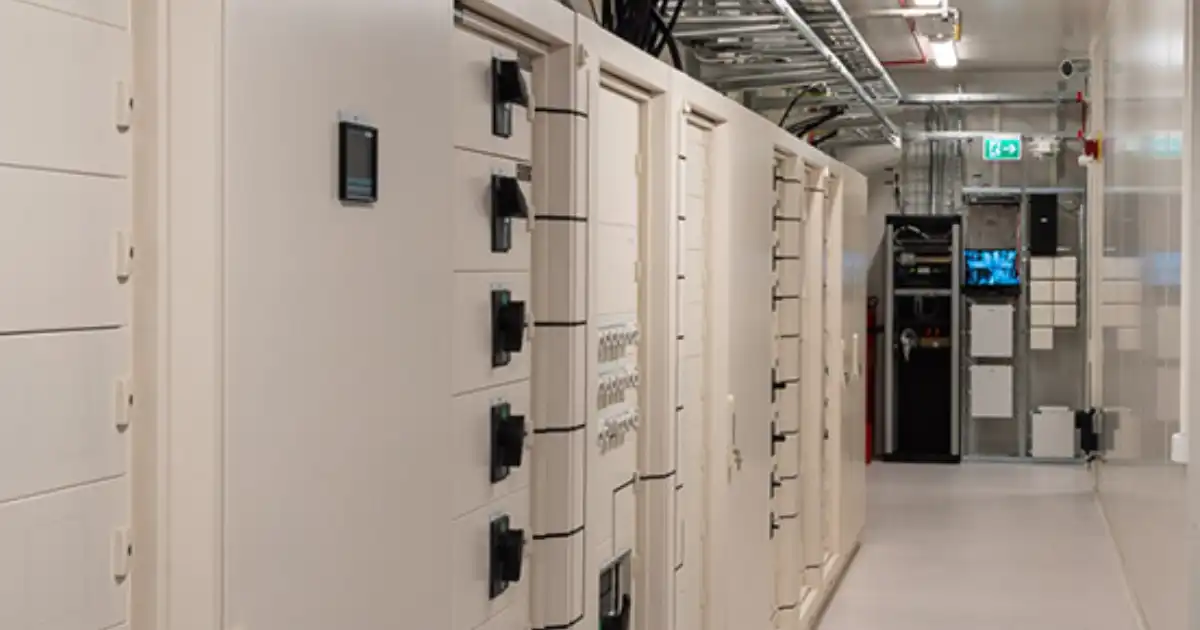
    Modular Data Centres are pre-engineered, factory-built computing environments that arrive on-site as fully integrated modules. Instead of constructing an entire facility from scratch, organisations simply deploy pre-assembled units that plug into existing infrastructure.

    These modules typically include:

    • IT racks and containment

    • Power distribution and backup

    • Advanced cooling systems

    • Fire detection and suppression

    • Security and monitoring systems

    Each module is a self-contained ecosystem — and multiple units can be linked to rapidly scale capacity.

    Core Characteristics

    Feature Benefit
    Standardised design Faster deployment and predictable quality
    Prefabrication Lower construction costs and reduced delays
    Portability Can be deployed in remote or edge locations
    Scalability Expand capacity as demand grows
    Efficiency Optimised power usage and space utilisation

    Modular systems redefine how Data Centres can evolve — shifting from slow and static to agile and scalable.

    The Problem With Traditional Data Centres

    Long Construction Timelines

    Standard facility builds can take 18–36 months due to:

    • Custom designs

    • Permitting delays

    • On-site engineering complexities

    • Large civil infrastructure requirements

    In fast-changing digital markets, this timeline is often too slow.

    High Capital Investment

    Organisations must predict future needs years in advance — purchasing more capacity than they currently require. This leads to:

    • Underutilised assets

    • Wasted energy and cooling

    • Reduced ROI

    Limited Flexibility

    Once built, traditional Data Centres are difficult to modify. As compute density increases (especially for AI and GPU clusters), existing facilities may struggle with:

    • Hot spots and cooling inefficiencies

    • Insufficient floor space

    • Power delivery constraints

    In today’s accelerated digital economy, infrastructure must evolve faster.

    How Modular Data Centres Enable Rapid Scaling

    Here’s where modular solutions shine.

    Faster Deployment

    Modules are built off-site in controlled factory environments. This allows:

    • Parallel construction (facility prep + module manufacturing)

    • Predictable delivery schedules

    • Reduced weather and site-related risks

    Deployment can be completed in weeks instead of years.

    Scale as You Grow

    Instead of guessing future demand, organisations deploy capacity just in time.

    Add modules when:

    • Customer usage spikes

    • New services roll out

    • Edge locations are required

    • AI workloads increase compute demand

    This eliminates waste and optimises CAPEX planning.

    Consistent Quality and Performance

    Standardised engineering means:

    • No time-consuming redesigns

    • Replicable solutions across global sites

    • Guaranteed compliance with industry standards

    Every module performs at the same high level — anywhere in the world.

    Enhanced Energy Efficiency

    Modular Data Centres often outperform legacy facilities with:

    • Advanced airflow containment

    • Liquid cooling support for high-density racks

    • Optimised Power Usage Effectiveness (PUE)

    Higher efficiency = lower operating costs + sustainability impact.

    Reduced Facility Footprint

    Smaller physical space enables deployment in constrained environments:

    • Industrial lots

    • Urban rooftops

    • Remote areas for edge applications

    Perfect for telcos, IoT, 5G, and content delivery networks.

    Types of Modular Data Centres

    IT Modules

    Single units hosting rack deployments — ideal for incremental scaling.

    Cooling Modules

    Supplemental cooling pods for high-density or GPU-heavy environments.

    Power Modules

    Include UPS systems, switchgear, and battery banks to boost power capacity.

    All-in-One Prefabricated Facilities

    Complete scalable computing ecosystems combining:

    • Power

    • Cooling

    • IT racks

    • Network connectivity

    These are essentially Data Centres in a box — deployable anywhere.

    Real-World Use Cases

    Cloud and SaaS Providers

    Scale global presence while keeping latency low.

    AI and High-Performance Computing

    Modules engineered for high-density compute workloads and accelerated GPUs.

    Government and Defence

    Rapid deployment for secure and remote operations.

    Telecommunications and Edge Networks

    Support 5G growth and real-time services near end users.

    Disaster Recovery

    Quick restoration after outages — deploy and activate in short timescales.

    Retail, Finance, and Healthcare

    Support compliance and local data sovereignty.

    Where digital demand grows — modular solutions follow.

    Economics of Rapid Scaling

    Lower Initial Capital

    Start small → grow as needed
    Avoid costly over-build situations

    Predictable Operating Costs

    Factory-tested modules deliver efficiency and reliability from day one.

    Faster ROI

    Revenue generation starts sooner due to faster deployment timelines.

    Extended Lifespan

    Modules can be upgraded, replaced, or relocated — reducing obsolescence.

    Every module added strengthens both operational capability and business performance.

    Sustainability Advantages

    Modular Data Centres promote greener infrastructure:

    • Energy-efficient cooling reduces carbon emissions

    • Smaller footprint reduces land and construction impact

    • Reusable components support circular economy principles

    As ESG regulations intensify, sustainable scaling is a competitive advantage.

    Supporting High-Density Workloads

    The rise of AI, machine learning, and GPU clusters demands high-density power and cooling. Modular facilities are designed to support rapid increases in compute density without compromising performance.

    Benefits include:

    • Liquid cooling-ready configurations

    • High-capacity UPS and power distribution

    • Scalable heat rejection systems

    • Hot aisle/cold aisle containment

    Enterprises gain the flexibility to transform workloads without replacing infrastructure.

    Security and Compliance

    Modular solutions can be delivered with built-in protections:

    • Multi-layer access control

    • Encrypted network connectivity

    • Fire suppression and environmental monitoring

    • Compliance with ISO, Tier, and governmental standards

    Every module is a secure and compliant operational environment.

    The Role of Digital Twins in Modular Expansion

    Before deployment, many modular Data Centres are simulated digitally:

    • Predict heat flows

    • Model power distribution

    • Validate performance under different loads

    This ensures each new module integrates flawlessly with the existing ecosystem.

    The Future: Fully Autonomous Scaling

    Emerging automation and AI-driven management will allow Data Centres to:

    • Auto-provision new capacity based on usage

    • Predict hardware failures

    • Self-optimise cooling and power

    • Deploy edge modules dynamically via robotics and drones

    Scaling soon won’t just be rapid — it could become automatic.

    Implementation Strategy: How to Adopt Modular Scaling

    Step 1: Assess Capacity Needs

    Analyse:

    • Current workload performance

    • Expected business growth

    • Geographic expansion requirements

    Step 2: Design a Scalability Roadmap

    Plan modular additions over time — ensure power and connectivity support expansion.

    Step 3: Select Technology Partners

    Look for providers with:

    • Proven modular deployment success

    • Robust support models

    • Strong supply chains

    Step 4: Deploy and Optimise

    Start with a core module → monitor → scale on demand.

    Why the Shift Is Inevitable

    The pace of digital transformation continues to accelerate:

    • AI adoption is surging

    • 5G networks require dense compute at the edge

    • Data privacy laws require local processing

    • Global markets demand always-on services

    Rigid legacy infrastructure simply cannot keep up.

    Forward-thinking organisations are already transitioning — securing scalability that matches digital ambition.

    Final Actionable Takeaways

    Challenge Modular Solution
    Slow deployment Weeks instead of years
    High upfront costs Pay-as-you-grow
    Unpredictable demand growth Scalable modular capacity
    Legacy cooling inefficiency High-density and liquid-ready systems
    Expansion restrictions Small footprint, portable deployments

    Modular Data Centres are not a trend — they are the new standard for rapid scaling.


    You Might Be Interested In

    • Top 10 Ai-powered Wearable Health Monitors
    • What Is Meant By Machine Learning?
    • Why Is Cybersecurity Awareness Important?
    • Top 5 Ai-driven Tutoring Systems Today
    • Top 10 Ai-driven Intrusion Detection Systems
    • How Do Data Centres Reduce Energy Consumption And Improve Efficiency?
    • How Do Phishing Attacks Work?
    • How Does Humain Support Ai Startups And Innovation In Saudi Arabia?
    • Does Chat GTP Have Loopholes?
    • Why Do Employees Use Unapproved AI Tools at Work?

    Conclusion

    Digital transformation is accelerating at a pace the world has never seen. Businesses are expanding services globally, AI workloads are intensifying, and data demands continue to surge. Traditional infrastructure — with its slow construction cycles, high upfront investment, and rigid design — simply cannot keep up.

    Modular Data Centres redefine what is possible.

    They allow organisations to grow at the speed of innovation, not construction. With prefabricated modules, enterprises can deploy new capacity in weeks, not years — unlocking rapid response capabilities that match real-time business needs.

    They eliminate the waste of overbuilding by enabling a pay-as-you-grow model, where scalability is predictable and strategic. They support high-density compute environments necessary for AI, machine learning, and next-generation workloads. They offer placement flexibility — from dense urban centres to remote edge locations — ensuring data and services remain close to users for maximum performance.

    Most importantly, modular infrastructure empowers organisations to stay competitive. When demand spikes, new opportunities emerge, or technology evolves, businesses with modular capabilities can adapt instantly. No delays. No downtime. No uncertainty.

    The future belongs to companies that can grow without limits. Modular Data Centres transform scaling from a challenge into a strategic advantage — enabling innovation instead of restricting it.

    FAQs about Data Centres

    How does a modular data center work?

    A modular data center works by using pre-built, self-contained units that house IT equipment, cooling systems, power supply, and security components. These modules are manufactured off-site and then transported to the location where they will be used. Once delivered, they can be quickly installed and connected to create a fully functioning data center. This design allows organizations to scale up or down easily as their needs change.

    Instead of building a huge facility all at once, businesses can add modules step by step. This makes the expansion process faster, more cost-efficient, and less disruptive. A modular data center also supports rapid deployment during emergencies or in locations where building infrastructure from scratch would be slow or expensive.

    What is scalability in data centers?

    Scalability in data centers refers to the ability to increase or decrease computing resources—such as servers, storage, and cooling capacity—based on demand. When a business grows and needs more power and data handling, scalability ensures the data center can handle it without starting over or replacing the entire system.

    This feature allows companies to plan for the future, avoid wasted energy, and save money. Scalable data centers offer flexibility so that organizations can keep up with new technology and customer needs without downtime or major renovations.

    What is the difference between modular and traditional data centers?

    Traditional data centers are built as a single large facility designed to support long-term needs. They often require high upfront costs, long construction times, and a fixed layout that is hard to modify once completed. Scaling a traditional center usually means expensive upgrades and potential downtime.

    Modular data centers, on the other hand, are built using prefabricated units that can be added or removed when needed. They are quicker to deploy, more energy-efficient, and easier to expand. This flexible approach allows organizations to respond faster to technological changes while maintaining lower costs.

    How does virtualization help to scale energy usage in a data center?

    Virtualization allows multiple virtual machines to run on a single physical server. This reduces the number of physical machines required to handle workloads. As a result, data centers consume less electricity, generate less heat, and require less cooling. By optimizing server usage, virtualization ensures energy is used only when necessary, rather than wasted on idle machines.

    This smart distribution of resources leads to better energy efficiency and smaller carbon footprints—making virtualization a key technology in creating greener data centers.

    How does virtualization improve scalability?

    Virtualization improves scalability by allowing data centers to quickly create, adjust, or remove virtual servers based on real-time needs. Instead of purchasing and installing new hardware every time workloads increase, businesses can simply allocate more virtual resources. This makes scaling faster, smoother, and more affordable.

    It also enables better workload management, flexibility, and disaster recovery. With virtualization, organizations can keep their systems performing well even during peak demand, making their data centers more adaptable to growth and technological change.

    Follow on Google News Follow on Flipboard
    Share. Facebook Twitter Pinterest LinkedIn Telegram Email Copy Link
    Avatar Of Omniraza
    omniraza
    • Website
    • Facebook
    • Pinterest

    At OmniRaza, we are dedicated to exploring and uncovering the vast landscape of emerging technological prospects that shape the world around us. Our mission is to provide our readers with comprehensive insights into the ever-evolving realm of technology, from cutting-edge innovations to the latest trends that are reshaping industries and influencing our daily lives.

    Related Posts

    Why Do People Use A Mechanical Keyboard?

    July 30, 2026

    What Is Full Stack Development?

    July 29, 2026

    Why Is Saas Security Important?

    July 28, 2026
    Leave A Reply Cancel Reply

    Subscribe to News

    Subscribe my Newsletter for new blog posts, tips & new photos. Let's stay updated!

    Latest Posts

    How AI Voice Assistants Understand Commands?

    August 18, 2026

    How AI Customer Support Improves Service?

    August 17, 2026

    How AI Email Automation Organizes Messages?

    August 16, 2026
    Editors Picks

    How to Change Polling Rate on Keyboard?

    November 19, 2025

    How Much DPI Is Glorious Model O?

    August 12, 2024

    How Ai In Finance Detects Fraudulent Activity?

    September 21, 2025

    What Are The 4 Applications of Artificial Intelligence?

    May 30, 2024

    At OmniRaza, we are dedicated to exploring and uncovering the vast landscape of emerging technological prospects that shape the world around us.

    Our mission is to provide our readers with comprehensive insights into the ever-evolving realm of technology, from cutting-edge innovations to the latest trends that are reshaping industries and influencing our daily lives.

    Facebook X (Twitter) Instagram Pinterest YouTube
    Recent Posts

    How AI Voice Assistants Understand Commands?

    August 18, 2026

    How AI Customer Support Improves Service?

    August 17, 2026

    How AI Email Automation Organizes Messages?

    August 16, 2026

    How AI Document Automation Saves Time?

    August 15, 2026
    Trending

    How to Change Polling Rate on Keyboard?

    November 19, 2025

    How Much DPI Is Glorious Model O?

    August 12, 2024

    How Ai In Finance Detects Fraudulent Activity?

    September 21, 2025

    What Are The 4 Applications of Artificial Intelligence?

    May 30, 2024
    • Home
    • About Us
    • Privacy Policy
    • Terms
    • Contact
    © 2026 OmniRaza. Managed by My Rank Partner.

    Type above and press Enter to search. Press Esc to cancel.